
To ensure a stable and abundant cherry plum harvest with outstanding flavor, careful care is essential. Pruning is a necessary step to ensure the successful development of the cherry plum tree. This procedure should be carried out with particular care and strict adherence to the rules.
Why do you need to prune cherry plum?
Pruning plays a key role in establishing harmony between plant development and fruiting. As fruit trees age, they become less productive, produce a poor harvest, and the flavor and size of the fruit decline. Pruning is essential for rejuvenating the trees.
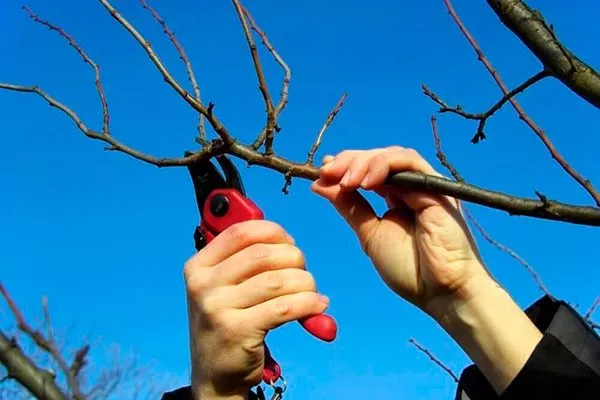
The benefits of this agricultural practice include:
- increase in growth amplitude;
- crown thinning;
- increasing yield and improving the taste of fruits;
- promoting continuous annual fruiting;
- development of additional shoots on skeletal branches;
- preventing crown thickening.
When pruning, it is important to decide on the type of procedure: whether it will be shortening shoots or thinning.
When is it necessary to shorten shoots?
Pruning shoots is a necessary part of cherry plum care. This procedure is required in the following cases:
- When planting a seedling in a permanent place. This helps to form the correct structure of the shrub or tree from the very beginning and creates favorable conditions for healthy growth.
- Fruiting and the formation of new branches in an adult plant have ceased. Shortening the shoots in this case helps stimulate the growth of new branches, which can lead to increased fruiting in the future.
- When it is necessary to maintain a certain height or shape of the plant. This may be important for aesthetic purposes, to facilitate harvesting, or to maintain the size of the plant within a given space.
- When managing plant size in confined spaces. In confined garden or agricultural conditions, pruning can help manage plant size and optimize space utilization.
When pruning shoots, it is important to follow certain rules, such as avoiding excessive top pruning to prevent the formation of water sprouts or wild shoots that are not capable of bearing fruit.
Rules and schemes
Typically, all types of pruning are performed in a single procedure. In other words, old and barren branches are removed simultaneously, the crown is shaped, and thinning is performed as needed. Spring pruning is recommended in late April or early May.
Sanitary
This procedure is essential for mature and old trees and can be performed twice a year – in spring and fall. In warmer regions, sanitary pruning can be performed in early winter, provided temperatures are not too low.
During sanitary pruning, the following types of branches are removed:
- Dry branches. Prune dried shoots both in the spring, after winter, and in the fall. When doing this, remove the healthy portion of the branch, cutting the shoots right at the base.
- Frost-damaged branches. If the winter was too harsh and there are frozen branches on the tree, remove them, as they rarely recover. Make the cut at the base.
- Branches growing inward. They interfere with the normal development of cherry plum and absorb excess nutrients, weakening the plant. Removing them improves the plant's health.
When pruning the tree, remove vertical and overly old branches that haven't borne fruit for a long time. After performing sanitary pruning, dispose of damaged branches or remove them from the site.
- ✓ Pruning shears with sharp blades for clean, burr-free cuts.
- ✓ Garden saw for removing thick branches.
- ✓ Garden pitch or special putty for processing cuts.
For young trees
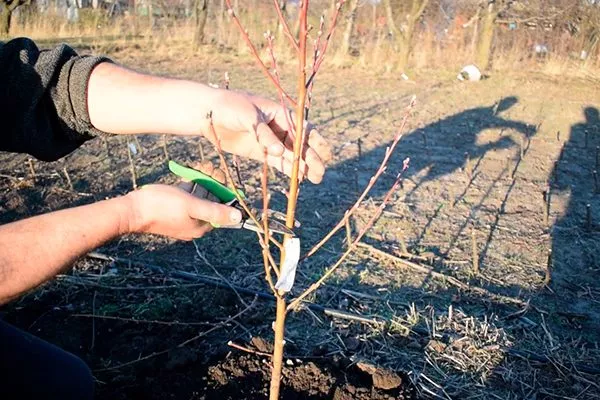
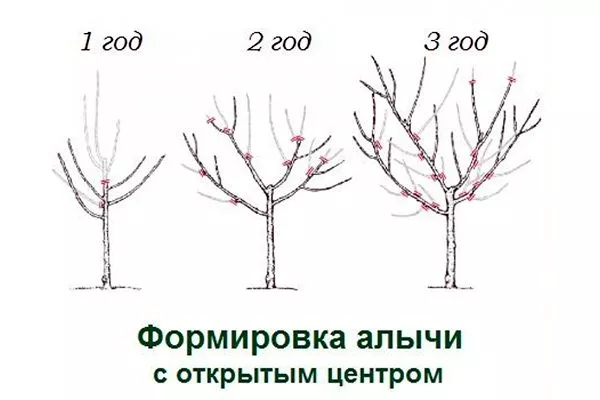
For young seedlings, carry out formative pruning to create a cup-shaped or flattened crown, which is especially important in regions with cold winters and for varieties that are not frost-resistant.
Recommendations:
- In the first year after planting, prune, leaving three main branches spaced 15-20 cm apart. In subsequent years, leave five to seven branches spaced 40-60 cm apart.
- Perform the pruning process in stages. First, remove branches at a height of 15-30 cm from the ground. Then, trim the shoots on the shortened branches to 50 cm. Using guy wires, position the branches horizontally at an angle of approximately 120 degrees.
This pruning method is considered effective for protecting the tree from snowfall and frost. In some cases, maintaining the crown at 80-90 cm is recommended to prevent branches from breaking under the weight of snow.
For mature trees
Pruning, intended for trees aged 5 to 7 years, is carried out when fruiting increases and growth slows. During this period, flower buds in the central part of the crown typically die off due to shade, causing them to shift to the periphery.
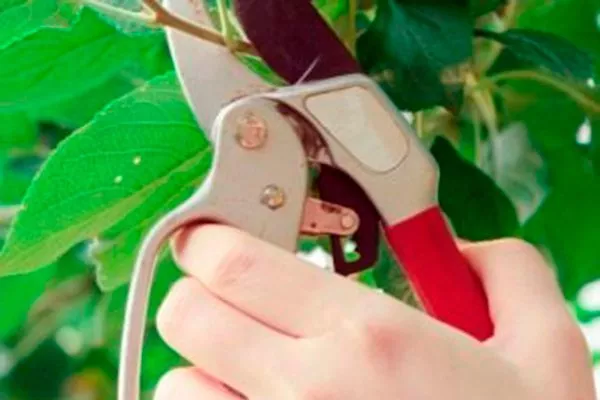
Pruning for mature trees is aimed at thinning the central part, taking into account the following recommendations:
- Rejuvenating pruning every 5-6 years. Prune the branches according to the cherry plum's age. The older the tree, the more branches you should prune.
- Removing crossing and downward-facing branches. It is especially important to direct them to the outer side of the crown to improve its structure.
- Complete pruning of lower branches. This promotes the formation of a strong crown, preventing the upper tiers from breaking off under the weight of the crop.
- Pruning of apical shoots. The procedure helps to control the growth and shape of the tree.
- Removal of water sprouts. It involves preserving only those branches that are suitable for the formation of new shoots.
It is important to consider the variety of cherry plum when pruning mature trees, as methods may vary depending on the plant variety.
Bushy
Bushy varieties tend to bear fruit on one-year-old shoots. In 3-4-year-old plants, if not regularly pruned, fruiting may migrate from the inner part of the crown to the periphery.
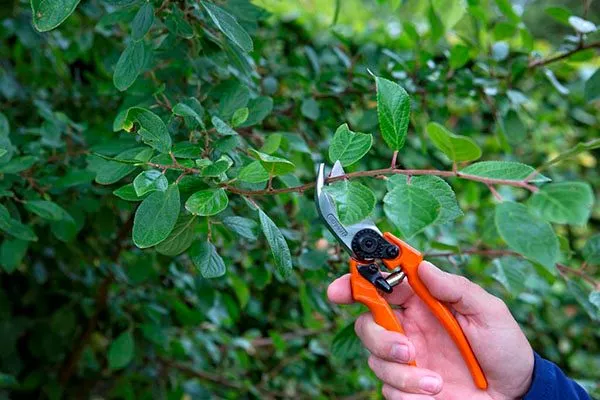
If the bush hasn't been pruned for a long time and has become neglected, perform the procedure every 2-3 years. First, thin the crown, removing dead and crossing shoots. In the second year, shorten the branches. This pruning method helps maintain the bush's fertility while restoring its structure.
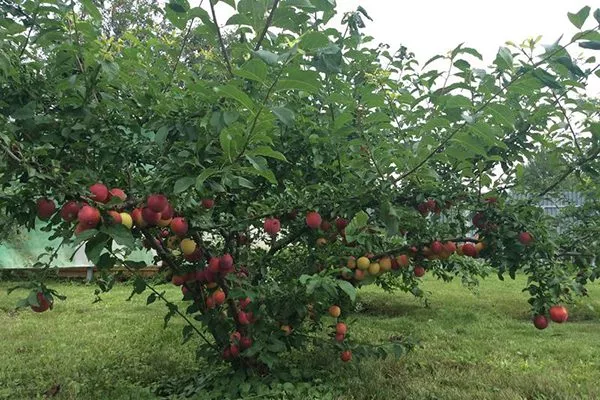
Arborescent
The tree plum group includes several subspecies with varying heights: tall varieties (6-9 m), medium-sized (7 m), and low-growing (up to 3-4 m). Fruiting occurs on 8-9-year-old shoots, so prune within the crown, removing dead, intertwined, and downward-facing branches.
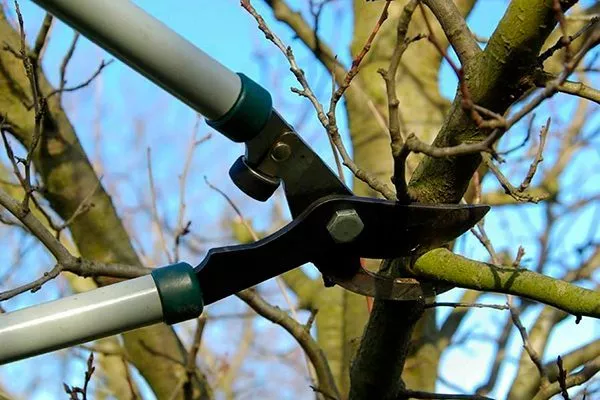
Prune shoots on weakly branched branches. If growth is less than 50 cm per year or the branch is not bearing fruit, do not prune the shoots. If growth has decreased, prune on 2-3-year-old wood, and if growth has completely stopped, prune on 5-6-year-old wood.
When the plant reaches 20-25 years of age, perform rejuvenation pruning, shortening the skeletal branches to 6-7-year-old wood and pushing the shoots into a lateral position. Perform this procedure during lean years, after which the plant will require 1-2 years to recover.
Hybrid
Hybrid cherry plum varieties are characterized by vigorous growth, up to 1 meter per season, and therefore require annual pruning and branch shortening. This procedure helps thin the crown, improving light penetration, and remove weak and non-fruiting branches. Without such pruning, the fruits may become smaller and their flavor may become sour.
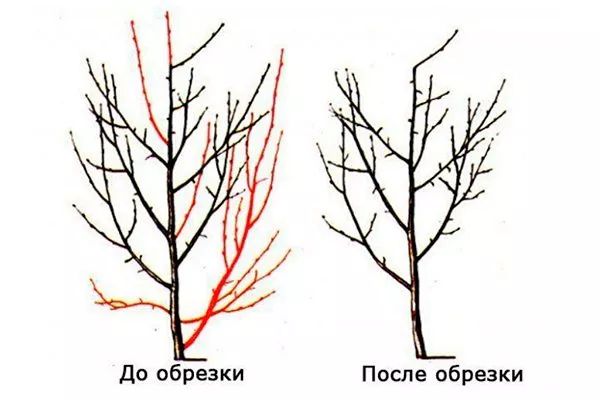
Slow growth and reduced fruiting indicate the need for rejuvenation pruning on 2-3-year-old wood. If growth has completely stopped, pruning is performed on 5-6-year-old wood. This type of pruning promotes plant regeneration and improves fruiting.
Columnar
The purpose of pruning these cherry plum varieties is to remove shoots on the main stem. This procedure is aimed at reducing the growth of new growth and improving the plant's yield. By removing excess shoots on the main stem, pruning helps form a more compact and manageable crown.
Rejuvenation of the old
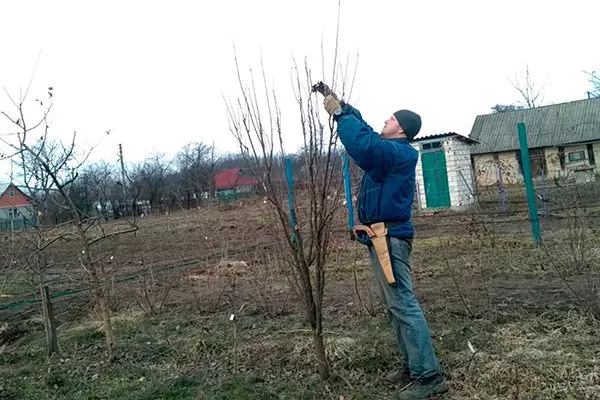
Rejuvenating cherry plum pruning is aimed at restoring the youthful appearance of an aging plant. This type of pruning is recommended when the cherry plum has stopped producing fruit actively or when the berries have become small and flavorless. There are several options for this type of pruning.
- Gradual pruning. Suitable for novice gardeners and gentle on the plant, this process involves three stages. First, in the fall, remove all dead and old branches. The following year, thin out the crown, and finally, remove a third of all scaffold branches.
- Half crop. This process takes place over two years. First, divide the tree into two halves, and in the first year, remove the skeletal branches from one side, and in the second year, from the other.
- Global pruning. This method allows you to quickly rejuvenate a tree. Remove a third of all skeletal branches at once. Maintain the shape of the crown to maintain its beautiful appearance. This method makes the tree not only a source of delicious fruit but also an ornamental addition to the garden.
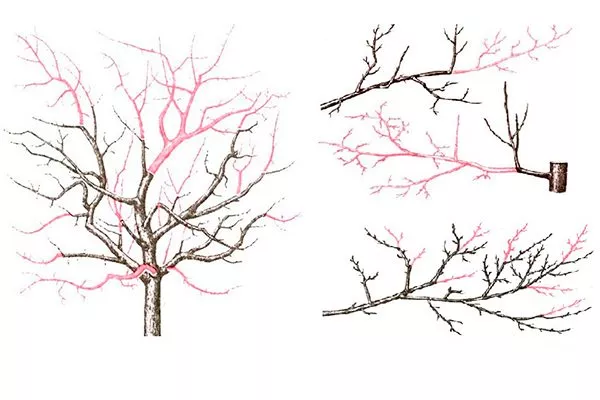
The process of rejuvenating cherry plum pruning is basically the same as pruning other trees or shrubs, but the choice of method depends on the individual characteristics of the plant and the preferences of the gardener.
Carrying out the thinning procedure
Summer pruning of cherry plums during the fruiting period, especially when the plant is three years old and has begun to bear fruit, is an important agricultural practice. In this case, thinning the crown is done to ensure increased light penetration and stimulate healthy growth and fruiting.
- The ideal time for thinning cherry plums in this case may be the summer growing season, when the plant is actively growing and developing. When the cherry plum is three years old and no more than 3 meters tall, the tree begins to bear fruit, and the plant has more than six shoots or branches, this is the right time for thinning.
- When thinning, follow these guidelines:
- Remove all dry, diseased and damaged shoots to prevent the spread of diseases and direct the plant's energy to healthy parts.
- Focus on maintaining healthy, strong branches that will promote the development of a beautiful and fruitful crown.
- Thin the canopy so that light can better penetrate the plant, supporting healthy growth and fruit development.
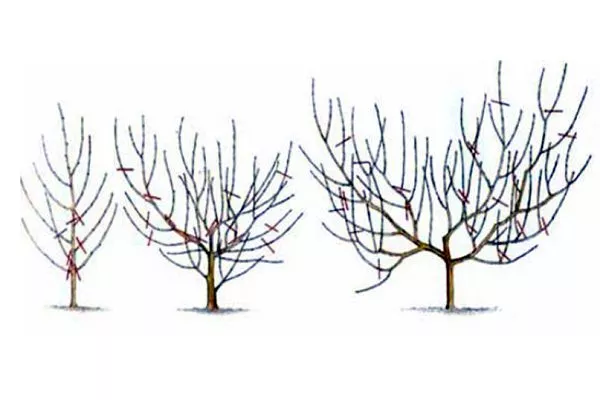
Thinning the crown in summer during the fruiting period is an important measure for maintaining the health and productivity of the cherry plum.
How to properly care for the procedure?
After pruning your cherry plum, to prevent loss of vigor and ensure proper recovery, it's important to provide the plant with appropriate care. Follow these recommendations:
- Immediately after the procedure, treat all cuts with garden pitch to protect against common diseases. Do not use paint or lime in this case.
- To speed up plant recovery, fertilize regularly. Use high-quality organic fertilizers in the fall, and add nitrogen-rich fertilizers to the soil in the spring.
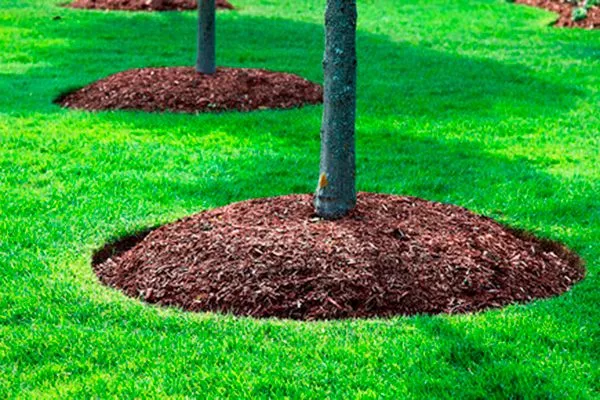
- After pruning, water the tree generously with warm water. To prevent the soil from drying out, cover it with sawdust or similar material.
Consequences of failure to process in a timely manner
Failure to properly care for cherry plums can lead to negative consequences. This can include:
- Thickening of the crown. The lower branches are deprived of sunlight, and the upper ones are faced with a lack of air, which leads to the death of part of the plant.
- Pulling the tree upwards. Lack of proper pruning can cause the tree to grow unnaturally upward.
- Deterioration of crop quality. Lack of light and air affects the shape, color and taste of fruits, reducing their quality.
- Increasing the frequency of fruiting. Incorrect pruning can disrupt the regularity of fruit ripening.
- Increased risk of diseases and crown damage. A dense crown promotes the development of diseases and damage to the tree.
- Deterioration of the plant's appearance. Lack of essential elements and high humidity contribute to the development of lichens and mosses on the tree.
Proper pruning of cherry plums is an important agricultural practice that not only improves the quality of the harvest but also extends the plant's lifespan. Effective pruning promotes balanced plant development, providing it with the necessary light, ventilation, and nutrients.