
Cherry plum is a close relative of the plum, distinguished by its high yield and low maintenance. During fruiting, cherry plums are literally covered with fruits, which are much smaller than plums, but no less tasty and aromatic.
General information
Cherry plum is one of the original forms of the cultivated plum (Prunus cerasifera) and belongs to the genus Prunus of the Rosaceae family. Other botanical names include cherry plum or spreading plum.
Where does it grow?
Cherry plums are native to the Transcaucasus and Western Asia. They also grow wild in Moldova, the North Caucasus, the Balkans, and southern Russia. Cherry plums are cultivated commercially in Russia, Asia, and Western Europe.
Description
Cherry plum has the appearance of a multi-stemmed branched tree or shrub.
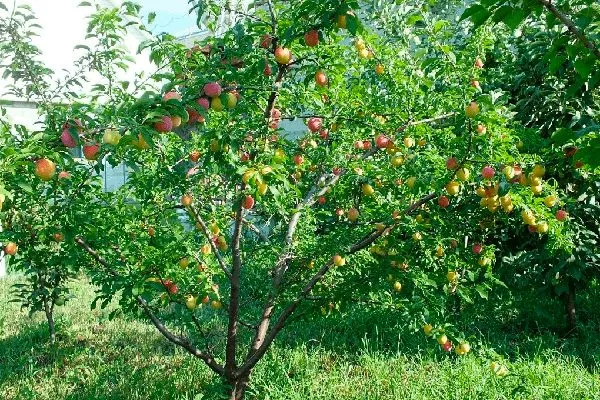
Brief description of cherry plum:
- height - 1.5-10 m;
- roots are powerful;
- leaves are elliptical, pointed at the ends;
- Flowers are single, 2-4 cm in diameter, white or pinkish.
Cherry plum blossoms in early May, and the flowering tree is practically indistinguishable from a plum tree.
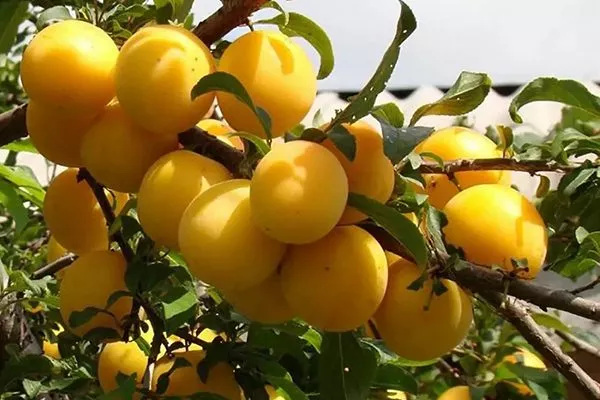
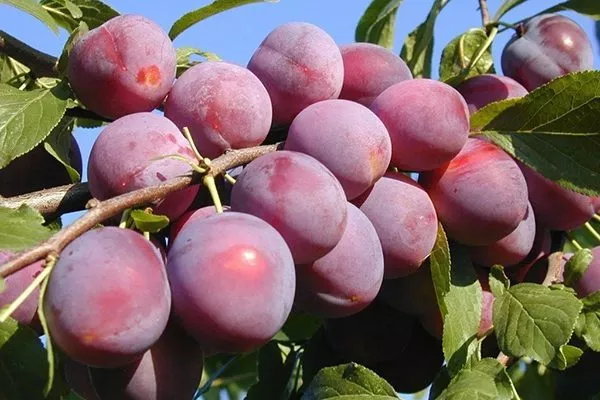
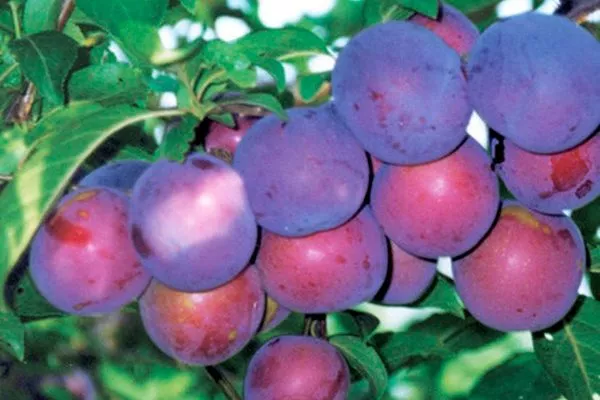
The fruit is a juicy drupe with a light waxy coating and a faint longitudinal groove. Some varieties have a strong aroma.
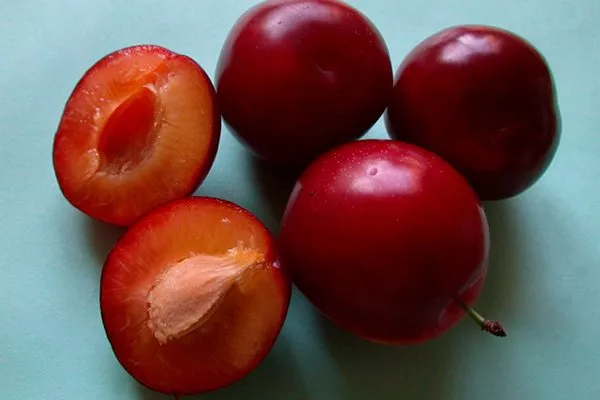
Fruit characteristics:
- shape - round, can be slightly flattened or elongated;
- diameter - from 16 to 55 mm;
- weight - 12-80 g;
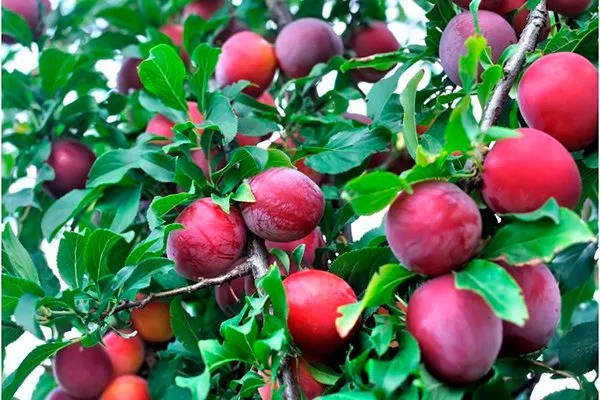
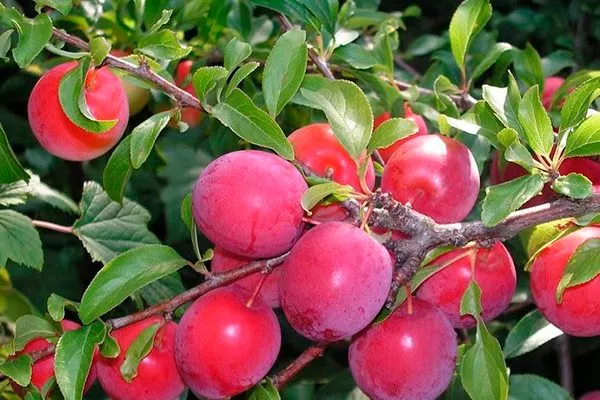
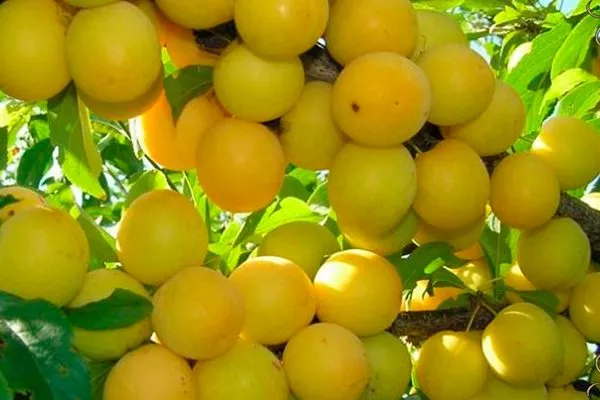
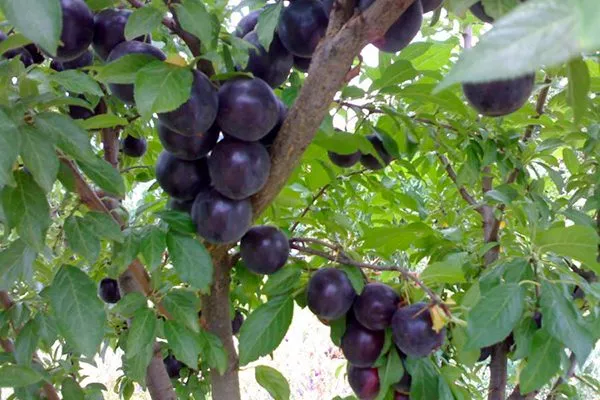
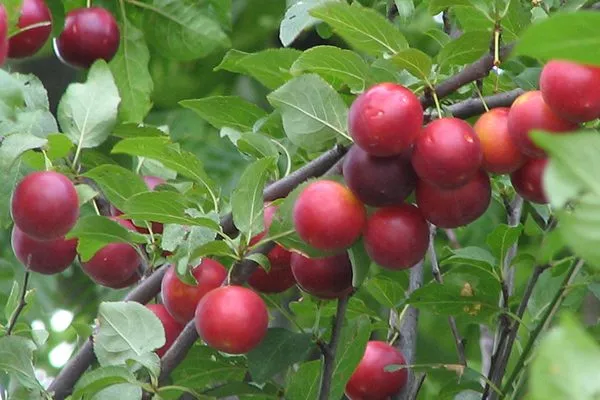
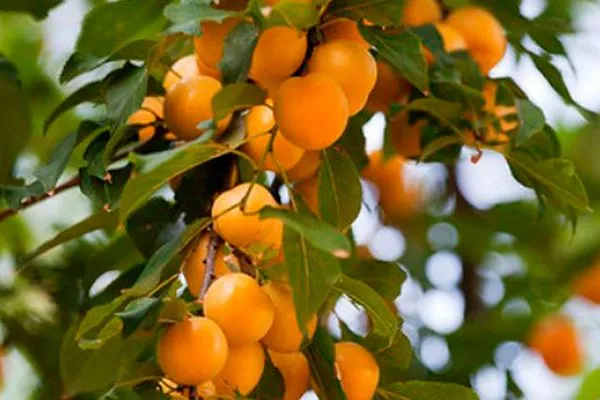
- color - light yellow, red, blue, purple and dark blue, almost black.
- The pit is round or elongated, flat or convex, and contains oil inside, comparable in quality to almond oil.
In many varieties, the stone is very difficult to separate from the pulp.
Self-fertility
Most cherry plum hybrids and varieties are self-sterile, so at least two trees (bushes) should be planted in a plot. They should bloom simultaneously—an important factor to consider when choosing varieties.
When growing self-fertile cherry plum, it is also recommended to plant another tree nearby. This increases the cherry plum's yield and ensures consistent fruiting.
Fruiting
The ripening period varies by variety and generally lasts from July to October. Cherry plums live 30-50 years. Its relatives include plum, peach, apricot, apple, almond, pear, rosehip, medlar, hawthorn, serviceberry, quince, cotoneaster, rowan, and chokeberry.
Selection
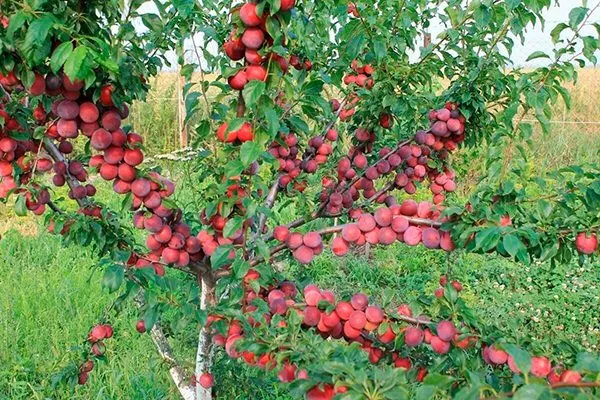
Previously, cherry plums could only be grown in regions with warm climates and mild winters. When cherry plums were crossed with Chinese plums, a hybrid was created—the hybrid cherry plum, or Russian plum. Its main difference from the common cherry plum is its high frost resistance, which allowed it to be grown in regions with a temperate climate.
Chemical composition
Cherry plum is characterized by its low calorie content and the variety of vitamins and nutrients it contains.
Cherry plum composition, g/100 g of product:
- proteins - 0.2;
- fats - 0.0;
- carbohydrates - 6.4;
- organic acids - 0.5;
- dietary fiber - 1.8;
- water - 89;
- ash - 0.5.
The caloric content of cherry plum is 26.4 kcal.
Cherry plum contains macroelements, mg:
- potassium - 188;
- calcium - 27;
- sodium - 17;
- magnesium - 21;
- phosphorus - 25.
Cherry plums contain the highest amounts of vitamins A (27 mcg) and C (13 mg), as well as B vitamins, E, beta-carotene, and niacin. Cherry plums are also rich in iron—1.9 mg per 100 g.
The benefits and harms of cherry plum
Cherry plum, being a low-calorie fruit, contains many vitamins and minerals, which allows it to be considered a very valuable product for the body.
Useful properties of cherry plum:
- improves the digestion of meat and fatty foods;
- normalizes the functioning of the gastrointestinal tract;
- has a mild laxative effect;
- improves immunity;
- promotes the removal of excess fluid from the body;
- has a beneficial effect on the functioning of the central nervous system;
- increases resistance to stress;
- prevents cardiac arrhythmia:
- has an antipyretic effect;
- reduces pain during colds.
Due to the abundance of beneficial properties, cherry plum is widely used for medicinal purposes.
Cherry plum should not be consumed by those with gout, rheumatism, ulcers, or high acidity. Overeating is also not recommended. Eating too much can cause poisoning, heartburn, abdominal pain, and diarrhea.
Cherry plum varieties
| Name | Ripening period | Frost resistance | Self-fertility |
|---|---|---|---|
| Nesmeyana | early | high | self-sterile |
| Scythian gold | early | average | self-sterile |
| Traveler | early | high | self-sterile |
| Cleopatra | late | high | self-sterile |
| Mara | average | high | self-fertile |
| Found | average | high | self-sterile |
| Flint | late | high | self-sterile |
| Yarilo | early | average | self-sterile |
| A gift to St. Petersburg | early | high | self-sterile |
| Monomakh | early | high | self-fertile |
| Huck | average | high | self-sterile |
All cherry plum varieties are classified by ripening time. Early varieties ripen in late July or early August, mid-season varieties in mid-August, and late varieties in late August or September.
Cherry plum varieties are also classified by height—low-growing, medium-growing, and tall—and by pollination method—self-fertile and self-sterile. Below are cherry plum varieties popular among Russian gardeners and summer residents.
Cherry plum varieties:
- Unsmiled. An early, self-sterile variety with high frost resistance. The fruits are pale red with pink flesh and a detachable stone. The flavor is sweet and sour. The tree is spreading and tall.

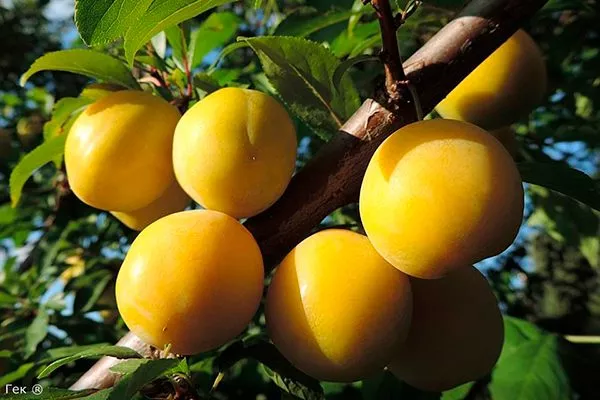
- Scythian gold. A medium-yielding, early-maturing, and self-sterile variety. The fruits are yellow, juicy, and delicious. The tree is medium-height and spreading.
- Traveler. A frost-hardy, self-sterile, early-ripening variety. The fruits are yellow with a reddish-purple bloom. The flesh is orange, sweet, with a delicate aroma and a fine-grained texture. The seeds are difficult to separate from the flesh.
- Cleopatra. A winter-hardy, self-sterile variety with a late ripening season. The tree is medium-height and broadly conical. The fruits are large, purple, with a bluish bloom. The flesh is red and cartilaginous. The pitting rate is 50%.
- Mara. A frost-resistant variety with a mid-season ripening period. The tree is medium-sized, the fruits are yellow, and the flesh is juicy and sweet.
- FoundA frost-hardy, self-sterile variety with purple-red fruits. The flesh is orange, fibrous, and slightly juicy.
- FlintThis disease- and drought-resistant, self-sterile variety produces dark purple fruits with a waxy coating. The flesh is red, slightly juicy, and has a difficult-to-separate pit.
- Yarilo. An early variety with glossy red fruits. They have juicy, firm yellow flesh. The flavor is sweet and sour. The pit is half-separated.
- A gift to Saint Petersburg. A self-sterile, frost-hardy cherry plum with stable yields. The fruits are small, orange-yellow, with a waxy coating and a sweet-tart flavor. The flesh is deep yellow and finely fibrous. The pit separates from the flesh with difficulty.
- Monomakh. A fast-growing, high-yielding cherry plum with purple fruits. They have juicy, sweet, and fibrous red flesh with a easily removable pit.
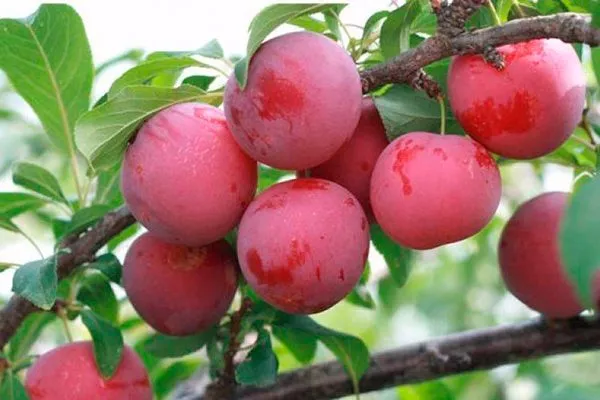
- Huck. A self-sterile, medium-sized cherry plum with stable yields and high frost resistance. It produces large yellow fruits with sweet-tart flesh and a difficult-to-separate stone.
Landing
Planting is a crucial stage in a tree's life, largely determining its future fate, development, and fruiting. To ensure the tree thrives and produces consistent yields, it's important to plant it correctly.
Where to plant?
To ensure that cherry plum grows well, does not get sick, and bears fruit consistently, it must be planted in a location that meets certain agricultural requirements.
How to choose a suitable site for planting cherry plum:
- Priming. The crop does not grow well in acidic and fertile soils, preferring loams. Acidic soils must be deacidified with lime or wood ash. It is also recommended to plant green manure before planting the tree.
- Light. Cherry plums prefer well-lit areas. Fruits ripened in the sun are sweeter and tastier.
- Wind protection. Cherry plums should be planted in areas well protected from drafts and cold winds. This is especially important for young seedlings. It is recommended to plant the crop near a fence or building.
The cherry plum's roots are 30-40 cm long, so it should be planted in areas where groundwater is at least 1 m deep.
How to choose seedlings?
It's recommended to plant one-year-old seedlings. They should be grown in the same region where they are intended for planting. If the seedling is bare-rooted, it should be planted as soon as possible. There's no need to rush when planting cherry plums in containers.
- ✓ The root system must be well developed, without signs of rot or damage.
- ✓ The trunk of the seedling must be straight, without cracks or signs of disease.
- ✓ The age of the seedling should not exceed 2 years for better survival.
Seedlings are carefully inspected before purchase. There should be no damage, rot, or dry spots on the roots. If seedlings are purchased in the fall, which is when nurseries sell out their planting stock, they should be stored in a cool place, such as a cellar, over the winter.
Preparing the pit
If planting is done in the fall, prepare the hole at the end of September. The hole should be wide enough to accommodate the entire root system of the seedling. If planting is postponed until spring, it is also recommended to prepare the hole in the fall.
Procedure for preparing the pit:
- Dig a hole 0.6-1 m in size. Depth - 0.4-0.6 m.
- Add a soil mixture of humus (15-20 kg), superphosphate (0.4-0.6 kg), and nitrophoska (1 kg) to the bottom. Fill the hole 2/3 full. If the soil is alkaline, be sure to add gypsum; if it's acidic, add chalk. It's recommended to add turf to sandy soils, and sand and peat to clay soils.
If you are planting several seedlings, dig holes at intervals of 2-4 m.
Preparing the seedling
Water the closed-root seedling before removing it from the container. Bare-root trees should be carefully inspected for damaged or diseased shoots. If any defective areas are found, prune them off.
Soak the roots in water for 24 hours to allow them to swell thoroughly. Immediately before planting, soak them in a clay slurry containing 0.001% Heteroauxin or another growth stimulant.
Landing dates
In regions with warm climates, cherry plums are recommended to be planted in the fall; in regions with cold winters, in the spring. If planting in the fall, choose a time 3-4 weeks before the cold weather sets in, allowing the plant time to establish itself and adapt. Spring planting is done before the sap begins to flow, when the soil warms to +2…+4°C.
The landing process
Plant on a calm, cloudy day. Prepare water for irrigation in advance; it should be settled and not cold.
Planting order:
- Rake the soil mixture into the hole to form a small mound.
- Place the seedling's roots, previously dipped in the potting mix, on the top of the mound. Carefully straighten out all the roots; they should not bend upward or sideways.
- Fill the roots and any remaining space in the hole with the remaining soil mixture. Firm it thoroughly. The root collar of the seedling should be level with the ground surface after planting. If you are planting an own-rooted seedling, its root collar can be buried slightly.
- Water the planted tree generously. Once the water has soaked in, cover the soil with mulch.
Caring for cherry plum
Cherry plums are relatively easy to grow, but like any fruit crop, they require some care. This care should not only be regular, but also proper.
Watering
During the growing season, mature trees are watered only three times, as they usually receive sufficient moisture from rainfall. Only young seedlings require regular watering. Watering should be generous, ensuring the soil is completely saturated.
Fertilizer
In the first year after planting, cherry plums don't require additional feeding; the nutrients added to the hole during planting are sufficient. In subsequent years, the tree is fertilized several times during the season.
In the spring, before flowering, cherry plums are fed with nitrogen-containing fertilizer, which stimulates foliar growth. In June, the tree is fed with potassium-phosphorus compounds. In the fall, after the harvest, organic matter such as humus or compost is added to the tree.
Wintering
Mature bushes and trees can overwinter without cover, but young trees require insulation. In the fall, their trunks are hilled high, and the area around the trunk is covered with a thick layer of humus, peat, or compost. The approximate thickness of the mulch is 8-10 cm.
You can also mulch the soil around mature plants. This isn't necessary, but it's a good idea, especially in regions with cold winters.
Later, the trunk is covered with snow; as soon as it falls, it is also piled into the trunk circle to form a large snowdrift. With this insulation, the cherry plum will be able to survive any frost.
Trimming
Cherry plum pruning can be done at any time of year, but spring is considered the most favorable time. There are several types of pruning: thinning, rejuvenation, sanitary, and formative.
Spring
In March or April, before the buds swell and sap begins to flow, formative and sanitary pruning is performed. All diseased, frozen, and damaged branches are removed.
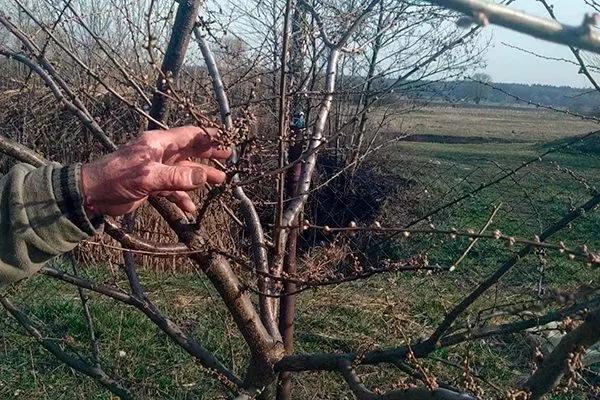
In the spring, young cherry plums undergo crown shaping, which involves pruning and shortening some of their branches. This prevents the crown from becoming overly dense, which negatively impacts the size and flavor of the fruit. Furthermore, a neat crown simplifies tree maintenance.
Tips for spring pruning:
- Plants with low winter hardiness are best grown as bushes. These seedlings are pruned at a height of 15-30 cm from the ground, leaving 5-6 branches and shortening them to 50 cm. They are then braced in different directions. In winter, these bushes are kept under snowdrifts.
- The trunk can be trained to a height of 40-50 cm—this will protect the skeletal branches with snow. If the trunk is higher, 1-1.2 m, snow coverage is unacceptable; it's important to consider the region's climate.
- When growing cherry plum as a tree, it is recommended to form a sparse, tiered crown. Five to seven branches are left on the tree, and the remaining branches are pruned to a ring.
- In the first year, three branches are left above the trunk, spaced 15-20 cm apart. Select branches that extend from the trunk at an angle of 45-60 degrees.
- Over the next two years, new branches are added, and within 2-3 years, the tree's crown should be formed. The top of the conductor is pruned at the level of the third scaffold branch.
Summer
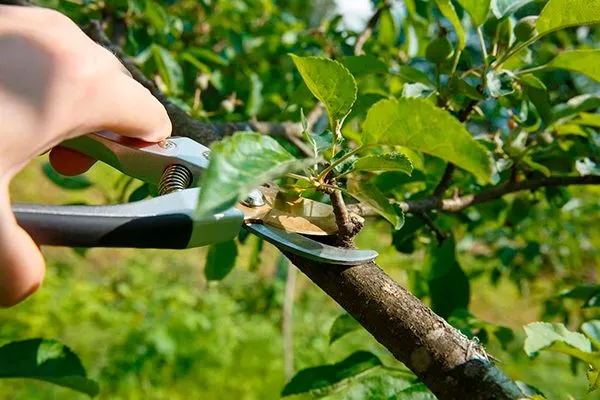
In the first two years of life, cherry plum branches can reach 1.5-2 meters. It is recommended to trim them in the summer, to a length of 0.6-0.8 meters. Summer is chosen because branches begin to grow vigorously at the cut sites, and after this procedure, new fruit-bearing branches begin to emerge from the lateral buds.
Autumn
It's not recommended to prune cherry plums in the fall, so as not to weaken them before winter. The only option is to remove damaged and dried branches. However, this should only be done after the leaves have completely fallen and the dormant period has begun. All cuts should be treated with garden pitch.
Reproduction
There are forms of cherry plum that are propagated by seeds, but vegetative methods are mainly used to obtain this crop.
Root cuttings
Cuttings are harvested in early spring or fall. The roots of mature cherry plums are dug up at a distance of 1-1.5 m from the trunk. The roots are dug up to a thickness of 0.5-1.5 cm. The roots are then cut into cuttings approximately 15 cm long. The autumn cuttings are stored in a box with sawdust.
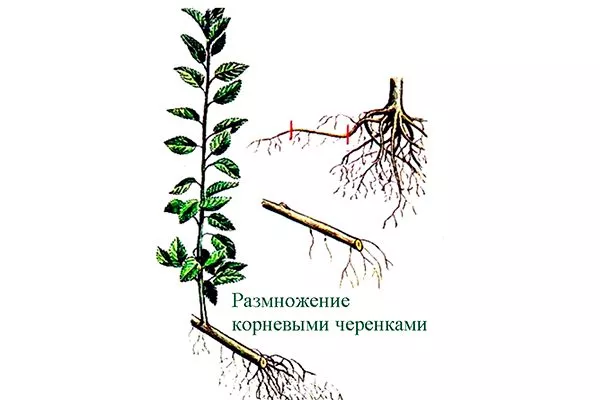
In the spring, plant the cuttings, planting them 3 cm deep. Leave 10 cm between each cutting. Cover the plantings with plastic film and, in sunny weather, with burlap. Keep the soil moist regularly, continuing to grow the cuttings for 1-2 years.
Undergrowth
This is a simple method popular among gardeners. For propagation, shoots growing as far away from the parent bush or tree are used, as they have well-developed roots.
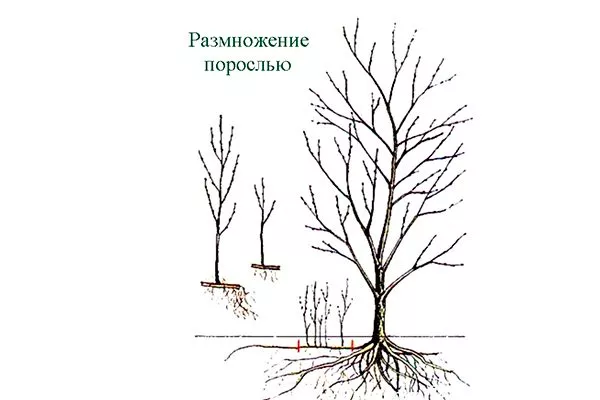
In spring, dig around the area where the shoots emerge from the cherry plum's roots. The main root is cut, leaving a 20 cm gap on either side of the tree. The cut is coated with garden pitch. Well-developed shoots are immediately transplanted to their permanent location, while weaker shoots are nurtured in loose, well-fertilized soil.
By vaccination
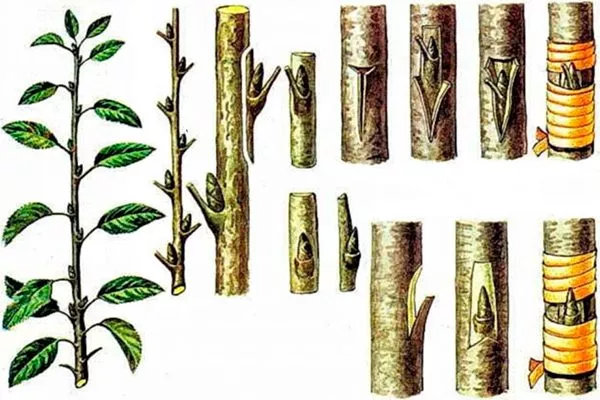
A varietal scion is used as the scion, and the rootstock is grown in advance. The scion is cut on the day of grafting, choosing branches at least 30 cm long. Cherry plum grafting can be done using the following methods: T-cut, improved copulation, cleft grafting, butt grafting, or bark grafting.
Diseases and pests of cherry plum
Cherry plums are susceptible to the same diseases as plums. If preventative measures fail, it's important to correctly identify the disease and take appropriate measures.
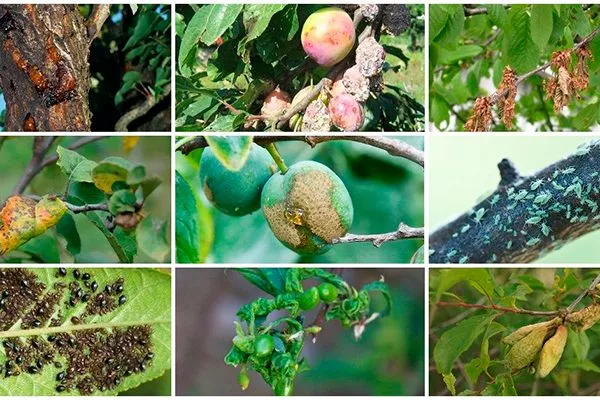
Most often, cherry plum gets sick:
- Hole spot. This is accompanied by the appearance of brown spots, which eventually develop into holes. Spraying with Hom and Bordeaux mixture (1%) is recommended.
- With a milky shine. A silvery coating appears on the leaves. It is recommended to treat the plant with copper sulfate (1%).
- Moniliosis. Gray growths containing fungal spores appear on the fruit. Preventative spraying with Bordeaux mixture (3%) is recommended.
To prevent insect attacks, it is recommended to spray cherry plums with Fufanon or Karate in early spring. This treatment is carried out before bud swelling, during swelling, and during bud formation.
The most common insect pests of cherry plum:
- brown fruit mite;
- slimy sawfly;
- plum aphid;
- yellow plum sawfly;
- oriental and plum codling moth.
Novaktion can also be used for pest control. Codling moths are resistant to a saline solution (500 g per 10 liters of water), and aphids are effectively controlled with insecticides such as Sumition and Karbofos.
Fighting against undergrowth
Cherry plum, like other crops like plum and cherry, produces vigorous root suckers. If left unchecked, these suckers will spread throughout the garden.
If a decision is made to cut down a tree that is producing shoots, it is necessary to act according to the following scheme:
- Cut down the tree and make several holes in its stump as close as possible to the sap-conducting layer.
- Fill the holes with ammonium nitrate or Tornado. Cover the stump with plastic wrap.
- Repeat the procedure after a week. Leave the stump in place for a while after this; the product needs time to penetrate each root shoot.
If you don't plan to uproot the cherry plum, you'll need to regularly remove root suckers. These should be cut back to ground level or simply mowed down along with the weeds. Another option is to cultivate varieties that don't produce suckers.
Application
Cherry plum is not only a tasty and healthy fruit, but also an excellent raw material for cooking, cosmetology and traditional medicine; it is used to make wonderful toppings, sauces and much more.
In folk medicine
Cherry plum is very useful, has a unique chemical composition, and is therefore widely used to treat various diseases and disorders.
Cherry plum is used to treat:
- Colds. For coughs, a decoction of cherry plum bark and roots is recommended. Take 40 grams of each, crush it, and add a liter of boiling water. Simmer for 7 minutes, then remove from heat. Drink 100 grams of the decoction on an empty stomach once daily.
- Liver diseases. Pour 20 g of cherry plum flowers into a cup and add 200 ml of boiling water. Strain and drink all at once. Drink this decoction every day for two weeks.
- Constipation. A decoction made from 200 grams of fresh fruit or 3 tablespoons of dried fruit can help. Add boiling water and let it steep for several hours. Drink it three times a day.
In cosmetology
Cherry plum is used in home and industrial cosmetology. The main reason for its use in cosmetics is its high content of vitamins A and C. These are powerful antioxidants that have a beneficial effect on skin condition and slow down the aging process.
The most commonly used cherry plum oil in home cosmetology is from the seeds, it:
- moisturizes the skin;
- maintains skin tone and elasticity;
- prevents aging;
- smooths out traces of damage.
Cherry plum is also used to make a variety of facial masks – moisturizing, softening, and rejuvenating.
To make a cherry plum mask:
- Peel the cherry plums.
- Squeeze the juice through cheesecloth.
- Soak a cotton pad in the juice and press it to your face for 20 minutes. Repeat daily, before bed.
Cherry plum is also used for weight loss, adding it to cold dishes.
In cooking
The advantage of cherry plum is that it loses virtually no nutritional value after cooking. It's not only eaten fresh but also widely used in a variety of dishes.
Cherry plums are used to make not only jams, jellies, and compotes, but also a variety of sauces, first and second courses. They are especially widely used in Caucasian cuisine. The most famous cherry plum-based product is the Georgian sauce tkemali, renowned throughout the world.
No less popular in cooking is the Caucasian cherry plum seasoning tklapi. Caucasians can't imagine kharcho soup without it. Cherry plum is also added to pilaf in the Caucasus and used in soups, including pea soup.
How to store?
Cherry plums have excellent shelf life. Undamaged, unripe plums can be stored in the refrigerator for about three weeks, while unripe plums can be stored for over a month.
To preserve cherry plums for a long time, they are dried or frozen. They can also be preserved as compotes or desserts. They are dried in the sun or fresh air, and frozen in various ways—with or without pits, as a puree, or with sugar.
Cherry plum is not only delicious but also very healthy, making it an excellent choice for a garden or summer cottage. Today, this remarkable tree grows not only in southern Russia; thanks to newly developed varieties, gardeners across the country—from Primorye to Crimea—can grow this marvelous tree.