
In the spring, gardeners are always busy – pruning trees and bushes, removing covers, sowing a variety of crops, etc. Therefore, experienced gardeners prefer to plant before winter. Moreover, there are many varieties of vegetables and flowers suitable for autumn planting.
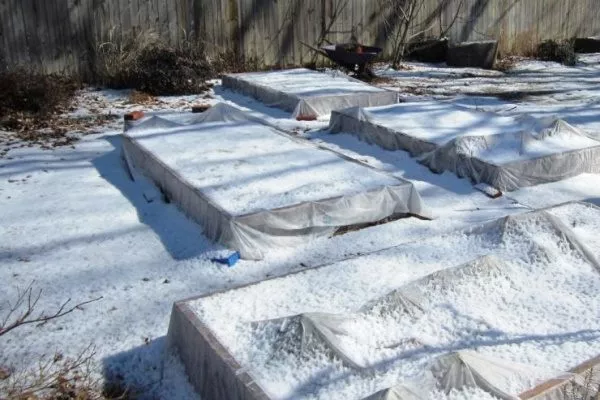
General rules for winter sowing
When planting crops, it's crucial to closely monitor weather and climate conditions, as plants will suffer equally whether seeds are sown early or late. Gardeners will also need to prepare the soil—this will allow the planting material to quickly adapt and easily survive winter frosts.
- ✓ The site must be protected from northern winds and drafts.
- ✓ The soil must have good drainage to avoid waterlogging in the spring.
- ✓ Southern or south-western slopes are preferred for better warming in spring.
Soil preparation
Soil preparation is based on its quality (how fertile it is) and the type and variety of crop. The same requirements apply to all groups. The following work must be completed:
- Dig up the vegetable garden or flower bed approximately 2-4 weeks before planting.
- At the same time, remove all plant debris from the soil, including weeds or harvested crops. Remove fallen leaves, branches, and debris.
- Fertilize as needed (depending on the soil and plant). If the soil is too heavy, amend it with river sand, humus, or peat. If it's acidic, add dolomite flour. To increase fertility, add 8-10 kg of humus and 200 g of charcoal per square meter.
- Level the surface of the garden with a rake, dig holes or furrows taking into account the depth of planting of certain planting materials.
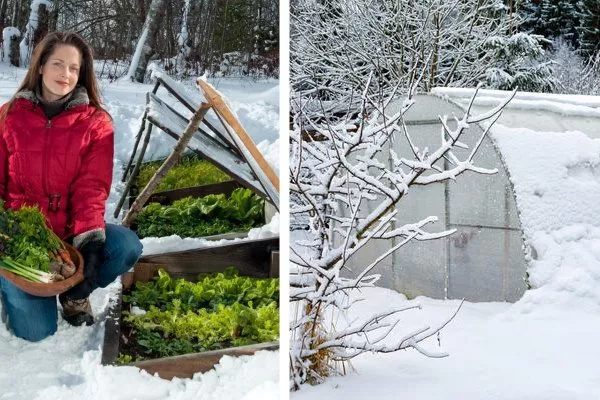
- Place stakes or arches along the edges of the beds to further insulate the plantings.
General tips for preparing the site and crops:
- the seeds need to be planted deeper than during spring work;
- After filling with soil, be sure to sprinkle with dry sand, leaves, peat or humus to retain heat;
- Apply organic matter to root greens and mineral matter to leaf greens;
- Determine the site based on elevation - the higher the better for winter plantings, as melt water will not stagnate and the soil will not freeze too much;
- You can set up warm beds in the northern regions.
Planting times and seed selection
The timing of autumn planting should be taken seriously. For example, if you plant ahead of schedule, cold-hardy seeds may germinate before frost, which is highly undesirable. If you plant later, the seedlings will die.
Planting material must be of high quality—free from damage, disease, and insect infestation, but most importantly, not hollow. The most important requirement for fall planting is that the seeds be dry. Otherwise, they will either freeze or germinate too quickly.
Helpful tips for selection and preparation:
- The best option is pelleted seeds. They are sold in stores or made at home. To do this, each seed is dipped in a clay slurry and allowed to dry completely. This unique capsule protects the seeds from early germination and from rodents and pests.
- Prepare approximately 40-50% more planting material. Because not all seeds will survive the winter safely.
- Take only those varieties that are intended for winter planting. Pay attention to the germination rate. It should be at least 80-90%.
Watering crops after planting is strictly prohibited. It's also not advisable to do this immediately in the spring, as the seeds will have enough moisture from the meltwater.
What vegetables are planted in the garden before winter?
Vegetables are the most commonly planted crop in any garden. To reduce the amount of work in the spring, plant them in the fall. Keep in mind that not all vegetables can be left in the ground over the winter.
Beet
| Name | Ripening period | Disease resistance | Soil requirements |
|---|---|---|---|
| Bordeaux 237 | Mid-early | High | Average |
| The incomparable winter | Late | Very high | Low |
| Egyptian flat | Early | Average | High |
Beets germinate easily at temperatures starting at +5°C (41°F), so they shouldn't be planted before September or October. The best time is when temperatures stabilize at -2°C (-3°F).
Features of winter planting:
- hole depth – from 3 to 4 cm;
- the distance between crops and rows is 10 and 20 cm;
- sowing rate per 1 sq. m – 4 g.
The best varieties for winter cultivation are Bordeaux 237, Podzimnyaya (inexcellent, flat IA-474), Egyptian flat, Captain, Red Ball, Detroit, Fekla.
Carrot
| Name | Ripening period | Disease resistance | Soil requirements |
|---|---|---|---|
| Shantane-2461 | Average | High | Average |
| Nantes 4 | Early | Average | High |
| Vitamin 6 | Early | High | Low |
Carrots don't tolerate shade or slopes, so choose a sunny, level site. Otherwise, the seeds will easily be washed away by meltwater in the spring. The optimal temperature for planting in the fall is between 2 and 5 degrees Celsius.
Features of winter planting:
- hole depth – up to 4 cm;
- the distance between crops and rows is 2 cm and 15 cm;
- sowing rate per 1 sq. m – 1 g.
What seeds to pay attention to: Shantane-2461 and 14, Nesravnennaya, Nantskaya 4, Moskovskaya zimnyaya A 515, Vitaminnaya 6, Amsterdamskaya, Konservnaya, Artek, Rannyaya TSKhA, Zabava, Karotel, Alenka, Super Nantes.
Cabbage
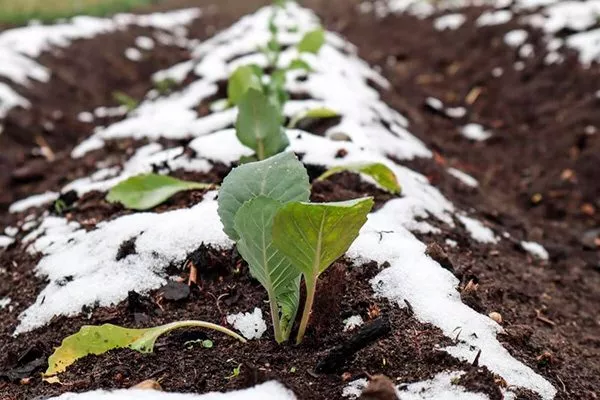
There are a huge number of cabbage varieties – white cabbage, red cabbage, broccoli, Chinese cabbage, cauliflower, Savoy cabbage, bok choy, etc. All of them can be planted in the winter, but the key is to choose mid- to late-ripening varieties, as only these will withstand winter frosts.
The seeds germinate quickly, so they're planted in the ground or a greenhouse after a light frost has settled on the beds. If snow falls, it's simply swept away.
Features of winter planting:
- hole depth – from 2 to 3 cm;
- distance between crops and rows – 10/30 cm.
Which varieties are most suitable:
- white cabbage variety – Gribovskaya, Dumas, Polar, Sibiryachka, Nadezhda, Vyuga;
- red-headed - Red early, Early hard-stone, Stone head 447;
- color – Movir 74 and Guarantee.
Radish
The seed material is not afraid of frost, so it is able to germinate even at sub-zero temperatures. Therefore, plant radishes It is possible when the thermometer reads -1…-5 degrees.
Features of winter planting:
- groove depth – 2 cm;
- distance between crops and rows – 3/10 cm;
- sowing rate per 1 sq.m. – 6-10 g.
Recommended varieties: White Nights, Mercado, Carmen, Zarya, Zhara, Mayak, Early Crisp, Greenhouse, Hussar, Stoykiy.
Turnip
Plant turnips in full sun 15 days before the expected frost. Fall planting will ensure healthy plants, as active growth begins before flea beetles appear, which can destroy the plant.
Features of winter planting:
- the depth of the hole is about 3 cm;
- distance between crops and rows – 10-15/25-30 cm;
- sowing rate per 1 sq. m – 2 g.
Optimal varieties: Glasha, Petrovskaya-1, Golden Ball, White Night, Snow Maiden, Snow White.
Tomatoes
It's not customary to plant tomatoes before winter, but this can be done in either a greenhouse or open ground. In the first case, the deadline is the last days of November, in the second – 3-4 weeks before the first frost. A special tip: don't sow seeds; instead, plant whole, overripe tomatoes.
Features of winter planting:
- the depth of the hole is about 20 cm;
- the distance between crops and rows is 70 and 60 cm.
Planting methods:
- under the ground - place tomatoes, cover with soil, compact, and cover with more soil after the snow falls;
- under the straw - rotted straw and tomato are placed in the hole, sprinkled with a mixture of dry straw (10 kg per 1 sq. m), compost and spruce branches.
In spring, sprouted seeds are transplanted to a permanent location.
Suitable varieties: Spiridonovsky, Red Arrow, My Love, President, Snegirok, Vasilievna, Raisa, Annabelle.
Potato
Potatoes are rarely planted in the fall, as they are susceptible to pests and rot. Therefore, before planting, treat the tubers and choose the right site—one that won't get too wet. The recommended time is when the temperature stabilizes between -2 and -7 degrees Celsius.
If the potatoes turn green, soak them in a fungicide for 30 minutes. When planting, add 200 grams of ash to each hole, planting two potatoes at a time. Cover the beds with straw, a layer of peat, and spunbond to protect the crop from sudden temperature changes.
Features of winter planting:
- the depth of the hole is about 15 cm with the obligatory addition of 200 g of wood ash into each hole;
- distance between crops and rows – 30 and 80 cm;
- The optimal weight of the root crop is 120-150 g.
Successful varieties are Asterix, Lorkh, Udacha, Nevsky, Zdabutak, Margarita, Adretta, Agria, Volzhanin.
Shallots
The crop is planted three weeks before frost, as it's important for the bulbs to take root. The tuber should be about 2 cm in diameter and weigh up to 15 g.
Features of winter planting:
- hole depth – from 4 to 6 cm;
- the distance between crops and rows is 10 and 35 cm.
Varieties that can survive the winter include: Family, Siberian Amber, Yellow Kuban, Sophocles, Sir 7.
Black onion and onion sets
These two onion varieties are recommended for fall planting because they easily withstand harsh winters, even in the North. The best time to sow is two weeks before the first frost, but they can also be sown after the ground freezes.
Features of winter planting:
- hole depth – 2.5-4 cm;
- the distance between crops and rows depends on the size of the bulbs, but on average it is 8-10 cm;
- The size of the bulbs is from 1.5 to 3 cm.
Successful varieties are Muzona, Buran, Ellan, Myagkovsky 300, Shakespeare, Stuttgarten Riesen, Carmen MS, Radar, Odintsovets, Danilovsky 301.
Multi-tiered bow
This variety can withstand temperatures down to -30…-40 degrees, but only if the root system is slightly formed, so it is recommended to sow it 2-3 weeks before frost.
Features of winter planting:
- the size of the bulbs is about 2 cm in diameter;
- hole depth – 4 cm;
- the distance between crops and rows is 15 and 30 cm;
- seeding rate per 1 sq.m – 400 g.
Give preference to the following varieties: Chelyabinsk Super Early, Gribovsky 38, Pamyat, Likova, Odesa Winter 12.
Horseradish
Horseradish is rarely grown from seed, as it propagates vegetatively. However, it's the best option for winter planting.
Features of winter planting:
- the depth of the hole is about 2 cm;
- distance between crops and rows – 30/60 cm.
The best varieties are Latvian horseradish, Suzdal, Atlant, Rostov, Valkovsky.
Garlic
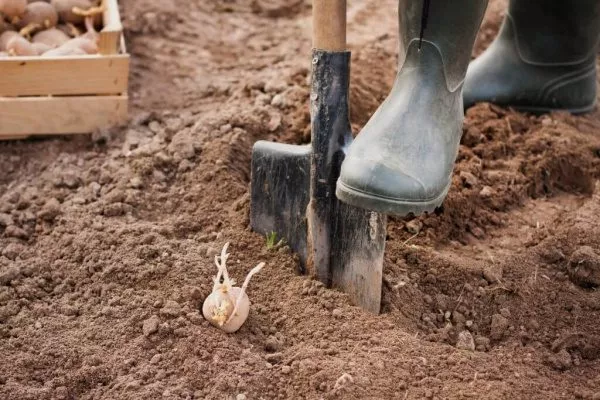
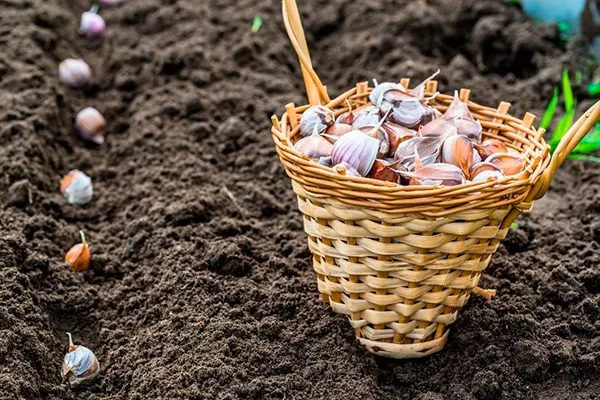
This culture is simply meant for winter planting, but with the obligatory addition of phosphorus, humus, and potassium to the soil. Planting is done not as heads, but as cloves, two weeks before the first frost.
Features of winter planting:
- the depth of the hole is about 10-15 cm in the North and from 3 to 4 cm in other regions;
- distance between crops and rows – 15/25 cm.
The best varieties are Lekar, Komsomolets, Zubrenok, Dubkovsky, Alkor, German, Lyubasha, Petrovsky, Spas, Messidor.
Parsnip
This crop is intended for autumn planting, as it has low germination rates and seeds that spoil very quickly. Therefore, natural stratification occurs during the winter.
Features of winter planting:
- hole depth – 2 cm;
- distance between crops and rows – 5 and 35 cm;
- sowing rate per 1 sq. m – 2 g.
The most popular varieties are Student, Best of All, Round Early, May, Salad 35, Gribovsky 21, and April 12.
What greens are planted in the garden before winter?
Many people consider greens to be a capricious and delicate vegetable. In fact, many plants easily tolerate winter frosts, especially if they are provided with favorable conditions.
Dill
No garden can do without it, but sowing takes a long time because the seedlings are too small and light. Fan-planting in the fall is not recommended; it's better to space the seeds at a regular distance. Planting time: 0 to -3 degrees Celsius.
Features of winter planting:
- hole depth – 3 cm;
- distance between crops and rows – 1 cm and 20 cm;
- seeding rate per 1 sq.m – 4-5 g.
The most resistant varieties are Esta, Udarnik, Gribovsky, Nezhnost, Aurora, Hercules, Preobrazhensky, Grenadier, Redut, Udalets.
Parsley
Parsley is recommended to be sown in the fall, as germination is uneven. Therefore, by spring, the seedlings will emerge simultaneously. The optimal temperature for winter planting is -7 to -9 degrees Celsius, no less.
Features of winter planting:
- hole depth – 1.5 cm;
- distance between crops and rows – 1 and 25 cm;
- sowing rate per 1 sq. m – 1-1.5 g.
Winter-hardy varieties – Russian Size, Sugar, Pagoda, Universal, Green Crystal, Curly, Breeze, Italian Giant, Esmeralda, Alba, Astra, Kucheryavets.
Sorrel
Plant the seeds after the first frost. Adding wood ash and organic matter to the soil is essential. Make a furrow 1.5 cm deep, space the rows 15 cm apart, and plant 2-4 cm apart. 1.5 g is required per square meter.
Almost all varieties are suitable, but the best ones are Krupnochereshkovy, Malakhit, Belvilsky, Nikolsky, Shpinatny and Victoria.
Spinach
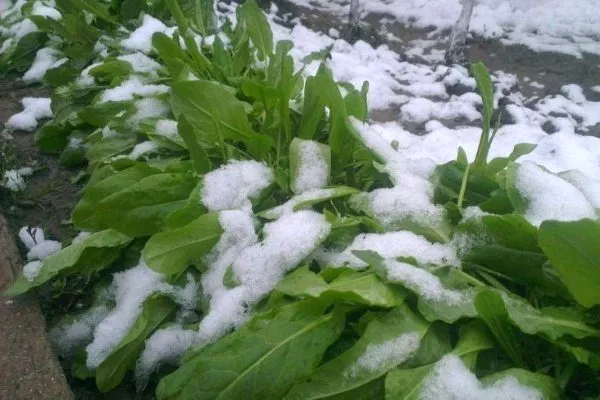
There are two planting dates for spinach: during September (the further south the region, the later) and in November-December.
In the first case, the plants will take root and form a rosette of leaves, overwinter peacefully, and begin growing again immediately after awakening. The harvest can be collected in 10-12 days. In the second case, seed germination will begin in the spring.
Features of winter planting, regardless of the time of work:
- hole depth – 3.5-4 cm;
- distance between crops and rows – 10/20 cm;
- sowing rate per 1 sq. m – 4 g.
Varieties: Garant, Shirokolistny, Progress, Ispolinsky, Universal, Matador, Victoria, Juliana.
Salad
For green salad, winter planting is the best option, as the crop requires plenty of moisture in the spring. It's important to add rotted manure and superphosphate before planting. The ideal sowing time is between 2 and -2 degrees Celsius.
Features of winter planting:
- hole depth – 2 cm;
- distance between crops and rows – 1 and 40 cm;
- seeding rate per 1 sq.m – 0.6 g.
Recommended varieties: Cook, Emerald Giant, Morozko, Sanzhin, Gauguin, Berlin Yellow, Sonata, Vitaminny, Festivalny, Dubachok, Gurmand.
Watercress
Planting should begin when temperatures reach -8 to -9 degrees Celsius. Earlier planting will encourage seed germination. Row spacing should be 10 to 20 cm, and seeding depth should be 1 to 1.5 cm. Sow densely in rows. 3 g is required per square meter.
Varieties: Curly Cress, New Year's, Narrow-leaved, Broad-leaved, Summer Resident, Riga, Large-headed.
Cilantro
Coriander is planted in late autumn, like parsley. However, the planting requirements are different:
- hole depth – 1 cm;
- the distance between crops and rows is 2 cm and 25-30 cm;
- seeding rate per 1 sq.m – 5 g.
Hardy varieties – Borodinskaya cilantro, Stimul, Taiga, Alekseevsky coriander 247, Debut, Yantar, Shiko.
Celery
Both root and leaf varieties are used, but the latter are more common. The seed rate per square meter is a maximum of 1 g, the seeding depth is 1.5 to 2 cm, and the density is dense, leaving about 30 cm between rows.
Varieties: Apple, Root, Gribovsky.
Leeks
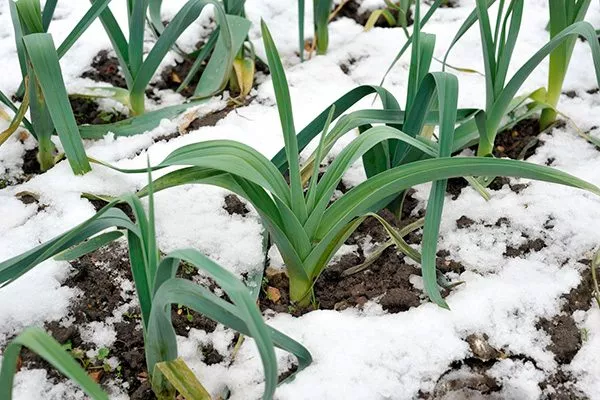
Winter planting is done exclusively in southern regions. The optimal temperature is 0 degrees Celsius.
Other features:
- hole depth – 1-1.5 cm;
- distance between crops and rows – 10 and 35 cm;
- sowing rate per 1 sq. m – 2 g.
The most resistant varieties are Pobeditel, Vesta, Columbus, and Karantansky.
Welsh onions
You can plant in spring, summer, or fall. It's believed that winter planting yields the earliest and most abundant harvest. A minimum of 6 grams of seeds is required per square meter, with a furrow depth of 2.5 cm, seeding spacing of 20 cm, and row spacing of 40 cm.
Varieties: Saladny 35, Gribovsky 21, Maysky, Aprelsky 12.
Salad mustard
Mustard greens are frost-resistant and quickly recover at positive temperatures, so plant them at temperatures between 0 and -5 degrees Celsius.
Features of winter planting:
- hole depth – 1.5 cm;
- distance between crops and rows – 3 and 25 cm;
- sowing rate per 1 sq.m – 2.5 g.
The most suitable varieties are considered to be: Zelenolitnaya, Krasnolistnaya, Prima, Volnushka, Ladushka.
Fennel
Only southern regions are suitable for fall planting. Cooler climates will kill the plants. Plant the seeds 2 cm deep, leaving 65 cm between rows, and sow the seeds in a continuous row. Use a maximum of 1 g per square meter.
Suitable varieties are Autumn Beauty, Aroma, Leader, Udalets.
What flowers are planted in the garden before winter?
Flower crops are also suitable for autumn planting. This way, you'll get blooming buds much earlier. The key is to choose elevated locations protected from drafts and cold winds.
Tulips
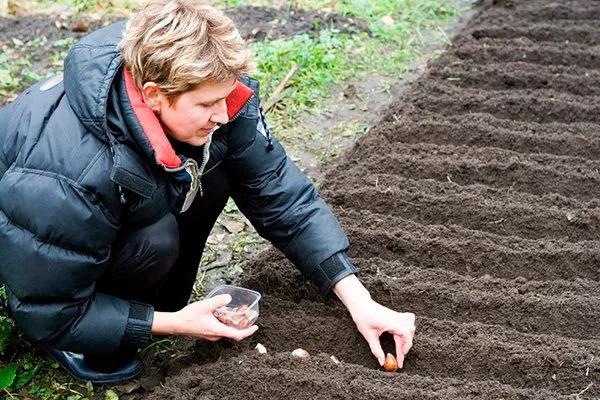
Bulbs are planted when the air temperature drops to 10-6°C. The planting depth is 10 to 15 cm, depending on the variety and size of the bulbs. Space large flowers 15 to 30 cm apart, and small ones 10-15 cm apart. Bulbs can be sown either in open ground or in pots, leaving them in a cool room until spring.
Almost all varieties are suitable, but the most resistant are the following: Little Princess, Yellow Emperor, Juan, Hit Parade, Authority.
Peonies
Herbaceous peonies are best for fall, planting them in a raised position to prevent overwatering. Planting should be done early, from early to late September. For this, prepare holes measuring 70 x 90 cm. Space the plants approximately 70-100 cm apart.
The best varieties are: Sunrise Charm, Coral Charm, Golden Hairpin, Lemon Chiffon, Karl Rosenfeld.
Marigold
Seeds do not tolerate cold and dampness well, causing them to rot, so autumn planting is only possible in the South. For other regions, a greenhouse can be used. The best time to sow is two weeks before the first frost. Plant at a depth of 4 cm, spacing 20-40 cm between plants on all sides.
Choose any variety, the main thing is to cover the crops with peat.
Alpine aster
To ensure the Alpine Aster survives the winter without any problems, plant it in a raised bed. Create a raised bed up to 25 cm high. The location should be windless and sunny. Avoid standing water during the spring snowmelt.
Be sure to cover the seedlings with dry soil and then apply peat moss on top. Plant the seeds at a depth of 2 cm, and plant them closely in a single row, as not all the seedlings will germinate. Leave about 10-15 cm between rows. The best time to sow is when a lightly frozen crust forms on the soil surface.
Frost-resistant varieties for winter sowing:
- Peony mixture;
- Blue Vortex;
- Winter cherry;
- Krakowiak;
- Pearl;
- Richard;
- Pompom mixture;
- Roter Turm;
- Gray-haired lady;
- Super princess.
Drummond's Phlox
This annual phlox is very frost-resistant if the seeds are sown one week before the cold snap. If frost returns in the spring, the plant will die, so winter sowing is recommended. Sow seeds 2 cm deep and space them 15 cm apart. Winter cover, such as a mini greenhouse or mulch, is essential.
Varieties: Nana Compacta Beauty, Beauty in Yellow, Allure, Grandiflora, Carnival, Star Rain, Blue Velvet, Blue Charm.
Viola
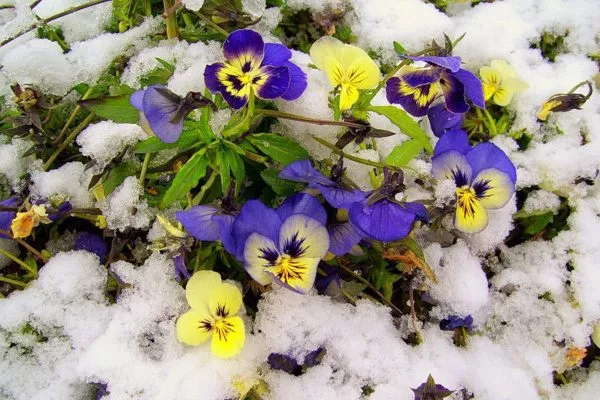
These are the well-known pansies and wild pansies. They are rarely planted in the fall, as germination rates drop by almost 50%. If you decide to plant them, they should be closely spaced—without spacing between the plants in the same row. In the spring, you will definitely need to thin them out and replant them.
The optimal time for winter planting is September. This will allow rooting to occur just before the cold weather sets in, preventing the plants from dying. Plant at a depth of 1 cm, with a row spacing of 20 cm.
Alyssum maritima and Lobularia maritima
The conditions for winter sowing are the same for both varieties. The seedlings are planted in the soil after the first frost, mixed with sand (the seeds are too small). The depth of planting is 1.5 cm, with a distance of 10 to 40 cm between plants on all sides, depending on the variety.
The best varieties are Violet Konigin, Princess in Purple, Tiny Tim, etc.
Lavatera
Also known as the wild rose, this undemanding flower easily tolerates winter frosts. The key is to cover it with a thick layer of peat or straw, and uncover it in the spring immediately after the snow melts.
Features of winter planting:
- hole depth – 1 cm;
- the distance between crops and rows is from 10 to 50 cm.
Regardless of the planting type, the hole must be filled with soil mixed half with compost. Any variety is suitable.
Lupine
The flower is completely undemanding of soil, so you can plant it even in a poor bed. It's a green manure often used for winter planting. The best time is from October 20 to November 20, depending on the climate.
Peculiarities:
- hole depth – 2-2.5 cm;
- the distance between crops and rows is 6 cm and 40 cm.
The best varieties are Fakel, Kastelan, Rubin Koenig, Abendglut, Siderat 38, Nadezhny, Crystal.
Lavender
Growing seedlings is quite rare due to the crop's fussy nature, so the seeds require proper stratification. This is achieved by sowing in the fall. The soil must be deacidified and a waterless area selected (high humidity in the spring will cause root rot).
Features of winter planting:
- the depth of the hole is about 3.5-4 cm;
- the distance between crops and rows is 5 cm, the planting method is zigzag;
- period – from mid-October to early December.
The most winter-hardy varieties are Sineva, English Narrow-leaved, Manstead, Fred Boutin, Grosso, Provence, Willow Vale, Hidcote, Alba, Phenomenal, Richard Gray, Twickle Purple.
What to plant in a greenhouse before winter?
Crops that grow slowly as seedlings and whose seeds are frost-sensitive are suitable for greenhouse conditions. These are most commonly:
- tomatoes;
- lettuce, parsley and dill;
- cucumbers;
- celery;
- zucchini;
- onion;
- swede;
- turnip;
- cabbage;
- radish.
How to care for seedlings in spring?
The first thing to do in spring is remove the cover. Then follow these recommendations:
- Remove fallen leaves, branches broken over the winter, and all debris from the area.
- After this, loosen the soil around the plantings. Do this carefully so as not to disturb the seedlings. At the same time, weed, removing weeds by the roots.
- Apply fertilizer as needed (depending on the soil and crop). Be sure to treat young shoots for pests and diseases.
- Inspect the seedlings and remove weak and damaged plants.
- Provide protection from recurrent frosts using covering material.
- Apply the first fertilizer with complex fertilizers after 2-3 true leaves appear.
Is it worth planting for the winter at all?
For many gardeners, the main reason for winter planting is to reduce the amount of work required in the spring. However, there are also agricultural factors:
- the harvest of any crop is delayed by 15-20 days, meaning ripening occurs earlier (experienced gardeners recommend additionally covering the seedlings with film in the spring, which will reduce the time by another 10 days);
- the plants grow more hardened, so they are not afraid of recurrent frosts;
- the immune system becomes stronger over the winter – crops get sick less often;
- there is no need for frequent watering, as with spring planting - over the winter and during the melt waters, the seeds are well saturated with moisture - this is quite sufficient;
- With early germination, the time for pest invasion has not yet arrived, meaning that the crops will not be affected by them.
If you have the opportunity to plant crops before winter, don't skip this step—this will not only improve the plants' health but also increase the yield, giving you time to focus on other plants (trees, shrubs) in the spring. The key is to choose the right variety and strictly follow the recommendations for that particular variety.
A great, timely article for the fall season. I myself was interested in what else, besides parsley and garlic, can be planted before winter. It turns out there's a lot. This year, I planted Moskovskaya Zimnyaya A 515 carrots, Bordeaux 237 beets, Sibiryachka cabbage, Belosnezhka turnips, and Asterix and Lorkh potatoes. I was a bit hesitant about tomatoes, though... We'll see how these seeds survive the winter; maybe next year I'll risk planting tomatoes too. I'm exhausted with these seedlings... Anyway, thanks for the helpful information.