
Black Magic is a remontant blackberry variety. It has become a favorite among Russian gardeners for its low-maintenance nature, strong immunity, high yields, and large, delicious fruits. The variety's main feature is its long fruiting period.
History of selection
Black Magic is a new variety developed in the United States. It was developed in the early 2000s in Oregon. Scientists achieved its creation by hand-pollinating blackberry varieties such as Arapaho and APF-12. The variety was tested in the Carolinas and Arkansas.
Description of berry crops
Black Magic blackberries are known for their ability to thrive and produce fruit in a variety of soil types. This variety thrives in the following climates:
- soft;
- moderate;
- mountain;
- southern.
General idea of the variety
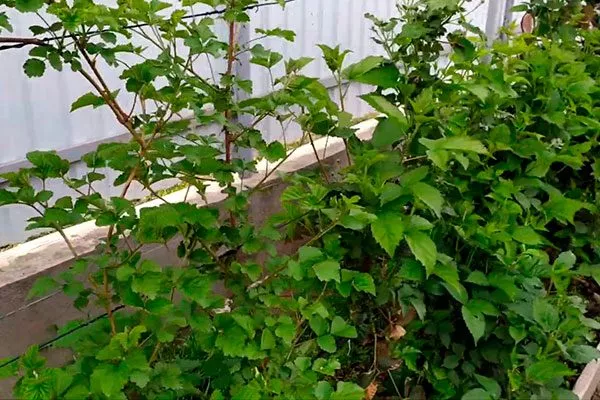
Black Magic bushes are low and compact. Their distinctive features are:
- height from 1 m to 2 m;
- shoots are straight and strong (annual shoots reach a height of 1.5 m);
- the thorns are few in number, small in size, located only in the lower tier of the bush, there are none on the fruit branches;
- do not form root shoots;
- deciduous.
Berries
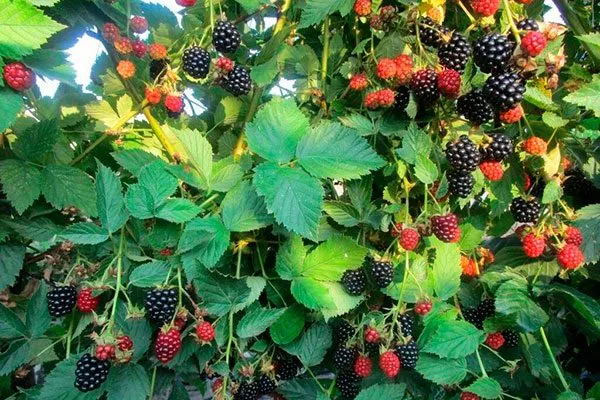
The fruits of this variety have the following characteristics:
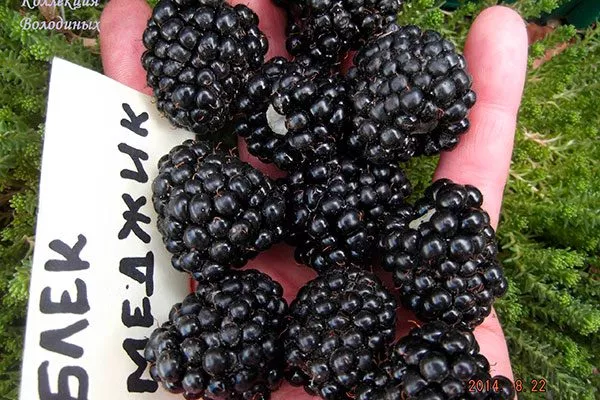
- large size (the berry reaches 4 cm in diameter);
- weight - from 8 to 12 g;
- shape - conical;
- Colour: inky black with a distinct shine on the drupes.
The taste of this blackberry variety is excellent. The berries are very sweet, juicy, and aromatic. Their flavor has a slight tartness. The tasting score for this variety is 5 points (the maximum).
Eating this blackberry brings many benefits to the body:
- strengthens the immune system;
- increases blood supply to the brain;
- prevents the development of sclerosis;
- improves the condition of skin and hair.
Characteristics
Black Magic blackberry has excellent characteristics that distinguish it from other varieties of this berry crop.
Key Benefits
Experienced gardeners include the following properties in the list of advantages of the variety:
- frost resistance (bushes can withstand temperatures down to -12°C);
- drought resistance;
- heat resistance (blackberries of this variety are not afraid of hot days, form ovaries and bear fruit well even at the peak of summer heat);
- resistance to diseases, in particular to brown rust;
- excellent quality and shelf life of the harvest;
- high yield rates.
Flowering period and ripening time
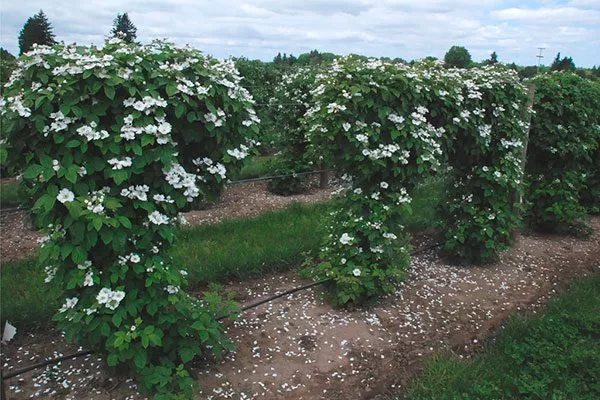
Black Magic bushes begin to bloom in late April. Flowering continues into May, with clusters of 5-12 inflorescences forming. The flowers are white. The plant is self-pollinating and does not require a pollinator.
This variety is characterized by early ripening. The first berries appear on the bushes in early June. Fruiting occurs in waves:
- June (abundant): gardeners harvest from second-year shoots;
- September: the harvest is produced by annual shoots and is less abundant.
Yield indicators, fruiting periods
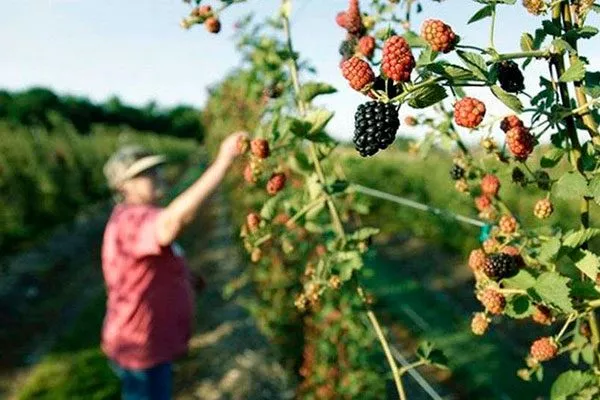
Yields range from 6 kg to 9 kg per plant. Blackberry bushes reach their peak yield in their fifth year. The Black Magic variety's fruiting season lasts 40-60 days, beginning in the first half of June and ending in September.
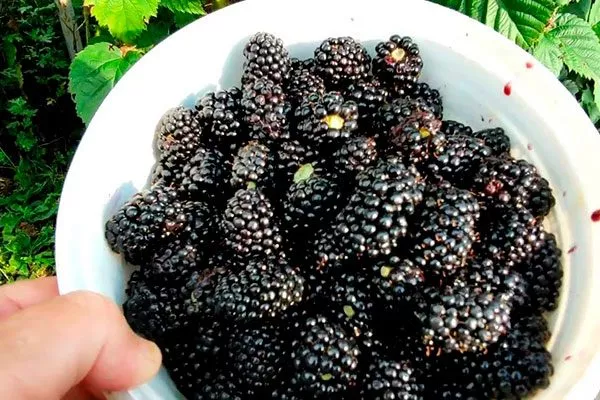
The blackberry harvest of this variety has high commercial qualities:
- the berry is dense;
- one size, large;
- does not wrinkle;
- transportable.
Application of berries
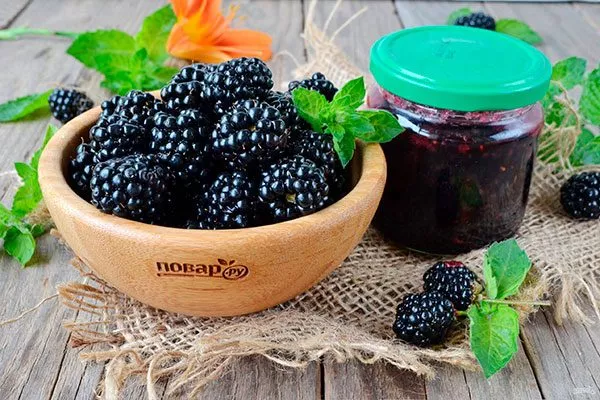
Black Magic blackberry is versatile in its purpose:
- it is eaten without heat treatment;
- added fresh to desserts and fruit salads;
- prepare jam, preserves, and purees;
- used to obtain juice and wine.
Advantages and disadvantages
Methods of reproduction
The Black Magic blackberry variety is considered elite and expensive. For this reason, Russian gardeners have learned to propagate its bushes themselves. Here's how:
- the root shoot is transplanted;
- the cuttings that have emerged from the ground are dug in;
- cut off the top and root it;
- adult bushes are divided into two powerful roots;
- rooted by cuttings.
Landing rules
For planting, purchase high-quality seedlings from a nursery. To grow this blackberry variety, select a suitable location in the garden: an elevated area with good sun exposure.
- ✓ Soil pH should be between 5.5-6.5 for optimal nutrient absorption.
- ✓ The soil must be well drained to prevent water stagnation and root rot.
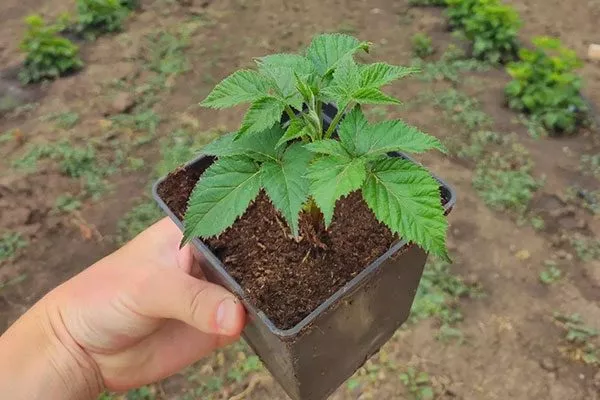
Plant the Black Magic variety in late fall or early spring. Follow these steps:
- Dig a hole 50x50x50 cm in 14 days.
- Add fertilizer to the hole, including humus (6-7 kg), potassium salt (45 g), and phosphorus fertilizer (120 g).
- Take the seedling and leave it in water for 12 hours.
- Create a small mound of soil at the bottom of the hole. Place the young plant on it, spreading out the roots. Sprinkle them with nutrient-rich soil. Leave the root collar open by 2 cm.
- Compact the soil under the bush. Water.
Subsequent care of the culture
Planted bushes require careful care to ensure rapid adaptation and prevent disease. This includes the following measures:
- WateringDuring the first month, water the planting 2-3 times every 7 days. Starting from the 5th week, reduce watering by half. Once the bush has established itself and is growing, moisten the soil once every 14 days. Avoid allowing it to dry out or become overwatered. After flowering, water the bushes 2-3 times every 7 days.
- Garter of branchesWhen growing this blackberry variety as a remontant plant, install a T-shaped trellis. When growing it as a regular berry crop, tie the bushes to posts.

- FertilizerFeed the seedling with a complex mineral fertilizer during flowering. Repeat the feeding when the ovary begins to form. In the fall, apply a phosphorus-potassium fertilizer.
- Weeding To prevent pest infestations, apply the treatment 2-3 times every 30 days.
- Loosening the soilDo this after each watering. Sprinkle the loosened soil with mulch.
- TrimmingPrune Black Magic bushes after they have fruited. Cut back young shoots to 130-150 cm. For the following season, leave 7-10 strong branches, and shorten the rest to 50 cm. On shoots that are 120 cm long, cut back 10 cm.
- In early spring, apply nitrogen fertilizer to stimulate shoot growth.
- During the flowering period, add potassium-phosphorus fertilizers to improve fruit set.
- After harvesting, apply organic fertilizer to restore the soil.
Preparing for winter
When growing Black Magic in northern regions, prune at the root. Cover the remaining bush with a thick layer of humus for the winter. In other regions, long blackberry branches are not pruned short to ensure an early harvest. Provide insulation by untying the branches from the trellis and bending them toward the ground. Wrap it in agrofibre.
Diseases and pests: methods of control and prevention
This variety is rarely affected by diseases and pests. However, if cultivation practices are not followed, the bush may become infected with:
- Viruses (mosaic, curl, yellow netting). The diseased plant is uprooted and burned.
- mushrooms (rust, septoria leaf spot, anthracnose, purple spot, powdery mildew, and gray mold). Control is achieved with folk remedies and commercial fungicides such as Fundazol and Topaz.
- Pests (mole crickets, cockchafer larvae, aphids, and shoot gall midges). The plantings are sprayed with tobacco infusion, sulfur-containing preparations, and insecticides.
To prevent blackberry diseases, gardeners take preventative measures:
- inspect the branches;
- damaged parts of the bush are treated with a fungicide or insecticide;
- sprinkle the soil with wood ash or tobacco;
- calendula, St. John's wort, and lavender are planted in the garden to repel pests;
- Before wintering, the bushes are treated with pest control products.
Reviews
Black Magic is the best choice for the domestic gardener. With minimal care, this blackberry variety is virtually disease-free and produces abundant fruit for a long time, producing very tasty and large berries. The key to successful fruiting is to completely avoid chlorine-containing fertilizers.