
Aztekium is a rare and exquisite cactus, prized by collectors for its unusual ribbed stem shape and slow growth. Its natural habitat is the rocky slopes of Mexico, which explains its preference for bright light and mineral soil. It is drought-tolerant but sensitive to overwatering, requiring careful care.
General information about the Aztekium cactus
In 1929, F. Ritter first discovered and classified the genus Aztekium in the Rayones region of Nuevo León, Mexico, simultaneously describing the species Aztekium ritteri. This rare cactus is often found only in specialized collections.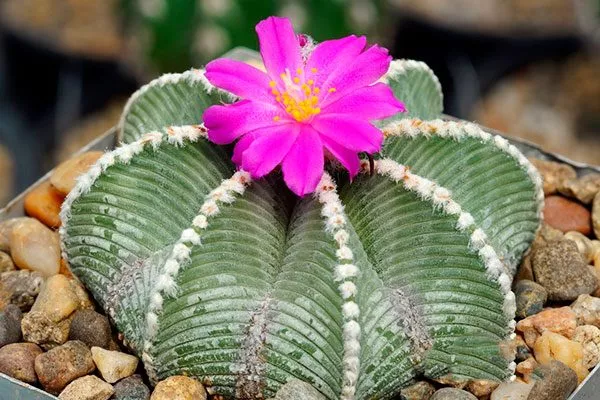
In 1991, George S. Hinton discovered a second species of the genus Aztekium in the same state, but in the Galeana region, and named it Aztekium hintonii in his honor. The species' distribution includes southern and central Mexico, particularly the Sierra Madre.
Biological characteristics
Aztekium is an unusual cactus from the Cactaceae family, native to arid shales. This plant is distinguished by its spherical, slightly flattened shape and extremely slow growth.
Other distinctive characteristics:
- The fleshy stems of Aztekium have numerous ribs covered with transverse wrinkles.

- The dark green shade of the stem gives the plant a special charm.
- The plant has thorns or spines on the surface of its stems. It is distinguished by a developed system of lateral shoots.
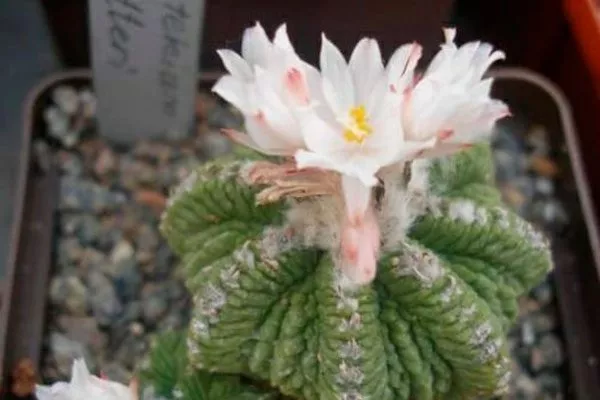
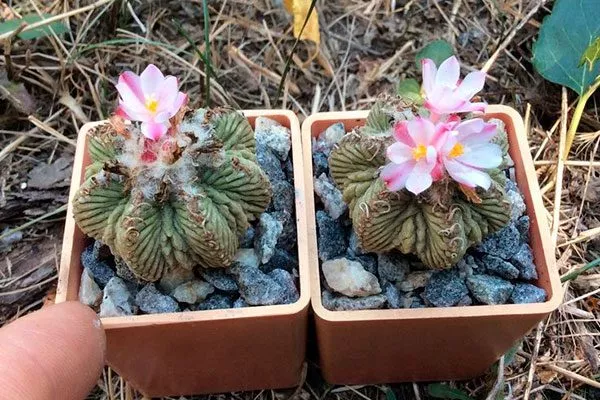
- The flowers are small, pale pink, and borne on short stalks. They range in size from 1 to 15 mm in diameter.
- The fruits of the plant are very small, and the seeds have the consistency of dust.
- The root system is represented by a thick, turnip-shaped root that goes deep into the ground.
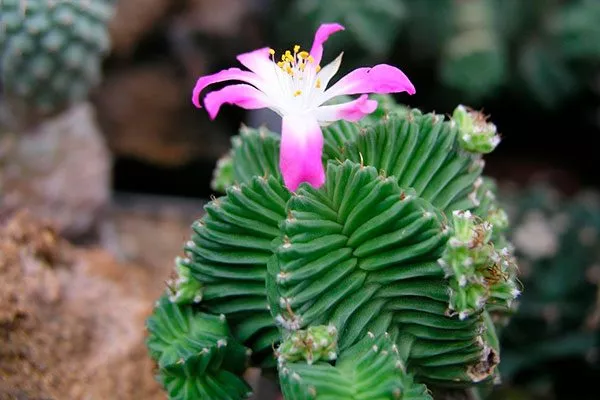
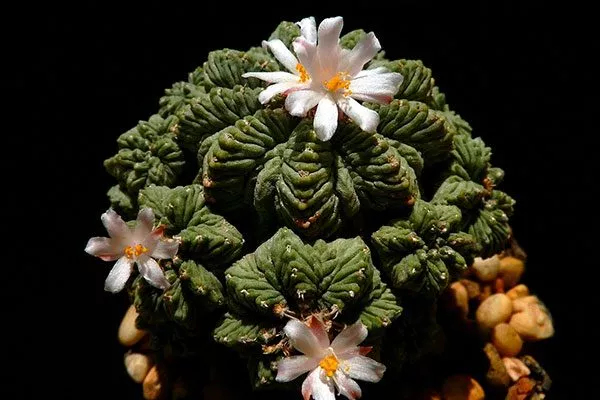
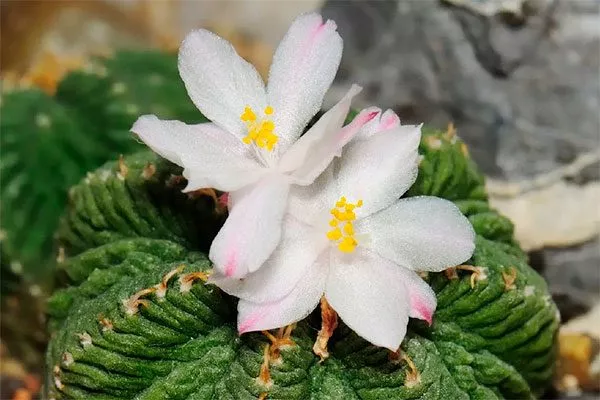
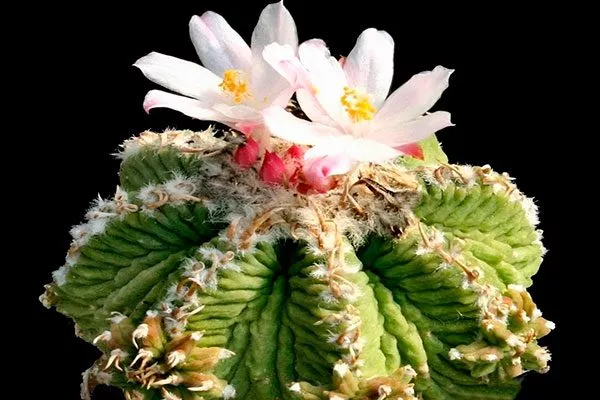
Aztekium grows extremely slowly, requiring considerable time to reach maturity and begin budding. Flowering is not continuous, but it lasts for quite a long time—about six months a year, from early spring to late summer.
Aztekium – Varieties and History
Aztekium is a unique genus of cacti, comprising only a few species. Each has a unique shape and other attractive qualities.
Aztekium ritteri (Boed.) Boed.
This cactus will undoubtedly be the highlight of any collection, although it does require special care. It grows slowly and requires very moderate watering, even in hot weather. For reliability, it is recommended to grow it as a graft.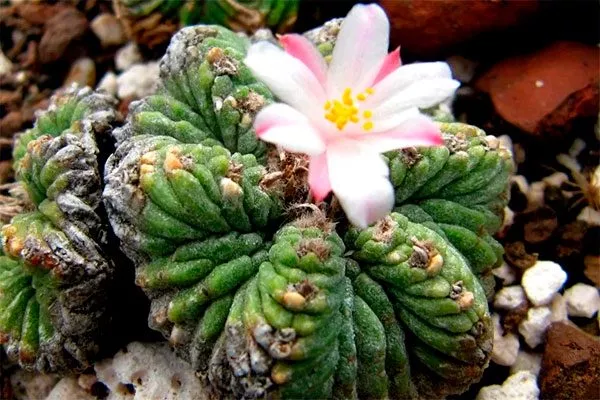
Distinctive features:
- The stem has a flattened spherical shape, is light green in color and branches abundantly.
- The ribs, 9 to 11 in number, are covered with transverse grooves.
- The areoles are located close to each other on the ribs and are provided with white hairs and quickly falling spines.
At the top, a dense woolly cover is formed, from which white or slightly pinkish flowers appear.
Aztekium hintonii
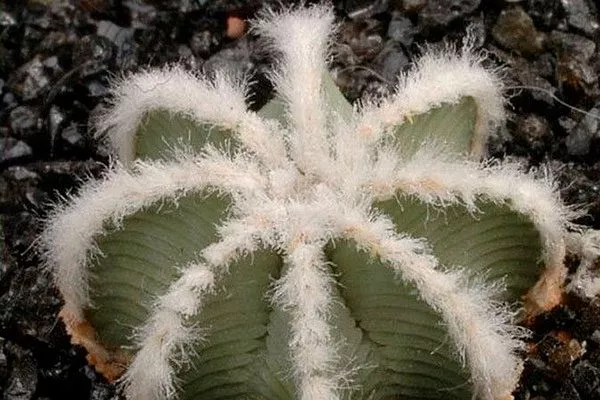
Characterized by an unusually ribbed stem covered in dense white hairs, this cactus features:
- Its skin color ranges from gray-green to grayish-brown, and small pink or purple flowers create a striking contrast with the inconspicuous stem.
- This species is extremely sensitive to overwatering and prefers a mineral, well-drained substrate with minimal organic content.
- In nature, it grows on gypsum slopes, which makes it demanding regarding the composition of the soil in cultivation.
- To grow successfully, bright light, limited watering and protection from sudden temperature changes are required.
Aztekium valdesii
In April 2009, a new species of Aztekium, named Aztekium valdezii (Velazco, Alvarado et Arias) sp. nov, was discovered in the Sierra Madre Oriental mountain range in the department of Nuevo León. The discovery was made by an expedition consisting of M.A. Valdez Marroquin, M.A. Alvarado Vazquez, and C.G. Velazco Macias at an altitude of 600–700 m.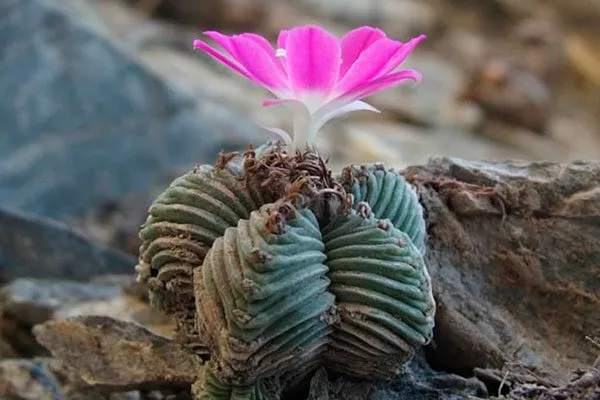
The new species' habitat resembles that of A. ritteri, but Aztekium valdezii grows in isolation. The cultivar exhibits morphological similarities to both A. ritteri and Aztekium hintonii.
Unlike Aztekium ritteri, the new species is characterized by the following qualities:
- the presence of a maximum of 5 ribs;
- absence of intermediate (false) ribs between the main ribs;
- differences in the size and color of the perianth tepals.
It differs from Aztekium hintonii by a smaller stem size, a smaller number of ribs (up to 10 in Aztekium hintonii) and similar differences in the perianth tepals.
Conditions for successful cultivation
To successfully cultivate Aztekium, it's important to provide it with the right environment. The cactus exhibits drought tolerance and can survive for long periods without moisture.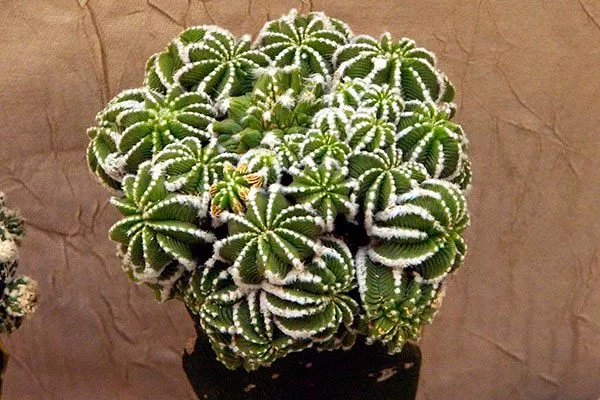
Basic conditions:
- The ideal temperature for the summer period is normal room temperature (+18-24°C), and in winter it requires a cool dormant period with temperatures of +5-8°C.
- The plant requires a well-drained substrate made from equal parts loam, coarse sand, and perlite. The soil pH should be neutral or slightly acidic.
- Moderate watering with soft water, ideally rainwater, is recommended.
The plant requires protection from the scorching midday sun. It's best to place the Aztekium pot in a location that receives morning or evening sun.
Caring for Aztekium at home
Caring for the crop requires attention and precise adherence to conditions close to natural ones. Follow standard agricultural practices:
- Lighting. Aztekium prefers bright but indirect light. Direct sunlight can cause burns. An east- or west-facing window, or a south-facing window with midday shade, is ideal.
- Watering. Overwatering is the main danger for the plant. Water only after the soil has completely dried out. In winter, reduce watering to a minimum or stop altogether. Use soft, settled water at room temperature.
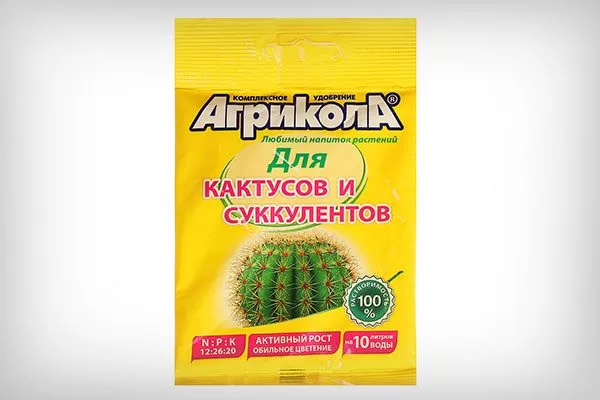
- Top dressing. During the period of active growth, fertilize once a month with a weak solution of cactus fertilizer with low nitrogen content.
- Transfer. It's recommended to repot the cactus only when necessary, once the roots have completely filled the pot. This should be done in spring or summer.
How to propagate Aztekium?
The plant can be propagated in two ways: by seeds or by lateral shoots. Grafting is the optimal option, but it requires careful monitoring to prevent excessive growth. Propagation by seeds is a complex and labor-intensive process that requires a great deal of patience.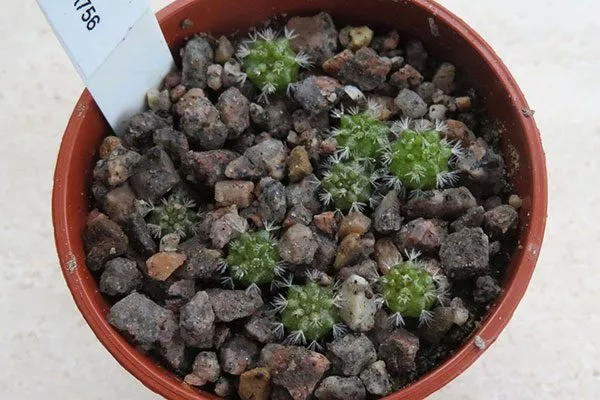
For those who aren't afraid of a challenge, the method of Czech cactus grower Z. Fleischer is suitable. Here's a step-by-step process:
- Take a shallow glass jar with a capacity of 350 ml. Place a glass tube in the bottom center for watering and fertilizing.
- Fill the jar with a fine-grained, air- and water-permeable, moistened substrate without organic fertilizers.
- Sterilize the structure in the oven for 30 minutes.
- Sow the seeds on the soil surface, seal the container tightly, and place in a well-lit area. No watering is required at this stage.
Seedlings will appear within a few days. After a few months, fertilize with mineral fertilizer. Transplant the young plants into pots filled with succulent soil.
Diseases and pests
Aztekium is a fairly resilient plant, but if growing conditions aren't right, it can suffer from diseases and insect attacks. Fungal infections, caused by overwatering and poor drainage, are the most common.
Gray mold and root rot are characterized by darkening and softening of the tissue. At the first sign, remove the damaged areas, repot the plant in fresh, dry soil, and treat with fungicides (Fundazol, Topaz, Horus). As a preventative measure, water sparingly and only when the soil is completely dry.
The following may appear on a cactus:
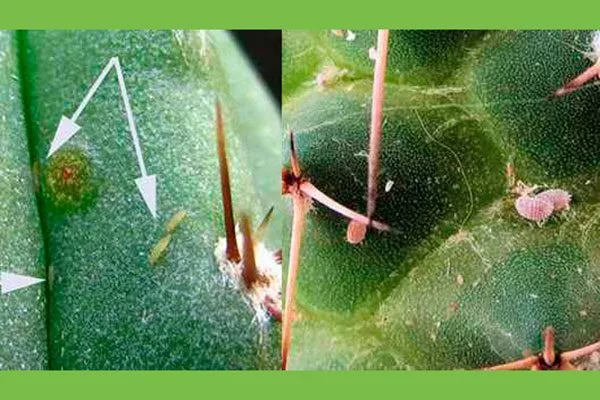
- Spider mite – Leaves light spots and a fine web. Acaricides such as Fitoverm, Akarin, and Apollo are effective in controlling the pest.
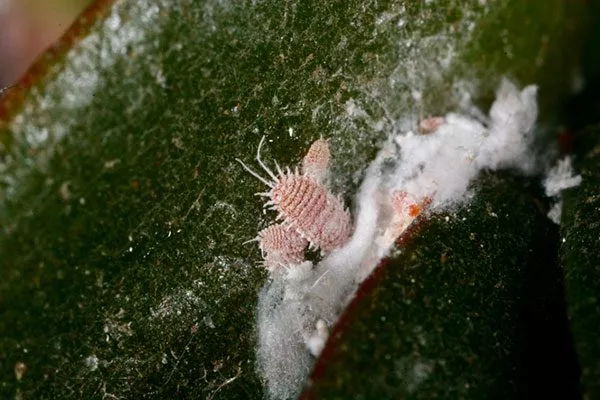
- Mealybug - Forms white, cottony clumps. Remove with a cotton swab and soapy water and treat with Aktara or Confidor insecticides.
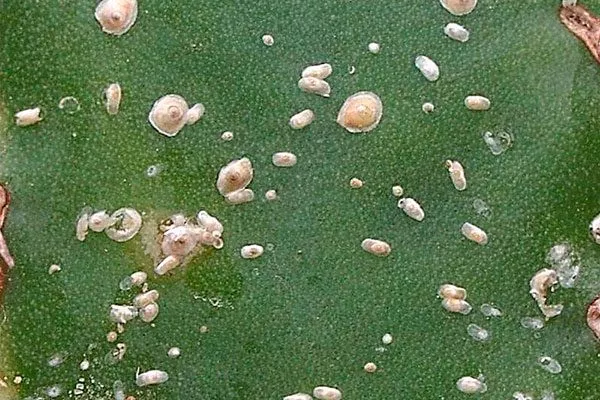
- Scale insect – Dense brown shields on the stem. Mechanical cleaning and spraying with systemic preparations will help.
The key to protecting Aztekium from most problems:
- maintaining a dry and clean substrate;
- regular inspection of the plant;
- quarantine for new specimens;
- moderate watering;
- good ventilation.
Reviews
The Aztekium cactus combines decorative expressiveness and botanical uniqueness. It's suitable for experienced gardeners who are prepared to provide specific watering, lighting, and soil conditions. However, even beginners can manage it if they follow the basic rules. This plant can provide years of enjoyment, remaining a living work of natural art.