
Chickens, ducks, and other poultry have always been kept together in households. Despite their different lifestyles and food preferences, these birds get along well together. Let's explore the potential challenges of keeping chickens and ducks together and how to avoid them.
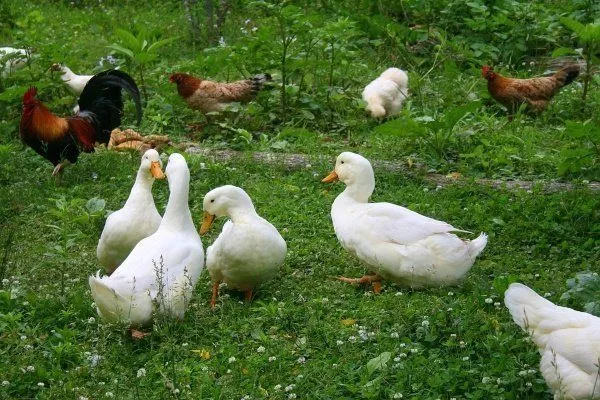
Rules for joint detention
Separate housing for chickens and ducks is preferable. If setting up two separate coops is not feasible, it's important to consider the differences between the two species and exclude the most quarrelsome and combative individuals from the flock. This will ensure a calm environment in the coop.
- ✓ The minimum distance between dry and wet areas should be at least 1.5 meters to prevent cross-contamination.
- ✓ Use of moisture-resistant materials for wet areas such as polypropylene or stainless steel for durability.
Fencing the area
| Name | Weight of an adult, kg | Egg production, pcs/year | Disease resistance |
|---|---|---|---|
| Chickens | 2.5 | 300 | High |
| Ducks | 3.5 | 200 | Average |
It's best to divide the room into two parts. Chickens need dryness, and ducks love to splash around. By creating "dry" and "wet" zones, you can prevent chicken diseases, associated with high humidity.
Options for dividing the poultry house:
- The easiest way is to divide the room into two separate pens by stretching a metal mesh.
- Make two enclosures in one room.
Zoning allows each bird species to be provided with optimal living conditions. Light is added to the chicken half, and water bowls for swimming and bathing are placed in the duck half. Considering the voracious appetite of ducks, which will readily eat other birds' food, separate housing and feeding is a major advantage.
You can also build two separate coops if space allows. How to build a chicken coop is described in this article.
Poultry house arrangement
| Name | Temperature of content, °C | Humidity, % | Duration of daylight hours, h |
|---|---|---|---|
| Chickens | 18-22 | 60-70 | 14-16 |
| Ducks | 16-20 | 70-80 | 12-14 |
Rules for setting up a poultry house for chickens and ducks:
- The poultry house must have an effective ventilation system. Drafts can cause colds, which are especially dangerous for waterfowl.
- Chickens like to sleep higher up - on perches, ducks don’t mind sleeping on the ground - that’s where they build nests out of straw and hay.
- When setting up roosting areas for chickens, it's recommended to raise the floor to prevent the bedding from getting dirty and wet. Chickens like to perch high up, and the difference in height will prevent them from getting lost in the ducks' nests.
- Chickens require more light to lay eggs than ducks, and this is taken into account when placing birds in the poultry house.
- Ducklings and chickens can be fed together—their diets are virtually identical at the start of their lives. Later, they are fed separately.
- A mesh floor is recommended for ducks. It has square mesh openings, 24 cm on a side, and a minimum of 2 mm thick wire mesh. The mesh is placed along the wall, occupying two-thirds of the total space. There should be a 30 cm gap between the floor and the mesh. Pine needles can be placed underneath the mesh.
Watch a video about keeping different poultry together in a greenhouse during winter:
Feeding Features
| Name | Feeding ration | Feeding frequency, times/day | Water requirement, l/day |
|---|---|---|---|
| Chickens | Cereals, vegetables, greens | 2-3 | 0.5 |
| Ducks | Cereals, vegetables, greens, fish | 3-4 | 1.0 |
In a poultry house, there are always leaders and underdogs. In the case of chickens and ducks, the ducks are the clear leaders: they are larger, stronger, and more voracious. To feed the birds and avoid conflict, one feeding method is chosen: either feeding the birds separately or taking turns. The leader—the ducks—is allowed to the feeder first.
Rules for organizing feeding of chickens and ducks living in the same poultry house:
- Each bird species has its own diet.
- Ducks and chickens' food differs not only in nutritional characteristics but also in consistency. It's best to feed them separately. Ducks constantly splash water, causing their feed to become dirty and runny, while chickens tend to scatter their food everywhere. The birds interfere with each other's food, spoiling and mixing it up.
- The communal feeder is covered with a metal grate. The bars are spaced 8-10 cm apart. Birds will eat by sticking their heads between the bars. This feeding method will help prevent squabbles and fights. The grates will also prevent food from scattering.
- Drinking bowls must be separate and placed at different levels. Duck waterers are placed on the floor, while chicken waterers are placed 20-50 cm above the floor. Read on to learn how to make your own chicken waterer. here.
Ducks and chickens living together don't have any insurmountable problems. The main thing is to avoid dampness in the chickens and drafts in the ducks, but other problems can always be resolved as they arise.
Methods of disease prevention
Preventive measures in the premises for chickens and ducks:
- The premises are regularly inspected for the presence of parasites.
- Acaricidal disinfection is carried out periodically in the poultry house.
- The litter is changed in a timely manner.
- The temperature and humidity in the room are monitored and adjusted.
- ✓ When stressed, chickens reduce egg production and begin to pluck their feathers.
- ✓ Ducks in a state of stress refuse water and show aggression.
Combining the rearing and keeping of different chicks
Ducklings and chicks get along well in the same area. Their owner only needs to follow a few rules:
- Feeding of ducklings and chicks occurs simultaneously to ensure that neither of them gets stressed.
- The diet of young chickens and ducks is the same during the first weeks, which significantly simplifies their feeding and maintenance.
- The young are kept separately from the adults. Individuals that show aggression toward their own kind are culled to preserve the brood.
- Chicks of both bird species are just as messy eaters as adults. Feeders should be cleaned regularly and maintained.
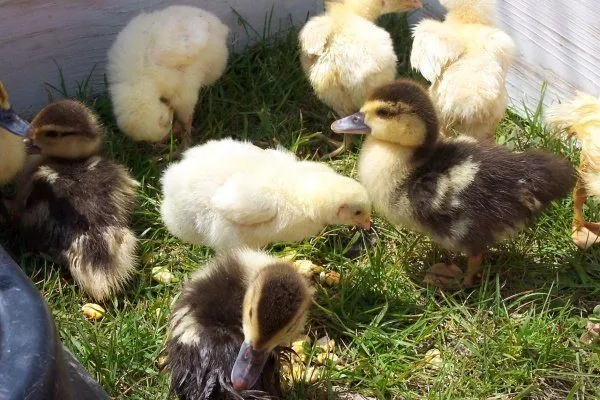
An approximate feeding ration suitable for chickens and ducklings is shown in the table.
Table – Daily feeding norms for chicks (chickens/ducklings)
| Feed, g | age 1-10 days | age 11-20 days | age 21-30 days |
| Crushed grain | 3 | 4 | 7 |
| Ground grain | 4 | 9 | 14 |
| Wheat bran | 1 | 2 | 4 |
| Oilcake | — | 1.5 | 1.5 |
| Eggs (1 per 100 chicks) | 1.5 | — | — |
| Fish and meat and bone meal | 0.2 | 1.5 | 3 |
| Skim milk | 10 | 10 | 10 |
| Roots | — | — | 10 |
| Green | 1 | 7 | 10 |
| chalk, shell | 0.1 | 0.35 | 0.6 |
| Table salt | — | 0.05 | 0.1 |
| Fish oil | 0.1 | 0.1 | 0.2 |
Difficulties in maintenance
Thanks to their relatively calm natures, ducks and chickens can live together quite well. Difficulties that arise when they live together primarily relate to the differences in their needs. Difficulties associated with the specifics of these two forms of housing arise in the open air and in the coop.
In a common poultry house
If you keep chickens and ducks in the same poultry house, the following problems may occur:
- The moisture from the water in which ducks splash has a negative impact on chickens. They become sick more often, and mortality increases. To avoid problems, change the litter more frequently—chicken litter should be completely dry.
- Each bird species requires its own waterers, nests, and feeders. All of this complicates their maintenance.
- If birds do not get along with each other, this negatively affects productivity - egg production drops, weight gain slows, and the offspring becomes less viable.
- Each feeding has to be divided—first feeding the ducks, then the chickens. This takes time. You have to make sure the ducks don't eat the chicken feed.
- Chickens require plenty of light to maximize egg production. Artificial lighting can negatively impact ducks' well-being and health.
When bringing chickens and ducks together in the same area, it's important to consider their different temperaments. While free-ranging birds don't interfere with each other, competition can arise in a covered enclosure.
When walking together
If ducks and chickens are housed in a common run, there must be sufficient space. Insufficient space can lead to conflicts and fights between the two species. During the summer, the run is a fenced area where the chickens and ducks roam freely. If a fight breaks out, the offenders must be temporarily isolated.
| Parameter | Chickens | Ducks |
|---|---|---|
| Minimum area per bird, m² | 0.1 | 0.3 |
| The need for a reservoir | — | Necessarily |
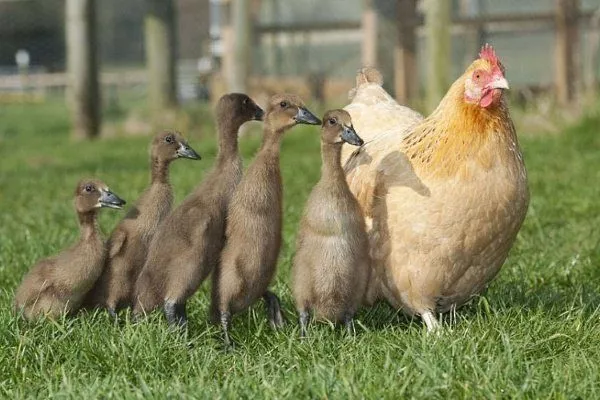
When buying birds for housing together, pay attention to their temperament – avoid those that are argumentative or aggressive. If one bird displays aggression, the entire flock will begin to imitate it.
Ducks need a pond for their outdoor pastures. Without one, waterfowl become sad. This negatively impacts their mood, health, and egg production.
Advantages and disadvantages
There are very few advantages to keeping chickens and ducks together:
- Space savings. No need to build a second coop.
- Reduced heating costs – it is cheaper to heat one poultry house than two.
- Saving time on cleaning – it’s easier to clean one poultry house than two.
Flaws:
- The bedding has to be changed more frequently due to the ducks splashing.
- Constant monitoring of feeding – even with separate feeding, encroachment on other people’s food is possible.
- If the relationship between the birds does not work out, productivity may decline.
- Chickens and ducks have different daylight requirements.
- Each species of bird has to build separate nests.
Separate keeping of different types of birds is stipulated by the Law of the Russian Federation No. 4979-1 “On Veterinary Medicine” dated 14.05.93.
Mistakes farmers make when keeping animals together
It's difficult for inexperienced farmers to accurately follow all the guidelines for co-housing. The most common mistakes poultry owners make are:
- Placing feeders at the same level results in food becoming dirty, spilled, and waterlogged. This leads to feed loss, unsanitary conditions, and disorder.
- Place dry feeders in the center of the coop. To prevent birds from climbing into the feeders and contaminating the feed with feces, feeders should be placed around the perimeter of the coop.
- Insufficient feeding troughs. This leads to crowding and fighting, and weaker individuals receive less food.
- Feed both species of birds simultaneously. To ensure everyone is well-fed and avoid fighting, feed each bird in turn.
The main advantage of housing chickens and ducks together is the reduced cost of their upkeep. To ensure savings don't turn into losses, it's important to consider all the nuances of the birds' lifestyle, needs, and disposition.