
Muscovy ducks are particularly popular with farmers due to their low maintenance requirements. Moreover, they boast tasty, lean, and nutritious meat and edible eggs (something common ducks cannot boast). However, winter care for these birds has several nuances that need to be considered if you decide to breed Muscovy ducks.
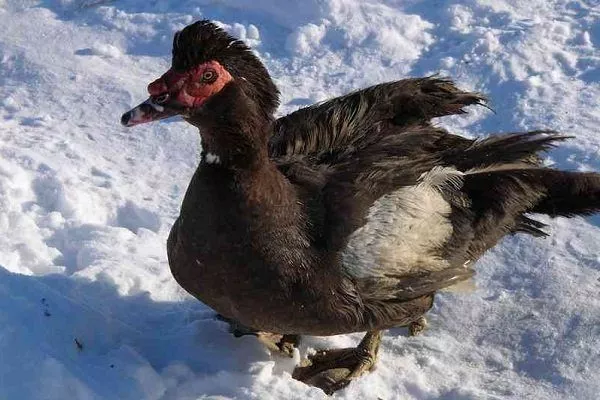
About winter care of Muscovy ducks
Keeping Muscovy ducks in winter requires a well-equipped poultry house. The room must be well-insulated. This applies to both the walls and the floor and ceiling to prevent sudden temperature fluctuations.
- ✓ The minimum thickness of the bedding should be at least 5 cm for effective heat conservation.
- ✓ The temperature in the poultry house should not fall below +12°C to prevent frostbite of the paws.
Muscovy ducks come from warm climates and therefore don't cope well with cold temperatures. The acceptable temperature for birds to stay warm outdoors is no higher than -9°C. Indoors, this temperature is 12°C or higher.
Additionally, the room needs good ventilation.
What dangers await Muscovy ducks in winter?
Muscovy ducks are not well adapted to Russian cold, so the poultry house must be heated. The birds have strong immune systems and rarely get sick, but they do not tolerate frost well. When kept in cold barns, there is always a risk of frostbite on the feet and combs. A drop in temperature below the permissible level increases the risk of mortality.
Wintering birds at home
To avoid loss of poultry, it's essential to prepare well for winter. This applies to all key aspects, but the most important is preparing the premises.
Shed or greenhouse
To care for Muscovy ducks during the colder months, farmers use either a barn or a polycarbonate greenhouse. The farmer decides where the birds will spend the winter, but the building must be heated in any case.
Otherwise, the requirements are standard:
- Insulation. The shed walls are insulated with plywood sheets. Styrofoam or mineral wool sheets are also considered. The floor—preferably wooden—is recommended to be raised 15–20 cm above ground level in both the shed and the greenhouse.
- Ventilation. A supply and exhaust ventilation system is installed in the room. If this is not possible, a window with an opening transom or casement is installed.
- Heating. With the arrival of frost, high-quality heating is provided. A permanent brick stove and blue lamps are used for this purpose. To prevent illness and promote weight gain, the required temperature is at least 12°C.
- Interior space. The poultry house contains feeders, drinkers with warm water, “nests” corresponding to the number of females, and perches in the form of inverted boxes and logs lying on the floor.
- Laz. A 40x40 cm opening is cut into the door to allow the birds to move freely. The opening is covered with thick fabric or a small hinged door.
Polycarbonate is a naturally dense material that can withstand wind pressure. However, using a greenhouse as an option for housing Muscovy ducks during the cold season is only permitted if the temperature in the region does not exceed -15°C. If temperatures in the area drop below this, it is wiser to keep the birds in a barn.
Floors
Floors in wintering rooms for Muscovy ducks are constructed using various techniques. The following options are common:
- plank flooring;
- adobe;
- cement screed.
Cement floors are the easiest to keep clean. They're easy to clean, but wood flooring is warmer. The choice depends on the farmer's preference.
Regardless of the chosen material, the floor must be insulated. This is a necessary step, as Muscovy ducks have very sensitive feet, unprotected by a layer of fat. On cold surfaces, they quickly freeze, causing the bird's death. This characteristic is precisely what makes keeping Muscovy ducks year-round challenging for farmers.
When preparing the poultry house for winter, the floor is cleaned and dried. It is then treated with slaked lime. A layer of dry straw, sawdust, or wood shavings is placed on top.
In winter, the litter isn't changed; a new layer is simply added. The litter itself is a source of additional heat, generated by the decomposition of the lower layers. However, this process is accompanied by the development of a strong, characteristic odor, so the poultry house must be equipped with a ventilation system.
Heating the room
Even an insulated barn needs additional heating in winter. It's recommended to use heating devices when the temperature drops to -5°C. Suitable for this purpose are:
- heat fans;
- heaters;
- electric fireplaces;
- potbelly stoves;
- electric lamps.

Experts recommend heating the room with blue lamps. This is the simplest yet most effective option. Each lamp produces 50 watts of power. A medium-sized shed or greenhouse will require up to 6-7. They are mounted on the ceiling and additionally protected by a mesh cover.
If a potbelly stove, electric, or gas appliance is used for heating, a special enclosure should be erected around it. This will help protect the birds from thermal burns.
Equipment of the manhole
In winter, it is not recommended to open the doors to the poultry house completely. To allow the Muscovy ducks to freely enter the run, a hole is cut in the main door, with a wooden ramp attached to the edge. The recommended dimensions are 40 x 40 cm, with a height of 20-30 cm from the floor. To prevent icy air from penetrating, the hole is covered with thick, dark fabric.
Repair Features
The room where the birds are kept should be warm. If possible, it should be plastered and whitewashed, and all cracks should be sealed with a mixture of clay and manure. Also, cracks should be sealed on the outside with foam and the inside with tow.
If an old structure is being adapted for a poultry house, then the debris is first cleared out, the cracks are sealed, and disinfection is carried out.
Muscovy ducks need fresh air
If the coop contains fewer than 12 Muscovy ducks, natural ventilation is used. Air exchange occurs due to temperature differences, air pressure inside and outside the house, and wind.
For larger herds, it's recommended to install a supply and exhaust ventilation system. The design is simple:
- Assemble a semi-closed box from boards, measuring 22x22 cm.
- Divide it along its entire length with boards inserted crosswise in relation to each other, into 4 parts.
- Cover the box with a board on top.
- Drill 7cm diameter holes on the sides.
- Install the pipe. Once installed, it should extend 60 cm above the roof of the poultry house.
Air flows through two compartments, regardless of wind direction. The resulting pressure forces polluted air out through the other two.
Below is a video that clearly explains what supply and exhaust ventilation is and how to properly assemble it:
Feeding and watering
Since the birds are completely transferred to home-made feed during the winter months, special attention is paid to organizing proper nutrition.
Basic rules winter feeding Indo-ducks:
- Two to three meals a day. In the morning and evening, the birds are given a mixture of ground grain, grated vegetables, and water. Wet feed reduces losses because the birds cannot shake it out of the feeder.
- Lunchtime meals emphasize fruits and vegetables. Reduce the amount of grains. It's recommended to offer pre-cooked and chopped apples, carrots, potatoes, pumpkin, or beets.
- In addition to grain, Muscovy ducks' diets also include silage. This is a substitute for fresh grass. Steam straw or hay in boiling water and add some meal (bone or grass meal).
The basis of the winter diet for Muscovy ducks is grains with added bran and compound feed. This includes essential nutrients and carbohydrates. Vegetables and fruits are a source of natural vitamins. Additionally, the birds should receive mineral supplements and salt. The latter is added in its pure form directly to the wet mash.
Sample diet
To prepare for winter feeding, farmers harvest silage and grass meal. These provide an alternative to fresh grass.
The basic diet consists of grains, bran, fruits, vegetables, and meal. Muscovy ducks can be switched to ready-made mixed feeds containing the necessary nutrients.
Example of the composition of the nutrient mixture:
- wheat – 40 g;
- oats – 30 g;
- barley – 30 g;
- wheat bran – 20 g;
- flour (fish, bone) – 20 g;
- herbal flour – 20 g;
- boiled potatoes – 25 g;
- silage – 40 g;
- salt – 2 g;
- mineral supplements – 10 g.
The daily norm for one bird is 200 g of the prepared mixture.
Cabbage leaves, potato peelings, and sunflower cake can be added to the prepared feed.
Overfeeding birds with an increased daily requirement leads to the development of obesity, which negatively affects egg production rates.
Food additives
During the cold season, when birds have no access to natural food, experts recommend supplementing Muscovy ducks' diets with mineral supplements. This will help strengthen their immune system and ensure good weight gain.
Muscovy ducks obtain the necessary nutrients from their feed. Sources of calcium include chalk, eggshells, and seashells.
Phosphorus deficiency can be replenished with meat and bone meal or fish meal. Cereals contain a large percentage of the mineral.
Table salt provides the Muscovy duck with sodium. It stimulates appetite and improves overall development. The daily requirement is up to 0.7% of the dry feed weight. Salt is dissolved before feeding and added to the mash as an aqueous solution.
Sources of sulfur include fresh cabbage, flaxseed meal, and legume greens in any form.
Drinking bowl
Muscovy ducks require a lot of water, so it is necessary to provide a drinking bowl.
The simplest type is a deep container. This could be a bowl or basin. While easy to maintain, a drinking bowl has a number of disadvantages:
- the water quickly becomes polluted and cools down;
- birds constantly turn over the container;
- uneconomical water consumption.
The second option is a vacuum waterer. Its design allows for maintaining the desired water level for a long time. Advantages of this model:
- birds do not splash water;
- the drinking bowl is closed, so the liquid remains clean;
- fresh water is supplied regularly;
- easy to repair and maintain.
- ✓ Nipple drinkers must be protected from freezing in winter.
- ✓ Vacuum drinkers require regular inspection for contamination and freezing of water.
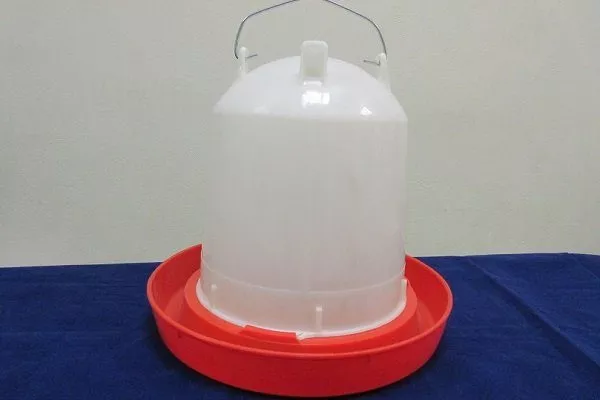
The downside is its light weight. The waterer is easy to tip over.
The third type is the nipple model. Many farmers consider this option the most convenient. Advantages of this product:
- the closed design ensures water purity;
- convenient for both young and adult animals.
The disadvantage is the complex design, so it is difficult to assemble it yourself.
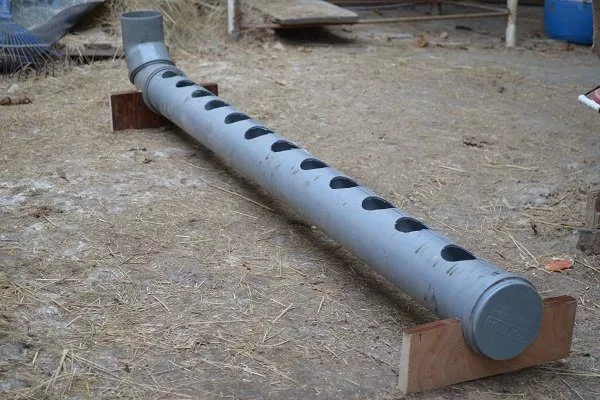
The next option for a Muscovy duck drinker is a trough-type drinker. Its advantages include:
- long service life;
- ease of maintenance;
- Suitable for large herds.
Disadvantages include:
- heavy weight;
- uneconomical consumption and rapid pollution of water.
The water bowl should always be filled with water. Regular changes are required.
Care
During the winter months, care is no different from summer care. To ensure the bird continues its active development and weight gain, it is necessary:
- organize proper feeding;
- feeders and drinkers must be clean;
- Every week, treat the poultry house with products to prevent the proliferation of parasites.
If you follow these recommendations, your bird will grow up healthy and maintain a good level of egg production.
Walking
Muscovy ducks require daily exercise, but this isn't always possible in winter. They are only allowed outside when the weather isn't too cold.
To keep Muscovy ducks warm and healthy, it's important to know the proper set-up for a run. The requirements are simple:
- It is advisable to locate the walking area on the southern side of the poultry house or on the leeward side;
- the area is fenced with a net, a fence at least two meters high;
- Muscovy ducks are released outside if the thermometer shows no more than -9°C;
- walking duration up to two hours;
- The walking area is cleared of snow and any foreign objects that could injure the bird, and covered with bedding made from sawdust or straw.
When grazing, it's recommended to give Muscovy ducks ash baths. However, allowing them near puddles or open water is prohibited. Bathing can cause frostbite and death.
Disease prevention
Muscovy ducks have a strong immune system and rarely get sick. Typical diseases fall into three groups: non-infectious, infectious, and parasitic.
Preventive measures depend on the type of pathology:
- The development of both non-infectious and infectious problems can be prevented by proper care, feeding and maintenance of the bird.
- To prevent helminth infestation, clean the poultry house regularly and treat the Muscovy ducks with special sprays and powders.
Winter is a difficult time for any poultry. Muscovy ducks are hardy and easy to care for, but in winter they require more careful and attentive care from their owners. With proper care, Muscovy ducks will survive even the harshest winters, continuing to lay eggs and gain weight.