
Duck farming is considered profitable because mallards grow quickly, lay numerous eggs, and are used for their meat and down. To achieve maximum results, it's essential to provide the birds with the necessary conditions, feed them properly, and, most importantly, master breeding techniques and flock management methods.
Choosing a profitable breed for breeding
Duck breeds are selected based on the purpose of breeding the birds—meat, feathers, or eggs. There are meat and egg varieties, but breeders have also developed breeds that produce both meat and eggs. Experts advise beginners to start with the simplest breeds, which are easy to care for and grow quickly.
| Name | Female weight, kg | Male weight, kg | Egg production, pcs/year | Egg weight, g |
|---|---|---|---|---|
| Beijing | 3.5 | 4 | 180-200 | 80-90 |
| Bashkir colored | 3.5 | 4 | 200-225 | 90 |
| Muscovy duck | 1.8-3 | 4-6 | 70-120 | 110 |
| Mulard | 4 | 4-7 | 180-210 | 80-100 |
| Moscow White | 3.5 | 4 | 100-150 | 80-90 |
| Black and white-breasted | 3.5 | 4 | 130 | 80-100 |
| Gray Ukrainian | 3 | 3.8-4 | 140 | 70-90 |
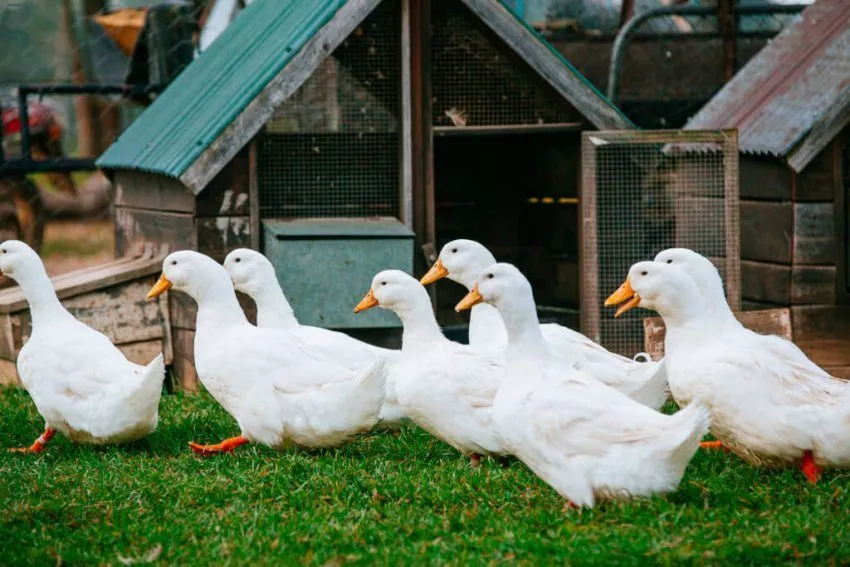
Beijing
This breed is considered the most common in Russia. As its name suggests, it originated in China. The Peking duck is a meat-and-egg breed—a single mallard can produce up to 180-200 eggs in 12 months. Females weigh 3.5 kg, while males weigh around 4 kg. By the age of 45 days, their weight reaches 2.5-3 kg.
Peculiarities:
- body type – powerful (back and chest are wide, head is large);
- forehead - convex;
- beak - bright orange;
- tail - small;
- fluff color – white or cream;
- paws - shortened;
- wingspan – wide;
- plumage density – high;
- character – restless, noisy;
- the meat of young animals is juicy and soft;
- the meat of adult animals is fatty;
- the weight of one egg is 80-90 g.
Pekin ducks are known for their high broodiness—from six hens can hatch up to 120-150 chicks per season. This breed tolerates cool climates well and is not picky about its food.
There are also some disadvantages: high humidity must be completely eliminated, otherwise the individuals begin to get sick.
Bashkir colored
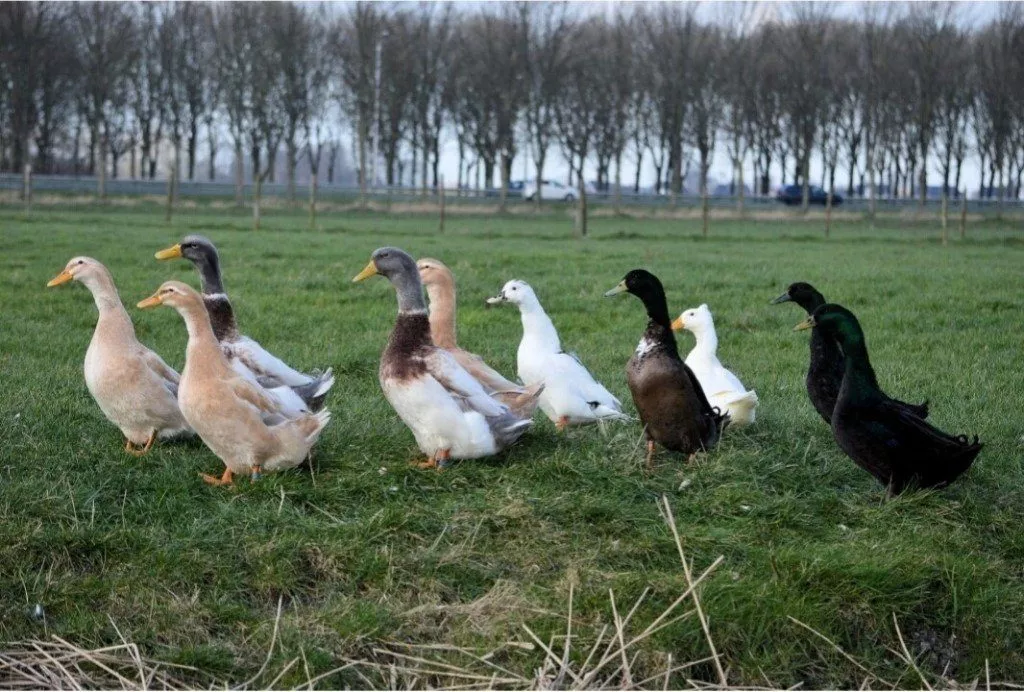
The breed was bred relatively recently—in the early years of this century. The meat of Bashkir colored ducks is considered dietary, as it lacks layers of fat. Despite this, the birds tolerate cold well. The breed is raised for meat and eggs.
Characteristic:
- physique – strong, with muscles;
- beak - concave, beige;
- coloring - females are inconspicuous, males are brightly colored;
- body weight of females/males – 3.5/4 kg;
- egg production – 200-225 pieces per year;
- egg weight – about 90 g;
- paws are short;
- a small tail raised upwards;
- head of medium size;
- the wings are large.
The breed is known for its strong, resilient immune system and rarely gets sick. Among the downsides, duck breeders note poor hatchability and a need for large amounts of feed. However, don't overfeed them, as this can lead to obesity.
Muscovy duck
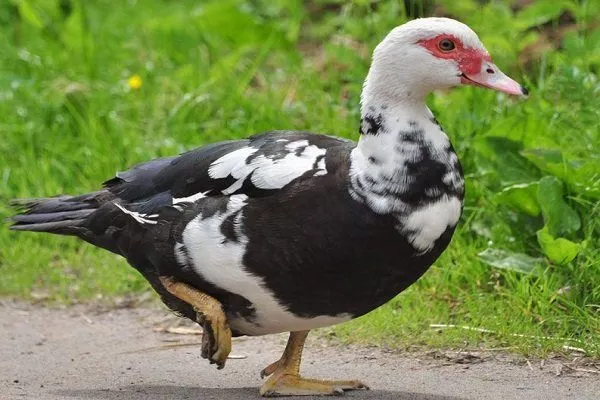
Another name is the Muscovy duck. It was brought to us from South America. Many people mistakenly believe that ducks and turkeys were used in the breeding process, but this is not true. The breed's main advantage is that it can be bred without human intervention. This is a meat variety with a highly prized liver.
Description:
- the body weight of the female is from 1.8 to 3 kg, the male – from 4 to 6 kg;
- large build (wild Muscovy ducks are 2 times smaller);
- males behave aggressively and should not be allowed to be near children;
- meat - dietary lean;
- eggs weigh more than 110 g;
- egg production is average – 70-120 pieces;
- beak - beige or red;
- feather color - most often black and white, but there are also multi-colored individuals;
- immunity is strong.
Mulard
The breed was created by crossing a Pekin duck (female) and a Muscovy duck (male). It can also be bred independently. The Mulard has the best qualities of its parents – it grows quickly and reaches its maximum size. It is considered a meat breed.
Peculiarities:
- weight – from 4 to 7 kg, depending on age and sex (the difference between male and female is no more than 500-600 g);
- colors - varied;
- beak - light pink, yellow;
- there is always a dark spot on the head;
- character – balanced and calm;
- neck - long, like a goose's;
- body - elongated;
- paws - shortened, but massive;
- egg weight – about 80-100 g;
- egg production – from 180 to 210 pieces.
Moscow White
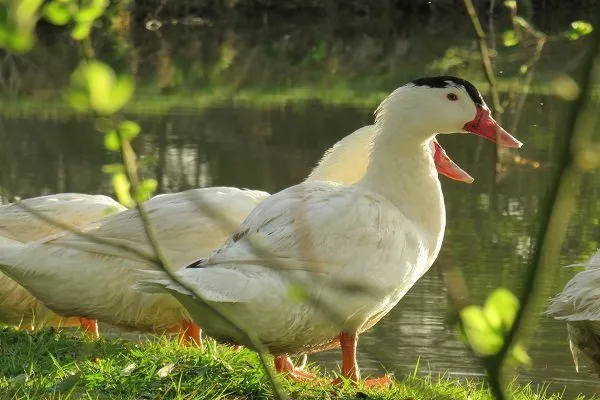
The breed was developed by crossing a female Muscovy duck and a male Campbell duck. It is characterized by its exceptionally white color and juicy, tender meat. It is raised for its feathers and meat.
Characteristic:
- female weight – 3.5 kg, drake – 4 kg;
- egg weight – 80-90 g;
- egg production – from 100 to 150 pieces per season;
- neck – long, powerful;
- physique – strong, muscular, broad;
- beak – large, red or pink;
- sternum - rounded;
- head - small;
- paws - short and wide apart;
- eyes - blue.
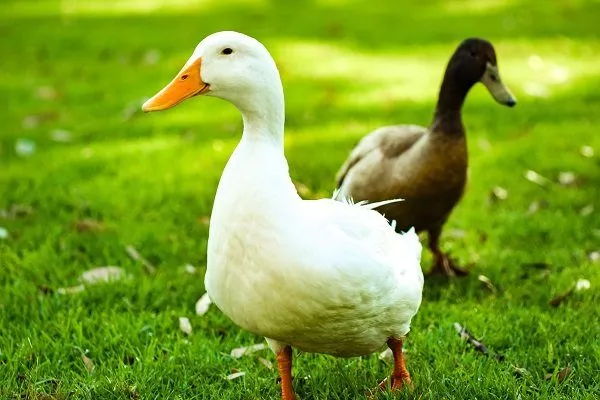
Moscow Whites are aquatic. Provide them with a pond. They are calm by nature, but they tend to run away and eat excessively.
Black and white-breasted
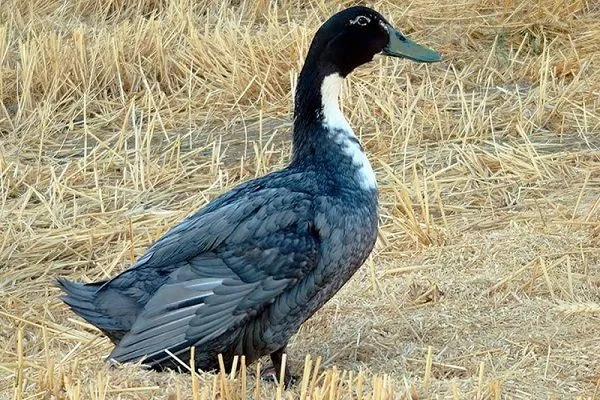
It's considered popular among duck breeders because it gains weight quickly and has a high egg production rate (90% hatch). It was bred from three varieties: the Pekin, Khaki Campbell, and Ukrainian White-breasted.
Indicators:
- female body weight – 3.5 kg, drake – 4 kg;
- egg weight – 80-100 g;
- egg production – up to 130 pieces per year;
- color – white and black;
- body - long and wide;
- sternum - concave;
- head - small;
- neck – elongated, flexible;
- beak – black and short, slightly curved downwards;
- eyes - black;
- There is a greenish tint on the neck of males.
Gray Ukrainian
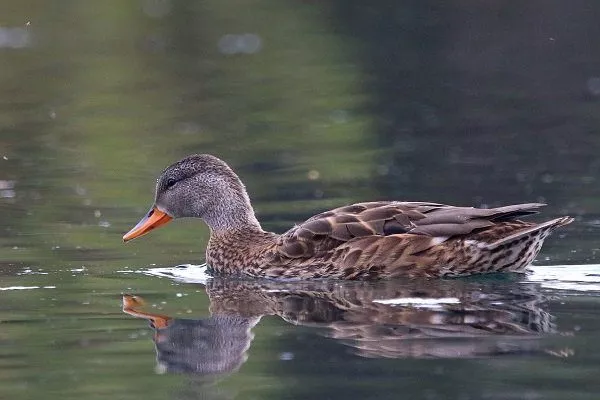
This breed has a well-developed muscular system, an elongated body, and a broad back and chest. A distinctive feature is the absence of wedge-shaped processes on the abdomen. It is used for its down and meat. There are two color varieties: white and wild-feathered (chocolate or golden plumage).
Peculiarities:
- beak - yellow-orange or olive;
- paws - red, orange or gray;
- the sheen on the back and sides is blue, grey, shiny;
- meat is soft and tender;
- body weight of male – 3.8-4 kg, female – up to 3 kg;
- egg weight – from 70 to 90 g;
- Egg production – maximum 140 eggs per year.
Like the previous breed, they cannot survive without water. Ducks are considered poor brooders, so it's best to raise them in an incubator. Avoid any drafts or overcrowding.
How to choose a pair?
To start a family, select individuals in excellent health—obese or underweight birds should not be mated. There should be 5 to 7 hens per drake. Other considerations:
- the herd must contain individuals of the same breed and age;
- You cannot mate normal species with hybrid ones;
- a single set consists of individuals that hatched from July to August;
- multiple assembly - they take birds that were born from January to May or in September.
Females and males must have similar personalities and "like" each other. Otherwise, mating will not occur.
When does the mating season begin?
Mallards are selected for mating 150 days after hatching. The optimal time is considered to be between 8 and 12 months, ensuring healthy and full-grown offspring. The onset of mating season can be determined by the following signs:
- The male's plumage changes, becoming brighter and more expressive.
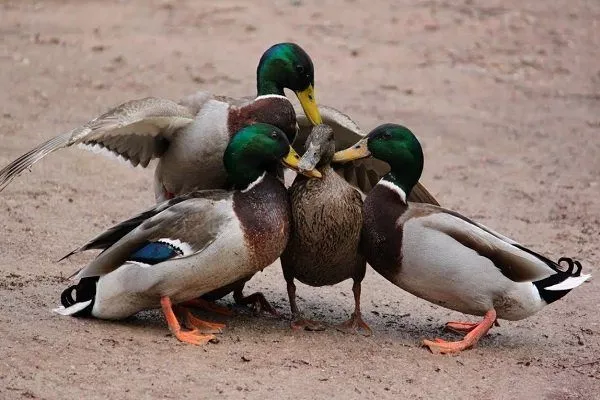
- The drake performs the ritual, accompanied by vocal signals (whistling, hissing, and quacking). In some cases, the female does the same.
- Females begin to raise their tails.
- The nest is being prepared – the ducks carefully build it from branches, straw and other materials.
Ducks mate both on land and in water. They lack special openings; they exchange biological fluids through cloacae. To do this, the male presses tightly against his partner and transfers seminal fluid. From her cloaca, it penetrates to the eggs.
Methods of raising chickens
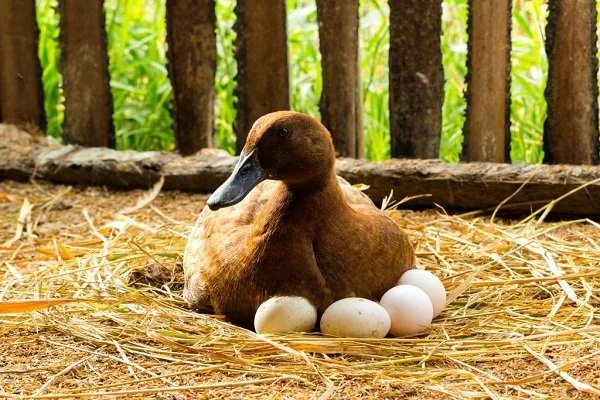
A single clutch consists of 7-12 eggs. Incubation takes 28 days, after which the chicks hatch, and within 10-12 hours they are ready to run and swim. If a duck doesn't sit on the eggs, they can easily be placed under a hen or other bird, but don't place the eggs of any other animal under a duck—she won't accept them.
Breeding chickens with a hen
This is a natural way to produce ducklings. This method of breeding is used when there are females of a breed capable of brooding eggs. A certain number of eggs can be placed under each duckling:
- in summer – 12-15 pieces;
- in spring – 10-12.
If a turkey or a chicken is used as a brood hen, the quantity varies depending on the size of the bird.
Follow the rules and regulations:
- Spread the eggs evenly so that each one receives enough heat;
- form a nest from straw and feathers (the shape should resemble a wreath);
- If the perch is located on the floor, be sure to lay some insulating material underneath it (especially if the flooring is concrete) - wood sawdust, chaff (cereal waste);
- nest location – dark area of the nest;
- To create maximum comfort for females, separate the perches with partitions;
- Immediately after hatching, separate the ducklings from the female - there is a risk that she will crush them;
- Transfer the young animals to a cardboard box with straw.
Growing in an incubator
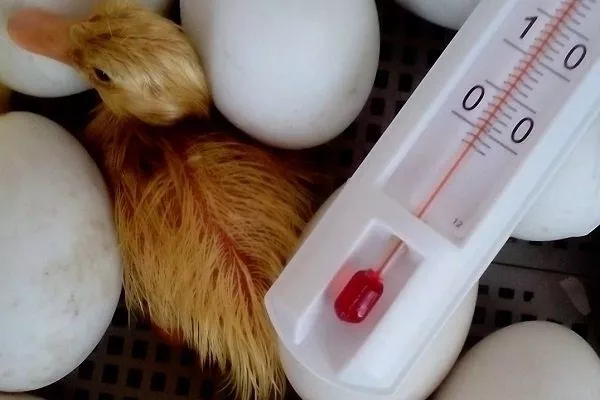
If you breed ducks incubator method, offspring can be obtained at absolutely any time of year. Special incubators equipped with temperature and humidity controls are used for this purpose.
Be sure to take into account the following nuances:
- Selection of eggs. Place only fertilized eggs and those that are undamaged (cracked or chipped) into the incubator. To do this, follow these steps:
- Check the position of the air chamber - it should be at the bottom, not at the top.
- Inspect the yolk – it should be centered and slightly shifted towards the air chamber.
- Check the integrity of the yolk - spin the egg, and if the yolk moves, it is not fertilized.
- Incubator hatching technology. Before placing the eggs in the equipment, preheat it to 38.4°C. Be sure to place containers of water on the tray, as the humidity level should be 55-60%. Then proceed as follows:
- Place the eggs in the incubator and set the temperature to 38.2°C. Leave it there for 3 days.
- On the 4th day, set the thermometer to 37.8°C.
- On the 14th day, reduce the temperature further to 32°C.
- From this day on, open the incubator twice a day for ventilation (for 25-30 minutes).
- Ovoscoping. The procedure is performed twice over a 28-day period. It involves inspecting the eggs for hatchability:
- On day 7, the embryo's circulatory system is examined. If it is absent, the egg is considered infertile.
- On the 26th day, the chick’s movements are observed (when the embryo freezes, a dark, motionless spot can be seen).
- Hatching times. The first chick hatches on the 27th day, and by the end of the 28th, all the chicks should have hatched. Because duck eggs have tough shells, sometimes you need to help by removing the shell from the hatching area.
Duckling breeding
To successfully raise ducklings, create favorable conditions and strictly adhere to all requirements. The key to success lies in proper feeding and care, especially before they reach one month of age, when the chicks require careful care.
- ✓ Activity and quick response to sounds.
- ✓ Clear and shiny eyes without discharge.
- ✓ Smooth and soft fluff without bald spots.
Necessary conditions
The main conditions for breeding ducklings are temperature, lighting and walking area:
- Temperature conditions. If the chicks are kept by a broody hen, there's no point in monitoring the room temperature, as they'll hide under her wings to stay warm. Otherwise, follow these guidelines:
- in the first 7 days, set the thermometer readings to 27-30°C;
- from the 8th to the 14th day – from 23 to 26°C;
- from the 15th to the 30th day – from 19 to 22°C.
- Daylight hours. Baby ducklings require supplemental lighting (19-20 hours of daylight). During the first week, use fluorescent lamps, then gradually reduce the time from the second week, starting with 15 minutes.
By the age of 1 month, ducklings should be accustomed to a 12-hour daylight period. - Walking. It's forbidden to let the chicks roam freely for the first 15 days, but starting on the 16th day, they can be taken to a pond (with their mother duck). Starting on the 30th day, the ducklings are allowed to roam freely.
Feeding
Pay special attention to feeding—it determines future egg production, meat growth, and the bird's health. From birth, establish a routine by feeding them at the same time each day. This will ensure that by 1.5 to 2 months of age, the bird will have reached exactly half its normal weight.
Rules for feeding ducklings in the first days:
- For up to 8 days, the daily food intake is divided into 7-8 meals - these are boiled eggs, cottage cheese, kefir.
- Over the next 7 days, include 40g of greens and specialized feed.
- From the 15th day, dairy products and eggs are excluded, but more often we give grass and grass (optimally duckweed).
- From 30 days onwards, transfer the ducklings to regular food.
Never place feeders near waterers, as young birds will begin to drink water after their food, contaminating it, which increases the risk of infection during this period. Waterers should be small enough to prevent chicks from getting their feet in them (they view the water as a swimming pool).
Care
If the ducklings hatched in an incubator, transfer them to a cardboard box. Place a 2-3 cm layer of straw on the bottom. If a hen was sitting on the eggs, return the separated chicks to the mother duck after all the chicks have hatched. Be sure to check that the mother duck has accepted all the chicks.
What to do next:
- keep the box or room dry – change the bedding 2-3 times a day (to make cleaning easier, put newspaper or paper under the straw);
- After each meal, remove any leftovers;
- When you put out baths for them to bathe, make sure the water is clean and at room temperature (otherwise the ducklings will catch a cold);
- Close all cracks to prevent drafts during the first 2 weeks of life;
- If it's warm outside, take them outside three times a day (for 30-60 minutes, gradually increasing the time spent walking).
Pros and cons of duck farming
Ducks aren't particularly expensive. Acquiring 20-30 chicks isn't difficult. They grow quickly (they can be slaughtered after two months) and don't hatch their eggs for long, making raising them profitable for both meat and eggs.
There are other advantages of duck farming:
- unpretentiousness in feeding and care - after growing up they do not require special conditions and expensive food, they are ready to eat forage (grass, etc.);
- The farmer receives profit from one cultivation in 4 directions - sale of meat, eggs, down and feathers, chicks;
- rapid increase in livestock;
- many eggs per season;
- rarely get sick, as they have a strong immune system;
- in summer, feed costs are reduced;
- ease of marketing of products (unlike nutria and other specific animals).
There are few disadvantages to duck farming:
- a lot of space is needed;
- creation of an artificial reservoir;
- frequent water changes;
- There are noisy breeds.
Common mistakes and useful tips
To avoid the mistakes common to beginners when raising ducks, experienced duck breeders offer helpful tips. Be sure to consider these when raising this type of poultry:
- Ducks lay eggs in the morning. Don't let them out onto the pond or from their pen until 9-10 a.m.
- Water treatments should not exceed 5 hours at a time. Birds need to eat actively.
- Do not leave food in feeders overnight – this will cause the birds to become obese.
- In the morning feed concentrated feed, in the afternoon – greens, in the evening – vegetables and root vegetables.
- If a farmer starts a parent stock for breeding, allocate no more than 5 females per 1 drake;
- Select the largest and healthiest individuals for breeding; do not keep them for more than 2 years.
- For meat, slaughter ducks no older than 2.5 months, as this is when molting begins, and with it, weight loss.
- 2-3 weeks before slaughter, feed the birds heavily.
- To prevent ducks from stopping laying eggs, do not move them from one barn to another or change their daily routine.
- To protect the bird, disinfect the room.
With the right approach to duck breeding, you can achieve amazing results in just one year – increasing your flock tenfold, while still enjoying meat and eggs, and using the down for feather beds and pillows. Choose your breed carefully to avoid problems with incubation at first.