
The American Cayuga duck attracts attention with its unique appearance and excellent breeding characteristics. This breed is easy to feed and produces delicious meat and eggs. Due to its unusual coloring, it has become a major attraction on many farms.
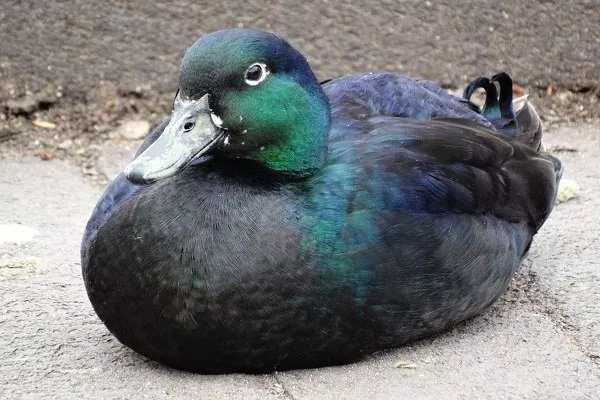
Cayuga Duck
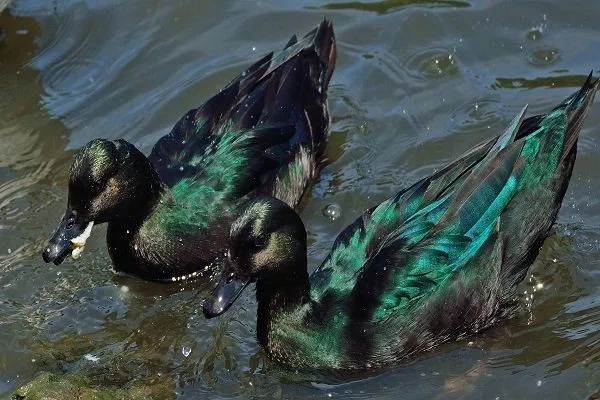
Cayuga ducks are not picky eaters.
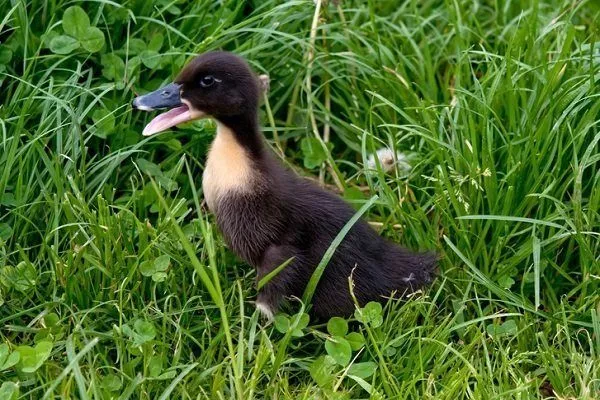
The Cayuga duck has a well-developed maternal instinct.
History of origin
This unique breed is named after Cayuga Lake, located in New York State. The birds were first bred in this region in 1809. American breeders crossed Scaup ducks with domestic ducks. Due to its distinctive coloring, this breed was long called the Coral Duck. It was patented only in 1874 as the Cayuga Duck.
For many years, selective breeding of the Black Cayuga breed has been ongoing. The main goals of these experiments are to improve meat production and egg yield, refine their appearance, and identify new variations in feather color.
Features and habitat
This meat-and-egg breed is well-known in Russian agriculture. Ducks are acquired for breeding and decorative purposes. Walking around the farmstead, the birds attract attention with their iridescent feathers, majestic posture, and dignified gait.
The ducks live in a coop and have constant access to water and fresh air. The habitat is kept clean, otherwise the birds die from attacks by small parasites. Cayugas love to swim a lot, so an artificial pond is installed in the habitat or a part of a natural one (from the wild) is fenced off.
Appearance and physique
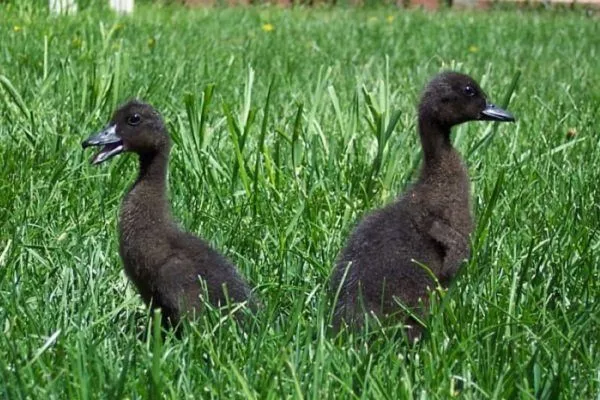
The Cayuga is difficult to confuse with other duck breeds. Its beautiful dark feathers shimmer in the sun with a variety of shades. The bird has a massive build, dense plumage, and powerful feathers that lie close to the body and serve a protective function.
The body is elongated, the head is small and disproportionate compared to the rest of the body. The beak is black, and the eyes are crystal-clear, dark brown. The duck has a well-developed chest and strong, stable limbs. The tail is erect, medium-sized, and changes position as it moves.
The high forehead merges into the bill, the color of which depends on the sex of the Cayuga. In males, it is greenish or olive; in females, it is black or dark blue. The neck is shortened, arched, and flows smoothly into the shoulders, with a visible hump.
Adult males weigh 4-5 kg, while females weigh over 3 kg. Ducks are fattened and slaughtered at two months of age, otherwise the onset of molting complicates and makes plucking the carcass impossible.
Color
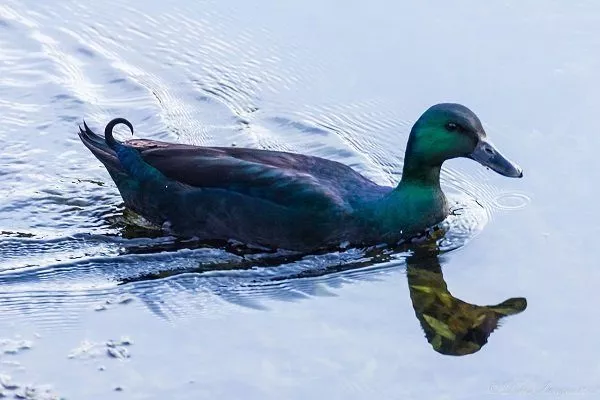
The Cayuga duck is traditionally black, extending to its body, bill, and legs. In bright light, the feathers take on a metallic sheen of green or blue. The bird literally glows in the sun, appearing even more majestic.
The dominant color scheme depends on the duck's gender. For example, males turn a pale blue in the light, while females acquire a rich green hue. This unusual sheen is usually concentrated on the upper body, then fades down to the feet.
Productivity and use of the breed
Cayuga ducks have a delicacy of meat with minimal fat content. It's not widely available commercially due to its unsightly appearance. Plucking leaves unsightly stumps on the carcass that are difficult to remove even with repeated processing.
Among lovers of the unusual, the meat is considered a refined delicacy and a dietary dish. To obtain a marketable carcass, the duck is fattened for two months before slaughter.
Egg production indicators
Ducks lay 100-150 eggs per year, each weighing 80-100 g. The eggs are larger than chicken eggs and initially have dark shells, but by the second decade they become whitish, with a distinct olive tint.
Cayuga eggs are rare for sale. Unless one breeder sells them to another for further breeding purposes, the eggs are otherwise used within the breeder's family, as a food ingredient or for hatching young.
The Cayuga Duck's Personality and Lifestyle
Ducks are naturally phlegmatic, quacking infrequently and exhibiting a calm and majestic demeanor. They walk slowly and do not tolerate being rushed. They have a high stress tolerance and are rarely startled by loud noises or the approach of other animals.
The Cayuga duck is brave and hardy, tolerates cold well, has a strong immune system, and rarely gets sick.
Birds quickly adapt to new weather conditions, and such changes do not negatively impact productivity. They enjoy grazing on flowering meadows and, when fed well, quickly gain weight.
In hot weather, they often swim and dive, and afterward, they prefer to bask in the sun. Daily walks are beneficial for the birds; they don't like being cooped up.
You can learn about the characteristics of Cayuga ducks in the following video:
Breed content
Ducks require care, adequate nutrition, and a clean coop. These birds are independent and can safely roam freely. They can be left unattended and confident that none will get lost or injured.
Because Cayugas have a strong immune system, they easily withstand even severe illnesses and rarely get sick. With a calm temperament, the birds are completely unshy and difficult to upset. Therefore, caring for this breed is not a problem.
Requirements for the poultry house
Cayuga ducks live indoors in winter but venture out regularly. In the summer, they spend less time indoors and more time outdoors.
Basic requirements for a poultry house:
- The room should be light and spacious.
- It is essential to have windows to allow light and fresh air in.
- Nests on the side walls of the room.
- The optimal nest size is 40x50 cm.
- The entrance to the nest is fenced with an 8 cm threshold to prevent the eggs from falling and breaking.
- In hot weather, the acceptable temperature is 17-19 degrees, in winter – not less than 5 degrees.
- The floor is covered with a 30 cm thick layer of straw, peat, and sedge.
- In summer the room is illuminated by the sun, in winter – by artificial lighting.
- It is advisable to install infrared lamps for additional heating.
- Each bird needs a drinking bowl and fresh water control.
- The presence of feeders made of boards and containers for mineral supplements is mandatory.
- ✓ The optimal temperature in the poultry house in winter should not fall below 5 degrees, despite the frost resistance of the breed.
- ✓ The thickness of the bedding made of straw, peat or sedge should be at least 30 cm to ensure warmth and comfort.
An aviary or a spacious lawn is installed around the poultry house. A canopy is also installed to protect the birds from heat and rain. Both the poultry house and the aviary must be cleaned daily to prevent the spread of parasites.
Walking area and access to water
Ducks need not only fresh air but also daily walks. In winter, make sure the air temperature is suitable for walks.
If Cayugas are grazing in a lawn, fence it off to prevent other animals from attacking or frightening the birds.
In summer, the area should have a shelter from the sun and rain, and an artificial pond. For example, fill a small basin or an old bathtub with water. Ducks love to swim and dive, but it's best to temporarily avoid water activities in winter.
Cayuga Duck Diet
At feeding ducksThe basis of the diet is carbohydrate-rich grains, which increase the bird's energy reserves. Choose grains that are easily digestible. Additionally, include corn, oats, legumes, and barley in the menu.
To normalize metabolism, processed foods are essential in the diet. For example, egg cake is essential for laying hens as a source of phosphorus and potassium. Bran replenishes fiber deficiency. Dry cake provides an additional source of carbohydrates. Processed foods should comprise no more than 5-10% of the total daily diet.
Vegetables and succulent feed prepared in the summer help quickly resolve the problem of seasonal vitamin deficiency. Alfalfa, clover, and root vegetables (pumpkin and beets, up to 20% of the total diet) are especially beneficial. These foods are given to ducks pre-chopped.
Minerals promote better absorption of food and normalize digestion. The main sources of minerals are shells, bone meal, chalk, gravel, and table salt. These ingredients can be given simultaneously, but the main thing is to strictly adhere to the daily dosages.
10-15 days before slaughter, Cayuga ducks are given enhanced rations.
Summer diet
During the summer, the Cayuga duck forages independently. It requires a shelter near an artificial pond to provide shelter from rain and the scorching sun. During this time, the bird feeds on worms, insects, and grass, and actively gains weight.
In the summer, the breeder can save a lot on store-bought feed and obtain a substantial carcass after slaughter. The main thing is to monitor the duck's diet and ensure that the lawn is free of poisonous plants, harmful parasites, and foreign objects.
Fill the water bowls with clean water and check them daily. During the summer, a duck can drink up to 1 liter of water. Therefore, refresh the water bowls twice a day. If algae or mold appears on the walls of the water bowl, disinfect it, otherwise the bird may die.
Winter diet
In winter, breeders feed Cayugas twice a day—morning and evening. The first meal consists of wet mash and fortified silage, while the second consists of harder-to-digest grain feed. A 500 ml water bowl is essential.
In summer, ducks gain weight faster, so breeders increase their daily ration. The resulting fat layer protects the birds from severe cold and chronic freezing. In winter, gaining weight is much more difficult.
How do they cope with the cold?
Cayugas are well adapted to cold temperatures. At temperatures of 5 degrees Celsius, they thrive in a coop, provided the room is regularly ventilated. In winter, the birds can also be taken for walks. Clear the lawn of snow and branches to prevent injury to the ducks.
To prevent cold paws, cover the path with straw or hay. Reduce walks to 30-40 minutes twice a day, depending on weather conditions. With proper nutrition, the Cayuga's immunity does not decline during the winter, and the risk of illness is minimal.
Reproduction and lifespan
For breeding, purchase young animals only from certified breeders who provide the necessary documentation. Otherwise, you risk purchasing mixed-breeds, which are significantly cheaper than purebreds.
Cayuga Breeding Guidelines:
- The flock should contain 7 ducks and 1 drake.
- Avoid mating close relatives, otherwise over time the offspring will completely degenerate.
- Ducks have a well-developed maternal instinct, so the chicks do not need additional supervision from the breeder.
Cayugas teach their young to swim and forage for food in the water. If some of the chicks hatch early, they are immediately removed. Otherwise, the mother duck will stop incubating the remaining eggs and rush to raise the hatched chicks. Cayugas incubate their eggs for one month, and up to 15 chicks hatch in a litter.
In the wild, ducks live 10-30 years. When bred, they are slaughtered at two months of age after proper fattening.
Incubation of eggs
The incubation period ranges from 26 to 28 days, and very rarely up to 35 days. Valuable recommendations for breeders who have purchased an incubator:
- If a female can hatch up to 15 ducklings, then with the help of an incubator this figure is an order of magnitude higher.
- For incubation, eggs with a light green tint are used, which indicates the maturity of the laying hen.
- For the incubator, eggs from 14-18 day old laying hens are selected.
- After the ducklings hatch, the young are placed with a laying hen, who takes on the task of feeding them.
Basic rules for using an incubator:
- During the first day, do not turn the eggs over; heat them on one side at a temperature of up to 38 degrees.
- Over the next few weeks, turn the eggs from side to side several times daily.
- Open the incubator lid for 10 minutes every day to ensure dry cooling and natural ventilation.
- Warm the eggs at 37.5 degrees Celsius for 26 days. On the 27th day, lower the temperature to 37 degrees Celsius and wait for the chicks to hatch.
- Transfer the hatched ducklings to the brooder, where they will be under the care of the hen.
Caring for and feeding ducklings
When the chicks hatch, ensure the coop is clean and tidy. Their immune systems are not yet fully developed, so parasites can kill them. Avoid exposure to drafts, especially during the first four weeks of life.
During their first month, ducklings are indiscriminate in their food choices and will peck at anything they come across. Ensure the coop is free of foreign objects and poisonous plants. Increase the volume of water bowls, as ducklings drink a lot. Prepare shallow containers in advance for the ducklings to practice swimming in.
Pay attention to the diet of the young birds. The breeder's main goal is to improve digestion and enrich the chicks' bodies with valuable vitamins and microelements. Calcium is especially important for growth.
Features of the daily diet:
- chopped boiled egg white, fresh herbs;
- kefir, yogurt, cottage cheese, other dairy products;
- eggshells ground into flour;
- small grains, compound feed (from one week of age).
Diseases
Like other inhabitants of the yard, the Cayuga duck can get sickPredisposing factors include vitamin deficiency, parasite activity due to poor bird care practices, and nutritional errors.
The most common diseases:
- Avitaminosis. Vitamin deficiency, especially dangerous for ducklings.
- Salmonellosis. The disease progresses in childhood, and the infection enters the digestive organs along with food.
- Viral hepatitis. At risk are ducklings that are less than 20 days old.
- Diseases of goiter. Among the provoking factors are poor-quality feed for ducklings and adult birds.
- Coccytosis. Ducks under 2 months of age are at risk. Characteristic symptoms include loose stools with blood, caused by parasitic activity.
- Aspergillosis. A fungal infection that causes mucus discharge from the nose. Even humans can become infected.
The last two diseases are fatal, especially dangerous for other birds and the breeder. Infected birds are unfit for human consumption, and their carcasses are incinerated.
- Immediately isolate the sick duck from the rest of the flock.
- Contact your veterinarian for an accurate diagnosis and treatment.
- Disinfect the premises and equipment to prevent the spread of the disease.
Cayuga ducks rarely get sick and have a strong immune system. However, at the first sign of illness, a breeder should respond promptly, consult a veterinarian, and protect other animals in the household.
Advantages and Disadvantages of the Cayuga Duck
These ducks are renowned for their distinctive coloring and majestic appearance, as well as their calm and prolific nature. When selecting Cayuga ducks for breeding, breeders consider the following significant advantages:
- stress resistance;
- independence in behavior;
- strong immunity;
- frost resistance;
- unpretentiousness in food;
- well-developed maternal instinct;
- high meat and egg productivity;
- high survival rate of young animals;
- delicacy, dietary meat.
Every breed of poultry has its drawbacks, and Cayuga ducks are no exception. These include:
- low meat value;
- low body weight;
- poor brooding instinct;
- black stumps after plucking;
- eggs are not for sale.
Reviews
Breeding Cayugas is a very exciting and unpretentious pastime. Representatives of this breed present no problems for the breeder; they are independent, prolific, and produce delicious, lean meat.