
When raising the Star 53 meat duck, its characteristics and features are taken into account. These ducks are relatively easy to care for, but only if provided with the proper conditions. Read on to learn more about caring for the birds, raising young, and much more.
Origin of the Star 53 Duck
This cross was developed by French specialists. Its "source" was Pekin ducks, a well-known Asian breed with a history of over 300 years. Since they naturally inhabit marshy areas, their ducklings, as well as all young of breeds derived from them, require plenty of lush, green food from the very first days of life.
The breed's advantages include its ease of use in local selection, resulting in birds adapted to specific climatic conditions.
Description and characteristics of broilers
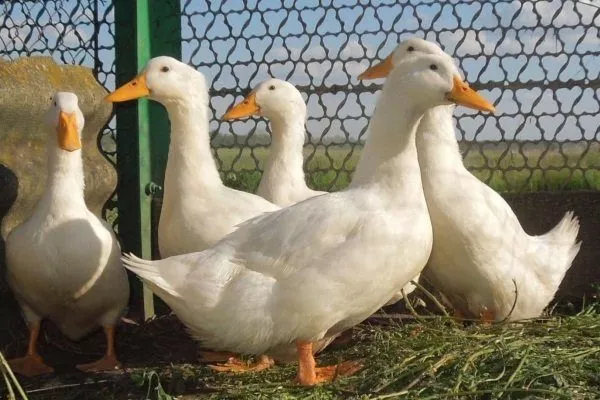
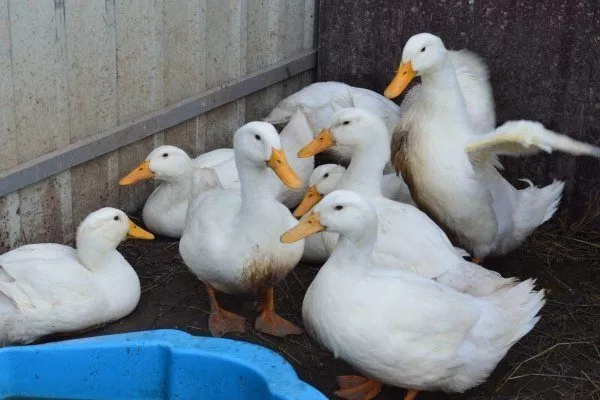
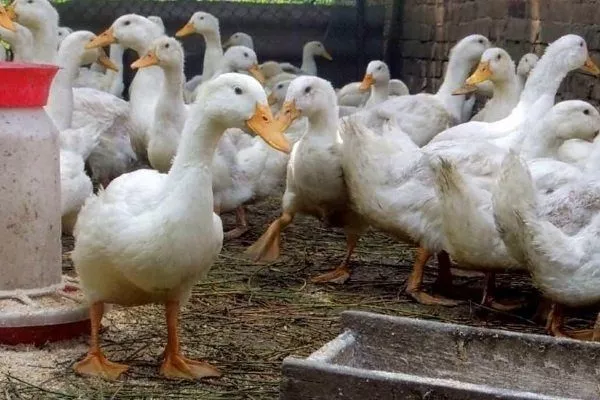
In appearance, ducks somewhat resemble geese. They have the same pure white plumage; cream or yellowish feathers are permitted, but there should be no color spots or markings. The plumage is dense, uniform, and thick. The legs and beak are a rich, bright yellow. The duck has a strong, broad chest that projects forward. The body is elongated. The legs are short.
If a bird doesn't bathe, its belly and chest are often soiled. The head is round and large. The forehead is convex. The neck is thick. The wings are held tightly to the body and have a long span. However, the bird is unable to fly due to its heavy weight. The tail is neat, well-feathered, and curved upward.
Productivity
Birds of this breed are distinguished by a fast metabolism and high nutrient absorption. Consequently, they gain weight quickly and are considered a precocious species. At three months, young birds already weigh 3 kg and are slaughtered at 4.5 months.
Meat
Duck meat is tender and nutritious, making it suitable for dietary feeding, as it contains more muscle mass than fat. A 4-month-old duck's carcass is approximately 60% lean, with fillet accounting for approximately 27% of the total meat.
Fat has no unpleasant odor or taste. As the bird ages, the amount of fat increases.
Advantages and disadvantages of the breed
The scientists' breeding work was aimed at preserving all the positive characteristics of Peking ducks and improving some of them.
The advantages of the breed in question include:
- rapid weight gain;
- high meat yield;
- low fat;
- good egg production;
- large eggs;
- good adaptability;
- unpretentiousness;
- high immunity to diseases;
- good fertility of eggs;
- the possibility of raising birds without a pond.
However, there are also disadvantages:
- Females have poor maternal instincts and do not hatch their eggs to completion, so incubators are used to breed this breed, or a responsible hen of a different breed is selected;
- intolerance to dampness and drafts;
- the emotionality of birds - they are prone to panic, fuss, and are very noisy;
- There is a high risk of buying the wrong breed - unscrupulous sellers often sell ducklings of other breeds, passing them off as "Star 53".
An overview of the Star 53 duck breed can be seen in the following video:
Eggs and fluff
Despite their meat-producing nature, females produce high levels of egg production. They lay up to 260-280 large eggs per year. Each egg weighs an average of 90 g. Unlike chicken eggs, they contain more fat, so they are not recommended for children under 6 years of age or overweight individuals.
Raw duck eggs are strictly prohibited due to the high risk of intestinal infections. They have a distinctive flavor and are considered an acquired taste. Ducks begin laying eggs at six months.
The Star 53 duck has dense plumage. By the time it's slaughtered, it's of high quality. When collecting duck down and feathers before slaughter, the ducks are thoroughly washed and dried in a place where they won't become soiled or contaminated with feces.
Content
Ducks are unpretentious, however, if they are not provided with suitable conditions, they may be left without eggs and meat.
- ✓ The optimal temperature in the poultry house should be maintained at 15-20°C for adults and 28-30°C for ducklings in the first two weeks of life.
- ✓ Humidity in the room should not exceed 70% to avoid the development of diseases.
- ✓ Daylight hours should be at least 15 hours to stimulate appetite and growth.
Premises
The barn where the ducks will spend their time must be warm. All cracks and holes must be sealed, as the birds react negatively to drafts, dampness, and cold.
Young ducks are kept separate from adults, as adults can injure them. It's best to avoid deep litter. If not cleaned regularly, ducks suffer from foot problems and excessive moisture. It's important to remember that they have a very fast metabolism, which means they produce a lot of waste. Experts recommend using a mesh floor with grooves underneath to collect droppings.
2-3 ducks are housed in a flock of 1 square meter. If kept in closer quarters, they become very noisy and restless, and begin to fight with each other.
During warm weather, birds need to roam outdoors, where they feed on succulent grass and also catch worms and other insects for protein. Special enclosures or areas on the banks of bodies of water are prepared for this purpose.
Keeping Star 53 ducks in cages is impractical for private farms, as they require ample exercise and succulent feed. A cage can be used to temporarily house newborn ducklings. It is essential to have a mesh floor to prevent increased humidity and dampness.
Conditions
The temperature in the poultry house should be comfortable for the ducks; even in winter, the thermometer should not drop below 15°C. At low temperatures, the flock huddles together, keeping each other warm. At high temperatures, the birds become lethargic, hold their beaks open, and breathe heavily.
The barn must have ventilation. However, there should be no draft whatsoever.
Ducks require 15 hours of daylight. During daylight hours, they feed constantly, which promotes faster weight gain. To reduce feed costs, the poultry house is designed to be dark during the day. Insufficient light encourages ducks to sleep, which also promotes weight gain. One to one and a half weeks before slaughter, daylight hours are reduced to reduce duck activity and thereby maximize live weight.
Ducks are waterfowl that never refuse a swim in a pond. However, when raised for slaughter, they forgo this water treatment. The farmer's primary goal is to fatten the birds, and additional activity won't contribute to this.
If there's a river or pond nearby, ducklings can be released into the water at one month of age. By this time, the sebaceous glands at the base of the tail begin to function normally and reliably. Otherwise, a tail without sebum quickly becomes saturated with water and can drag the duckling to the bottom.
Feeding
Broilers are raised primarily for dietary meat, so they must always have feed available.
Ducks are not fed potato peelings or kitchen scraps, as these are high-calorie foods that promote excess fat accumulation.
Rapid weight gain and metabolism require frequent feeding. Ducklings are fed every four hours, and older young are fed three to four times a day.
Feeding for slaughter
The main diet is compound feed or grain mixed with wet mash. Instead of compound feed, they are fed a homemade mixture consisting of:
- 1 part corn flour;
- 2 parts coarsely ground sifting flour;
- greens - clover, dandelion, nettles scalded with boiling water.
Mineral supplements such as chalk, crushed shells, or shell rock are essential. Fresh water at room temperature should always be available in the water bowl.
When to score?
Birds can be slaughtered once they weigh over 3 kg, usually around day 45. In any case, this should be done before day 56, when they begin to molt.
This natural process involves weight loss and high energy expenditure. As a result, the duck begins to eat more food, but does not gain weight.
Raising ducklings
Breeding Star 53 ducks is virtually hassle-free. Spring eggs are best for hatching young. Two weeks before collecting eggs for subsequent laying, the ducks are fed protein and supplemented with minerals.
Features of incubation
Large, clean, perfectly rounded eggs are selected for incubation. The shells should be free of damage, cracks, or scratches. Since eggs cannot be collected for incubation in one day, they are collected over several days. The remaining eggs are stored at a temperature of 15 to 18°C and humidity of 70-80%.
The hatch rate of ducklings depends on the storage duration. The highest hatch rate is observed in eggs stored for no more than 5-8 days. When storing, eggs are placed with the blunt end facing up. Ducklings hatch after 28 days.
Stages and modes of incubation
Any incubator is suitable for hatching ducklings. The best time for breeding is considered to be February-April. To get the maximum number of healthy ducklings observe incubation regimes:
- At stage 1 (Days 1-8) The eggs in the incubator are not turned or ventilated. The temperature is maintained at 38°C, and the humidity is 70%.
- At stage 2 (from the 9th to the 13th day) the temperature is reduced to 37.5°C, and the humidity to 65%. The eggs are turned 4 times a day, and the incubator is opened for 5 minutes once a day.
- Stage 3 Lasts from the 14th day to the 24th. The temperature is lowered to 37.2°C, humidity to 56%. The eggs are also turned four times a day, but now they are aired for 20 minutes twice a day.
- At the final stage (Days 25–28) Increase humidity again to 70%, and reduce temperature to 37°C. Do not turn the eggs, but ventilate them once a day for 10 minutes.
Care and maintenance
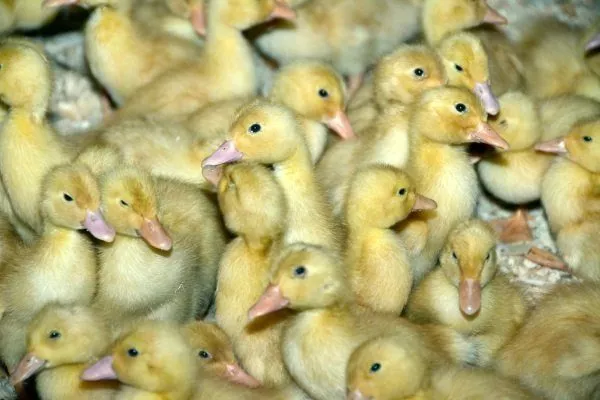
Newborn ducklings are transferred from the incubator to a box where the temperature is maintained at 28-30°C. Once they reach two weeks of age, the temperature is gradually reduced.
The bedding is changed regularly. The main thing is to keep the box dry and warm. For the first two weeks, the ducklings are kept under constant lighting.
They are taken for walks in dry, warm weather. The first time they spend outdoors should be about 20 minutes. Then, the duration of walks increases, and eventually they are left for the entire day.
Nutrition
In the first few days, babies are fed a special formula or a boiled, chopped egg with cooked corn or barley porridge. On the second day, green onions are a must to ensure they are getting the vitamins they need.
The number of feedings is eight times a day. Starting from the third week, this frequency is reduced to five. From 10 days of age, boiled vegetables, greens, and yogurt are introduced into the diet.
Diseases and their prevention
Star 53 ducks are distinguished by high immunity to various diseasesThe disease is most often caused by improper care and feeding. Drafts and dirt can trigger infection.
The most dangerous infections that can develop into an epidemic and result in livestock death are paratyphoid, hepatitis, and pasteurellosis.
Non-communicable diseases that ducks can suffer from include vitamin deficiency, crop and esophageal blockages caused by improper feeding, and helminthiasis (parasites that develop inside the bird due to poor-quality feed and dirt). Females may experience oviduct prolapse due to laying very large eggs.
- Disinfect the poultry house twice a year to prevent infectious diseases.
- Quarantine new or sick birds for at least 14 days.
- Include fish oil and greens in your diet to strengthen your immune system.
Disease prevention involves following proper husbandry practices and providing high-quality feed. Greens and fish oil are essential in the diet. Sick birds are immediately quarantined and kept separate from the rest of the flock. The poultry house is disinfected twice a year.
Reviews of the Star 53 duck breed
Reviews of this breed range from positive to negative. Many poultry farmers dislike the ducks' noisy nature.
Many farmers prefer the Star 53 duck breed. Besides being easy to care for and requiring little breeding skill, these birds also gain weight quickly and produce lean, tender meat.