
Agidel ducks are a favorite breed among Russian breeders and are most often used for breeding. They can produce a duck weighing 3 kg or more, and a hen can lay 250 eggs. These ducks are economical to keep, easy to feed and care for, and are highly productive and have rich meat.
History of the breed's development
The Agidel duck was developed in Russia through the selective breeding of three breeds: the Blagovar, Super M, and Indian Runner. The first broiler-type hybrid was bred in 2000 in the Republic of Bashkortostan.
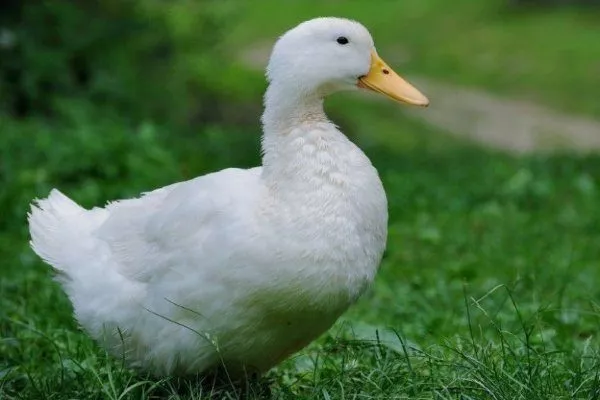
Blagovar duck
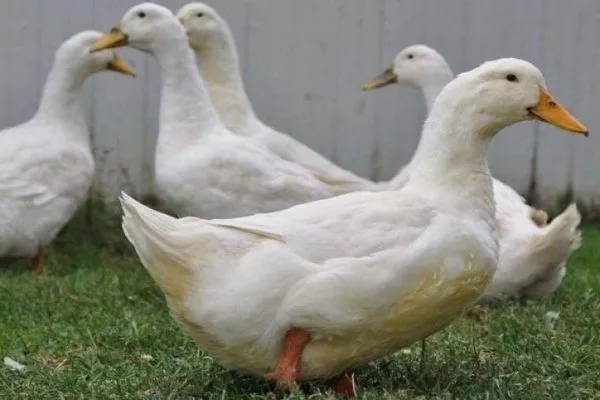
Duck of the "Super M" breed
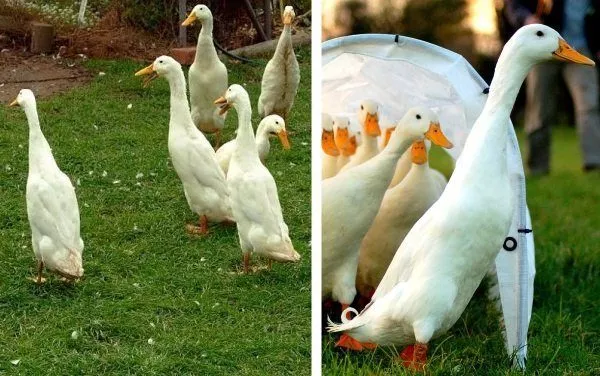
Indian Runner Ducks
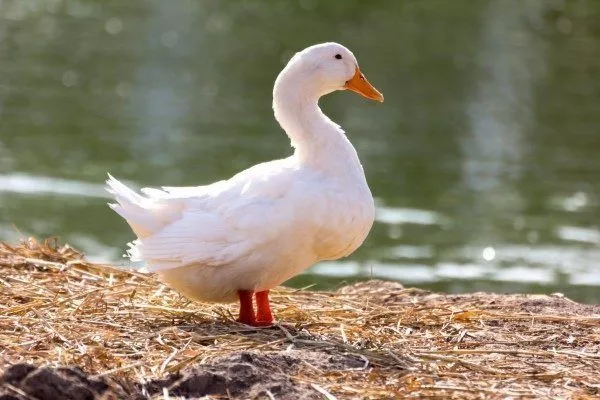
Duck "Agidel"
Two Agidel breeds emerged simultaneously—A34 and A345—which differed in their productivity. The primary goal of breeders was high meat production with low fat content. Experiments by domestic breeders continued into the 21st century.
Characteristics of the Agidel duck
These snow-white birds strut majestically around the garden, attracting attention with their impressive appearance and even temperament. This meat-and-egg breed is often used for mass production because it is easy to feed and produces healthy meat and eggs.
Agidel ducks produce high meat yields, and their snow-white feathers are used in the light industry for insulation. These birds are trouble-free on the farm, have a well-developed self-preservation instinct, and a docile nature.
Description of the breed
Representatives of this breed have two important characteristics: white feathers and rapid weight gain. A drake weighs 3.2 kg at six weeks, while a female weighs up to 3 kg. Adult broilers weigh between 3.5 and 5 kg. In addition to meat, ducks produce up to 250 large eggs, which provide an additional source of income for breeders.
| Cross | Direction of productivity | Egg production (pieces/year) |
|---|---|---|
| A34 | Oviparous | 250 |
| A345 | Meat | 200 |
The Agidel duck comes in two crosses: A34 and A345. One is an egg-laying breed, while the other is more of a meat-producing breed. When raising poultry, this is the determining criterion for most breeders. The meat-producing Agidel duck is more popular.
The body structure of ducks
The bird has a large head, a wide pink bill, and high-set dark eyes. The neck is massive and elongated, descending to a protruding chest. The back is broad and long, and the body is horizontal.
The legs are short and massive, light orange in color. The bird stands confidently on its feet, moving around the farmstead with a leisurely, clubfooted gait.
Plumage
A distinctive feature of Agidel ducks is their snow-white feathers. Yellow, beige, and cream shades should not be present, as this raises doubts about the breed's purity. This fact is enshrined in the cross's genotype. If spots or color variations appear, it indicates a crossbreed, a representative of another breed.
The wings are medium-sized, with white feathers pressed tightly against the body, allowing them to adapt more quickly to low temperatures and withstand cold weather more easily. The thermal properties of the feathers are actively used to produce insulation for clothing and bedding.
Duck's character
Agidel ducks are calm and balanced. They move leisurely around the farmyard, rarely quack, search for food without fuss, and quickly gain weight. These birds can be kept in pens or free-range, without concern for the quality of their carcasses.
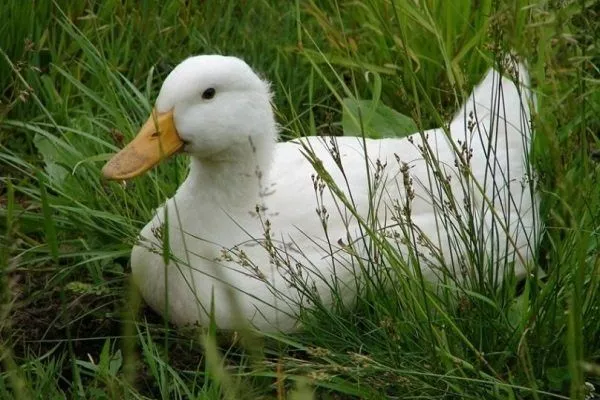
When a duck feels anxious, it begins to quack loudly and for a long time. Calming the bird isn't easy. The breeder must pay attention to this signal and provide prompt assistance to the frightened duck.
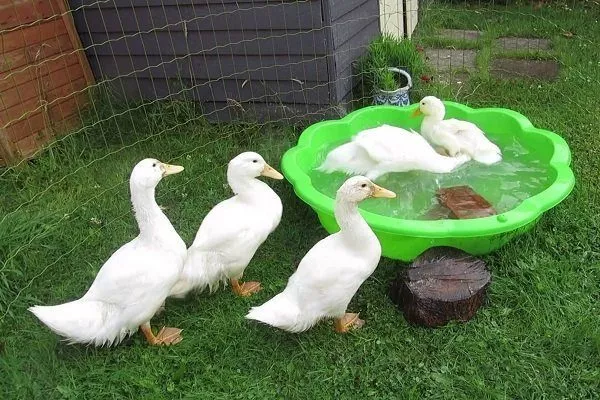
Agidel ducks behave more calmly if there's a body of water nearby. They also feel comfortable without one, but they need unimpeded access to water daily to wet their feathers.
Productivity
The duck is a meat breed. Its carcass has an aesthetic appearance (without black stumps) and weighs up to 3 kg. At two months of age, the duck is slaughtered. The resulting meat is dietary, rich in protein, vitamins, and beneficial microelements.
The female produces offspring twice a year. Highly fertile, she lays up to 250 large, oval eggs per season. Each egg weighs between 80 and 100 grams. Raw eggs should not be consumed. They are best used in cooking, for confectionery and baked goods.
Content Features
Agidel ducks live in coops. In winter, they spend most of their time indoors, and in summer, they spend the night there, hiding from the intense heat. Essential conditions include temperatures of up to 5 degrees Celsius during the cold season and the absence of drafts, especially during the egg-laying season.
In addition to the coop, ducks need access to water. Install an artificial pond nearby or enclose a natural one, such as a pond or pond. For bathing, bury and fill an old container or bathtub with water. Alternatively, install a small pool.
Regularly clean the pond and the birdhouse, otherwise the birds will get sick and infect the entire flock. Take your birds to the vet regularly for symptoms. duck diseases React in a timely manner.
- ✓ Optimal stocking density: no more than 3 adult individuals per 1 square meter.
- ✓ Temperature conditions in the poultry house: not lower than 5 degrees in winter, 17-19 degrees in summer.
What should a poultry house be like?
This is a bright room with space for three adult ducks per square meter. In a more cramped coop, ducks can injure each other, and there's a high risk of infection and disease throughout the flock. The optimal nest size for three ducks is 40x40x35 cm.
Install high-quality ventilation and a heating element in the poultry house. Air purification helps eliminate harmful bacteria, minimizes the risk of disease, and eliminates gases and lingering bird odors. The heating element—either a stove or a heating element—will ensure the room temperature does not drop below 5 degrees Celsius in winter.
Pay special attention to lighting. The coop should have windows on the south side. Additionally, install artificial lighting to extend daylight hours. Egg production depends on this. As winter approaches, daylight hours should be 8-9 hours, gradually increasing to 14 hours.
The poultry house requires a heated floor. Cover cold boards with peat or sawdust bedding, otherwise the ducks' immune system weakens, and they become sick and die more often. Change the bedding twice a year—in spring and fall. Make sure it doesn't get wet or dirty.
Before laying the floor, treat it with slaked lime and fill the walls with putty. These measures are necessary to protect against infection.
Care
Ducks are timid and wary, and distrustful of people. Frightening them should be avoided, as this negatively impacts their peace of mind and productivity. Following proper care and maintenance ensures high weight gain and egg production.
Ducks tolerate temperature fluctuations well, but the optimal temperature in the poultry house should be no lower than 5 degrees Celsius in winter and 17-19 degrees Celsius in summer. Ventilate the room daily at any time of year.
Because ducks have low feet, they often soil the white feathers on their chests. To prevent contamination from entering the barn, install an artificial pond in the aviary where the birds can splash and clean themselves.
Nutrition
The Agidel duck is a waterfowl, but a natural body of water is not necessary. A small pool in the enclosure is sufficient for the bird to wet its feathers.
The basis of the diet in feeding ducks Whole grain feeds promote rapid weight gain. High-calorie compound feeds are also beneficial as an additional source of vitamins, minerals, and trace elements.
The bird's diet changes depending on the season. In summer, its diet includes aquatic vegetation, such as sedge and reeds. Ducks find their own food by grazing near a small pond. If the bird lives in an aviary, add dried grass.
In winter, ducks don't eat wet food; their diet consists primarily of grain, compound feed, and high-quality hay. To prevent vitamin deficiency, add dried nettles and shell rock to their food, and don't forget the benefits of mineral supplements. These include chalk, meat meal, sand, gravel, and table salt.
To improve metabolism, promote digestion, and accelerate weight gain, introduce watermelon and watermelon rinds into your ducks' diet. If the rind is tough, crush it into crumbs before feeding.
Place it next to the feeders drinking bowlsDucks drink after every meal. The water should be clean, and the water bowl should be refreshed regularly. If algae or mold appears on the walls, clean and disinfect it. Otherwise, the bird may become ill.
Boiled vegetables are introduced into the ducks' menu - they are filling and safe for digestion, necessary for weight gain.
Breeding
Agidel ducks have a weak maternal instinct. Use an incubator to incubate the eggs, otherwise the bird will rise from the eggs and they will harden. The fertilization rate is 94%, and the hatching rate is 80%. To avoid lowering these rates, follow the instructions for using the incubator:
- Place fresh eggs without cracks or dents into the device.
- Control the temperature regime according to the incubation period (37-38 degrees).
- Turn the eggs up to 10 times a day to prevent the embryo from sticking to the shell and dying.
- Maintain humidity in the incubator at 60-70% (for the first week), 45% (for the next three weeks).
- Open the device daily for 10-30 minutes to allow the eggs to cool twice a day.
In matters of breeding, you may find our article “Duck Egg Incubation Basics for Beginners".
Raising ducklings
After hatching, the ducklings should have 24-hour lighting for the first day, and maintain a constant temperature. Keep the ducklings in a brooder made of galvanized iron and mesh. If one is not available, use a cardboard box. The bedding should be clean and dry.
Catching a duckling in a spacious enclosure is challenging. Difficulties arise during routine vaccinations. Other recommendations for raising ducklings:
- Babies have sharp claws, so they can injure their fellows. To prevent this, supervise their behavior and trim their claws with scissors.
- If the duckling is injured, immediately treat the sore spot with brilliant green, otherwise a dangerous infection will penetrate the wound, which a weak immune system cannot resist.
- When feeding, don't startle the chicks by scattering grain, otherwise they'll crash into the wall and die from fright. Therefore, fill the feeder with food before entering the coop/aviary.
- Make sure the chicks always have clean water, otherwise their digestion will be disrupted, and then the ducklings will die.
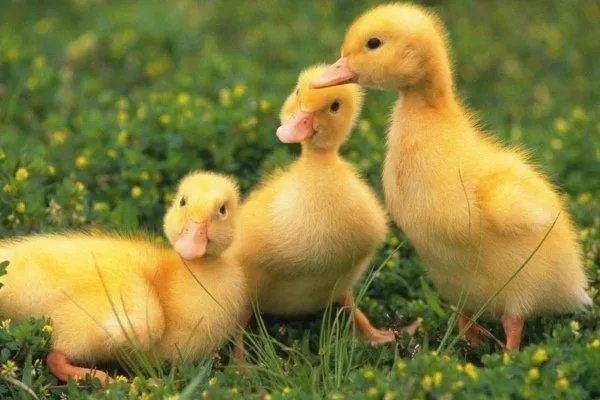
To prevent intestinal infections, give babies a calendula decoction during the first month of life (1 tablespoon of the herb per 1 cup of boiling water). Other feeding guidelines for young animals:
- The ideal option is a special starting mixture.
- From the age of one week, introduce cake, greens, and crushed grain.
- For feeding, use vitamin premixes against rickets, vitamin deficiency, and pecking.
Starting at one month of age, let the ducklings out to pasture. If weather permits, you can do so earlier. Make sure the lawn is free of poisonous plants and foreign objects, and that there's some water in a specially prepared container.
When to slaughter
The ideal time for slaughter is when the duck is 2 months old. The feathers are not fully formed, so pluck a carcass It won't pose any particular problems. In one productive season, you can harvest up to 550 kg of duck meat per year. The carcass is cleaned and attractive to buyers, enjoying high demand.
Feather and down
Pure white feathers replace swan's down, which is used for clothing and bedding. Feathers and down are inexpensive, and the resulting garments are warm and lightweight. They are widely used in regions with harsh climates.
Advantages and disadvantages of the breed
Ducks are undemanding eaters, but that's not the only advantage of the Agidel breed. There are other positive aspects to this breed:
- dietary meat;
- high value of down;
- rapid weight gain;
- high egg production;
- strong immunity;
- high fertility.
The Agidel breed has its own disadvantages:
- fatty meat;
- lack of maternal instinct in females;
- the need to purchase an incubator;
- restless nature of chicks.
Price and where to buy
Agidel ducks attract breeders with their affordable price. You can buy a duckling at any poultry market for 100 rubles, and a hatching egg for 50 rubles. It's best to purchase young ducks from farms with a breed certificate. Otherwise, you're more likely to buy crossbreeds rather than quality Agidel ducks.
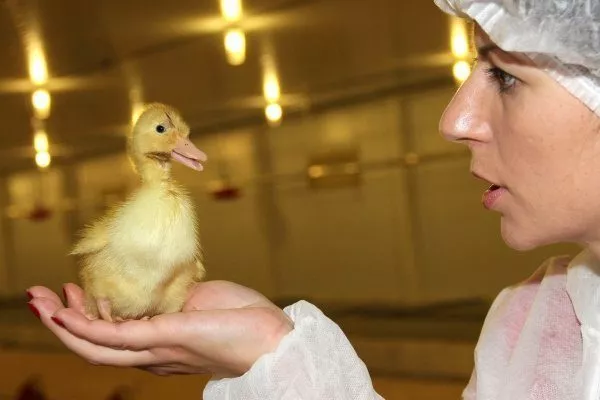
Farmer reviews of the Agidel duck
Agidel ducks are popular among Russian breeders and are equally common throughout the country. They are renowned for their lean meat and large eggs, high fertility, and non-confrontational nature.