
Mute ducks are very common in poultry yards. They attract breeders due to their ease of care, tasty and nutritious meat, and high fertility. Other names for this breed include Muscovy ducks and Muscovy ducks. These birds have a distinctive character, so carefully familiarize yourself with the breed's specifics before breeding.
History of the breed's origin
The first Muscovy ducks appeared during the time of the ancient Aztec tribes. A more precise time period is not specified by breeders. In agriculture, two versions of the origin of this breed's name are known:
- The specific smell of Muscovy duck fat when melted resembles the aroma of musk.
- "Muisca" is the name of an ancient Indian tribe living in the territory of modern-day Colombia.
Today, wild relatives of the Muscovy duck, identical in color and build, are often encountered in the forests of South America. They are hunted, although their meat is tougher and has a distinctive flavor (due to their diet).
Mute ducks were brought to Europe from South America and subsequently spread throughout the world. The birds' popularity gradually increased, as breeders were put off by their unsightly appearance. Mute ducks first appeared in the USSR in 1981, imported from East Germany. In 1988, they were supplied to Russia from France.
Characteristics of mute ducks
Muscovy ducks are called mute ducks for the distinctive hissing sound they make instead of the usual quack. In appearance, they are unremarkable, even unsightly birds, with an elongated body and distinctive growths around their beaks.
Despite their external defects, Shipuns have tasty, dietary meat and high egg production rates, which is what attracts Russian breeders.
Appearance and behavior
Mute ducks have a massive, elongated body and a long tail. The head is large, set on a muscular but short neck. The chest is broad and prominently protrudes forward. The feet are feathered, set wide apart, and short. The tips are tipped with sharp claws. The webbing is rounded. The duck waddles from side to side and walks slowly.
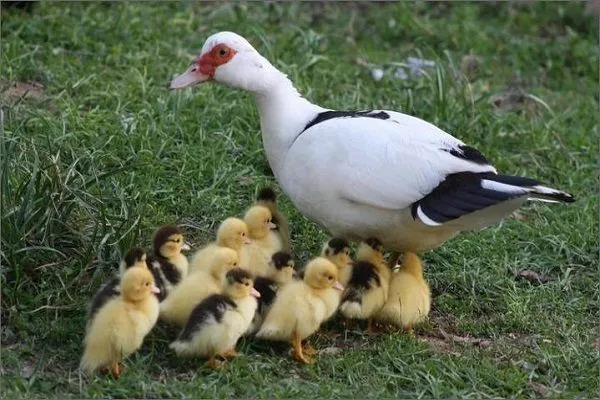
Mute ducks
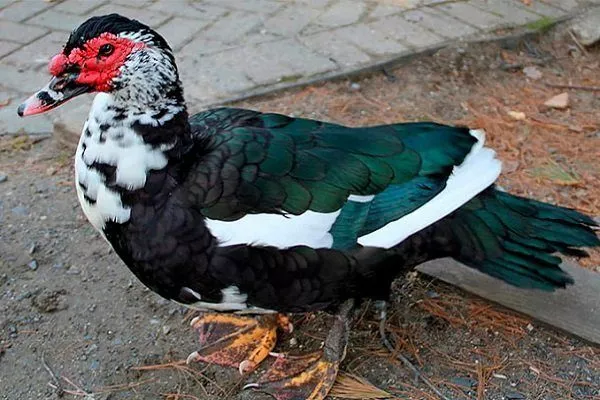
Ducks have a characteristic hissing sound
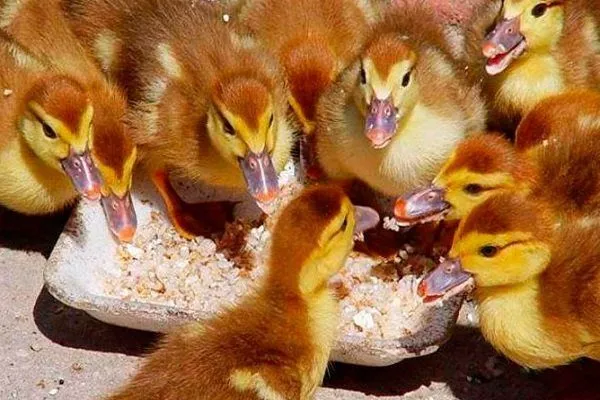
Mute ducklings
The bird's head features a flattened bill with a distinctive rounded tip. Around it are soft red growths, like a mask. In males, these growths are a more intense color, while in females, they are pink or pale pink. The eyes are brown and set wide apart. These external characteristics make it easy to distinguish males from females.
Domestic birds gain weight quickly. By three months, males reach 5-6 kg. Females weigh no more than 3.5 kg. A drake can be identified by the protruding feathers on his head, whereas a duck's head is completely uncharacteristic of such a distinctive hairstyle.
Domestic birds come in a wide variety of colors. Through extensive selective breeding, black and white, brown, chocolate, and even blue birds have been developed. There's a common misconception that a variety of colors indicates impurity. This isn't true.
Muscovy ducks are docile, calm, and non-confrontational. They are peaceful and get along well with other poultry housemates. The exception is when the bird's daylight hours are disrupted or it is hungry. In these cases, aggressive behavior and cannibalism may occur.
Meat and egg production
Muscovy ducks are more suitable for slaughter. The best period is 2-3 months, when the male weighs up to 5 kg. If overexposed, weight gain continues, but due to the accumulation of fat in the subcutaneous layer. Meat production declines.
The meat, with its deep red hue, has excellent flavor and is a healthy addition to any diet. It has no distinctive odor or flavor.
Muscovy ducks lay large eggs, weighing 80-90 grams each. Annual egg production ranges from 90 to 110 eggs. Compared to other duck breeds, these numbers are much lower, making it unprofitable to breed Muscovy ducks for their eggs.
Advantages and disadvantages
Mute ducks are attractive due to their docile nature. They present no feeding problems for the breeder and do well without an artificial pond. The list of advantages of this breed doesn't end there:
- cleanliness;
- tasty dietary meat;
- 2 offspring per year;
- rapid weight gain;
- large, healthy eggs;
- good maternal instinct;
- strong immunity;
- the possibility of obtaining offspring in an incubator.
Along with all the advantages, breeders have found significant disadvantages in keeping and breeding Muscovy ducks, which has made the breed less in demand in agriculture:
- low egg production rates;
- slow growth;
- intolerance to low temperatures;
- risk of disease;
- the need for space, warmth, and lighting.
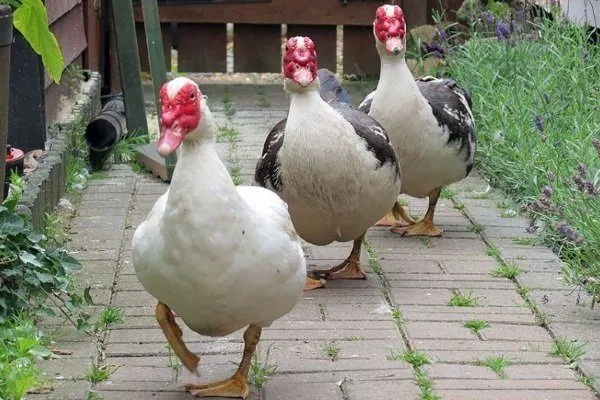
Conditions of maintenance and care
Muscovy ducks live in poultry houses, grazing in aviaries on fertile soil. To increase their fertility and productivity, follow proper care and maintenance guidelines for domestic birds. Start with proper poultry house setup.
- ✓ Optimal stocking density: no more than 3 individuals per 1 sq. m.
- ✓ Temperature conditions in the poultry house: 15 degrees, humidity 60-70%.
Valuable advice from experienced breeders:
- Provide the birds with sufficient space, otherwise they will behave aggressively. Ideally, there should be three birds per square meter of coop.
- For flooring, use wood shavings or dry straw, but first treat the floor with slaked lime to remove microbes.
- Set the optimal temperature – 15 degrees, the acceptable humidity level – 60-70%.
- Avoid dampness and drafts, maintain a constant temperature in the poultry house.
- Install perches measuring 40x50 cm on elevated surfaces – 8-15 cm from the ground.
- Line duck nests with straw or feathers, and ensure they are clean and intact.
- Provide adequate lighting in the poultry house. A 14-hour daylight period increases egg production.
- Install a reliable ventilation system in the poultry house, otherwise stale air creates favorable conditions for the growth of bacteria and duck diseases.
- Place feeders with fences: wooden ones for dry mixture, metal ones for wet food.
- Provide access to fresh water, install drinking bowls of such a volume that the birds always have something to drink.
To ensure your poultry stays healthy, produces healthy offspring, and achieves high productivity, follow these rules:
- Cleaning the poultry houseMake sure the bedding is always dry and clean. Change it every 2-3 days. Otherwise, the infection can spread to the ducks, which can lead to their death and the entire flock becoming infected.
- WalkingBuild an aviary near the poultry house and enclose it with mesh. If desired, create an artificial pond or separate part of an existing pond. Graze the birds from 10 a.m. until late evening. Ensure they always have fresh food and access to water.
- Removing food, changing waterChange the water bowls daily. If algae or dirt appears on the walls, count them and disinfect them. Check what the ducks are eating; do not leave stale hay or damp, moldy mash. The Muscovy ducks' immunity, health, and fertility depend on this.
- VaccinationAt 4 and 8 weeks of age, administer preventative vaccinations against viral hepatitis to ducklings. Otherwise, there is a high risk of death in offspring under 1 month of age. In unfavorable conditions, vaccination schedules should be adjusted individually with a veterinarian.
- Bird inspectionRegularly inspect your birds' feathers, heads, and limbs. At the first sign of illness, isolate sick birds and seek immediate veterinary attention.
Maintenance of laying hen and drake
Domestic birds are not picky eaters, but to ensure healthy offspring, monitor their diet and living conditions. At 6 months of age, move the hen to a separate room and increase daylight hours to 16-17 hours. From this point on, the duck can begin laying eggs.
As for drakes, the reproductive period occurs in the spring, from April to June. The fertility rate of eggs increases to 95%. There are up to 2-3 hens per drake. With more hens, the percentage of fertilized eggs decreases, and the duck will discard them and refuse to incubate them.
Nutrition
When choosing a basic diet, opt for nutritious and vitamin-enriched feed. Feed half the daily ration in dry, concentrated form, and mix the other half with mineral supplements, greens, vegetables, and vitamins.
Include wet mash in your Muscovy duck's diet, but feed it during the day. To prepare this mash, use fruits and vegetables, boiled and chopped eggs, grain, chalk, table salt, sunflower meal, bone meal, and meat meal.
Feed dry food in the late afternoon and wet food during daylight hours. This daily diet, combined with adequate water intake, promotes rapid weight gain and prevents digestive issues.
For more tips on feeding ducks, read next article.
For the cheapest food to feed Muscovy ducks, watch the following video:
Breeding
Muscovy ducks begin to breed late, at 9-10 months. Females begin laying eggs between February and April, depending on the climate of the region. This is due to the increased activity of the drake.
Ducks lay eggs at night or early in the morning, so don't let the hens out to pasture before 10:00 a.m. Monitor the number of eggs in the nest. At 15-20 eggs, the duck will begin to incubate them. If necessary, add a few more eggs to the nest if the non-maternal hen refuses to incubate them.
Closely related individuals should not be bred, as this can lead to extensive pathologies and mutations in the offspring. If all rules are followed, up to 100-150 eggs can be produced per year. If these numbers suddenly decrease, review your Sheepshead's daily diet and determine the cause.
Incubation of eggs
Muscovy ducks lay eggs twice a year. The eggs incubate for about 32-37 days, after which the young hatch. The ducks do not leave the nest until the ducklings hatch. They sit on the eggs when there are 15-20 eggs in the nest.
A hen will independently select the eggs she wants to incubate. She simply discards the empty ones. There have been cases where a duck unexpectedly pecked an embryo, while the remaining eggs were incubated to term. This indicates that the chick was not viable.
Muscovy ducks have a highly developed maternal instinct, so they can sit on their eggs for a month without getting up. Furthermore, the hens themselves turn the eggs and spray them with water, carried in their beaks. The most important thing is to ensure the Muscovy duck receives adequate nutrition and water. A feeder and waterer should be nearby, as well as a basin of water for wetting their wings and eggs.
Using an incubator
Breeders place more trust in hens with good maternal instincts than in incubators. In the latter case, duckling survival rates are low. This is due to the egg's thick shell, which prevents air and heat from passing through. As a result, the embryos die.
- ✓ Eggs must be fresh, no older than 7 days.
- ✓ Absence of visible shell defects.
If you still use a horizontal incubator to hatch Muscovy ducks, follow these rules:
- Ensure temperature is 38 degrees.
- Place large eggs first, then medium ones after 3-4 hours, and small ones after another couple of hours.
- Turn the eggs 4-5 times daily.
- Monitor the temperature: 1-7 days – 38 degrees, 8-29 days – 37.6 degrees, 30-35 – 37.2 degrees.
- Regulate the humidity level: 1-7 days – 55-60%, 8-29 – 40-45%, 30-35 – 70-75%.
- Starting from the 3rd week, open the incubator for 15-20 minutes 2 times a day to cool the eggs.
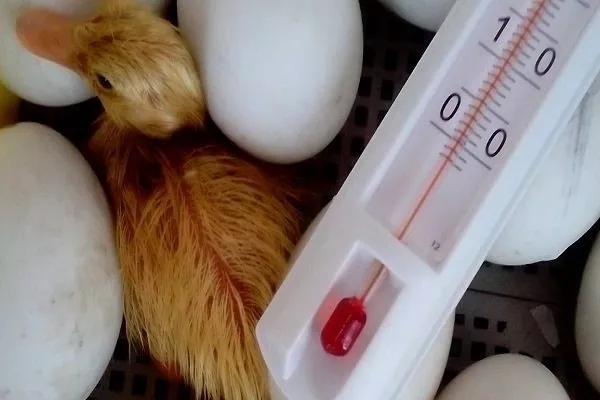
The hatched ducklings are transferred to a brooder, where they are provided with constant temperature and lighting, and the correct nutrition for their age.
Read about the basics of incubating duck eggs in this article.
Feeding ducklings
Once the ducklings hatch, immediately separate them from the mother hen and feed them. Otherwise, the mother duck may accidentally kill her offspring. Then return the ducklings to their mother, as they won't survive without her care.
Nutritional features:
- On the first day, feed the chicks crushed boiled egg to help them get used to feeding on their own. To do this, sprinkle some egg crumbs on the back of one chick; when it moves, it will attract the attention of the entire brood.
- On the 2nd day, include dairy products, such as cottage cheese, whey, and milk, in the ducklings’ daily diet.
- On day 4, add bran, spinach, and chopped beet greens to your diet. Meat scraps, bran, and grains are allowed.
- On the 10th day of life, give the ducklings compound feed and boiled potatoes.
- At 2 weeks of age, ducklings should be fed primarily protein-rich foods. Supplement their diet with boiled meat and fish.
From two weeks of age, ducklings begin grazing. Feed them grain twice a day, monitoring their water availability. To increase the nutritional value of the grain, grind it into flour beforehand. Corn, barley, millet, and wheat are welcome additions to the daily diet of poultry. While grazing, ducklings find small insects and worms, which also supplement their usual diet.
Keeping ducklings
Ducklings grow quickly and are ready for slaughter by two months. The optimal temperature in the hatching area is 30 degrees Celsius (86 degrees Fahrenheit) during the first week of life. If heat is insufficient, use an infrared lamp. Over the following weeks, gradually reduce the temperature to 15 degrees Celsius (59 degrees Fahrenheit), which is suitable for adult ducklings.
The duckling house should be free of drafts and dampness. The acceptable humidity level for the growing generation is 60-70% degrees Celsius, no more.
During the first month of life, healthy ducklings produce runny droppings, which shouldn't cause concern for the breeder. Due to this developmental process, change the young ducklings' bedding more frequently to prevent infection and mold buildup.
Possible diseases
Mute ducks, like other poultry house inhabitants, can become ill. They become lethargic, eat poorly, and refuse to drink water. Without prompt treatment, they can infect the entire flock and die.
Potential diseases include:
- Viral hepatitis. It most often develops in chicks under two weeks of age and is characterized by drooping wings and head, as well as poor feeding. Treatment is effective with antibiotics.
- Parasitism. The disease is caused by parasitic activity due to improper care of Muscovy ducks. Treatment involves medication, disinfection of the poultry house, and preventative measures for all its inhabitants.
- Salmonellosis. The Sheepsheads are developing conjunctivitis and frequent seizures. The birds are weakening and occasionally falling while walking. The coop is being disinfected and treated with antibiotics.
- Eimeriosis. The disease most often develops in animals under 4 months of age. Significant symptoms include green stool, diarrhea, loss of appetite, and decreased activity. Treatment is comprehensive.
- Cholera. The disease is fatal, capable of killing up to 80% of a flock. Affected ducks experience swollen feet, bowel disturbances, and fever up to 43 degrees Celsius. The meat is inedible, and the carcass is burned.
To find out why ducks fall on their feet and how to help them, watch the video:
Farmers' reviews

Mute ducks have tasty, tender meat that's both nutritious and healthy. Females have excellent maternal instincts, so they can incubate their young on their own. They are easy to feed, and their care is simple and quick, making this breed popular among both experienced and novice farmers.