
Many farmers prefer to raise ducks at home for personal consumption and subsequent sale. To do this, it's important to know the duck breeds, their productivity characteristics, and the specifics of their rearing. This article discusses the best breeds suitable for backyard farming.
| Name | Weight of an adult (kg) | Egg production (pieces/year) | Productivity type |
|---|---|---|---|
| Ukrainian gray | 3.5-4 | 120 | Meat |
| Russian Crested | 2-3 | 55 | Meat and egg |
| Bashkir | 3.7-4 | 115-125 | Meat and egg |
| Beijing | 3-4 | 110 | Meat |
| Muscovy duck | 2-6 | 90-100 | Meat |
| Blagovarskaya | 3-5 | 200-250 | Meat and egg |
| Agidel | 3 | 250 | Meat and egg |
| Blue Favorite | 3-7 | 100-150 | Meat |
| Mulards | 3.5-6 | Meat | |
| Cherry Valley | 3.4-4 | 120-150 | Meat and egg |
| Indian Runner | 1.5-2 | 200-350 | Egg |
| Star 53 | 4 | 300 | Meat and egg |
| Moscow Whites | 3.8-4 | 150 | Meat |
| Rouen ducks | 3.8-4 | 90 | Meat |
| Swedish Blue | 3-4 | 100-150 | Meat and egg |
| Black and white-breasted | 3.5-4 | 110-130 | Meat and egg |
| Khaki Campbell | 2.2-3 | 350 | Egg |
| Pace | 3 | 150-160 | Meat and egg |
| Medeo | 2.5-5 | 140 | Meat and egg |
| Cayuga | 3-4 | 150 | Meat and egg |
Ukrainian gray
A meat poultry breed considered one of the best in this category. It was developed by Ukrainian breeders.
Description. These birds have a broad, muscular body, a powerful build, and fragile bones. Their bills are dark and slightly concave. They have dense plumage, similar in color to their wild counterparts. Specimens with clay-colored or white plumage are common.
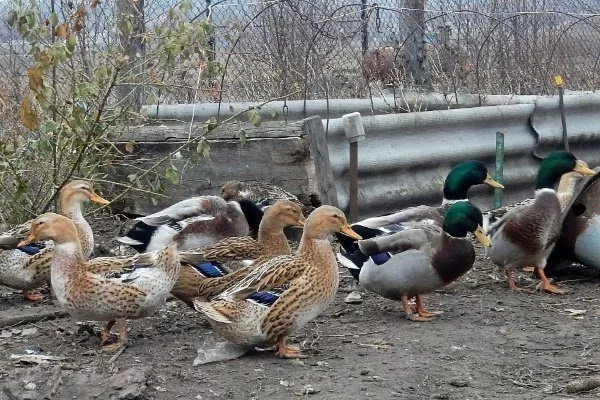
Productivity. The young ducklings grow and develop well and gain weight quickly. By two months, they weigh 3.5-4 kg. A single hen lays up to 120 large eggs weighing 85-90 g per year.
Content. Ducks of this breed can thrive on pasture and home-grown duckweed alone. They can be kept in unheated coops. The key is to provide thick litter and protect the coop from drafts.
Advantages. Good productivity, increased resistance to low temperatures and avian diseases. Also noted are early maturity, vigorous growth, and a high chick survival rate.
Flaws. The birds are not clean and also behave noisily.
Russian Crested
The main characteristic is the crest on the head. Some note that the larger the crest, the lower the productivity.
Description. The Russian Crested Duck has a medium-length body and a strong build. Muscles are well developed. The back is broad and slightly arched, and the chest is rounded. The full belly is free of folds. Some specimens are pure white, while others are multicolored, with dense feathers that lie close to the body. These ducks have long wings and an elongated, rounded head. They have brown eyes and a concave bill.
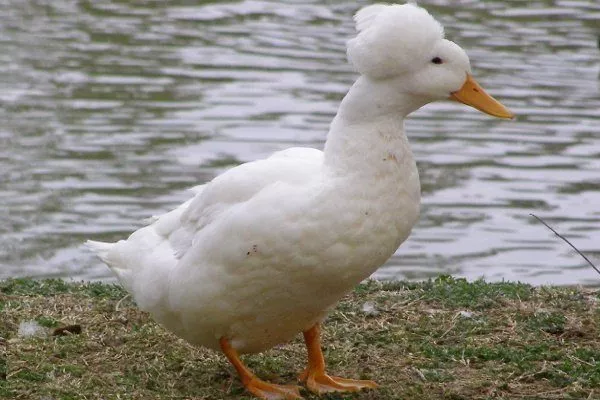
Productivity. Ducks weigh just over 2 kg, with drakes weighing around 3 kg. Their meat is tender, juicy, and delicious. A single hen lays approximately 55 white or greenish eggs per year, weighing up to 70-80 g.
Content. Ducks are easy-to-eat and are quite comfortable in water. Overfeeding them is not recommended, as they are prone to obesity. Keep the birds' enclosures clean and dry, otherwise they may become susceptible to illness.
Advantages. These birds are easy to care for and feed. They are characterized by high productivity and rapid growth.
Flaws. Small weight of Russian ducks.
Bashkir
A breed primarily for meat and eggs. Farmers on private farms and in industrial enterprises have become particularly fond of these birds because they eat virtually any food and are able to independently satisfy their needs while wandering in a meadow or pond.
Description. The ducks have a prominent chest and a strong, muscular build. They have large, wide-set feet on short, orange legs. Their heads are flattened on top and rest on a short, concave neck that curves outward. Their beaks are concave and orange, with a wide knob that allows them to grasp grass. Their wings are held close to their bodies. Their plumage is a bluish-black hue.
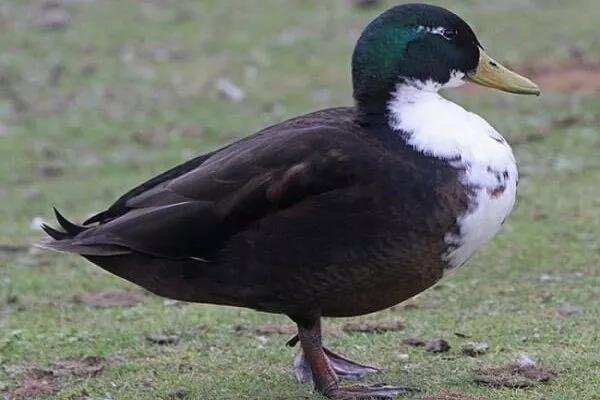
Productivity. Adult drakes weigh over 4 kg, while females reach 3.7 kg. Their carcasses are virtually fat-free. Meat yield is at least 70%. One hen produces 115 to 125 eggs per year, each weighing 70-80 g.
Content. The bird is easy to care for, so it thrives in special cages and pens. The duck house must be maintained at a moderate temperature in winter and at an optimal temperature in summer—it shouldn't be too hot.
Advantages. Ducklings have a high survival rate—approximately 80%. They also have increased resistance to infectious diseases and grow and develop quickly.
Flaws. Birds need to be constantly provided with clean water and have their bedding changed, otherwise the animals may become susceptible to disease.
Beijing
As its name suggests, the breed originates from China. The bird arrived in Europe in the 19th century and immediately became prized by many private farm owners. The Peking breed is equally popular in Russia.
Description. These birds have distinctive external characteristics. Pekins have a strong build, a broad chest, and a deep back. Their large heads feature a prominent forehead and a bright orange bill. The head is set on a short, short neck. Their wings are wide-spanning and well-developed. The birds have dense white plumage. Occasionally, specimens with cream-colored feathers are found.
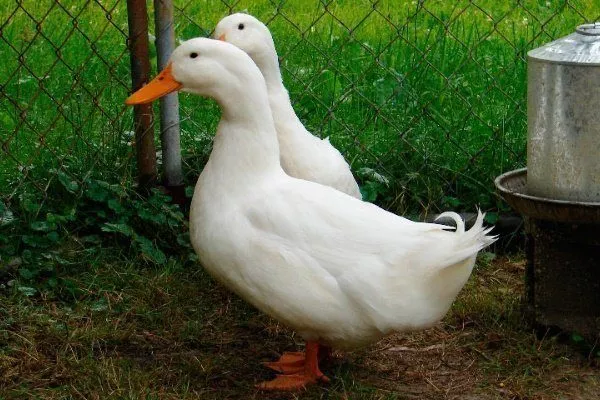
Productivity. An adult duck weighs about 3 kg, while a drake can reach up to 4 kg, sometimes even more. The young quickly gain weight, and by two months, drakes weigh 2.9 kg. Over the course of a year, the hens lay over 110 eggs, each weighing approximately 90 g.
Content. During the winter, ducks need a special room to ensure there are no drafts. Maintaining optimal temperature and lighting is equally important. During cold weather, the duck house should be at least 10°C (50°F), and during the summer, no more than 25°C (77°F).
Advantages. They mature early, are undemanding in terms of feed, and are resistant to heat and cold. Furthermore, they don't need to be kept near water.
Flaws. Birds have a poorly developed maternal instinct, and ducks are overly sensitive to excess humidity.
Muscovy duck
The Muscovy duck originates from South America, where ancient Native Americans raised this bird for hundreds of years. It appeared in the former Soviet Union in the 1980s. The breed supposedly got its name from the distinctive aroma of its meat, but modern people don't detect anything unusual.
Description. The bird's appearance is remarkable. It has brightly colored growths on the top of its head, and a narrow, downward-curving bill. The crown has elongated, raised feathers that stand out even more when the bird is startled or surprised. Muscovy ducks have blue, gray, or brown eyes. The neck is strong and short. The chest is well developed. The back is long and broad. The body is carried almost horizontally. Short legs give the bird a squat appearance. Birds come in brown, white, and blue. There are also specimens with brown and white, black, and patterned white colors.
Productivity. Adult males weigh 5-6 kg, while females weigh 2-3 kg. At two months, the young weigh 3.8 kg for males and 2.2 kg for females. Over the course of a year, hens produce 90-100 eggs weighing up to 75 g. Egg production is valuable and nutritious.
Content. Birds prefer dry and clean rooms. The coop should be spacious and bright. They are particularly sensitive to cleanliness because it affects the egg-laying period. The room temperature should be maintained at 18-20 degrees Celsius.
Advantages. Unpretentiousness in feeding, developed maternal instinct, endurance, ability to live for a long time outside the water.
Flaws. Long development, birds' dislike of crowded and damp conditions - these contribute to the development of diseases.
You can find out what exactly the Muscovy duck breed looks like and how to keep them in the video below:
Blagovarskaya
Most poultry farmers prefer to raise birds not only for egg and meat production, but also for the beauty of their backyard. Blagovar ducks are precisely such birds, prized for their delicious meat and appearance.
Description. These birds are large, with a horizontal, elongated body. A large head rests on a flexible, elongated, and short neck. Their build is robust, resembling a broiler in appearance. Their voluminous, elongated body and rounded, well-developed chest make them particularly distinctive. Their bill is a rich orange hue. Their legs are short and set wide apart, with orange or pink feet. Their plumage is snow-white.
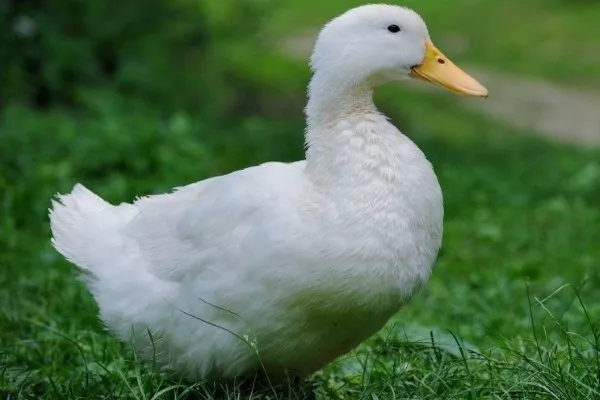
Productivity. Adult drakes weigh 4.4-5 kg, and ducks weigh up to 3 kg. A hen lays approximately 200-250 large eggs weighing 90-95 g per year. The eggshell is white. Fertility rates reach 98%.
Content. During the winter, birds require a coop for overnight roosting. The coop should be equipped with a heating and ventilation system, lighting, nests and feeders, waterers, and windows.
Advantages. Rapid growth and weight gain. The birds have good meat production and are highly productive. The breed has increased resistance to various diseases.
Flaws. To ensure that birds are healthy, grow quickly, and gain weight, they need not only good housing but also a balanced diet, which can be costly.
Agidel
Breeders working with these ducks sought to improve not only egg and meat production but also the animals' resistance to disease and infection. They succeeded.
Description. These ducks are characterized by a deep, prominent chest, a long, broad back, and a well-set, almost horizontal body. They have a long, large head with dark, high-set eyes and a wide, pinkish-white bill. The neck is slightly thicker and comparatively long. The body is firmly supported by short, light-orange legs. The plumage is white.
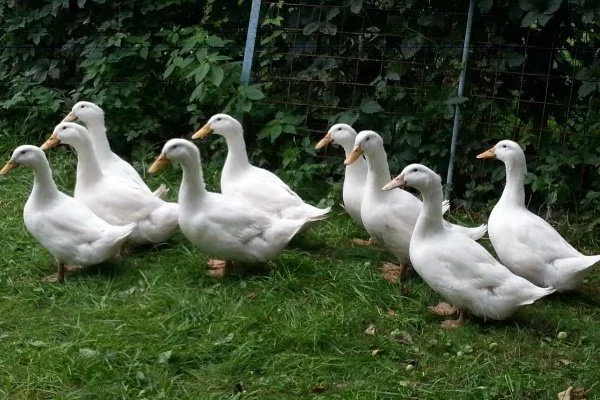
Productivity. The breed is prized for its high productivity. At two months of age, the birds weigh 3 kg. During this period, if the birds are not kept for breeding or egg production, they are slaughtered. A duck produces up to 250 large eggs weighing up to 100 g per season.
Content. Birds don't need substantial housing because they tolerate temperature fluctuations well. The only thing to avoid is drafts. A water dish should be provided in the room so the birds can moisten their feathers.
Advantages. Agidel ducks gain weight quickly, produce many eggs per year, and have increased disease resistance. The taste of their meat is especially prized by farmers.
Flaws. Receiving a brood from an incubator due to poorly developed maternal instinct, fatty meat.
Blue Favorite
This breed was developed relatively recently—about 20 years ago. Peking ducks were used in the crossbreeding. At the farm in Bashkiria, breeders spent a long time selecting and crossing ducks to achieve a positive end result. The bird is also known as the Pharaoh.
Description. Blue ducks are considered large birds. At six months, they are comparable in size to geese of the same age. The Pharaoh has a stocky, heavy build, a prominent chest, and a long, low-slung body. The neck is strong and medium-length. It has a wide, large, gray bill and large, dark eyes. The body rests on strong, short, yellow or gray legs. The wings are small and lie close to the body. Specimens can be found with blue, red, gray, white, black, or a combination of plumage.
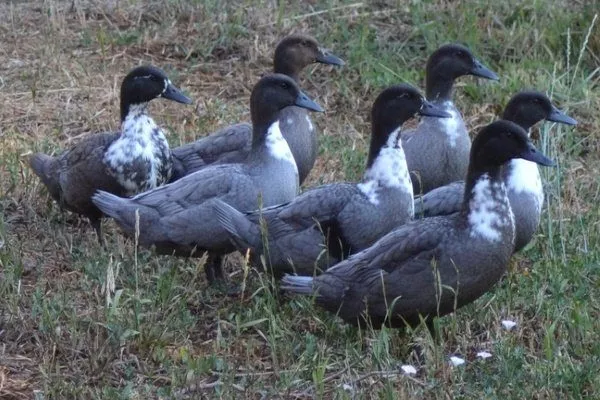
Productivity. With a balanced diet, the birds weigh around 3 kg by two months of age. Males average up to 5 kg, sometimes reaching 7-8 kg. Hens weigh less, around 4 kg. A single hen lays 100 to 150 large eggs weighing 80-85 g per year.
Content. The Blue Favorit is a low-maintenance breed. A special duck house isn't necessary; a regular pen will suffice. This bird adapts well to a wide range of climates.
Advantages. The Pharaoh has many advantages that make the breed popular for breeding:
- the birds have a beautiful appearance;
- animals gain weight quickly;
- Birds provide tasty, lean meat.
Flaws. Birds have a poorly developed maternal instinct. For this reason, ducklings are hatched only using an incubator or with hens of other breeds.
Mulards
Breeders created a hybrid to improve the parent breeds to produce a new, improved specimen. The crossbreeding involves Muscovy ducks and domestic ducks of the Peking White, Rouen, and other breeds.
Description. These birds have a distinctive appearance, making them difficult to confuse with other ducks. They are large, with a stocky, elongated body. A small, oval head sits on a strong, long neck. The body rests on sturdy legs with short, yellow-orange feet. Their eyes are dark, and their bill is flat, light yellow, and slightly elongated. The feathers lie flat against the body, predominantly white. These birds are calm, quiet, and clean.
Productivity. The hybrid boasts high productivity. During the first 2-3 months, ducks weigh 3.5-4 kg, reaching approximately 6 kg by four months of age. Their lean meat is particularly prized in cooking and considered a delicacy.
Content. Ducks can be kept in an insulated barn where they will spend the night. They should also be provided with a run. The temperature in the coop should be no lower than 16°C and no higher than 25°C.
Advantages. Calm disposition, early maturity, cleanliness, high meat production, unpretentiousness in care.
Flaws. Mulards are not found in the wild and are unable to reproduce. They are raised exclusively in captivity.
A Mulard duck breeder shares his experience breeding them in the following video:
Cherry Valley
The breed originates from England. British breeders sought to develop a breed with maximum meat production without sacrificing egg production. Pekin ducks were used in the breeding process. Selection was conducted simultaneously on both the paternal and maternal lines, yielding good results in both cases.
Description. In appearance, these birds resemble their ancestors. At birth, the chicks are born with yellow plumage, which lightens over time, becoming pure white. The body is vertical and elongated. The birds have a broad chest, well-defined muscles, and feathers that lie close to the body. The body stands on short, sturdy legs of a reddish-orange hue. A small head with a convex forehead rests on a thick neck. The beak is curved and yellow-orange. The eyes are blue or dark blue.
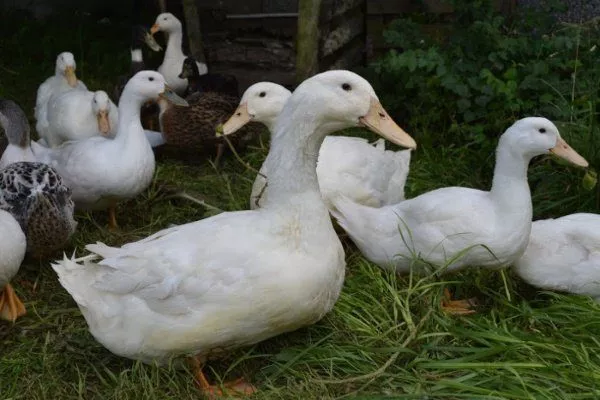
Productivity. A duck weighs between 3.4 and 3.7 kg. A drake weighs between 3.5 and 4 kg. A hen lays 120-150 large eggs weighing 70-90 g per year. The hatchability of the young is approximately 95%.
Content. Maintaining this breed is virtually hassle-free. To ensure the animals feel comfortable, they need a warm room and proper feeding and drinking facilities.
Advantages. The advantages of the breed include rapid growth, attractive appearance, high productivity rates, and undemanding diet.
Flaws. Cherry Valley birds have virtually no downsides. The only difficulty a breeder might encounter is access to water and exercise.
Indian Runner
This breed was previously called the "Pinguina." This name derives from the duck's unusual shape. Even in the early 20th century, the breed was considered rare in Europe, and the birds were considered exotic—they were exhibited in zoos.
Description. The Indian Runner's appearance distinguishes it from other duck breeds: it has a unique body shape, resembling an elongated bottle. This feathered creature has a slender, tall, vertically oriented body with a rounded chest. The feathers are smooth and lie close to the body. The plumage coloration varies.
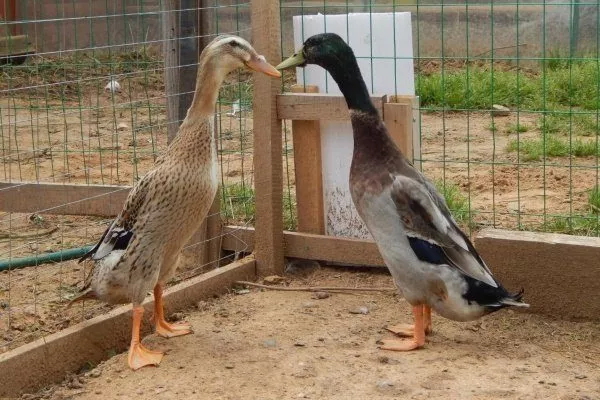
Productivity. Adult runners can weigh up to one and a half to two kilograms. Females are smaller than males. Within the first month of good fattening, ducklings reach the weight and size of adult birds. Egg production is much better: a hen lays 200-250 large eggs per year, sometimes reaching 300-350.
Content. If ducks have access to a pasture near a body of water, maintenance costs will be minimal. Indian runners can forage for food on their own all day long.
Advantages. The animals are fast runners and active. They have increased resistance to disease. They grow quickly and are not afraid of snow and frost.
Flaws. Ducks are skittish and can panic at the slightest noise. It's not advisable to breed these birds for meat.
Star 53
The Star-53 is a Pekin duck cross. The cross was created by a French breeder at Grimaud Frères Selection.
Description. The bird is similar in appearance to its ancestor. It has snow-white plumage and is large in size. Its beak and feet are bright yellow. It has a massive back, an elongated body, and a powerful, broad chest that juts forward. Its round head rests on a thick, muscular neck. Its tail is strong and its wings are long.
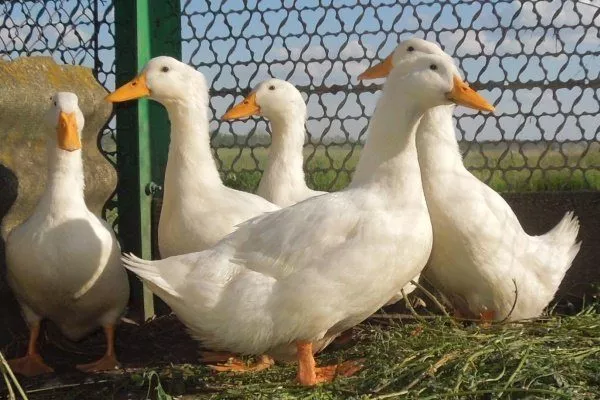
Productivity. By two months of age, the bird weighs approximately 4 kg. The meat content of the carcass is over 60%. Over the course of a year, the hen produces up to 300 large eggs weighing approximately 90 g or more.
Content. Birds should not be kept in cramped conditions. If they don't have enough space, they will become restless, fidgety, and noisy. It's important to maintain an optimal temperature in the coop—not too hot or too cold.
Advantages. By two months of age, they produce large, lean meat carcasses. These birds are prized not only for their appearance, but also for their high egg production and low maintenance requirements.
Flaws.They cannot be kept indoors all the time; it is difficult to acquire truly high-quality young animals; the cost of hatching eggs is high; and feed is expensive.
Moscow Whites
The Moscow White duck was created by crossing a Pekin duck and a Campbell drake. Russian breeders developed the duck, producing a highly productive bird.
Description. These birds have a fairly large, slightly elongated head and a massive, sturdy body. The chest and back are broad. The body is positioned horizontally relative to the ground. The bill is pink or red. The short legs and feet are orange.
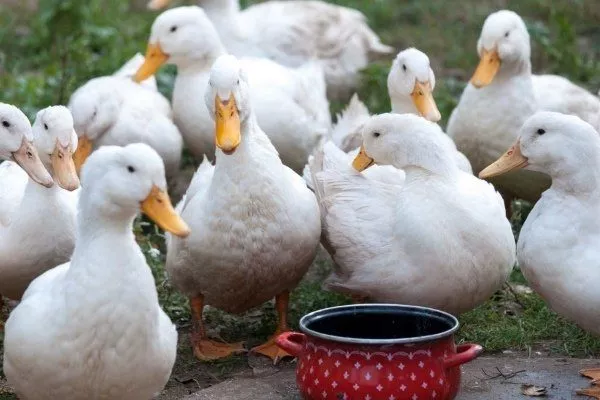
Productivity. Adults weigh on average 3.8-4 kg. Each female produces approximately 150 large eggs weighing 85-90 g per year. However, the breed is most often bred for meat production.
Content. An important characteristic of the breed is its ability to quickly adapt to various weather conditions. These birds are easy to care for and have strong immune systems. In winter, they can be kept in an unheated but insulated coop.
Advantages.Fast growth, tasty and tender meat.
Flaws. It requires good nutrition, but this allows the bird to gain weight faster.
Rouen ducks
This breed of duck was once a wild bird. Farmers value it for its delicious meat and minimal fat content.
Description. These ducks have a heavy, horizontal build, a deep chest, an oval back, and a curled tail. Their bodies rest on short limbs. Their bills are large and greenish. Their heads are small and set on a strongly arched neck.
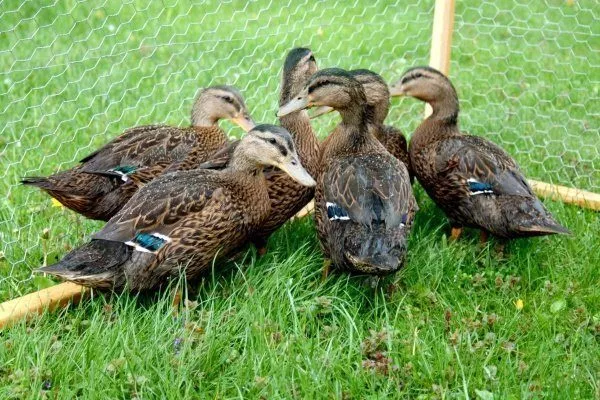
Productivity. On average, an adult duck weighs 3.8 kg, and a drake about 4 kg. A single female lays only 90 eggs per year.
Content. Caring for these birds is simple and is virtually no different from caring for other birds. Ducks require artificial water sources if natural ones are unavailable. Large containers or troughs are used for this purpose.
Advantages. The breed is most often raised for homestead decoration or for show. However, those who raise the bird for meat can confidently say that the resulting product is juicy, flavorful, and delicious.
Flaws. Tendency to obesity and poorly developed maternal instinct.
Swedish Blue
A meat-oriented breed developed in Sweden, Swedish Blue Ducks are now popular in Germany and Russia.
Description. These birds have a large, stocky build. They have a flat chest, a broad, straight back, and a short, straight tail. Their heads are oval, and their beaks are flattened. The primary distinguishing feature of this breed is the blue hue of their plumage.
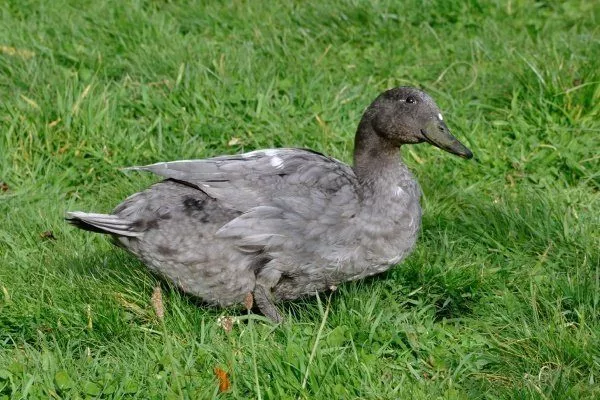
Productivity. Adults weigh on average 3-3.6 kg, while drakes weigh around 4 kg. A hen lays 100 to 150 small, oval eggs per year, with blue or greenish shells.
Content. These birds are easy to care for. During warmer months, they are provided with a spacious, fenced-in area. This area is often equipped with artificial pools and planted with various vegetation.
Advantages. Unpretentious in care and nutrition, resistance to diseases.
Flaws. Slow weight gain. It takes a long time for the bird to be slaughtered.
Black and white-breasted
The breed was created by breeders from the Poultry Institute of the Ukrainian Academy of Agrarian Sciences. Khaki Campbell, Peking, and Ukrainian White-Breasted ducks were used for the development.
Description. These birds are characterized by a massive body, a long, broad back, and a large, concave chest. A small head with a short, blunt beak and large black eyes sits on a long neck. The legs are short, the tail is small, and the feathers lie flat against the body. These birds have black plumage and white down on their chests.
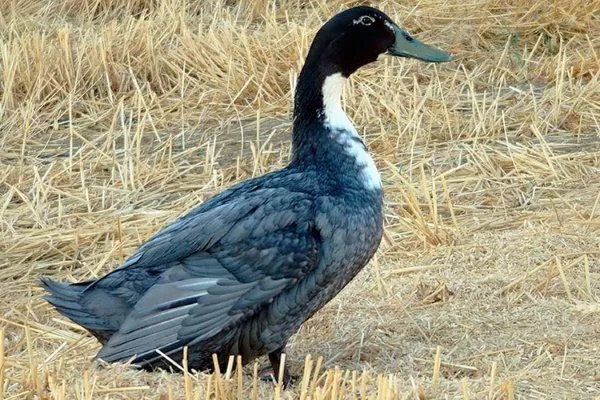
Productivity. The average weight of ducks reaches up to 3.5 kg, and drakes up to 4 kg. A laying hen produces 110-130 white eggs weighing 85-100 g per season.
Content. Black-breasted ducks are aquatic birds, so they require ponds or small water containers. When keeping a large number of birds, it is recommended to set up a brooder house with separate sections for free movement of the birds.
Advantages. Well-developed maternal instinct, rapid growth and weight gain, unpretentiousness in maintenance, calm disposition.
Flaws. Under unsuitable conditions and improper nutrition, there is a risk of decreased egg and meat productivity.
Khaki Campbell
A British duck breed developed in the late 19th century by poultry farmer Adele Campbell. It was named not only after the breeder but also for its unique coloring.
Description. Ducks are small, so their body parts are relatively small. They have an elongated coat with a deep chest and strong, short legs. A small head with dark, shiny eyes sits on a thin brown neck. The wings are underdeveloped.
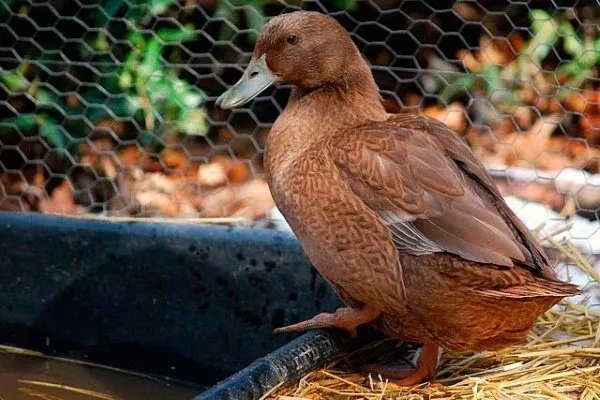
Productivity. An adult drake weighs up to 3 kg, while a female duck weighs 2.2-2.5 kg. Most of their weight gain begins at 3-4 months. Hens produce up to 350 eggs per year, each weighing 80 g.
Content. To ensure comfortable bird care, a farmer must ensure good pastures and water sources. A water diet can easily replace most of the feed.
Advantages. High egg production rates, tender meat taste, active birds and calm character.
Flaws. If the conditions for keeping birds are not met, they not only gain weight poorly, but also behave restlessly.
Pace
Breeders who have been working with the X-11 duck for a long time have achieved good results and developed a new variety. Compared to other breeds, the Pep is characterized by good productivity and early maturity.
Description. These birds have a large, oval body with a small tail and large yellow feet. The bird has a small head with a large, yellow beak and two black eyes. The head is supported by a long, pronounced neck with a slight arch. The wings are covered with dense, snow-white plumage.
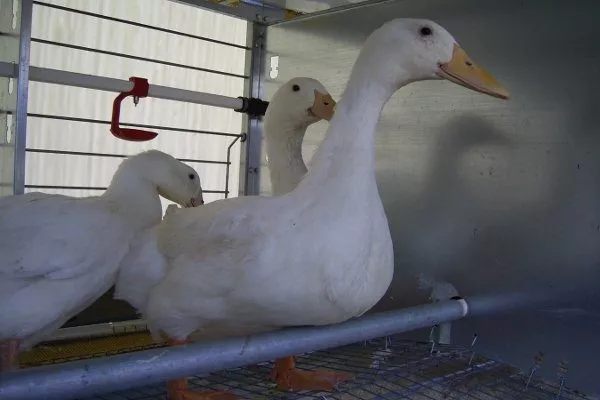
Productivity. At two months of age, the birds already weigh about 3 kg. Drakes are usually larger than ducks. Hens produce 150-160 large eggs per year.
Content. Birds can survive without a pond, but water containers should be installed in the walking area. A shelter should also be provided to protect the birds from rain or sun.
Advantages. The birds are unpretentious in care and can adapt to low temperatures.
Flaws. Good weight gain requires proper nutrition, which can be expensive.
Medeo
The birds were bred in Kazakhstan. Several cycles of crossing the X-11 cross with the Peking duck resulted in a breed with improved egg production and early maturity.
Description. In appearance, the bird is particularly similar to the Cherry Valley duck breed, and its coloring has been inherited from the Peking duck: white plumage, a yellow-orange beak, and large reddish-orange paws.
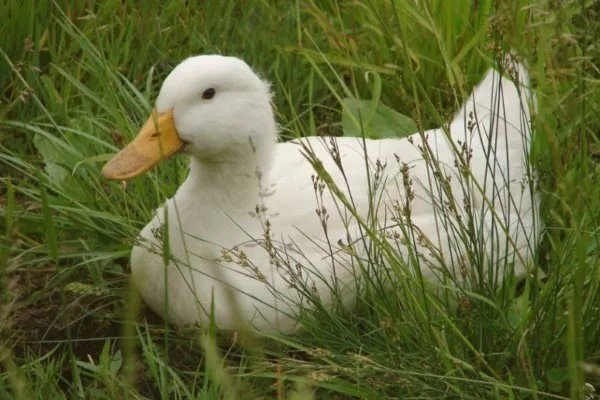
Productivity. At two months, the female weighs 2.5-2.9 kg, and the drake 3.3 kg. As adults, the female duck can weigh up to 4 kg, and the male up to 5 kg. Over the course of a year, the female lays up to 140 large, nutritious eggs.
Content. These birds are easy to care for and thrive in small spaces or cages. Providing them with a run is recommended, but not essential.
Advantages. Minimal feed consumption, birds adaptability to life in any conditions, high productivity indicators.
Flaws. No negative aspects were noticed.
Cayuga
The unusual black birds were discovered in 1809 near Cayuga Pond in New York. Residents began domesticating the wild birds that had arrived for the winter, crossing them with local breeds. This selective breeding resulted in the formation of the Cayuga breed.
Description. A distinctive feature of these birds is their beautiful, dark plumage, shimmering in various shades of blue and green, with a metallic sheen. Their elongated bodies are massive and strong, with dense plumage and wings that lie close to their bodies. They have a broad chest, a small, upright tail, and short, sturdy legs. Their heads are small and rounded, with a wide, black beak and dark brown eyes.
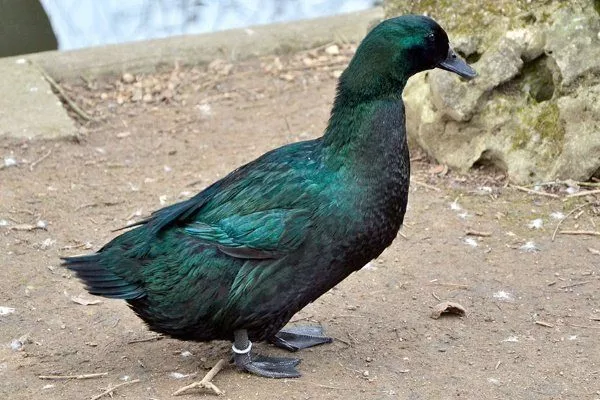
Productivity. Females weigh approximately 3-3.2 kg, drakes 3.5-4 kg. Ducks produce up to 150 eggs per year, weighing 75-100 g.
Content. These birds are unpretentious and undemanding when it comes to food. It is recommended to keep them in a free-range environment.
Advantages. They provide tasty meat and egg products with minimal care and economical feeding.
Flaws. If birds are poorly kept and fed with low-quality food, they can often become ill.
Today, private farms and large farms raise numerous breeds of ducks, with preference given to those varieties that exhibit good productivity. These characteristics, after all, ensure a high-quality product and profit from the sale of meat or eggs.