
Recently, the Muscovy duck has become one of the most sought-after birds for both domestic and farm use. This is due to its undemanding nature regarding rearing conditions, feeding, and productive characteristics—high egg production, as well as tasty, tender, and nutritious meat. Muscovy ducks require little care and can thrive in virtually any environment.
History of origin
Some people believe that Muscovy ducks are a hybrid of a turkey and a duck, but this is a misconception, although their beaks do somewhat resemble those of turkeys. This may be why Muscovy ducks were given this name.
This breed descended from wild ducks native to South America and Mexico, domesticated by ancient Native American tribes. Later, the species spread throughout the world. Muscovy ducks arrived in the former USSR from Germany as early as the 1980s.
Description and characteristics of the breed
Almost all Muscovy ducks are similar in appearance. Differences are found only in certain breeds, primarily:
- color of the feather cover;
- habits;
- fruitfulness;
- egg production;
- taste qualities;
- growing periods;
- feeding features.
Appearance
Muscovy ducks are a diverse breed with many distinct characteristics, but they share one commonality: distinctive appearance. Muscovy ducks have a large body and a broad, pendulous chest.
Muscovy ducks' strong, webbed feet are much shorter than those of other domestic birds. They have large, strong wings that lie close to their bodies and a short neck.
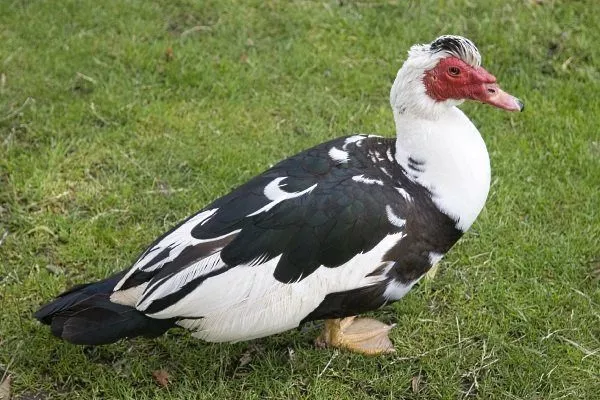
Their small heads are topped by a flat bill, and around their eyes is a distinctive red growth that distinguishes them from common ducks. Touching it reveals a faint musky odor.
Muscovy ducks' feathers lie tightly together, forming a waterproof covering that gives them a huge advantage in water. They love water, especially marshy ponds, which are home to a variety of insects and larvae. It's okay if there's no water nearby; they also thrive on dry land and can splash around in a regular trough.
Muscovy ducks vary in color depending on the breed. They are typically dark with a greenish or purple tint.
In terms of weight and size, there are no significant differences between them. Male ducks can weigh up to 6 kg, while females can weigh up to 4 kg. However, wild ducks are 1.5-2 times smaller than domesticated ducks.
Varieties of Indo-ducks
| Name | Drake weight (kg) | Female weight (kg) | Color |
|---|---|---|---|
| Black Muscovy ducks | 6 | 4 | Black with a greenish tint |
| White Muscovy ducks | 6 | 4 | White |
| Black and white Muscovy ducks | 6 | 4 | Black with white spots |
| Brown wild breed | 6 | 4 | Brown with a green tint |
| Blue and Wild Blue Muscovy Duck | 6 | 4 | Blue with darkening at the edges |
Many beginning farmers or casual backyard hobbyists struggle to decide on a Muscovy duck breed. Each has its own characteristics, so it's important to choose the right breed for your specific needs and requirements. Muscovy ducks come in the following varieties:
- Black Muscovy ducks.They live up to their name, as their feet, tarsus, and beak are also black. Only a greenish tint on their back and a purple tint to the rest of their feathers distinguish it from the complete blackness. Their eyes are brown.
- White Muscovy ducks.They have a consistent feather color, without any tints or iridescence. The duck's bill is pink with a lighter tip. The feet are yellow, and the eyes are gray-blue.
- Black and white Muscovy ducks.They have matching shades, with darker colors and distinct highlights predominating. White spots protrude on the chest, neck, and head. Their eyes are light brown. Their feet are yellow, sometimes with black spots, and their beak is red.
- Brown wild breedIt has a beautiful, rich brown color. White feathers may appear on the wings, and their number increases as the duck grows. The red bill has dark spots at the tip. The eyes, like the legs, are brown. Sometimes the coloring can be slightly different—the brown feathers have a greenish tint, and white feathers are present on the chest and head.
- Blue and Wild Blue Muscovy DuckThis breed is very rare and does indeed have blue feathers with darker edges. The feet and bill of this duck are black. The eyes have a brown tint. The wild Muscovy duck has similar feather coloring, but with a narrower rim. When fully mature, the upper feathers turn white, and the black flat bill changes to a lilac-red. The feet and eyes are the same color.
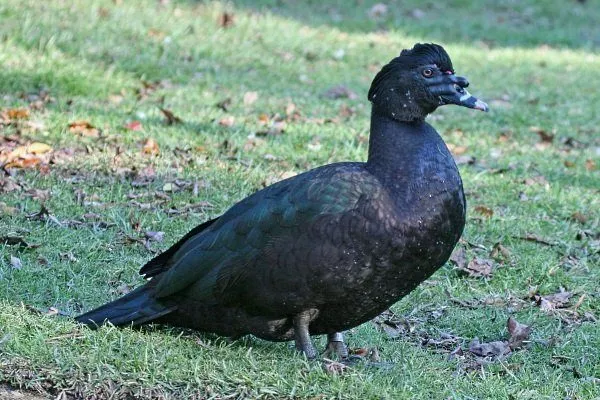
Black Muscovy duck
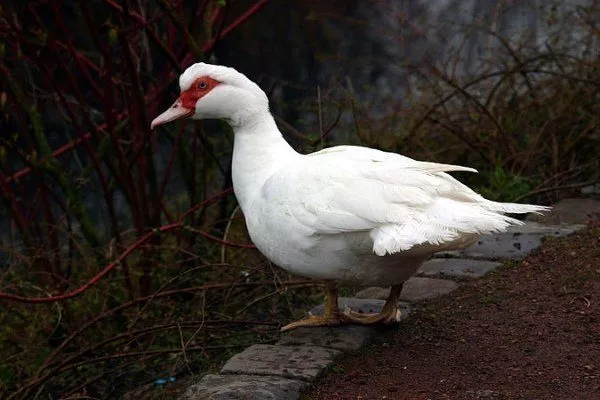
White Muscovy duck
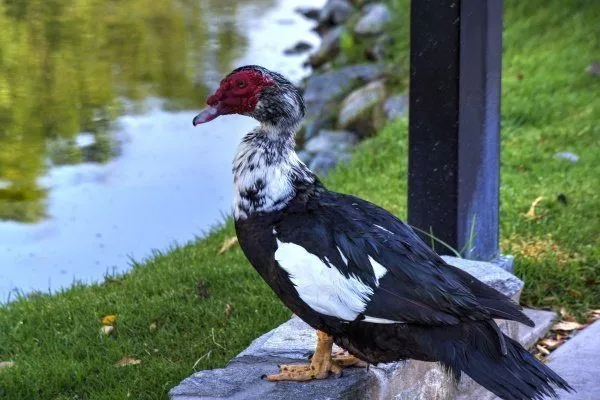
Black and white Muscovy duck
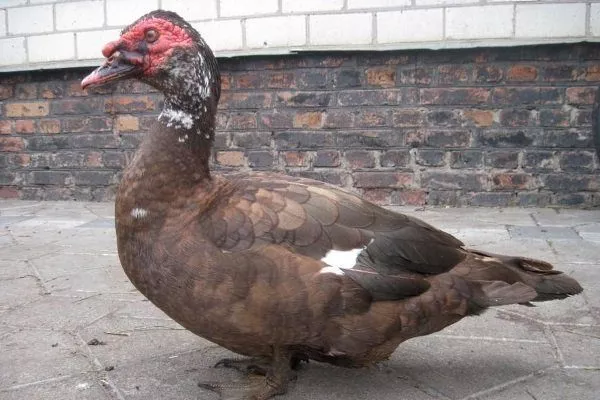
Brown Muscovy duck
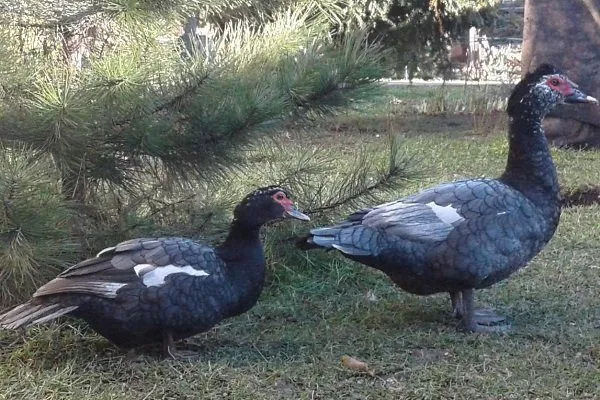
blue muscovy duck
Experienced poultry farmers claim that the brighter the color of a Muscovy duck, the more productive it will be, so when choosing ducklings, it's worth paying attention to their appearance.
Lifestyle and behavior
Domestic birds become accustomed to their owners and their territory, so they don't wander far or cross boundaries. This is one of the advantages of breeding Muscovy ducks. Furthermore, they don't require constant herding; they quickly become accustomed to their routes and can navigate familiar territory independently.
This bird species is very docile, but if there are large numbers of them in one area and several adult drakes are present, they may become aggressive towards each other. This usually occurs over feeding. Stronger males may kill weaker ones, and sometimes even young offspring. In stressful situations, the female may stop laying eggs or abandon her nest.
Muscovy ducks love fish, so they're attracted to anything shiny. It's best to remove any objects that remind them of a tasty treat, such as broken glass or mirrors, metal scraps, and other debris.
Habitat and range
In the wild, Muscovy ducks can be seen near lakes, rivers, and other freshwater bodies. They form small flocks to breed. They rarely gather in large flocks, and they rarely migrate.
Their feather oils aren't as thick as those of other duck species, so they don't like to swim in cold water. In winter, swimming is dangerous for them, as subzero temperatures can cause their wings to freeze and they can drown.
Advantages and disadvantages of the Muscovy duck
Breeding Muscovy ducks doesn't require any special knowledge or skills, but it has its pros and cons. Among the advantages are the following:
- resistance to various diseases, which largely affects the survival of young offspring;
- undemanding to feeding;
- high egg production;
- feel great in any environment;
- Muscovy ducks are good brood hens, even for hatching other types of birds;
- tasty dietary meat.
As for the disadvantages, there are far fewer of them than the advantages:
- small ducklings may peck each other if they are not provided with the necessary conditions;
- addiction to shiny objects;
- slow growth and weight gain.
For information on the care and breeding of the Muscovy Duck, see the video below:
Breeding direction
Depending on the purpose for which musk ducks are bred, their living conditions do not change, but the period of keeping and feeding are completely different.
Egg production
On average, an adult Muscovy duck lays about a hundred eggs per year. If the right conditions are provided, this number can increase to 120, with each egg weighing between 60 and 70 grams. To achieve this, the bird requires a warm environment during the winter, as well as regular cleanliness in the coop.
They require good lighting and ventilation. Add to this a list of nutrients and vitamins, and these pets will likely become record-breaking egg-laying birds.
Under favorable conditions, adult ducks begin laying eggs early in the year; otherwise, the difference is about two months. Young ducks begin laying eggs at six months, gradually increasing the number of eggs each month. Initially, the monthly clutch size is about 8 eggs, and by the time the bird reaches 12 months of age, the number of eggs increases to 16.
Egg laying is a cyclical process. After intensive egg laying, which lasts about 5 months, a molting period of 2-3 months follows.
Growing for meat
Young poultry raised for meat gain weight within the first six months of life if properly fed. Drakes weigh up to 4 kg, and ducks up to 3.5 kg. If the poultry house is cold and damp, their weight gain will be slower.
Many people try not to keep poultry for long. Muscovy ducks can gain 2.5 kg in 2-3 months, which allows them to be slaughtered. However, it's important to maintain cleanliness, maintain proper conditions, and follow feeding guidelines to prevent illness. Otherwise, they may not gain weight well, and their meat will be of poor quality and taste.
Peculiarities of breeding and raising Muscovy ducklings
Regardless of the hatching method, to ensure a successful brood, select eggs from the first days of laying. Then, carefully select them based on their characteristics—ensuring they are all uniform in shape, weight, and size.
- ✓ Eggs must be fresh, no older than 14 days.
- ✓ The shape of the eggs must be correct, without deformations.
- ✓ The weight of eggs should be within 60-70 g.
The most fertile eggs are those collected within 14 days. When collecting, store them lying on their sides at a temperature of 11 degrees Celsius.
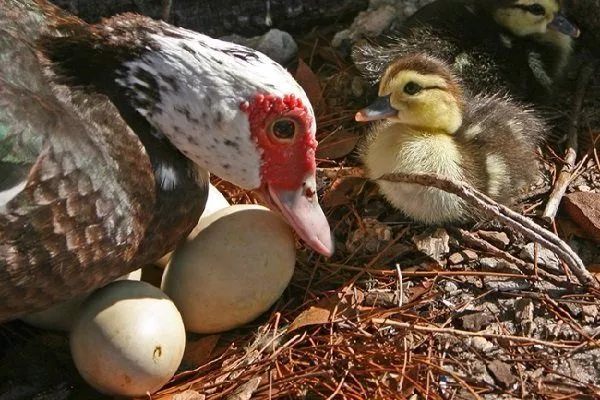
Formation of the broodstock
To breed using the traditional method (using a broody hen), set up a separate queen cell for 3-4 hens and a drake. Then build a nest box, filling it with dry leaves, sawdust, or hay.
Do not touch the eggs selected for incubation. Muscovy ducks are excellent brood hens, so when the nest reaches 10 eggs, the female sits on it.
The room should be stocked with water and food so the hen can feed regularly. While the eggs are warming, she regularly turns them over and moistens them with water.
The hatching period for ducklings is 32-35 days.
Hatching ducklings with a hen
Although Muscovy ducks are excellent brooders, ducklings require their owner's help. After the first chicks hatch, the duckling remains in the nest until the entire brood is hatched. Therefore, the ducklings should be placed in a warm, cozy place and provided with good lighting. A standard incandescent lamp will do the job, as it will speed up the drying process.
During the first few days, feed the ducklings hard-boiled eggs. Chop them up and sprinkle them on their backs, as at this stage they only react to movement. When they start moving, the crumbs roll off, and the chicks notice and eat them.
- First days: feed chopped boiled eggs.
- From the 3rd day: introduce starter feeds.
- From day 7: add greens and vegetables.
After the allotted laying period, the unproductive eggs become unusable, and the mother duck leaves the nest to care for her offspring. Once the day-old ducklings are dry and strong, place them under the mother hen.
In the morning, she can already walk them and feed them. After a week, they can take baths, but before the procedure, the caring mother lubricates their feathers with her fat.
Incubation
In incubation breeding of ducksThe device must be heated to 38 degrees Celsius. After this, lay the fertilized eggs horizontally. Place the largest eggs first, and the rest after 5 hours. It's best to avoid using smaller eggs.
The incubator must be properly humidified. If this feature isn't available, mist the eggs with a weak, warm solution of potassium permanganate twice daily. This cools the eggs and speeds up their metabolism.
The eggs should be turned and rotated periodically to ensure even heating. Hatching eggs may take slightly longer to hatch than broody eggs. Once the hatching period is over, gradually reduce the air temperature, check the eggs, and encourage the ducklings to hatch by breaking the shells.
Place the hatched chicks in a brooder. With proper care for 10 days, they will grow strong and healthy.
Feeding and keeping chicks
Proper feeding of Muscovy ducklings is crucial for their future development. First and foremost, ensure favorable conditions in the poultry house. This requires regular cleanliness and disinfection when necessary. Waterers and feeders also require this attention.
A review of duck drinkers and instructions for making them can be found in this article.
During the first week, ducklings should have at least 18 hours of daylight, so the coop should be equipped with adequate lighting. As they mature, the daylight hours should be reduced by 1 hour each week. This is essential for proper development, as Muscovy ducks need to maintain their metabolism, which is best achieved in the dark. Failure to follow these guidelines can lead to rickets.
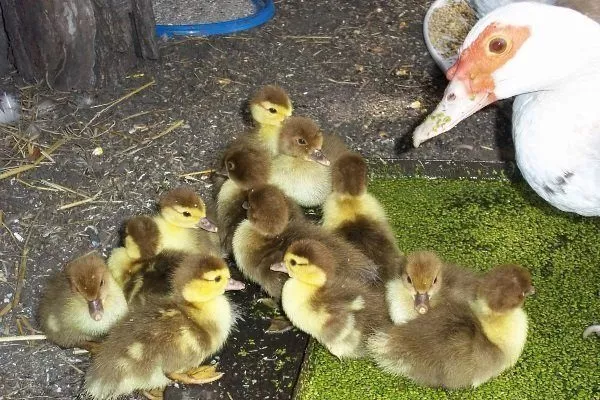
Ducklings need a complete diet to thrive. From the very beginning, feed them a grain mixture and foods containing starch, protein, and calcium:
- shell rock;
- chalk;
- starter feeds;
- grain mixtures;
- corn, bone and barley meal;
- chopped meat and fish waste;
- boiled potatoes;
- fresh carrots.
Don't forget about greenery. If you have access to fresh, lush grass, that's the best option. Ducklings will find the right, nutritious greens they need for proper development.
Conditions of maintenance and care
Provide your Muscovy duck with proper living conditions and comprehensive care. This is the only way she will grow quickly and produce good eggs.
Requirements for the premises
Keeping Muscovy ducks doesn't require a building with a stove or heating system, especially electric heating. Insulating the house with straw, hay, wood, or other wood-based materials is sufficient. Comfort and cleanliness are the most important factors for this bird.
The room size should be chosen to accommodate three birds per square meter. It should also be well ventilated. If the owner keeps several dozen birds, it's best to house them in separate colonies, as in the wild.
Nutritional Features
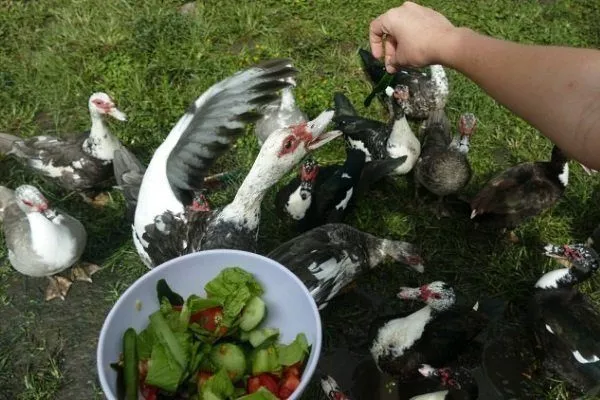
The diet of adult and juvenile Muscovy ducks is virtually identical. The only difference is in feeding, as ducklings generally require crushed feed. Muscovy ducks can be fed:
- grain crops - wheat, barley, corn;
- wheat bran;
- greens - beet leaves, meadow grass;
- boiled potatoes;
- grated beets;
- cottage cheese;
- carrots;
- bone meal;
- fish and meat waste;
- bread yeast;
- elements containing calcium - chalk, granite chips, crushed shells, table salt.
Muscovy ducks' favorite treats are kitchen scraps, milkweed and dandelion greens, corn, beet tops, and boiled potatoes.
Duck diseases
If owners don't pay enough attention to their pets, they can become ill. Muscovy ducks are most often susceptible to infectious, viral, and parasitic diseases:
- rickets;
- lack of vitamins;
- cloacitis;
- catarrh and goiter obstruction;
- yolk peritonitis;
- intestinal poisoning;
- cannibalism.
If all the rules and conditions for keeping the bird are followed, and preventive measures are taken, then the immune system of Muscovy ducks will not allow various diseases to occur.
Profitability of breeding Muscovy ducks
Many livestock breeders, farmers, and backyard owners know that raising Muscovy ducks can be a very profitable business if done correctly. The meat of this bird is prized for its flavor and nutritional value.
This breed of bird requires little care and is not picky about feeding. They don't require constant supervision; they are quite independent and can travel to and from the pond without their owners' help.
Equipping a poultry house doesn't require significant investment, especially if you make your own feeders, waterers, and other amenities. The only expenses are grain feed and vitamins. In any case, the investment will soon pay for itself and generate a handsome income.
According to experts, the profitability of breeding Muscovy ducks for meat is about 70%.
Farmers' reviews
Muscovy ducks not only have delicious meat but also require little care. Simple guidelines will help you build a profitable business raising this bird.
Yes, it's true, the Muscovy duck is a profitable bird, I won't argue. But it grows slowly.