
The Blagovar duck is the most productive waterfowl, producing lean meat and high egg production. Learn about the characteristics, advantages, and disadvantages of this breed.
History of the breed's origin
The duck, bred at the Blagovar State Poultry Breeding Farm (Bashkortostan) in 1998, is widespread not only in Russia, but throughout the world. Muscovy birds They have a rich pedigree, descended from the white Pekin duck. The breeders' primary goals were to ensure robust immunity and vigorous growth in the hybrids.
Two similar lines of birds, Blagovarka-1 and Blagovarka-2, were used for selection. The result was a new cross with high egg production and excellent meat quality. Experiments with Blagovar ducks are still ongoing. The main goal of this long-term selection is to improve the birds' production performance.
Description and characteristics of the breed
The Blagovar duck surpasses its Pekin relatives in characteristics. Females weigh 3.2 kg, while drakes weigh 3.5 kg. This cross differs from its predecessors in its resistance to infectious diseases, strong immunity, rapid growth rate, and tasty meat without a distinctive odor.
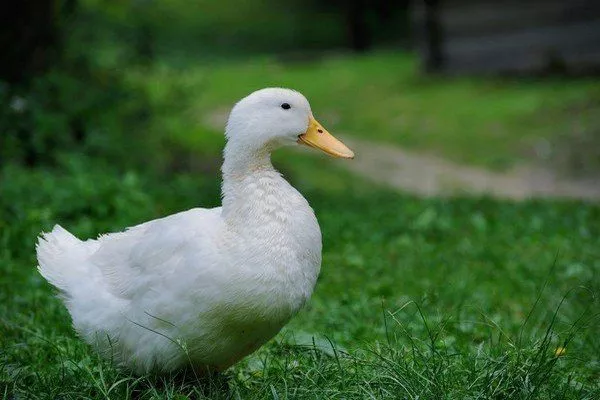
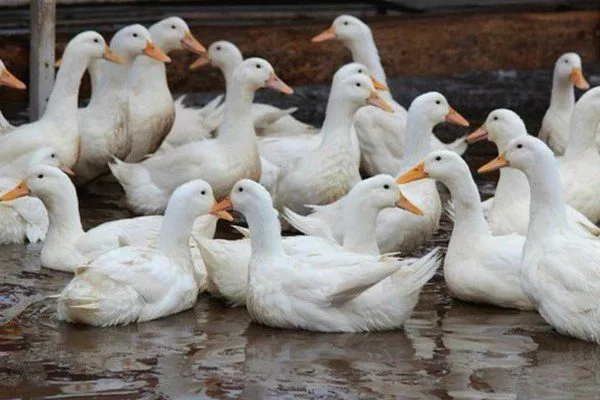
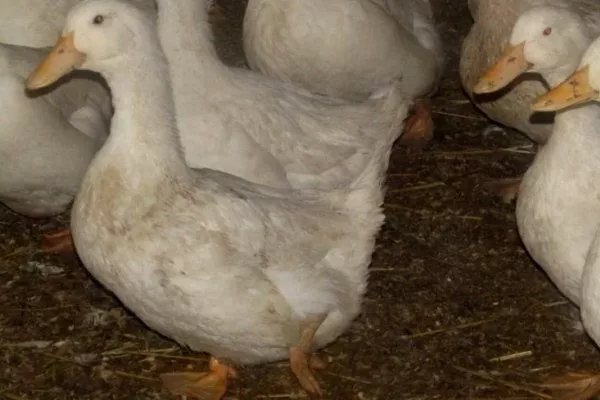
The breed's distinctive features include snow-white feathers and bright orange legs and beak. The color of the lower legs provides an indication of the health of Blagovar ducks. If the legs and beak turn pale, this is the first sign. poultry diseases against the background of violation of the rules of detention and feeding domestic ducksA rich orange hue characterizes healthy ducks.
Blagovar ducklings survive almost 100% of the time after hatching, grow quickly, and are slaughtered at the age of 2 months.
Paternal and maternal lines
| Name | Weight of an adult (kg) | Egg production (eggs/year) | Plumage color |
|---|---|---|---|
| Blagovarka-1 | 3.2 | 200 | White |
| Blagovarka-2 | 3.5 | 210 | White |
These birds were obtained by crossing Blagovarka-1 on the paternal line and Blagovarka-2 on the maternal line. The parental genes determine the physical characteristics, productivity, and character of the Blagovarka duck.
From their father, ducklings inherit:
- intensive growth rates;
- rapid weight gain;
- maintaining body weight during the molting period;
- fast fletching;
- high taste qualities of meat;
- calm behavior;
- high egg production (up to 200 eggs in 40 weeks);
- Fertility rate is 93%, duckling birth rate is 75%.
From the mother, the chicks inherit:
- high egg production (210 eggs in 40 weeks);
- Fertility rate – 94%, number of hatched ducklings – 80%.
Appearance
Blagovar ducks are distinguished by their large, massive build. Their bodies are broad and horizontal. Their heads are large and massive, set on a long, flexible neck that is constantly held in an extended position. Their wings are held tightly to their bodies, enhancing their cold resistance and adaptability.
Externally, these are very beautiful birds, whose snow-white plumage is combined with bright orange legs and beak.
By nature, these birds are calm and balanced, but highly active and able to fend for themselves when necessary. They are friendly towards other poultry inhabitants. Blagovar ducks are the highlight of any homestead, bringing in a steady income for the breeder.
Productivity
Blagovar ducks are a meat breed with a high egg production rate. A six-week-old bird weighs up to 3 kg, while an eight-week-old drake weighs 4-4.5 kg. The carcass contains approximately 40% fat, with the remainder being fresh meat.
Removing the feathers after slaughtering a Blagovar duck is not particularly difficult. The carcass has a presentable appearance, which attracts buyers. plucking there are no black stumps left on it.
With economical feed consumption and minimal weight loss during molting, the meat has excellent taste. The product is dietary and contains a low amount of cholesterol. The best time for slaughter is when the birds are two months old.
Over nine months, the duck lays up to 240 eggs weighing 90-95 grams each. The fertility rate is 95%, and the duckling survival rate is 80%. Blagovar ducks can live up to 20 years, but their egg production only lasts for five years. In the second year of breeding, the hens' laying performance improves by 10-12%, and the eggs produce better hatching qualities.
Conditions of keeping and growing
The birds require no special care, and their time and financial investment are minimal. Blagovar ducks require a complete and balanced diet, which, in addition to specially formulated feed, includes vitamin and mineral supplements, fresh vegetables, and premixes.
Birds need clean water not only for drinking but also for bathing. They regularly preen their feathers and beaks and enjoy bathing. Blagovar ducks are known for their cleanliness, so cleaning the coop of droppings is a must-do daily task for breeders.
You can clearly learn the tricks of keeping and feeding ducks by watching the video below:
What should a poultry house be like?
Blagovar ducks live in a coop, barn, or other warm space with a perch. Basic requirements:
- Place up to 3 3-week-old birds per square meter. Overcrowding reduces bird productivity.
- Treat the floor with slaked lime and place a layer of straw, sawdust, or peat on top.
- To avoid dampness and infections, change the bedding regularly and clean the barn of bird droppings.
- Eliminate drafts and close all cracks through which rodents can enter the poultry house.
- Ensure heating and lighting for the poultry house. Blagovar ducks require 12-14 hours of daylight.
- Place a perch near each perch. water sippy cups, feeders with grain, containers with sand and gravel.
- Control humidity (60-75%), temperature (15-18 degrees) and ventilation in the room.
- Next to the poultry house, fence off a spacious aviary and place a container with water for bathing the birds.
If possible, provide an accessible exit from the indoor poultry house to the aviary so that the birds can graze independently and safely return to the warmer area if the weather worsens. Install shelters to protect them from the sun and rain.
Nutrition
Ducks are raised on a complete diet. Vegetables, root vegetables, and succulent grass are encouraged in their daily diet. However, it is not recommended to reduce the portions of special compound feed, as this will reduce egg production and meat quality. The birds will lose weight, and symptoms of vitamin deficiency may occur.
With a properly developed feeding schedule, Blagovar ducks gain weight quickly. At 3 weeks, they weigh up to 550 g, at 4 weeks – up to 1.5 kg, at 6 weeks – 2.4 kg, and at 8 weeks – up to 2.5 kg. For better digestion, the poultry's daily diet should include gravel and sand, which are discontinued only one week before slaughter.
Ducklings
During the first day after hatching, ducklings feed on crushed egg yolk. Sprinkle the crumbs on their backs to develop their grasping reflex. Without it, it will be difficult for older ducklings to find food.
On the second day, chicken egg whites are ground into the yolk. Feeding guidelines are similar. This limited diet predominates in the ducklings' lives from the first to the third day after birth; after that, it becomes more filling and varied.
The fourth day differs from the previous ones in terms of nutrition. Meat scraps, finely chopped greens, a little low-fat cottage cheese, bone meal, and chalk are added to the daily diet to improve the ducklings' digestion.
From 10 days to 1 month of age, ducklings are allowed to be fed boiled potatoes, pre-crushed grain scraps, table salt, and fine gravel. Milk and yeast promote rapid weight gain in young ducklings.
When feeding ducklings, use specialized “starter feeds” enriched with vitamins and minerals.
Adults
In addition to a grain feeder, the coop should have a container with gravel, shells, bone meal, and table salt as mineral supplements. It's important to maintain a feeding schedule of four times a day.
The specifics of the diet depend on the breeder’s goals:
- To ensure rapid weight gain and tasty meat, birds should always have full feeders. Provide varied and fresh food and clean water, otherwise digestive problems are difficult to avoid.
- Laying hens require a special diet, which differs from that of meat-producing ducks. The main goal is to prevent overweight and obesity and support their bodies during the intensive egg-laying period.
Features of the diet of adults:
- Make roughage the basis of the diet. Include ground grains (corn, oats, barley, wheat), bran, and oilcake.
- Starting at one month of age, feed ducks wet flocks cooked in broth. Otherwise, digestion will be disrupted, and intestinal obstruction is highly likely.
- Include in the diet complete foods with a high content of vitamins and microelements for strong bones, immune system stability, vitamin deficiency prevention, and improved digestion.
- Diversify your poultry's menu with juicy root vegetables, fresh grass, fruits and vegetables.
- An alternative to expensive compound feed is a mixture of grain and green fodder, fed 2-3 times a day.
- Add crushed eggshells and chalk to the diet daily. A week before slaughter, eliminate this mineral supplement from the daily menu.
- Introduce new foods gradually, starting with small portions.
- Increase the proportion of the new food in the diet over the course of a week.
- Monitor the ducklings' reaction to the new food and adjust their diet if necessary.
Remember that special weight-gain feeds remain a priority in ducks' daily diets. Substituting them with grains, vegetables, and root vegetables can lead to weight loss. 3.5 kg of fortified feed is required per 1 kg of live weight.
Breeding
There are 5 mature ducks per 1 drake. Keep the hen until she is 3-4 years old. Add calcium to the drakes' daily diet. These recommendations will only increase the ducks' egg production.
Because domestic birds are artificially bred, their maternal instincts are poorly developed. When attempting to place a duck on the nest, she gets up and runs away, and the eggs freeze. She is incapable of incubating her young.
For breeding Blagovar ducklings, also use an incubator. The duckling hatch rate is over 90%. Incubation time ranges from 26 to 28 days.
Valuable advice from experienced breeders:
- Collect eggs for incubation no older than 7 days and store at room temperature.
- Place the eggs in an incubator, set the temperature to 37.5-38.5 degrees, humidity to 50%.
- Turn them over 4-5 times a day.
- During the third week of incubation, ventilate the incubator twice a day for 10-20 minutes.
- During the hatching period, increase the humidity to 80%.
- ✓ The optimal temperature in the incubator should be maintained at 37.5-38.5 degrees with 50% humidity for the first 25 days of incubation.
- ✓ Humidity should be increased to 80% during the last 3 days of incubation to facilitate hatching of the ducklings.
Hatched ducklings weigh up to 50 g each, have rich yellow plumage, and squeak from the first minutes of life.
For more information on incubating duck eggs, look here. here.
Caring for young animals
Taking care of ducklings is not difficult, the main thing is to feed them on schedule and keep the poultry house clean.
Valuable recommendations:
- As soon as the chicks hatch, remove them from the hen and place them in a brooder. You can use a clean box or cage, but ensure 24-hour lighting and a constant temperature.
- From the 8th day of life, reduce the duration of brooder lighting by 1 hour; from the 21st day, the duration of daylight should be no more than 15 hours, as in adults.
- From day 1, the brooder temperature is 33-35 degrees, from day 5 – 28-33 degrees, from day 11 – 22-25 degrees, from day 20 – 17-19 degrees, as for adults.
- Provide clean bedding made of straw, sawdust, or paper. Change it every 2-3 days, or more frequently if it gets dirty.
- Avoid dampness and drafts, otherwise infection will develop and the young birds will become sick en masse. The acceptable humidity level is 60-75%.
- Gradually increase the amount of time the young generation spends outdoors. Allow ducklings to take them outside during their first week of life, provided the weather is good.
Remember that birds need space. If 1 square meter is enough to comfortably house 13 ducklings immediately after hatching, by the 10th day, the population density per square meter should decrease to 7-8 ducklings.
Advantages and disadvantages
The Blagovar duck is popular among both novice and experienced breeders. Its high productivity, economical feed consumption, and low maintenance are noteworthy. The breed's list of advantages doesn't end there. Breeders highlight:
- large size of birds;
- high meat indicators;
- rapid weight gain;
- egg production;
- unpretentiousness in food;
- maintaining weight during molting;
- presentable carcass;
- healthy offspring;
- strong immunity;
- fast molting process (compared to ducks of other breeds);
- The productive period of laying hens is up to 5 years.
When breeding, breeders find certain shortcomings of Blagovar ducks:
- growth period – first 2 months;
- the need to purchase compound feed;
- adherence to the feeding regime, otherwise the duck will lose weight;
- regular walking;
- high price of hatching eggs and young animals;
- lack of maternal instinct;
- the difficulty of purchasing purebred individuals.
Farmer reviews of the Blagovar duck
Blagovar ducks are ideal for small-scale farming and commercial breeding. Moreover, these domestic birds attract attention with their appearance, becoming the signature feature of any poultry yard.