
The Bashkir duck is a meat and egg breed highly valued in agriculture due to its excellent productivity. This poultry is ideal for breeding, producing delicious meat and large eggs. It is easy to feed and gains weight quickly, making it a favorite among breeders. Its decorative appearance is also appealing.
History of origin
The first Bashkir ducks appeared completely by accident in 2001. Breeders at the Blagovarsky breeding farm in Bashkortostan were attempting to improve the productivity of white Pekin ducks. During the breeding process, chicks with dark feathers emerged, although yellow was originally expected.
The young were raised separately and grew into true beauties. The accidental mutation in the Pekinese offspring was officially recognized. Bashkir ducks later spread beyond the region.
There are two main duck colorings: black-breasted and khaki. The former is significantly more productive. Both birds are excellent for farming and have become a primary source of income for many breeders.
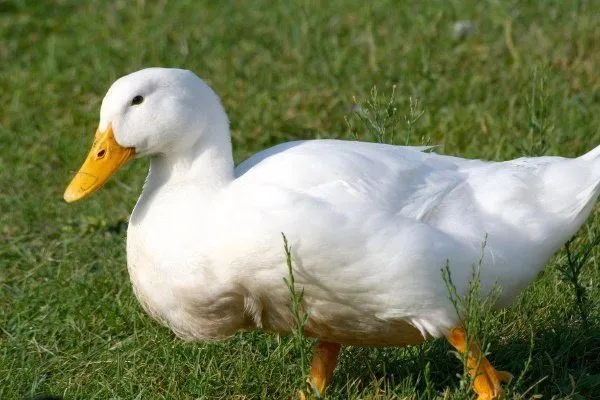
White Peking breed, from which the Bashkir duck originated
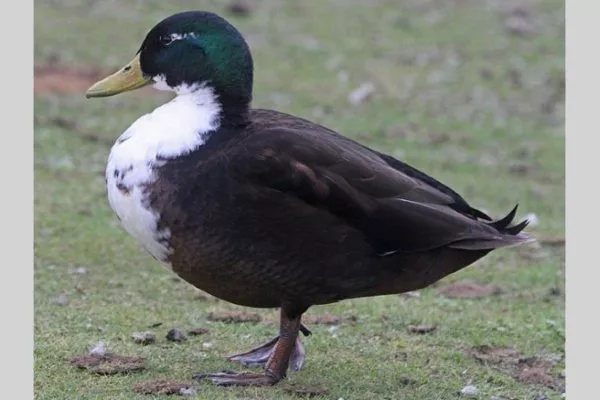
Bashkir black white-breasted duck
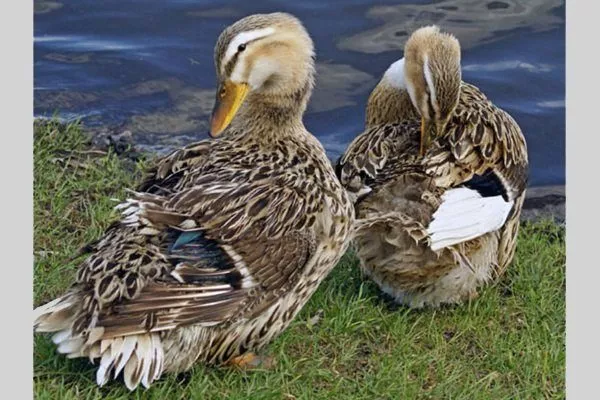
Bashkir ducks in khaki color
Characteristic features of the breed
Bashkir ducks have a massive build, variegated plumage, and powerful legs. Khaki-colored specimens have gray-brown wings with white spots. The black-breasted duck has dark feathers and a light breast.
The birds' plumage is uneven. The rich color is concentrated on the back. The wings and lower limbs are 1-3 shades lighter. In terms of plumage color, domestic birds are close to their wild relatives and are attractive for their decorative appearance.
Appearance
Bashkir ducks have a strong build, with sweeping wings that lie close to their bodies. Their ability to fly gives them a pronounced keel, and their chest is significantly pushed forward.
The light orange legs are massive and shortened, set wide apart. The bird's gait is slow, rolling from side to side. It seems the Bashkir duck is never in a hurry.
The ducks' heads are flattened, their necks shortened but gracefully arched forward. Their orange (ochre) bills are concave, with a distinctive knob on top for easy grasping of plant food.
Ducks have no nerve endings in their lower limbs, which allows them to move on any surface without feeling discomfort.
Breed productivity
Adult males weigh 4 kg, females no more than 3.5 kg. Ducks produce lean meat, with only 2-4% fat per 100 g. The net weight is 70%. The meat is tasty and healthy, containing vitamin A and omega-3 polyunsaturated fatty acids.
Newborn ducklings gain weight quickly. By the age of one month, they reach 3.3 kg, making them attractive to many breeders. The meat is sought after not only for its nutritious composition but also for its lack of a distinctive odor.
Domestic birds are high egg producers. Khaki ducks lay 210-250 eggs per year, while black-breasted ducks lay 230-270 eggs. Each egg weighs 70-80 g, with a caloric value of 185 kcal per 100 g.
How to distinguish gender
Every breeder must differentiate between the sexes of ducks so that males can be fattened for meat and females can be used for egg production. Domestic birds differ in appearance, behavior, and habits.
The drakes are noticeably larger and more attractive. They have a deep blue head, green (olive) tinted feathers, and a bright orange bill. Males are distinguished by a white band around their necks and a bright blue stripe on their wings.
Females are less attractive in appearance. They have light brown feathers with white speckles along their entire body and head. Their coloring is uniform, and their bill is grayish-brown.
Other distinctive features of drakes and ducks besides their external appearance:
- Males are particularly active and pugnacious, while females behave in a reserved and calm manner.
- The drakes always walk behind the ducks, as if letting them go first.
- Males cannot quack; they express any emotion with a characteristic hiss.
- Drakes have curled tail feathers, while ducks have straight tail feathers.
We invite you to watch a video where a novice Bashkir duck breeder explains how to distinguish a drake from a female duck:
Varieties
| Name | Weight of an adult (kg) | Egg production (pieces/year) | Plumage color |
|---|---|---|---|
| Blue | 3.5 | 130 | Blue |
| Gray | 3.5 | 115 | Grey |
| Whites | 3.5 | 100 | White |
There are several varieties of Bashkir ducks. Classification characteristics include plumage color and annual egg production.
Description of species:
- Blue. Productivity rate: 130 eggs in 6 months.
- Gray. Weight – 3.5 kg, egg production rate – 115 eggs in 6 months.
- White. Ducks weigh 3.5 kg and lay 100 eggs every six months.
Conditions of detention
Bashkir ducks live in cages and pens and quickly adapt to new conditions. Comfortable conditions increase egg production and meat yield. Maintaining a constant temperature in the duck house is essential, especially in winter. These birds do not tolerate drafts and require constant access to water.
- ✓ The optimal stocking density of ducks in a poultry house is 3-4 individuals per 1 m².
- ✓ Minimum temperature in the poultry house in winter: not lower than +5°C for adults.
Ducks don't need a natural or artificial body of water to swim regularly. Water is essential for wetting and preening their feathers, and for drinking. The birds' wings stay dry after swimming.
Feeding the Bashkir duck
Poultry are not picky eaters. They have a shortened stomach and a rapid metabolism, so they need to be fed three times a day. 2-3 kg of feed are required per 1 kg of weight gain. By 2-3 months, birds weigh 2.5-3 kg and are ready for slaughter.
The diet consists primarily of grain mix, silage, hay, dried grass, chopped vegetables, and boiled root vegetables. To prevent vitamin deficiencies, include compound feed and mineral supplements in the diet. Crushed chalk, gravel, or sand are essential.
Bread makes birds gain weight quickly, so feed it to Bashkir ducks in small quantities, especially before slaughter.
Be sure to monitor your ducks' access to water. A duck drinks up to 2 liters per day. Keep the water fresh, and change the water bowls regularly. If mold or algae appears, clean and disinfect them.
Read the article on our website: "A review of duck waterers and instructions for making them".
The bird needs a regime:
- before lunch – wet mashes of cereals and compound feed;
- After lunch – dry feed, silage and hay.
Provide your ducks with a fresh portion of food each time. Stale and sour feed can cause digestive problems, dysbiosis, intestinal infections, and can even lead to the death of your birds.
Read about the rules for feeding ducks at home. Here.
Poultry house arrangement
When setting up the poultry house, avoid dampness and drafts. Install the structure 0.3 m above the ground. This will keep the floor warmer and prevent rodents and harmful insects from reaching the poultry.
Basic requirements for housing Bashkir ducks:
- Place nests away from the entrance, as birds are very afraid of drafts and get sick more often.
- To make nests, use wooden boxes and crates; avoid plastic structures.
- Place feeders outside the poultry yard, otherwise messy ducks will spill food around the house. This can cause damp mash to become moldy and potentially cause illness in the coop.
- To prevent ducks from spilling water, securely fasten water bowls. Make sure each bird has its own drinking bowl.
- To maximize fertility, adjust the lighting. For a 10 square meter room, 50 watts is required. For optimal egg production, the daylight hours should be 14 hours.
- Ensure good ventilation in the room, otherwise bacteria will multiply in stale air and the ducks' fertility will decrease.
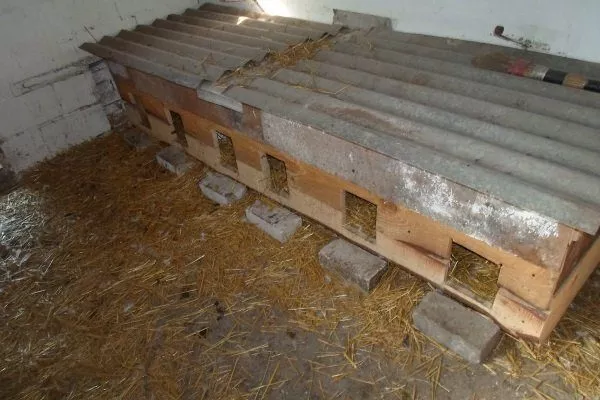
Care Features
Clean the coop daily. Dirty conditions make birds more likely to get sick. Give your ducks a fresh portion of feed every time, and replace their water bottles. Cleanliness is the key to healthy and productive poultry.
Set up a feeding and walking pen near the poultry house. Seed it with clover and alfalfa, and create an artificial pond with fresh grass on the bank nearby. Graze the birds daily to promote weight gain.
In winter, lay a layer of straw, sawdust, or peat on the floor to prevent the birds from freezing. Keep the bedding clean and dry, otherwise the Bashkir duck will become lethargic, eat poorly, and become ill more often.
Breeding at home
To produce hatching eggs, three to four ducks are needed per drake. With more females, the eggs remain unfertilized. Mating a pair in water increases productivity.
If the drake is large, 2-3 ducks are enough for him to mate.
Eggs from different laying hens vary in size, but within a single hen they are uniform. Their appearance determines the quality of the breed. Small eggs are not suitable for incubation, and the hen is considered defective.
Incubator or broody hen
Breeders say it's best to leave the eggs under the hens. Bashkir ducks have a well-developed maternal instinct, but it all depends on the bird's mood. The hens may suddenly leave the nest, and the eggs freeze. To prevent this, use a duck of a different breed with a well-developed maternal instinct.
The number of eggs laid depends on the size of the hen and ranges from 10 to 17. Avoid using a hen as a nesting site, as she incubates her eggs for 21 days, while ducks incubate for 28 days. A hen will leave the nest prematurely, and the duck eggs will freeze before they hatch. Turkeys are also not suitable for nesting.
General recommendations when using an incubator:
- For laying, use 5-day-old eggs.
- Keep them at a temperature of 9-13 degrees, turning them regularly.
- Remove eggs with chips or deformed shells.
- To disinfect them, treat them with a weak pink solution of potassium permanganate.
- Place in an incubator, set the temperature to 38 degrees, humidity to 70%.
- In the second week, reduce humidity to 60% and temperature to 37.8 degrees.
- Turn the eggs every 3-4 hours.
- From the 15th to the 25th day, open the incubator for 10-20 minutes twice a day.
If you are new to incubating duck eggs, then please read our additional information. another article.
Secrets of raising young animals
After hatching, the ducklings are kept in a specially prepared room with constant lighting and a temperature of 30 degrees Celsius. They spend the first five days adapting to their new living conditions, so the temperature regimen must be maintained. During the third week, the optimal temperature is 22 degrees Celsius, and during the fourth week, 18-20 degrees Celsius.
If the ducklings are drinking a lot, are lethargic, have their wings drooping, and their mouths slightly open, lower the room temperature. The same applies to lighting. For the first seven days, keep it 24 hours a day, then reduce each day by one hour to the adult standard of nine hours.
Ventilate the coop daily (but avoid drafts), and maintain humidity at 60-75%. Check the litter for dryness and cleanliness, changing it every two days. Change it more often if it becomes soiled.
At two weeks of age, release the chicks into the fresh air. Make sure no large animals can enter the area. Provide shaded and sunny areas in the aviary to prevent the birds from overheating or freezing. Release the young birds back into the adult flock when their entire body is feathered.
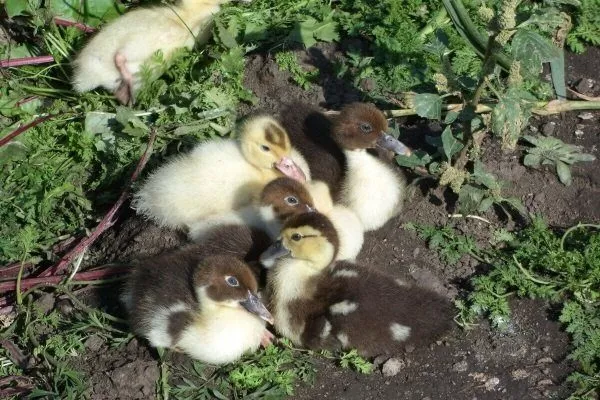
Feeding ducklings
Juveniles are not picky eaters. Their daily diet is little different from that of adults. It includes grains, feed yeast, alfalfa, fishmeal, chopped dandelions, and clover.
To strengthen the immune system of young animals, add food scraps, boiled potatoes, carrot and beet tops, and cabbage leaves to their diet. As they grow older, increase the portions of grains, crushing them into crumbs beforehand.
Be sure to include vitamins and valuable micronutrients in the daily diet. Otherwise, the bird's skeleton weakens even at 3-4 months (feet fall off), and if there's an amino acid deficiency, feathers fall out in clumps. Food should always be fresh, and the water in the drinking bowls should be clean.
The Bashkir duck reaches sexual maturity at 2-2.5 months. After this, it noticeably loses weight and molts, complicating the carcass processing (black stumps remain).
Diseases
Bashkir ducks have a strong immune system. If proper care and feeding are followed, there's no need to worry about their health. Domestic birds are also susceptible to illness.
List of common diagnoses:
- Avitaminosis. The disease is associated with vitamin and mineral deficiencies. The ducks' plumage thins, they become lethargic, eat poorly, and fail to gain weight.
- Cloacite. Inflammation of the cloacal mucosa due to a deficiency of vitamins A, E and D, and trace elements.
- Prolapse of the oviduct. Severe diarrhea is followed by prolonged constipation, and digestion is disrupted.
You should also be wary of infectious diseases in your poultry yard:
- AspergillosisA fungal disease. Most infected ducklings die, but the clinical outcome for adults is favorable.
- Bacillary white diarrhea. This is a salmonella infection. Newborn ducklings are most often affected, and die within three days of infection.
- Rhinitis. The runny nose infects the entire flock and is quickly transmitted from sick ducks to healthy ones.
- Typhus. This disease affects adult ducklings; ducklings are extremely rarely affected. Breeders isolate and cull infected birds.
- Viral hepatitis. Ducklings up to two weeks old are susceptible to the disease. Infection occurs from an infected individual through feces, feed, and water.
- Coccidiosis. The disease develops when the rules for keeping ducks are not followed, and is especially dangerous for babies under 2 weeks of age.
Read more about common duck diseases. here.
Disease prevention
Despite a strong immune system, it can still fail. To maintain duck health and the flock's numbers, follow these preventative measures:
- Disinfect the room before introducing the ducklings.
- Keep the bedding dry, clean and fresh.
- Carry out preventive vaccination of ducks according to their age.
- Remove the sick duck promptly, otherwise it will infect the entire flock.
- Monitor the freshness of food and water, introduce new food ingredients according to age.
- Disinfect the poultry house before introducing new ducklings.
- Provide constant access to clean water and fresh food.
- Vaccinate ducks according to their age.
Advantages and disadvantages
Many breeders use the Bashkir duck breed for breeding, and there's a good reason for this. Key advantages:
- high yield of hatching eggs;
- strong immunity;
- unpretentiousness in food;
- resistance to low temperatures;
- rapid acclimatization;
- increased endurance;
- stress resistance;
- excellent reproductive qualities;
- dietary meat, large eggs;
- decorative appearance of drakes;
- rapid growth, weight gain.
Like other birds in the poultry yard, Bashkir ducks also have their drawbacks:
- loudness;
- increased appetite;
- low maternal instinct;
- obesity due to gluttony;
- dysbacteriosis due to poor quality drinking;
- poor cold tolerance.
Watch this video to learn whether it's worth keeping and raising Bashkir ducks:
Reviews of Bashkir ducks
Bashkir ducks are a meat-and-egg breed with good fertility. When choosing these birds, it's important to ensure they have a good coop, an artificial pond, and proper nutrition. This ensures the birds stay healthy, gain weight well, and yield up to 70% fresh meat after slaughter. Egg production is high with an incubator.