
If ducklings die without cause, the first sign may be white muscle disease, a serious pathological condition. Ducklings can only be cured in the early stages, so it's important to understand all the signs of each form of the disease. But preventing the disease is even easier. To do this, you need to understand its etiology, pathogenesis, and other nuances.
Definition of white muscle disease
White muscle disease is a profound metabolic disorder that causes morphological and functional changes in cardiac and skeletal muscle tissue, the nervous system, the liver, and other organs. The condition typically manifests in ducklings up to three months of age, beginning at two weeks of age. However, it can sometimes occur earlier.

Etiology
The etiology is poorly understood, especially in young ducks. However, it is known that the disease is caused by mineral and vitamin imbalances in the body, specifically a deficiency of vitamins E, B, A, selenium, manganese, copper, cobalt, iodine, cysteine, and methionine. Selenium and vitamin K are the most common deficiencies.
The disease is characterized by enzootic (endemic) and focal lesions. It is most often found in poultry houses located on acidic soils, in low-lying, flooded, and depleted areas.
Pathogenesis
Feather pecking and feather plucking are the most common behaviors among young ducks. This occurs due to a lack of nutrients, and the situation is exacerbated by high humidity and dirt in the duck house. Therefore, the first signs are ruffled feathers, feather loss, and exposed underparts.
Why does selenium deficiency cause white muscle disease? It turns out that this nutrient plays an active role in the functioning of all organs and systems. Without it, the body's antioxidant activity is impaired, leading to weakening.
Selenium is a component of glutathione peroxidase. This enzyme helps break down free radicals, which are toxic peroxides. If they are not broken down and removed from the ducks' bodies, they lead to intoxication, destabilization of cell membranes, and cell death. As a result, the birds die.
Symptoms of white muscle disease in ducklings
In adult birds, white muscle disease has no characteristic symptoms, but in ducklings, it manifests as liver dystrophy and fatty infiltration. Therefore, the clinical picture is pronounced. The disease is most often detected in winter and spring, less frequently in other seasons. The young of affected ducks are born with limited viability.
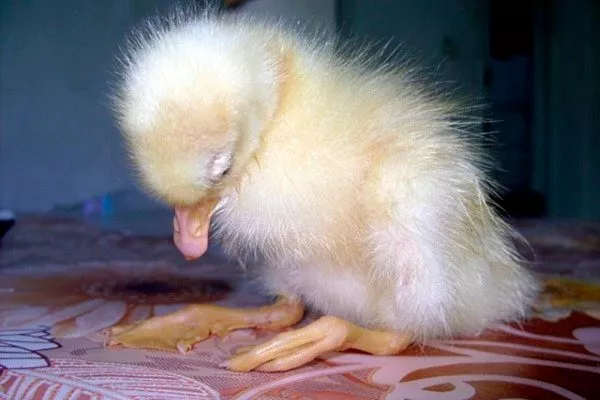
Acute form
In the acute form of white muscle disease, ducklings exhibit pronounced symptoms, but mortality is lowest (since the disease is detected early). How to recognize:
- depressed state;
- diarrhea;
- rapid breathing;
- lameness;
- convulsions, muscle tremors and paralysis of the legs;
- tachycardia;
- loss of appetite;
- discharge from the nose and eyes.
The acute stage lasts for a week. If the disease is asymptomatic, which is most common in adults, death occurs suddenly.
Subacute form
If white muscle disease occurs in a subacute form, the clinical manifestations are not so pronounced:
- mild depression;
- decreased appetite, not loss;
- presence of wheezing;
- diarrhea;
- ruffled feathers;
- arrhythmia;
- reluctance to rise, causing muscles to atrophy.
In the subacute stage, resistance is reduced, leading ducklings to develop other illnesses. These most commonly affect the lungs (pleurisy and the like). This stage lasts from 2 to 4 weeks, and mortality is high.
Chronic course
The chronic form is observed in ducklings over 3 months of age and follows a similar course to the subacute or acute forms, but additional symptoms include growth and developmental delays and muscle dystrophy. The chronic form lasts from 3 to 4 weeks.
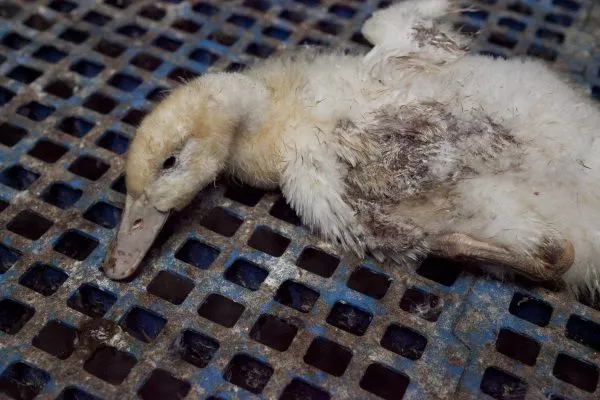
Pathological and morphological changes
The main pathological changes are observed in the muscles responsible for physical activity. Specifically, the striated muscles located in the duck's posterior and anterior girdles. The bird's cardiac muscles are also inevitably affected. In some cases, changes occur in the diaphragmatic muscles.
- ✓ Presence of whitish spots on the muscles upon visual examination.
- ✓ Decreased activity of ducklings, not associated with other diseases.
Diagnostics
White muscle disease should be diagnosed not only by clinical signs but also in a laboratory setting. For this purpose, the feed composition is analyzed for the percentage of selenium and other nutrients. If the percentage is less than 0.1 mg per 1 kg of feed, this indicates low selenium levels.
Additionally, the ducklings' blood is examined - in case of disease, selenium levels are less than 10 mcg per 100 ml of blood fluid.
Treatment and prevention
White muscle disease can only be cured in the early stages, but if heart muscle block or myocardial dystrophy has already occurred, curing the condition becomes impossible. What is included in the treatment process?
- Sick ducklings are moved to a separate house. They must be placed on dry bedding. During this period, they need rest and avoid any stressful situations. Warmth is also important.
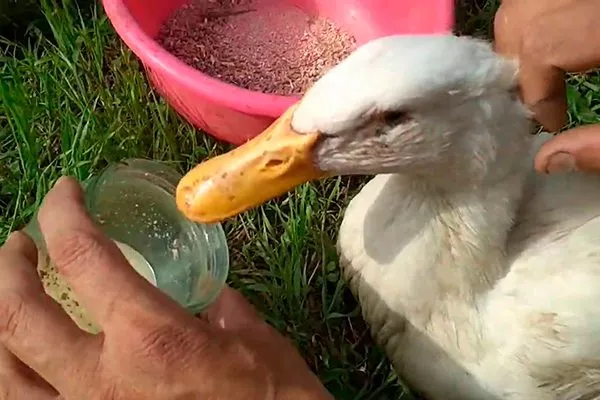
- E-selenium is prescribed—a supplement that saturates the bird's body with selenium and vitamin E. For ducklings, 1 ml to a maximum of 2 ml of the product is sufficient, dissolved in 1 liter of drinking water. Treatment duration is at least 10 days, but most often 2 weeks. Feeding should be done using a special duck watering system.
- The quality of nutrition is improved, other minerals and vitamins are introduced to strengthen the immune system.
Prevention is quite simple and consists of the following:
- creation of conditions that meet sanitary and hygienic standards - dry and clean premises;
- feeding with food that is rich in vitamins and selenium (this applies not only to newborn ducklings, but also to egg-laying ducks);
- adding selenium to the soil where the grass used to feed the ducks is taken from;
- administration of selenite immediately after hatching (the dosage is determined by the veterinarian);
- separating ducklings from adult ducklings because they are more susceptible to various diseases.
Selenium plays a vital role in duckling development, so it's important to monitor its levels in feed, water, and soil. Promptly identify clinical signs to effectively treat white muscle disease. Remember, the disease can be widespread, potentially resulting in the loss of your entire duck flock.