
Ostrich farming in our country is a lucrative business. However, not all beginning farmers know what ostrich meat is and how to properly slaughter and cut up the carcass to achieve a good market price. Non-professionals are advised to consider many important factors.
Ostrich meat
Ostrich meat is similar in appearance to veal. Its surface is red, and when cut, the cherry color is clearly visible. The intensity of the color depends on the age of the meat. The older the animal, the darker the product. There are few layers of fat, practically invisible to the human eye.
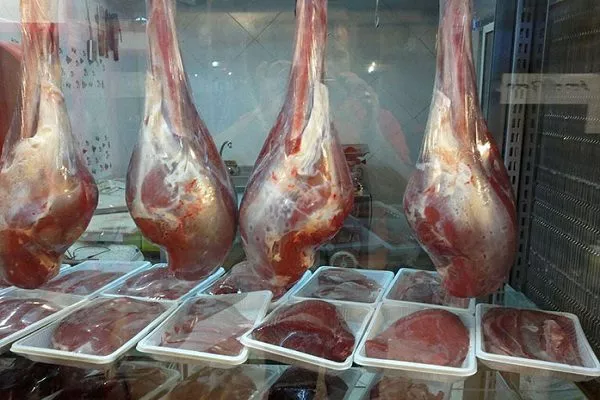
Experts classify ostrich meat as a premium meat.
Ostrich meat sales peak in Asia and Europe. In other countries, ostrich meat is not considered a delicacy. The high demand is driven by the product's perceived dietary value.
Composition and presence of useful substances
It's believed that ostrich meat will soon replace veal on the market. This is because it contains a colossal number of essential micronutrients. Poultry meat contains vitamins of the following groups:
- B, which has a good effect on blood vessels;
- E, has a beneficial effect on muscle fibers;
- RR, replenishing energy reserves.
If you compare ostrich with other types of meat, you will see that the former has advantages:
- low caloric value;
- protein is contained in large quantities;
- low fat content;
- low cholesterol.
Useful properties of poultry meat:
- has a good effect on the gastrointestinal tract;
- normalizes intracranial pressure;
- helps lower glucose levels in the body;
- strengthens tooth enamel;
- has a positive effect on skin health.
The product can be consumed for various ailments because the meat is dietary and hypoallergenic.
Harmful components of the product
No harmful components were found in ostrich meat during research. The only contraindication is for individual intolerance.
Those who prefer poultry as a low-fat product should avoid using spices or enhancing the flavor with sauces. Such ingredients will reduce the product's nutritional value and add extra calories.
What is made from it?
Ostrich meat has excellent culinary qualities and is easy to prepare. It is used to make:
- soups (they turn out to be dietary);
- salads;
- appetizers, both hot and cold;
- second meat courses.
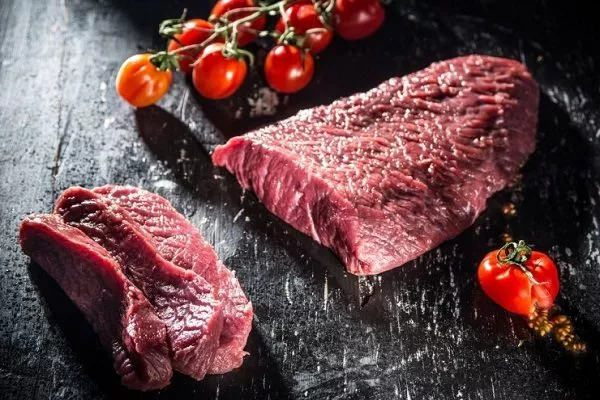
The best part of the chicken is the hip section. The fillet makes good cutlets.
Ostrich meat absorbs spices strongly, so be careful with them. Any vegetables go well with the meat.
Suitable age for slaughter
The farmer looks not at the animal's age, but at its weight. A bird is suitable for slaughter when it weighs:
- males – not less than 120 kg;
- females – about 100 kg.
Males are usually not retained after they have reached the optimal weight for slaughter. Keeping them simply doesn't make sense. Females are sometimes kept for one reason only: to harvest eggs.
Ostriches are kept on the farm for about two years until they reach the required weight. Shortly before slaughter, the birds are fed special high-calorie feed.
Where are ostriches slaughtered?
Killing an ostrich isn't easy. The first rule is that you can't slaughter a bird on a farm. The animal panics. This panic is caused by fear. The ostrich, hearing a rustle, immediately takes off running, destroying everything in its path.
If a farmer decides to slaughter birds in a pen with other birds, they're in for a real treat—the animals will become stressed. As a result, the ostriches won't let humans near them, and if they sense an enemy, they might even attack.
- Provide soundproofing to minimize stress on other ostriches.
- Make sure you have all the necessary tools and equipment before starting the process.
- Organize the space to ensure safety for both humans and birds.
What do you need to know before slaughter?
Ostriches have an unpredictable temperament. A farmer breeding ostriches for slaughter must keep several rules in mind. These will help ensure proper slaughter and avoid injury.
What you need to know before you begin the process of slaughtering an ostrich:
- Do not frighten the bird, gain its trust before slaughtering. If the animal is frightened and stressed, there is a high probability that the quality of the meat will decrease;
- evaluate the ostrich correctly, the bird is large and has many strong muscles;
- The slaughter must be carried out by the person who raises the pigs; a specialist who slaughters pigs is not suitable (the birds get used to one person and behave reservedly around him);
- The slaughter site should be located as far as possible from the main habitat of the ostriches; this is necessary so that other individuals do not see or hear the entire process.
Preparation for slaughter
To ensure a successful slaughter process, the farmer must prepare in advance. You will need:
- stun hammer;
- sharp knife;
- thick rope;
- a hook made of metal;
- equipment with electric current (it is needed to put the ostrich to sleep, the tool is used only on large farms).
Step-by-step instructions for slaughtering and cutting up a carcass
To ensure proper quality poultry meat and to ensure the farmer's time is not wasted, slaughtering must be carried out in a strict sequence. The process consists of several stages.
Stun
First, stun the target. There are two ways to do this:
- Electric current. A voltage of 250 V is applied to the bird for 6-7 seconds. This procedure immobilizes several ostriches at once. This method is only applicable to large farms.
- With a hammer. The bird is hit on the head. The key is to hit the exact center so the bird is instantly knocked out.
Exsanguination
The process algorithm is as follows:
- After stunning the bird, cut the jugular vein (the paired veins in the animal's neck that drain blood from the head). You can also decapitate the bird.
- Then hang the carcass on a metal hook. The purpose of this procedure is to drain the blood, so the ostrich is hung by its legs. Once the blood has drained from the carcass, proceed to the next step.
Plucking
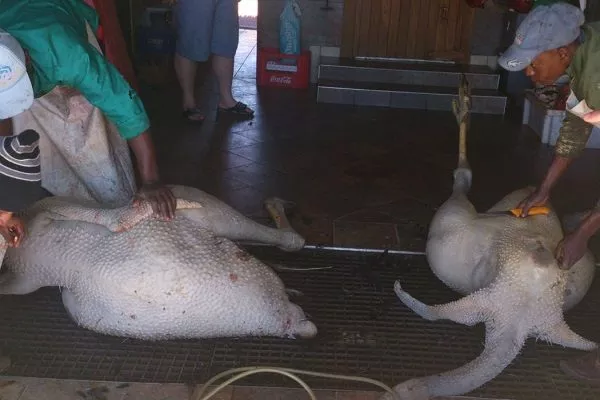
The plucking procedure should be approached with care. If you, as a farmer, don't have perfect plucking skills, it's best to hire a professional.
Feathers, like all other ostrich products, are sold. If you pluck the carcass incorrectly, it won't be easy to sell.
Primary processing of raw materials
This is one of the most difficult and critical stages of slaughter. Follow these instructions:
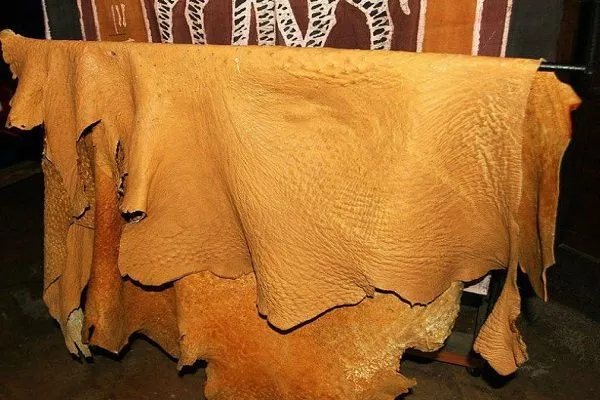
- First, remove the ostrich skin. Approach the process with a technological approach. The key is to ensure the raw material is in the correct shape and free of any defects.
The size of the leather doesn't matter; quality is key. To ensure the raw material is presentable and suitable for further use, make cuts according to specific guidelines. The rules, in this case, are as follows:- When removing the skin from the wings, rip it open only with a sharp knife, starting from the outside of one wing to the front edge of the second limb;
- do not interrupt the cut, make it through the entire belly from bottom to top;
- On the legs, cut the skin from the joint of the fingers to the stomach, be sure to go through the pelvic part.
- Let the skin cool. 15 minutes is enough. If any blood remains on any of the ingredients (skin or meat), rinse them thoroughly with tap water.
Cutting and gutting
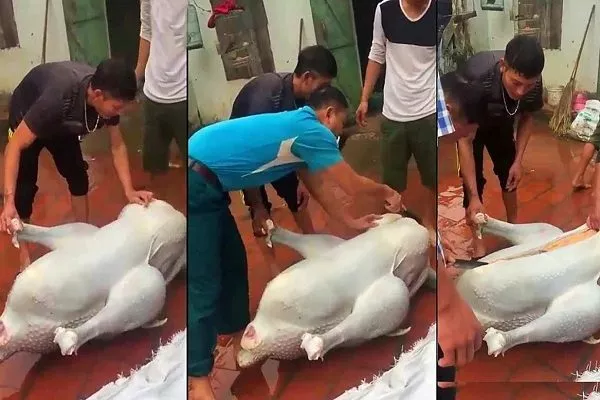
The process follows a standard pattern, similar to gutting a chicken or goose. It's easiest to hang the carcass by the wings. Some may prefer to butcher the ostrich on the surface. It all depends on the farmer's preference.
Follow these steps:
- First, cut open the abdominal cavity, spread it as far as possible and remove the entrails.

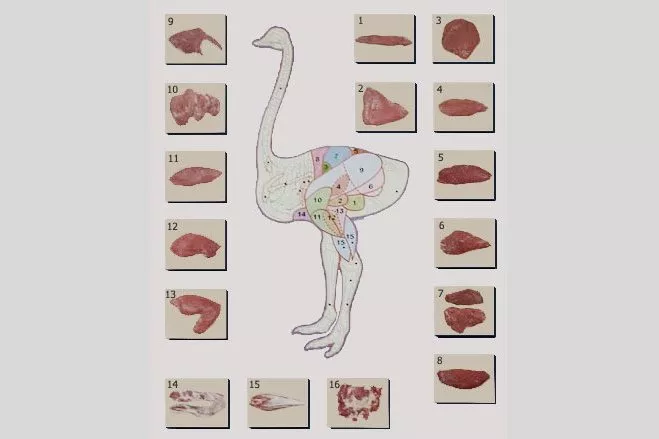
- Divide the gutted carcasses on a flat surface. Ostrich is divided into:
- fillet, usually taken from the brisket;
- shins;
- hip part
- halves of the carcass;
- quarters;
- The wings can be finished as desired.
- After cutting, place the meat in plastic bags and refrigerate. It will keep for several days. For longer storage, place the meat in the freezer. It will keep for about six months.
The resulting ostrich meat doesn't require any special processing. The only thing to remember is to rinse the meat under running water.
What mistakes can be made?
Ostrich slaughter is a complex, labor-intensive, and responsible undertaking. An untrained farmer can make a number of mistakes:
- other individuals were present at the slaughter;
- the stunning process was carried out incorrectly; if you don’t hit the right spot right away, it will be difficult to catch the ostrich;
- The slaughter should be carried out by the owner, but not by a novice in this business (if the farmer himself is not familiar with the procedure, it is worth inquiring - perhaps the farm worker who feeds the birds is familiar with the slaughter procedure).
Ostrich meat prices in Russia
Ostrich meat is available in various varieties in Russia. Prices vary depending on your preference:
- ostrich fillet – from 2,000 rubles per kg;
- minced meat – from 1,000 rubles per kg;
- goulash – from 2,500 rub. for 1 kg;
- fat – from 2,900 rubles per kg.
Ostrich eggs are also available for sale. Prices start at 800 rubles per egg.
Ostrich meat is no longer a delicacy, but it is still prized for its minimal fat content. It's safe for virtually everyone to eat. The meat will only meet quality standards and sell well if it's slaughtered and dressed correctly. That's why experts have shared some tips.