
Ostrich farming is not an exotic pastime or a mere whim, but a highly profitable business. Currently, the breeding of these large birds, which generate significant income, is successfully carried out in both the southern regions and central Russia.
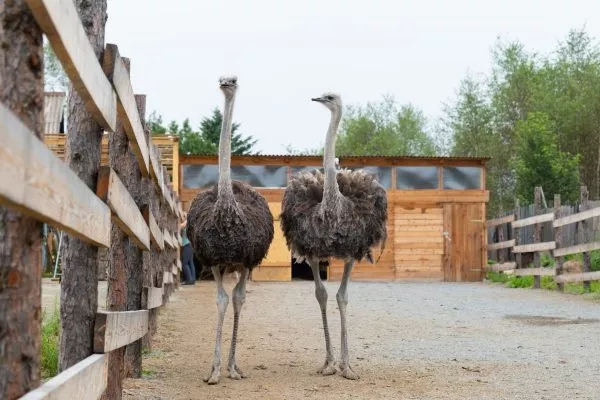
Why are ostriches bred?
Ostriches represent an attractive prospect for farmers as their breeding can become a source of multiple income.
- ✓ Optimal stocking density: no more than 1 adult individual per 10 m² to avoid stress and aggression.
- ✓ The need for sandy areas for bathing, which is critical for the health of the skin and feathers.
Ostriches provide valuable resources:
- Meat. When cutting one bird you get about 30 kg meat, which is approximately 40% of its live weight.
- Eggs. Ostrich eggs They are true giants among laying hens' eggs, with the average weight of one such egg being around 1.5 kg. This is equivalent to the weight of approximately 30 chicken eggs.
- LeatherOstrich skin is used to make luxury goods and footwear (bags, wallets, belts, gloves, shoes, and purses). Even if you only sell ostrich skin, this can cover all the costs of keeping and breeding these birds.
- Feathers. Designers and fashion designers use feathers to create unique pieces and accessories. Artists and craft enthusiasts incorporate them into their creative projects.
- Claws and beak. Ostrich claws are used to create various items, such as clasps and buttons. They are also used to produce a powder used to polish precious stones. Beaks are often used to make jewelry, including necklaces and amulets.
- Fat. One ostrich bird yields between 7 and 15 kg of fat, which is widely used in the production of cosmetics and medical products. Ostrich fat is used as a raw material for a variety of products, including creams, ointments, soaps, and balms.
Ostrich farming as a business in Russia
Ostriches are successfully adapting to our climate, and the ostrich breeding industry is rapidly gaining momentum. Breeding these giants promises significant profits across all aspects.
Productivity of ostriches
Ostriches, despite their enormous size, grow quite quickly and can reach slaughter weight within 10 months. In the wild, female ostriches begin laying eggs when they are around 4 years old, but in farmed ostriches, this occurs as early as 2 years of age.
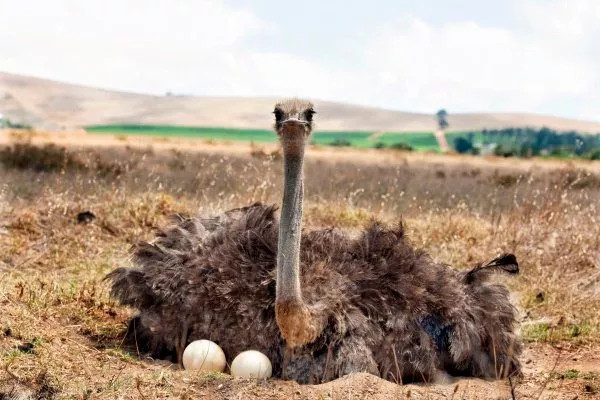
Ostrich productivity characteristics:
- egg production – from 40 to 80 pieces, sometimes it can reach 100 eggs;
- the weight of one egg is from 1.4 to 1.9 kg;
- egg diameter – about 15 cm, length – from 15 to 21 cm;
- the thickness of the eggshell is approximately 0.6 cm;
- the incubation period for ostriches is 42-45 days;
- The productivity of females usually continues until 30 years, and for males until 40 years.
Ostriches, despite their origins in warm regions, are highly resistant to temperature fluctuations, which allows them to be successfully bred even in Siberian conditions.
Market value
High demand and good profits make ostrich farming an attractive business for farmers. Below are general price ranges for the main products obtained on ostrich farms:
- hatching egg – 3,000 rubles;
- table egg – 1-2 thousand rubles;
- souvenir egg – 500 rubles;
- ostrich feather 60 cm – 400 rub.;
- rendered fat (1 kg) – 1,000 rubles;
- meat (fillet) 1 kg – 1.5-2.5 thousand rubles;
- wet-salted leather (1.5 sq. m) – 3,000 rubles;
- tanned leather (1.5 sq. m) – 7,000 rubles;
- one-day-old chick – 7,000 rubles;
- chick up to one month old – 10,000 rubles;
- two-month-old bird – 12,000 rubles;
- six-month-old bird – 18,000 rubles;
- bird 10-12 months – 25,000 rubles;
- sexually mature two-year-old ostriches – 45,000 rubles;
- adult birds aged 3 years – 60,000 rubles;
- ostrich family 4-5 years old – 200,000 rubles.
The video provides recommendations on how to breed ostriches for profit:
How much does it cost to open an ostrich farm?
Ostrich breeding experts point out several important points that entrepreneurs should consider.
Investing in an ostrich farm
Opening an ostrich farm requires significant investment. You'll face a number of expenses. Below are some approximate costs:
- registration – 1,000 rubles;
- account opening – 2,000 rubles;
- 3 hectare plot with a farm building of 1,000 sq. m – 1,750,000 rubles;
- connection of water and electricity – 100,000 rubles;
- repair and installation work – 500,000 rubles;
- sanitary and veterinary examination – 4,000 rubles;
- ostriches (5 families) – 1,250,000 rubles;
- equipment – 2,500,000 rubles;
- waste pit – 50,000 rubles;
- gravel and sand – 15,000 rubles;
- advertising and website creation – 50,000 rubles;
- administrative expenses – 28,000 rubles.
Annual costs of an ostrich farm
An ostrich farm requires a significant annual investment. This includes staff costs, utilities, and other expenses. Let's take a closer look:
- wages – 3,850,000 rubles;
- account maintenance – 1,500 rubles;
- payments to individual entrepreneurs/financial corporations – 40,000 rubles;
- boiler fuel – 700,000 rubles;
- communication and Internet – 15,000 rubles;
- registration of veterinary documents – 40,000 rubles;
- vaccination – 120,000 rubles;
- electricity – 250,000 rubles;
- advertising – 120,000 rubles;
- purchase of feed – 1,710,000 rubles;
- fuel and lubricant costs – 250,000 rubles;
- floor mat – 120,000 rubles.
Ostrich farm employees
Running an ostrich farm requires numerous responsibilities and tasks, including bird care, administrative work, finding clients and suppliers, and financial reporting. To successfully run the business, you need to hire employees to assist with management and maintenance.
Here are some typical positions and tasks that might be needed on an ostrich farm:
- livestock specialist;
- administrator;
- Marketing and Sales Specialist;
- financial analyst;
- purchasing manager;
- veterinary specialist;
- workers.
Selecting and training staff is essential for effective farm management. Managing your team will help ease the burden and improve business efficiency.
Required documents
To open an ostrich farm in accordance with the law, it is necessary to register it as a legal entity, for example, an LLC, or, preferably, as a farm.
To register a farm, the following documents are required:
- general civil passport;
- application (form No. Р21002);
- receipt of payment of state duty;
- an agreement on the establishment of a farm, which can be signed by one or more founders.
This package of documents must be submitted to the tax office for registration.
Payback period: what kind of profit can you expect and when?
Before calculating potential profits, it's necessary to estimate the initial investment. Running an ostrich farm requires funding both at the start and throughout its operation.
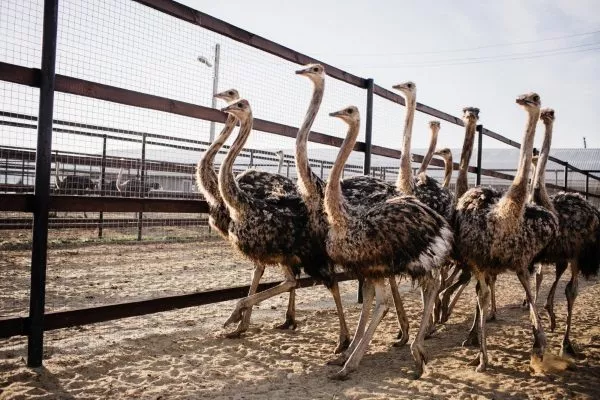
Let's consider how much can be earned from a single ostrich, taking into account various products: meat, fat, feathers, and skin. The total from all these products could amount to approximately 70,000 rubles. Let's assume that one female can lay 60 eggs per season, which would bring in another 40,000 rubles.
The profits can be used to expand the business by increasing the herd. With proper organization and a high farm profitability, which can reach 95%, the costs of purchasing and maintaining the ostriches can be recouped.
Points of sale
Ostrich meat and eggs are currently in demand in major cities. Supermarkets, restaurants, and gourmets actively purchase these products for sale. Direct sales to farmers and individuals are also possible.
Some of the most effective methods of promoting ostrich farm products include:
- mailings to the client base;
- distribution of leaflets and information booklets;
- organizing farm tours for the public;
- placing advertisements in print media.
These events will help to attract attention to the products and establish contacts with potential customers.
Advantages and disadvantages of ostrich farming
Ostrich farming has not yet become widespread in Russia, making it difficult to fully characterize this business within the context of the domestic market. Here are the main pros and cons that currently stand out:
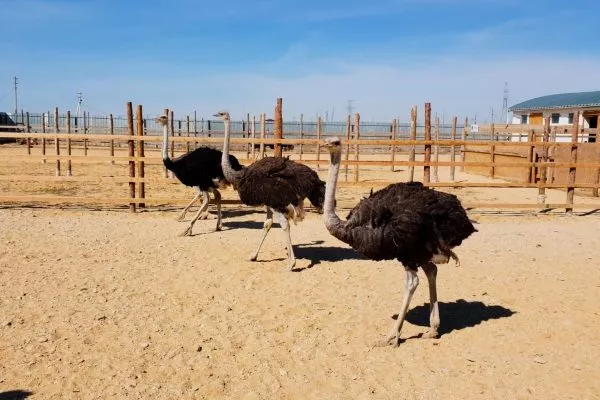
Setting up a farm requires significant capital investment, including equipping the premises and purchasing livestock.
What is the best breed to breed?
| Name | Average egg weight (kg) | Incubation period (days) | Productivity (eggs/season) |
|---|---|---|---|
| A hybrid between a Zimbabwean male and a black African female | 1.5 | 42 | 60 |
| Nandu | 1.4 | 51 | 80 |
| African ostriches | 1.9 | 42 | 70 |
The choice of ostrich breed for breeding depends on the farm owner's primary goal. Below are the various goals and suitable ostrich breeds:
- If the primary goal is meat production, the most suitable breed is a hybrid between a Zimbabwean male and a Black African female. These hybrids are most often bred on ostrich farms due to their high fertility and ease of maintenance.
- If the goal is to obtain eggs, then the most suitable breed is considered rheaThese birds are distinguished by their abundant clutches and unpretentiousness.
- African ostriches They are considered a versatile breed, suitable for any purpose. They provide plenty of meat, eggs, and feathers, have a long lifespan, and a friendly nature.
Masai ostriches are considered the most aggressive breed, and their breeding on private farms is not recommended. They may be used for breeding and research.
Setting up an ostrich farm
Setting up an ostrich farm is a key aspect of successfully breeding ostriches and ensuring their health and well-being. It's important to consider a variety of factors to create the right conditions for these birds.
Territory
Ostriches require a sufficiently spacious and well-equipped habitat, especially for extended breeding. Here are the key characteristics of a suitable habitat:
- The presence of a forest belt provides good protection from winds and adverse weather conditions, which contributes to the comfortable maintenance of ostriches.
- The site should be located away from the bustle of the city and highways to avoid stress and noise, which can negatively affect the birds.
- Access to utilities such as electricity and water is necessary to provide lighting, water supply and other aspects of ostrich care.
- The land on the site should be covered with grass, which will provide the ostriches with natural pasture and suitable walking environment.
- The groundwater level should be 1 m or more to prevent waterlogging of the area and ensure dryness of the site.
- The slope of the terrain to the south helps to ensure better illumination of the area by sunlight.
- The area should be fenced with a height of at least 2 m to ensure the safety of the ostriches and prevent them from escaping.
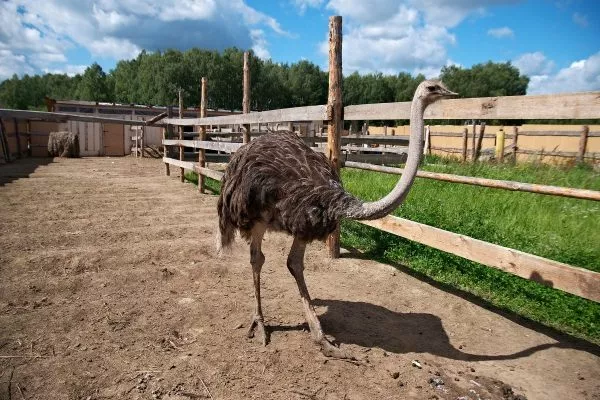
Creating such conditions on the site will help ensure comfort and safety for ostriches, which in turn contributes to the successful keeping and breeding of this exotic bird.
Premises
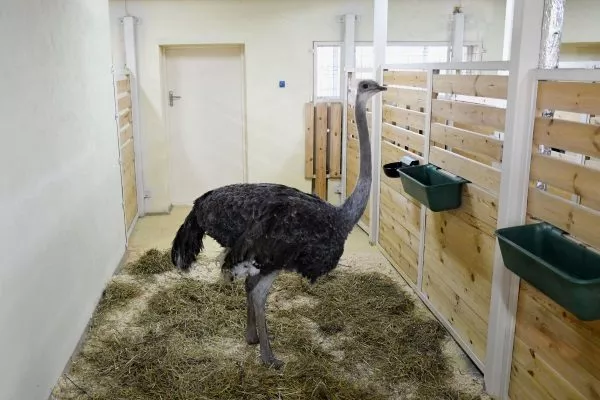
It's important to consider the specific requirements of the space intended for keeping ostriches. Here are the basic requirements:
- For a family including a male and two females, an area of 12 by 16 m is required.
- The width of the doors should be 120 cm.
- It is recommended that the height of the stall be at least 3 m.
- Provide good quality lighting.
- If the floor of the barn is concrete, be sure to lay down bedding (hay or dry wood shavings) to prevent the birds from freezing.
- The area adjacent to the room should be covered with sand, as ostriches love to take sand baths.
Males are polygamous and can have up to four females per family. To keep the birds separated, partitions can be installed in the barn so they can see their neighbors.
Conditions of detention
To ensure the comfort and health of ostriches, certain rules must be followed. Regularly clean the stalls and areas where the ostriches are kept. Regularly disinfect the areas and change the water in the drinking bowls daily.
Ensure an optimal indoor microclimate:
- Ventilation. Ventilate the room regularly. The minimum air exchange rate for a room housing 100 ostriches weighing 5 kg is 750 cubic meters per hour.
- Temperature. The optimal temperature is 15°C.
- Humidity. Humidity in the ostrich enclosure should not exceed 60%, as high levels can promote the growth of microorganisms and fungi, and can also cause respiratory diseases.
- Gas pollution. Monitor ammonia levels as they can negatively impact the health of ostriches.
Avoid making noise near ostriches. Noise can frighten the birds and lead to accidents, such as falls, injuries, and stress.
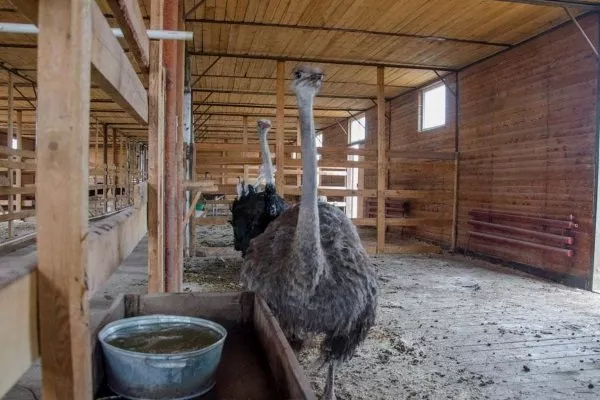
Inventory
To set up an ostrich farm, it's important to have the necessary equipment. There are several options:
- Hanging drinkers. They are suspended from fence posts or trees at a height of 1-2 m. They are usually easy to use.
- Car tires. They are used as drinking bowls.
- Plastic containers on legs. These feeders and waterers may be more expensive, but they are easy to clean and durable.
The choice of equipment depends on your individual situation and budget, but it is important that it is comfortable and safe for the ostriches.
Feeding
Ostriches are omnivores, and their diet includes a variety of foods that they can find in the wild. It is important to observe rules for feeding birds.
Feeding systems
Ostrich diets can vary depending on the farm's breeding system. Here's how they can change:
- Semi-intensive breeding. With this method of breeding ostriches, they are provided with supplementary feeding of mixtures of nutrients and hay.
This means that part of the food supplied to the birds is in the form of specially prepared mixtures that provide the necessary nutrients, as well as hay, which can serve as a source of coarse fiber. - Widely bred. In this case, ostriches obtain most of their food in the open air, where they have access to a variety of plants and natural resources. During dry or rainy periods, supplemental feeding may be necessary to ensure the birds receive adequate nutrients.
It is important to monitor the quality and balance of the ostrich diet, regardless of the chosen breeding system, to ensure they are healthy and grow well.
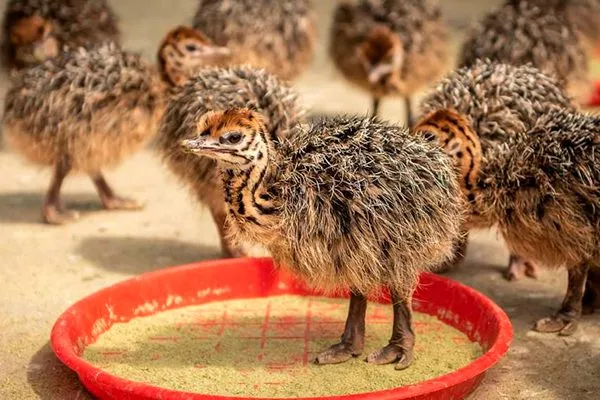
Types of feed
Feeding adult ostriches involves feeding a variety of foods to ensure the birds receive the nutrition they need. Ostriches' diets include:
- Green fodder: White cabbage, clover, alfalfa, nettle, beet and carrot tops, spinach, and quinoa. These plants enrich the ostriches' diet with vitamins and minerals.
- Raw food: Drinking straw and meadow hay. The straw is used as a feeding supplement, and the meadow hay provides the birds with fiber and roughage.
- Succulent feed: Radishes, carrots, cucumbers, watermelons, onions, and apples. These foods enrich the ostriches' diet with moisture and vitamins.
- Cereals and seeds: Oats, corn, millet, grain, cowpeas, pumpkin seeds, and barley. Grains and seeds provide ostriches with energy and protein.
- Mineral supplement: Gravel, limestone, shell rock, and crushed shells provide essential minerals for bird health.
- Animal feed: Fish meal or meat and bone meal. They can be used as a source of additional protein.
Ostriches' diets must be balanced and meet their nutritional requirements to ensure good health and productivity.
Diet of an adult bird
Feeding ostriches is an important aspect of their care. Their diet must be balanced and meet their nutritional needs. In winter, their diet should include grass and bone meal, brewer's yeast, gravel, crushed grain, chalk, and wheat bran.
What and how to drink?
Depending on weather conditions and the availability of succulent feed, ostriches may require varying amounts of water. In hot weather or when succulent feed is scarce, ostriches may require up to 10 liters of water per bird per day.
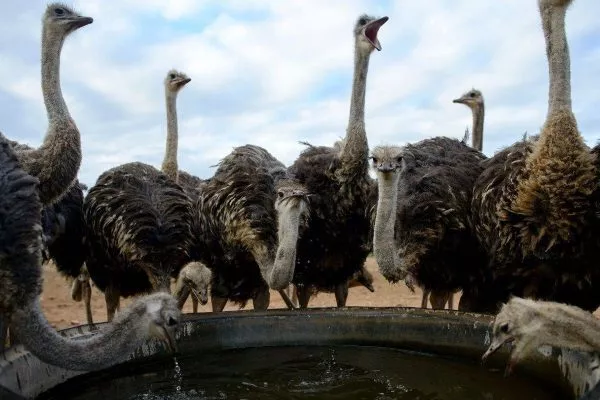
Place water bowls at a height that is comfortable for the ostriches. The optimal height is about 70 cm from the floor, so the birds can easily reach the water.
What should not be fed?
When breeding ostriches, it's important to maintain a proper diet. There are certain foods that should not be fed to these birds:
- rye;
- parsley;
- potato;
- limited amounts of flour, bran and cabbage.
A balanced diet for ostriches includes a variety of foods rich in protein and nutrients to ensure healthy growth and development of these birds.
Nutrition in winter
During winter, ostriches should be fed a varied diet to ensure they receive the necessary nutrients. Staples in an ostrich's winter diet may include:
- compound feed;
- cereals;
- bread and croutons;
- beets and carrots;
- mineral and vitamin supplements;
- apples;
- silage;
- herbal flour.
It is important to maintain a balanced diet for ostriches, taking into account their nutritional needs to maintain the birds' health and productivity during the winter months.
Breeding Features
Ostrich families typically include one male and four or five females, and both parents actively participate in incubating the eggs. Let's take a closer look at these features. breeding of large birds.
Mating season
Males reach sexual maturity at 2-2.5 years of age, while females reach sexual maturity at 2 years of age. To determine if a male is ready for mating season, pay attention to the color of his legs, beak, and the skin around his eyes, which turn red during mating season.
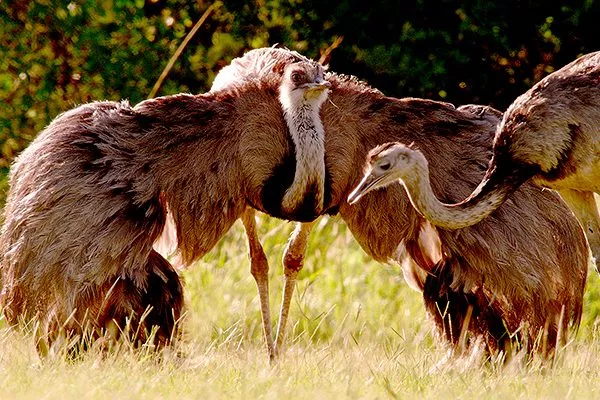
For African ostrich breeds, the mating season usually lasts from March to October, but weather conditions can slightly affect these timings.
Oviposition
A female can lay 40 to 80 eggs, laying them every two days. Young hens may lay 20% fewer eggs in their first season than adult birds. The maximum number of eggs is observed within three seasons.
Hatching times
African ostriches hatch on days 39-42 of incubation, while emus hatch on days 51-54. During incubation, the average temperature is 36°C, and humidity is maintained at 24-35%, rising to 60% only during hatching.
Is incubation necessary?
The use of incubators in ostrich breeding is part of the intensive breeding method. This is necessary to ensure uniform age of all chicks. Ostrich eggs can be placed in special incubators equipped with trays for large eggs.
What kind of care do ostrich chicks require?
The viability of ostriches depends on correct incubation and compliance with the rules for raising young animals. Young animals should be kept in a dry and warm place, separate from adult ostriches. The room temperature should be maintained between 30 and 33°C.
The chicks can be released into the pasture, but only if there is no dew, as it can cause illness in the chicks.
Poultry health
On an ostrich farm, one of the main risks is infection. It can lead to serious losses in the herd. Ostriches are most often susceptible to respiratory diseases and digestive disorders. To maintain the health of your ostriches on the farm, follow these important steps:
- Clean the farm daily.
- Employees must work with gloves.
- Check droppings regularly for worms and intestinal infections.
- Follow the vaccination schedule recommended by your veterinarian.
- Set up a quarantine pen for new ostriches purchased for the farm.
- Weekly disinfection of premises and equipment with a 2% chlorhexidine solution.
- Monthly examination of birds by a veterinarian for parasites and signs of disease.
- Quarterly vaccination against common avian infections.
Ostrich farming requires significant investment and precautions, but with proper organization and care, these birds adapt to local conditions and can bring in good profits.
How to register an ostrich farm?
To ensure your business is legal and compliant with sanitary regulations, you must undergo inspections and obtain the necessary documents. You will need:
- sanitary certificate on the suitability of the farm for operation;
- conclusion of the State Fire Supervision Authority on the safety of the structure;
- an agreement with the veterinary service for the registration of a Veterinary Certificate of Animal Health (VVH);
- waste disposal agreement;
- veterinary passports for each bird;
- conclusion of the labor protection commission;
- health books for workers handling meat and eggs.
Ostrich farming isn't an exotic hobby or a mere whim, but a highly profitable endeavor. With little competition, it's easy to develop this niche and reap excellent profits year-round.