
Ostrich eggs are a valuable product that must be handled carefully and properly. Collection, storage, sorting, and transportation of eggs must be carried out in accordance with all regulations, which every farmer should be aware of. Even the slightest deviation from these standards can result in the loss of a valuable egg.
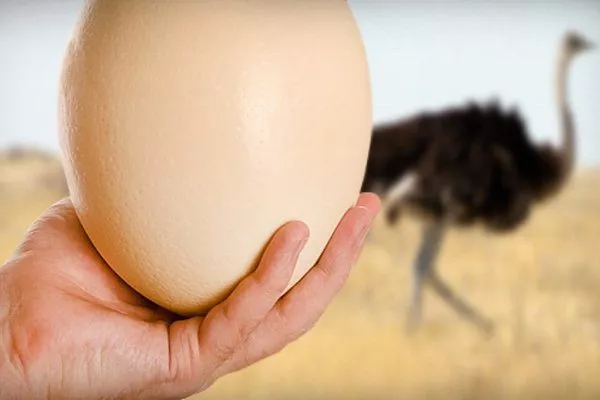
When can you collect eggs from ostriches?
Ostrich eggs It is recommended to remove eggs from the nest almost immediately after it has been laid. Therefore, it is crucial to check the nests as often as possible. Moreover, frequent egg collection stimulates the female ostrich to continue laying, thus replenishing the eggs she has lost.
However, it's important to keep in mind that collecting eggs should never be done while the female is in the nest. This can be psychologically traumatic for the bird. It's best to wait until she leaves the nest and begin collecting eggs without attracting her attention.
An egg left in the nest for a long time is at risk of developing pathogenic bacteria on the shell surface, as well as embryonic diseases. Furthermore, leaving the clutch in direct sunlight can lead to embryonic death.
Collection rules
To properly collect eggs from a nest, you must adhere to the following rules:
- It is necessary to ensure that someone distracts the birds while the eggs are being collected.
- The assembler must wash his hands with warm water and disinfectant soap before starting work.
- Collected specimens should be placed in a special basket or container.
- During the process, do not perform any sudden manipulations with the eggs or shake them.
- After collection, each specimen must be washed, dried and examined.
Processing and disinfection before storage
It's important that the eggs are clean; if they're heavily contaminated, they need to be washed. Here, too, it's important to follow a few rules:
- Eggs are processed before storage.
- Before starting the procedure, disinfect your hands with iodine, as well as before contact with each individual specimen.
- For washing, use warm water, at least 40°C. Never use cold water, as if the egg's interior temperature is higher than the external liquid, it will begin to wrinkle. This allows microorganisms to penetrate the egg.
- If the procedure is carried out in a container and not under running water, change the water after each specimen, washing the container thoroughly.
- A chlorine- or iodine-containing sanitary agent is added to the water.
- Do not use a cloth during the washing process, as this increases the degree of contamination.
- Contamination is not scraped off the surface, as this can damage the outer layer of the shell and allow microorganisms to penetrate inside.
- The procedure lasts 2-3 minutes.
- After washing, clean specimens are laid out on a natural cloth and left to dry completely.
Compliance with sanitary standards when keeping birds minimizes the risk of infection developing on the surface of the egg, as well as its penetration inside.
Storage conditions
When storing ostrich eggs, a specific temperature and humidity level are maintained. Therefore, experienced poultry farmers equip the room with special measuring instruments. The location should also be dry and dark.
Optimal humidity and temperature levels
| Parameter | Meaning |
|---|---|
| Temperature | 13-18°C |
| Humidity | 30-40% |
| Shelf life at room temperature | Up to 30 days |
| Shelf life in the refrigerator | 5-7 months |
It is recommended to ensure low humidity levels during product storage, approximately 30-40%. Temperature should not be less than 13°C and not more than 18°C.
Positioning and turning eggs
Experts disagree on the proper position for storing eggs. Some advocate storing ostrich eggs strictly horizontally, while others recommend storing them vertically, with the blunt end up. Farmers, through trial and error, find the method they find more effective.
You can also turn the eggs at different intervals, depending on how long they've been stored. For example, if the eggs are stored for several days, you can turn them every day. If they're stored for about 10 days, you can reduce the frequency to once every three days.
Shelf life
At room temperature, an egg can last up to 30 days if the shell is not damaged.
In the refrigerator at a temperature of +2 to -2 C° and a relative humidity of 85 to 88%, the shelf life increases significantly - up to 5-7 months.
The shelf life of eggs before incubation is 1 week; pre-incubation storage for 10 days is allowed, but only at a temperature of 15-18 °C and a relative humidity of 40%.
Video: How to choose a good ostrich egg
We recommend watching a report where a farmer discusses the collection, storage, and selection of good ostrich eggs:
How to properly transport an ostrich egg?
To ensure safe transportation of ostrich eggs, please follow these guidelines:
- They select a special box and wipe it with a dry cloth.
- Each egg is wrapped in packing rubber, cotton wool or rubberized packing material.
- Place it with the blunt end facing up.
- The box is placed on anti-vibration rubber to avoid shocks while driving.
- The lid of the box is painted white, especially if it is to be transported for a long time, to reflect sunlight.
Should eggs be labeled?
Farmers who are serious about ostrich farming know that the birds' eggs need to be labeled to know exactly when the product was harvested.
Eggs are marked with a pencil. The collection date and section number are marked on the pointed end of each eggshell. This information is also recorded in a special logbook under a serial number.
So, collecting and storing ostrich eggs is a painstaking process that requires specific knowledge, skills, and a comprehensive approach. Only by following all the requirements will you be able to preserve this valuable product.