
Salmonellosis is one of the most common infectious diseases, often affecting ostrich farms. To avoid losses when breeding these enormous birds, it is important to promptly detect the infection and prevent its further spread.
Description of the disease
Salmonellosis is a bacterial disease that attacks the victim's digestive system. The infection spreads not only to birds but also to animals and humans.
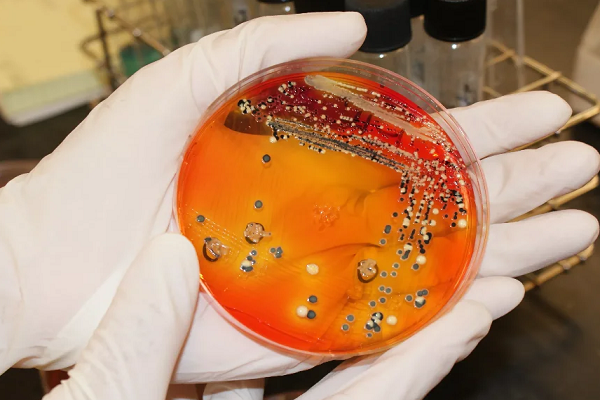
If salmonella appears on a poultry farm, many young birds usually die. The surviving ostriches grow slowly, making keeping them unprofitable.
Pathogen
The causative agent of salmonellosis is the bacterium Salmonella. It was named after D. Salmon, who first discovered the pathogenic bacteria that kills birds en masse.
Of the many varieties, three types of salmonella cause the greatest damage to poultry farming:
- Typhimurium;
- gallinarum-pulorum;
- enteritidis.
The most common bacterium found in ostriches is Salmonella enteritidis. It is a gram-negative, motile rod with rounded ends. The disease caused by Salmonella enteritidis is commonly called salmonellosis-paratyphoid.
Salmonella are environmentally resistant and remain viable for long periods of time. Salmonella lifespan:
- in water - about 5 months;
- in the ground - 1.5 years;
- in meat - up to 6 months;
- in poultry carcasses - more than a year;
- in dairy products - 20 days;
- in cheese - about a year;
- on eggshells - up to 25 days.
Salmonella dies within 5-10 minutes of heating to 70°C. However, if the bacteria is deep within a piece of meat, it can survive for some time.
Bacteria are resistant to smoking and salting, and cold even prolongs their lifespan. Hospital strains resistant to antibiotics and disinfectants have already been identified. These are currently the most dangerous.
Causes of the disease
The worse the living conditions and the weaker the bird, the higher the risk of salmonella infection. The risks also depend on the type of bacteria and the individual characteristics of the birds.
Infection and development of the disease are facilitated by:
- malnutrition;
- past illnesses;
- overheating and hypothermia;
- dirt in the poultry house;
- overcrowding and non-compliance with area standards.
These factors lead to a weakening of the immune system, and birds become vulnerable to diseases.
Methods of transmission
The main source of infection for ostriches is sick or recovered ostriches and salmonella-contaminated feed from domestic and wild animals. Vertical transmission from hatching eggs to chicks is also possible.
Sources of infection:
- Birds. Ostriches that have recovered or were asymptomatic are carriers of the bacteria. Moreover, salmonella is found not only in their gastrointestinal tract but also in other internal organs, such as the ovaries and liver.
- Eggs. Infection can occur in the cloaca, where microbes from the intestinal tract can become lodged on the eggshell. Salmonella, penetrating the egg, kills the embryos and infects the hatched ostriches.
Sick birds contaminate farm premises and feed with their droppings. Transmission occurs via the fecal-oral route. Most often, infection occurs through food and water.
Symptoms of the disease appear 3-5 days after infection. Infected birds become a source of germs and can infect their fellow birds for several months.
If the disease becomes chronic, the bird remains a source of salmonella throughout its life.
Mechanism of infection
Since infection most often occurs through food or water, pathogenic bacteria localize in the intestines of infected birds. This causes bacillary diarrhea.
The bacteria, penetrating the blood and lymphatic system, rapidly spreads throughout organs and tissues. Ostriches, like any living organism, have an immune system, which, in many individuals, successfully combats the "enemy agent."
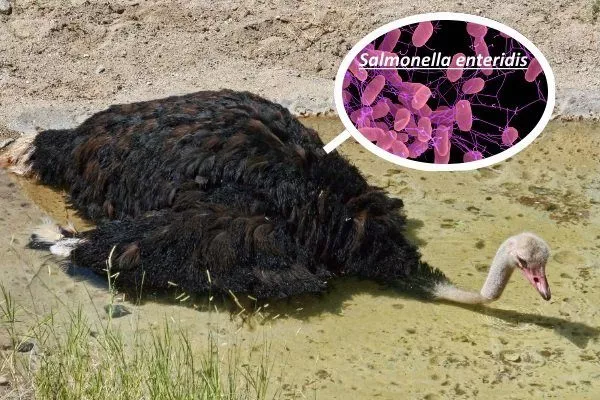
In weakened birds the disease progresses rapidly:
- sepsis develops;
- tissue cells die;
- internal bleeding occurs.
The kidneys, liver, and intestines are primarily affected in birds. Sometimes salmonella reaches the brain and lungs. Then the ostriches quickly die.
Risk group
Two categories of birds are most at risk of becoming infected and dying due to critical health impairment: chicks and those with weakened immune systems. The risk of fatal infection also increases under unfavorable conditions.
Symptoms
Salmonellosis symptoms depend on the age of the ostriches and their health. In young ostriches, signs are similar to gastroenteritis, while in adult ostriches, they are more severe.
In chicks
Young birds infected with salmonella weaken literally before their eyes. The chicks eat poorly and lose virtually all interest in food. Due to a lack of nutrients, the chicks stop growing and go bald.
They have difficulty breathing due to lung damage. Most infected chicks die, and those that survive are unable to fully recover.
In adult ostriches
Adult ostriches have a better chance of surviving the disease, but it is acute and often complicated. Symptoms of salmonellosis in ostriches include:
- deterioration or complete loss of vision;
- swelling of bone tissue leading to lameness;
- indigestion;
- intense thirst;
- lethargy and general apathy;
- lack of coordination;
- convulsions;
- semiparalysis and paralysis.
Forms of salmonellosis
Salmonellosis is classified by location and severity. These criteria determine the severity of the disease and its treatment.
The following forms of salmonellosis are distinguished:
- Lightning fast. It usually occurs in chicks a few days old, which hatch from infected eggs.
- Acute. It occurs in ostrich chicks aged 1-2 weeks and is accompanied by obvious symptoms and mortality.
- Subacid. Occurs in ostrich chicks aged 2-8 weeks. It causes developmental delays and is accompanied by subtle symptoms.
- Permanent. Typical of adult ostriches. Clinical signs are subtle.
Depending on the location of the infection, three forms of the disease are distinguished:
- Nervous. It is usually chronic and causes paralysis. A clear symptom is head tilt.
- Articular. It is accompanied by swelling of the paws. The joints are filled with effusion. The bird has difficulty moving. Other characteristic symptoms include tremors and muscle atrophy.
- Intestinal. It has a chronic course. The most characteristic symptom is diarrhea.
Is the disease dangerous for humans?
Ostriches infected with salmonella can infect humans. Infection also occurs through eggs or meat containing salmonella. Contaminated foods can cause severe food poisoning.
The World Health Organization (WHO) believes that among diseases common to humans and animals, salmonellosis is the most complex in its course and treatment.
Why salmonellosis is difficult to treat:
- Variety of strains. More than 2,000 of them have already been counted. About 250 strains are found in birds, and 700 in humans.
- Asymptomatic course. Many robust birds exhibit no obvious symptoms of salmonellosis. Salmonella, when found on eggshells and in meat, causes widespread poisoning in humans.
Symptoms of infection in humans:
- weakness;
- temperature up to +40°C;
- vomit;
- diarrhea;
- stomach ache.

The stool is loose and foamy, greenish in color. Blood often appears in the stool 2-3 days after infection. In people with weakened immune systems, the disease affects vital organs such as the lungs, heart, and kidneys. Treatment is ineffective in this case.
The disease is most severe in children under one year of age (especially seven-month-olds) and the elderly. The immunity developed by those who have recovered from the disease is fragile, lasting no more than a year.
Diagnostics
To diagnose salmonellosis, the pathogen is isolated from biological samples such as stool or vomit. If the bacteria is generalized, it is differentiated from bacterial cultures in the blood.
Laboratory tests determine blood viscosity, acid-base balance, and electrolyte balance. Diagnosis is made comprehensively, based on clinical symptoms, pathological findings, and laboratory tests.
Treatment
Sick individuals exhibiting characteristic salmonellosis symptoms are isolated for 20 days. During this time, the birds' blood is sent for laboratory testing. If the diagnosis is negative, the ostriches are released back into the general flock.
Medicinal
Salmonellosis is treated comprehensively. Therapy involves the use of effective antibacterial medications. These are given with food if the medication is powdered, or by injection if the medication is liquid.
Popular medications for salmonellosis:
- Pharmaspectin. 1 ml per 2.5 kg of body weight. Once daily. 3-day course.
- Noroflox. 0.5-1 ml of the product is diluted in 1 liter of water and given to ostriches to drink for 5 days.
- Baytril. 10 mg per 1 kg of live weight. The course is 8-10 days.
- Levomycetin. The dosage is 30 g per 1 kg of body weight. The antibiotic is administered three times daily for a week.
- Oxytetra. 2 kg of the preparation is diluted in 500 liters of drinking water. The course of treatment is 5 days.
To maintain the microflora in the gastrointestinal tract of ostriches during treatment, probiotics are added to their feed.
Salmonella bacteria adapt to antibiotics and become more resistant to their effects. Over time, the disease becomes increasingly difficult to treat. New medications have to be tried.
Drug therapy is effective in the early stages of the disease. If birds show obvious signs of infection, treatment is usually not used. Sick ostriches are simply slaughtered. The bodies are always disposed of, as all parts—skin, meat, feathers—are a source of infection.
Folk remedies
Salmonella can even adapt to antibiotics, let alone folk remedies. On their own, they are unable to cure sick birds. They are usually used as a supplement to medications and as part of a comprehensive treatment.
Popular folk remedies for salmonellosis:
- Oak bark decoction. This is an excellent antiseptic, usually given for diarrhea of any kind. Add 250 ml of boiling water to 1 tablespoon of dried bark and simmer for 10 minutes over low heat. Give to birds three times a day.
- Flower infusion. Steep 1 teaspoon of herbs (dried calendula, chamomile, and yarrow) in 200 ml of boiling water. Give the infusion to the birds three times a day. It has anti-inflammatory, cleansing, and disinfecting properties.
- Bird cherry infusion. Pour boiling water over 10 grams of dried fruit and leave in a water bath for 25 minutes. Give the infusion to birds with diarrhea on an empty stomach.
How to prevent the disease?
The main ways to prevent the spread of salmonella are preventative measures and vaccination. Salmonella has not yet been completely eradicated. Not only timely diagnosis but also adherence to ostrich husbandry guidelines can help minimize damage.
Sanitary prevention
Preventive measures are tightened if sick birds or suspected illness appear in the flock. While sick ostriches are isolated, enhanced sanitary and preventive measures are taken.
- ✓ Use disinfectants with proven effectiveness against salmonella.
- ✓ Carry out disinfection at a temperature of at least +15°C to activate chemicals.
Salmonellosis prevention measures:
- Regular veterinary checkups. Daily inspection of birds. Identification of lethargic birds and their isolation.
- Adding antibiotics and bifidobacteria to feed.
- Feeding chicks probiotics from birth.
- Treating poultry areas with antiseptics. Disinfecting floors, walls, equipment, cages, eggs, feeders, and waterers.
Vaccination
The most reliable and effective way to prevent salmonellosis is vaccination. The Virosalm vaccine is used to prevent this disease. It is a combination vaccine against salmonellosis and Newcastle disease.
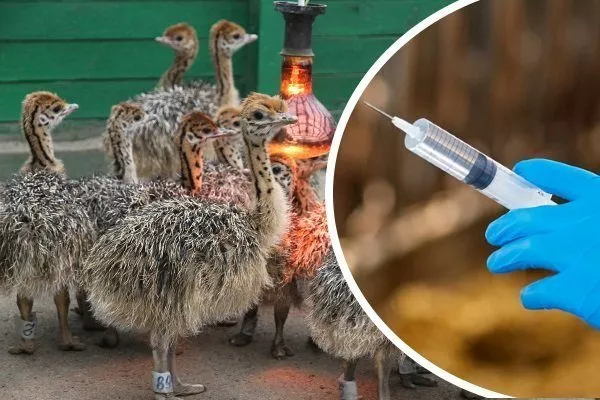
This is a domestically produced drug, released as an injectable suspension. It is made from Salmonella bacterial cells and virus-containing fluid contaminated with Newcastle viruses.
- ✓ The vaccine storage temperature must be strictly between +2°C and +8°C.
- ✓ Use the vaccine immediately after opening, do not store the opened ampoule.
Vaccination procedure:
- The first dose is administered at 20 days of age.
- The second dose is administered after a month.
- Repeat the vaccination every 10 months, twice, with 30-day intervals.
Who else will be vaccinated outside of the schedule:
- Parent individuals before egg laying. This is necessary to create immunity in future ostriches.
- Birds sent to exhibitions, competitions, exchange, sale. Anyone who will come into contact with other birds is a potential carrier of salmonella.
Vaccination rules:
- Weakened individuals cannot be vaccinated.
- Deworming is performed 10 days prior to drug administration. Broad-spectrum medications are used. Simultaneously, the birds are treated with insecticidal acaricides.
- Vaccination is carried out in favorable weather conditions, at temperatures ranging from +10 to +30°C.
- The injection site is treated with an antiseptic.
- The salmonella vaccine should not be administered in combination with other immunobiological agents. Ostriches should also not be vaccinated with other vaccines for two weeks after immunization.
- Meat, eggs and by-products of vaccinated ostriches can be consumed regardless of the vaccination date.
- Workers performing vaccinations must wear special clothing, gloves, and glasses.
- If the vaccine comes into contact with a person's skin or mucous membranes, rinse them with water. If the vaccine accidentally gets under the skin, clean the injection site with 5% iodine or 70% ethyl alcohol, and then seek medical attention.
Content
In order for ostriches to be healthy and gain weight quickly, in addition to vaccinations, they need favorable living conditions.
Requirements for keeping ostriches:
- Birds should live in a warm and dry room.
- The poultry house should be free of parasites and rodents, which are constant sources of various infections, including salmonellosis.
- The optimal temperature in the barn is between 16°C and 23°C. The room must be heated to prevent the ostriches from freezing in winter.
- The poultry house is regularly ventilated, as damp and stale air promotes the development of mold and pathogenic microorganisms.
- Floors are made of sand, clay, or wood. Concrete and asphalt surfaces are unhealthy for ostriches, as their feet can become frozen. The floor should be covered with straw.
- The height of the poultry house is at least 3 m. The distance from the bird's head to the ceiling should be at least 1 m.
- The feed is stored in a separate room, protected from rodents.
- Feeders are placed 0.5 m from the ground and filled two-thirds full with food.
- Birds should have a sandy or gravel run with protection from the wind. Each bird requires at least 5 square meters of space.
Feeding
One of the conditions for good immunity in ostriches is proper and regular nutrition, taking seasonality into account. Balanced feeding helps maintain birds' resistance to diseases and viruses.
How to feed ostriches correctly:
- Strengthen the diet during the productive period.
- Birds are fed according to their age: adults 2 times a day, ostriches 3-4 times.
- Changing the diet due to the change of season is carried out gradually over 10 days.
- If there is no special ostrich feed, the birds are given feed for ducks or chickens.
- The water is changed every day. It must be clean and fresh.
- Ostriches' diets should include grains—corn, wheat, barley, and oats. They are also fed hay and succulent feed, grass meal, root vegetables, vegetables, and animal feed. It is also recommended to supplement their diet with fish waste, eggs, and dairy products.
- Leaves, tops, and root vegetables should be washed and dried beforehand; dirty food should not be given.
Salmonellosis is a dangerous disease that poses a threat to both ostriches and ostrich farm workers. Neglect of preventative measures, vaccinations, and inadequate housing and feeding practices can lead to the spread of salmonella, which can lead to significant losses.