
Newcastle disease, or pseudoplague, is one of the most serious ostrich diseases. It is viral in nature and can affect any poultry. To avoid loss of flocks, effective prevention is essential, and, if necessary, timely and adequate treatment.
What is Newcastle disease?
The disease was first recorded and described in the early 20th century. It occurred in the Irish city of the same name, from which the disease takes its name. For more than 100 years, this avian disease remains one of the most dangerous for ostriches.
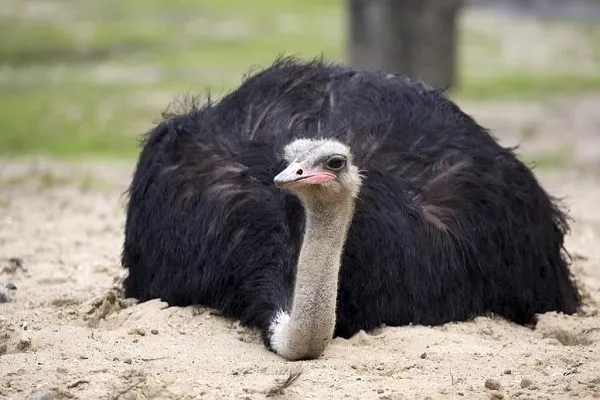
Periodic outbreaks of Newcastle disease occur on virtually every continent. They have been recorded, in particular, on ostrich farms in Africa, America, and Asia. The disease is dangerous to all bird species.
Pathogens
Newcastle disease is caused by the highly contagious paramyxovirus PMV-1. The virus spreads rapidly among birds due to its short incubation period of 3 to 5 days.
PMV-1 has an innumerable number of strains, which are grouped into 4 large groups:
- Mesogenic. They affect the respiratory system and central nervous system. They have a low mortality rate.
- Neurotropic velogenic. They affect the respiratory and nervous systems and cause high mortality.
- Lentogenic. The disease is accompanied by a slight deterioration in the functioning of the respiratory system.
- Viscerotropic velogenic. They cause acute illness and are highly contagious. They can lead to hemorrhage into internal organs.
PMV-1 is highly resilient and can remain viable outside of birds for long periods of time. It persists in their habitats, continuing to infect flocks. The virus's lifespan is 6-8 days in summer and up to 5 months in cold weather. Its lifespan is affected by external stimuli.
How long does PMV-1 last depending on conditions:
- under direct sunlight - 2 days;
- under the diffused rays of the sun - about 15 days;
- when heated above 70°C - about 2 minutes;
- frozen - about a year;
- when heat treating meat - up to 1 hour;
- when drying infected organs and storing them at +17…+18°C – about 2 years;
- burial of infected individuals in the ground - about 20 days.
The virus is resistant to environmental challenges. It reacts most acutely to high temperatures, acidic environments, and disinfectants such as ether and chloroform.
Sources of infection
The main sources of infection for ostriches are their sick relatives. Both sick birds and those incubating are dangerous.
Infection also occurs from:
- wild birds;
- insects;
- rodents;
- pets;
- person.
In ostriches, the virus does not spread as quickly as in other bird species. This is due to its slower release into the environment.
The closer the contact between sick and healthy birds, the more intense the infection. The virus is literally carried through the air, for example, by wind or ventilation systems.
Risk group
Compared to other poultry, ostriches are relatively resistant to Newcastle virus. They are not as susceptible to it as, for example, chickens, and do not readily transmit the virus to each other.
Among ostriches, those at risk include immature chicks and young birds under 9 months of age, as well as weakened and older birds. Healthy and strong birds usually show only a limited number of symptoms.
Mechanism of infection
The pathogen can enter a bird's body through any number of possible routes—inhalation, ingestion with food or water, or through a scratch. Once the disease has entered a flock, it is impossible to protect it using conventional quarantine methods.
Birds become infected in the following ways:
- airborne;
- through blood;
- through water and contaminated feed;
- from secreted secretions, excrements;
- from eggs;
- through bedding, down and feathers.
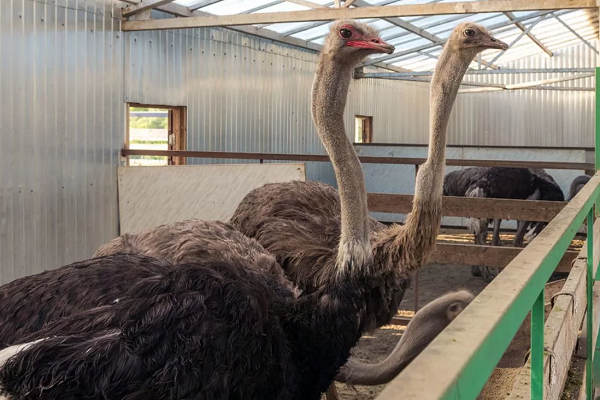
Once the virus enters the bird's body, it begins to multiply rapidly, and then spreads throughout the body through the bloodstream and into the internal organs.
Once the virus has multiplied and established itself in the body, infected ostriches develop clinical symptoms and become sources of infection, releasing the pathogen into the environment.
Is the disease dangerous for humans?
Paramyxovirus does not pose a fatal threat to humans, but they can become infected. Workers who come into contact with sick birds are at risk.
A person becomes infected by inhaling air contaminated with the virus or by rubbing their eyes with dirty hands. The first signs of the disease appear 3-7 days after infection.
A person infected with pseudoplague develops the following symptoms:
- the nasal mucosa swells;
- the temperature rises slightly;
- weakness comes over me;
- eyes become inflamed and red;
- mucus mixed with pus is released from the nose and eyes;
- diarrhea is observed, including with blood inclusions;
- appetite worsens.
To avoid becoming infected with paramyxovirus from ostriches or other birds:
- After leaving the poultry house, wash your hands thoroughly with soap and treat them with disinfectant solutions;
- Meat and eggs should be thoroughly cooked before consumption;
- When carrying out aerosol vaccination and disinfection in farm premises, wear a respirator.
Symptoms are typically limited to standard respiratory symptoms or conjunctivitis, but more serious complications occasionally occur. For example, brain damage has been reported in children. Regardless of the severity of the condition, treatment is symptomatic.
Symptoms
The severity of clinical manifestations depends on the age of the ostriches, the strain, the host's resistance, the conditions of their maintenance, and other factors. Pathologies are observed in the following body systems:
- respiratory;
- nervous;
- digestive.
Sick birds may exhibit the following symptoms:
- weakness;
- coordination disorder;
- throwing back the head;
- diarrhea;
- discharge of mucus from the nose and beak;
- elevated temperature;
- heavy breathing;
- convulsions;
- paralysis.
The easiest way to suspect pseudoplague is by a change in the color of the stool. It becomes greenish, often mixed with blood. Diarrhea is an unusual symptom for ostriches. Its appearance is a serious sign, suggesting paramyxovirus infection.
Forms of the disease
The course of Newcastle disease takes different forms, which differ from each other in symptoms, their severity and outcome:
- Lightning fast. There are virtually no symptoms. The birds die suddenly. Only after an autopsy do the farm owners discover that the ostriches died from paramyxovirus.
- Acute. The disease presents with pronounced symptoms. Symptoms affect the respiratory and gastrointestinal tracts, and there are clear signs of central nervous system damage. Death occurs within a few days of infection. This form of the disease can lead to the loss of an entire herd.
- Subacute. Observed when the body is infected with a mesogenic strain of the virus. Affected birds behave somewhat agitatedly, and their eggshells become thinner. About 30% of the flock may die.
Birds with this form of the disease typically die within a week. Asian viruses often cause subacute cases. - Chronic. It is caused by mesogenic strains and is observed in birds with good immunity. With proper and timely treatment, most birds can be saved. Mortality rates are no more than 15%.
Newcastle disease is seasonal. Outbreaks typically occur in summer and fall. On large farms, the infection can be persistent due to the virus's high winter persistence and the presence of birds that are latent carriers.
Diagnostics
Diagnosis involves differentiating the disease from other illnesses with similar symptoms. Based solely on external symptoms, pseudoplague can be confused with:
- classical plague;
- typhoid fever;
- bronchitis;
- flu;
- laryngotracheitis;
- pasteurellosis;
- poisoning with pesticides.
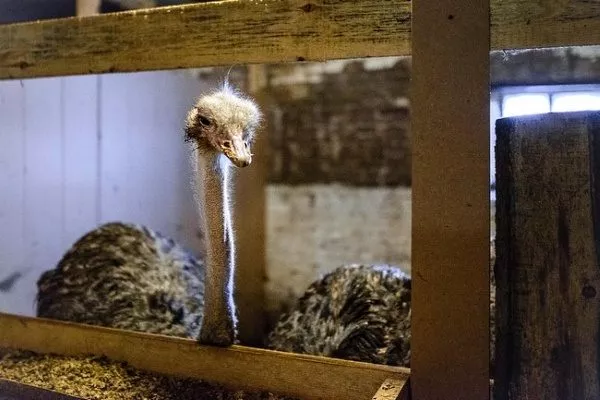
Diagnosis is made through laboratory testing or an autopsy of the ostrich's body. Typical signs of PMV-1 in a dead bird include:
- the esophagus and intestines are covered with hemorrhages;
- dystrophic changes are observed in the liver, kidneys, myocardium and muscle tissue;
- necrotic phenomena;
- pulmonary edema;
- stagnation of blood in the veins.
Biospecimens—slices of liver, brain, trachea, and lungs—are sent for testing. Birds with weakened immune systems also have their blood tested to determine whether they contain antibodies.
Laboratory diagnostics involve identifying the pathogen in embryos, identifying disease symptoms during the incubation period, and performing a hemagglutination test. The probability of infection is determined by the average time to embryo death.
Modern diagnostic methods include rapid immunochromatographic tests. The test takes 5 to 10 minutes. The samples tested include blood plasma or serum, ocular secretions, and tracheal and cloacal swabs.
Treatment of ostriches
Despite centuries of observing pseudoplague, scientists still have not developed an effective treatment. Treatment of sick individuals is not only ineffective but also dangerous for the entire herd, given the virus's ability to spread through the air.
If a farmer decides to save a bird infected with pseudoplague, the bird or birds are moved to a separate room, not connected by ventilation to the main flock. They are treated with antibiotics prescribed by a veterinarian.
Birds that are sick but not sent for slaughter are usually treated with the following medications:
- B vitamins, such as Cerebrolysin and Cerebrolysate;
- vitamin C;
- Fosprenil;
- Immunim;
- antibiotics against pathogenic microflora.
Antibacterial agents are selected based on the presence of pathogens and the agent's sensitivity to a specific drug. During recovery, birds are prescribed the probiotic Emprobio instead of antibiotics to normalize gastrointestinal function.
Treating sick birds in acute cases is impractical. In practice, farmers prefer to euthanize sick birds to reduce the risk of infection throughout the flock. Infected birds are slaughtered in accordance with veterinary and sanitary standards. The slaughter equipment and area are then disinfected.
Prevention
Prevention is the primary method of combating Newcastle disease. This involves general sanitation practices and timely vaccination.
Vaccination
The most effective method of combating the virtually untreatable Newcastle virus is vaccination. One example of a vaccine used by farmers is Virosalm. This drug creates relatively strong immunity against pseudoplague and salmonellosis.
Young ostriches are vaccinated according to a specific regimen:
- At 20 days of age, the first dose of the vaccine is administered. The drug is injected into the chest muscle with a syringe.
- A booster vaccination (revaccination) is administered every 10 months. Birds are vaccinated throughout their lives.
Quarantine
Once the presumptive test result is officially confirmed, the ostrich farm or other poultry operation is closed and quarantine is declared. During the quarantine, the following is prohibited:
- import and export of poultry;
- sale of poultry products - meat, eggs, down and feathers;
- Outsiders are not allowed onto the farm.
Quarantine is lifted one month after the last case of illness and disinfection. If the entire herd is culled due to illness, it can be lifted earlier—five days after disinfection.
Sanitary measures
One of the main pillars of infectious disease prevention is adherence to sanitary and hygienic norms and regulations. Combined with vaccination, sanitation helps protect livestock from many diseases, including pseudoplague.
Sanitary measures include regular:
- disinfection (disinfection);
- deratization (destruction of rodents);
- disinfestation (arthropod control).
When disinfecting premises, keep in mind that paramyxovirus is killed by high temperatures, meaning hot water can be used for disinfection. 1% solutions of Lysol, Phenol, and Chloramine, as well as a 2% solution of Formaldehyde, also help kill the virus.
- ✓ To disinfect premises, it is necessary to use solutions with a temperature of at least 60°C to guarantee the destruction of the virus.
- ✓ Treatment should be carried out in the absence of birds, followed by ventilation for at least 2 hours before their return.
To minimize infection, birds are restricted from contact with the outdoors and prevented from interacting with each other. If the birds are kept in close contact with their natural environment (as is the case with farmed ostriches), vaccination is a top priority.
Keeping ostriches
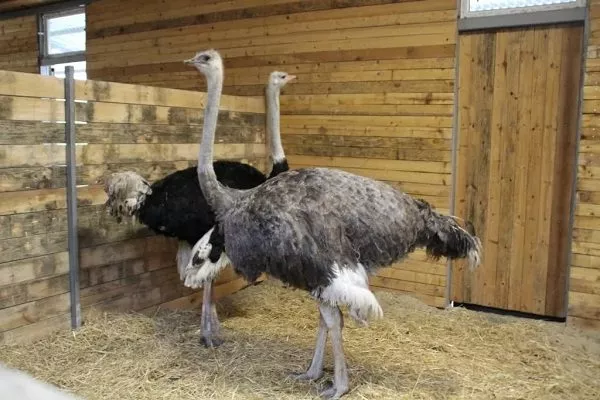
The health and productivity of the entire herd, and therefore the profitability of the farm, depend on favorable living conditions. How to keep ostriches:
- the room is warm and dry;
- there should be no rodents or parasites that could harm birds, including by spreading infection;
- optimal air temperature is from +18°C to +22°C;
- regular ventilation to ensure that the air is fresh and clean and that favorable conditions for the growth of pathogens (bacteria, mold, fungi, viruses) are not created;
- the floor is wooden, sandy or earthen (clay); it is prohibited to make it from brick, concrete or asphalt, as they are too cold for the feet of ostriches;
- the distance from the ostrich's head to the ceiling should be at least 1 m, the total height is 3 m;
- window size - 80×80 cm, from floor level - 1 m;
- there must be a separate room for feed, isolated from rodents;
- there is a straw litter on the floor;
- the feeders are placed at a distance of 0.5 m from the ground and filled to 2/3;
- water in drinking bowls is renewed daily;
- the room is heated by electricity or another method;
- the walls are covered with boards;
- there should be a place for walking, covered with sand or gravel, protected from the winds;
- The walking area per individual is 5-10 sq. m.
Feeding
In order for ostriches to grow normally and not get sick, they must receive proper nutrition, balanced and varied. The health and immunity of birds, as well as their resistance to diseases and viruses, largely depend on the quality of feed.
Rules for feeding ostriches:
- When there is no green fodder and the hay is of poor quality, the birds are fed sprouted wheat, meat or meat and bone meal.
- Birds aged 1 year and older should be fed twice a day, following a regular schedule. Ostriches should be fed 3-4 times a day.
- The transition from a summer diet to a winter one and vice versa is carried out smoothly and lasts about 10 days.
- The diet during the productive period is more nutritious than during the non-productive stage of life.
- Feed must be consumed within 24 hours; it must not be left to spoil. Feeders in pens should be placed under cover, otherwise rain will get in and the feed will spoil.
- For feeding, you can use compound feed for poultry.
- The ostriches are given clean, fresh water to drink, which is changed every morning.
- Don't feed your bird contaminated leaves or grass. Wash and dry them first.
Ostriches are fed solid and liquid feed, including plant and animal sources. Their diet is tailored to the season, location (outdoors or barn), age, and health of the bird.
Newcastle disease is a serious illness that can cause significant losses and loss of livestock. Pseudoplague is virtually incurable. The only ways to combat this disease are prevention and proper feeding and husbandry practices.