
The small size of quail can present some challenges during slaughter and butchering. Therefore, it's crucial to understand the nuances of these procedures.
How to choose a bird for slaughter?
Only healthy and well-fed quails no more than two months old are used for slaughter. Mature birds have tougher meat. Therefore, keeping quail for long periods of time is unprofitable for the farmer.
Quails for slaughter are selected as early as 40 days after birth. The selection generally favors well-muscled quails with a prominent keel.
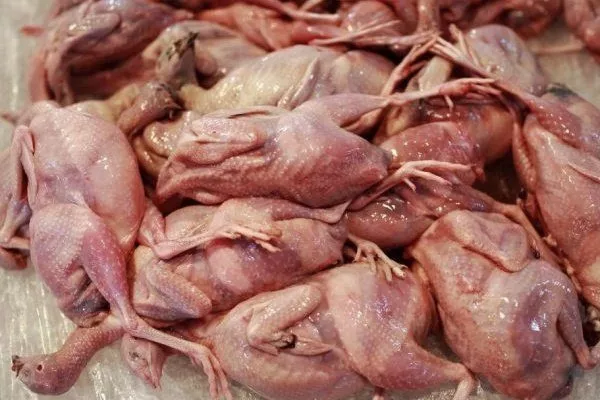
The feathers should have a dense and shiny texture. This indicates the bird is healthy.
Since both males and females are sent to slaughter, it is recommended to select from those incapable of laying eggs. Since males and females are kept in separate enclosures during the weight-gaining period, selection for slaughter is also based on sex.
Requirements and principles of fattening
It is recommended to fatten up the bird only after its first month of life. Quail are transferred to a high-calorie, nutrient-rich diet and are restricted from excessive physical activity.
- ✓ The temperature in the fattening room should be maintained within 20-22°C for optimal weight gain.
- ✓ Lighting should be moderate, no more than 16 hours a day, to avoid stress in the bird.
All these measures allow the bird to gain weight in a relatively short period of time. And the lack of exercise promotes the accumulation of fat layers, which gives the meat a tender and soft texture.
In addition to concentrates, quail need to be provided with an additional source of vitamins A and D. These allow them to digest such a large volume of food more quickly and easily.
To accelerate weight gain, it's recommended to add animal proteins to your quail's diet. For example, cottage cheese, pre-boiled eggs, and other dairy products.
Feeding is carried out at least three times a day. There is no limit to the amount of supplementary food. Since a sudden change in diet can provoke a negative reaction in the bird, it is advisable to introduce supplementary food in small portions during the first four days of fattening. The following foods should form the basis of the bird's diet:
- corn cobs;
- cereals;
- steamed peas;
- feed fats;
- compound feed.
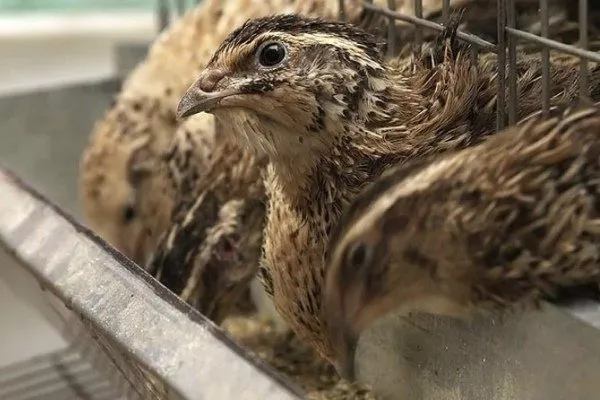
Preparing quails before slaughter
Shortly before sending quail to slaughter, perform a few simple steps. Following these steps will help extend the shelf life of the meat:
- Place the pre-fed bird in a separate enclosure 24 hours before slaughter.
- During this entire period, the bird should be kept on a fasting diet. The gastrointestinal tract can be cleaned using salt dissolved in water in a 3:1 ratio.
- 10 hours before slaughter, quails are restricted from accessing water.
Quail slaughtering techniques
At large farms, quail slaughter is carried out using specially installed equipment. However, using such equipment at home is completely impractical. Therefore, farmers slaughter the birds using the following methods:
- manual;
- "American";
- using a semi-automatic slaughterhouse.
Manual method
This method of slaughtering quail is the most commonly used at home. Due to the quail's small size, the procedure is quick and requires little effort. To slaughter a quail manually, follow these steps:
- Place the bird on a flat surface and lightly press its body and wings against it.
- Then, using a pre-sharpened knife, decapitate the quail and cut off the legs.
- Place the slaughtered bird in a separate container with hot water for half a minute.
- After scalding, proceed to plucking.
In the video below, watch the manual slaughter of quails:
Use of semi-automatic equipment
If you need to slaughter a large number of birds, it's best to invest in semi-automated equipment. Home slaughterhouse equipment is much less expensive than farm-based slaughterhouse equipment.
Although the semi-automatic slaughtering machine is designed only for the initial stages of processing, it allows for a perfectly smooth cut and the slaughter of large volumes of birds. The machine consists of a blade and a holder for the quail neck.
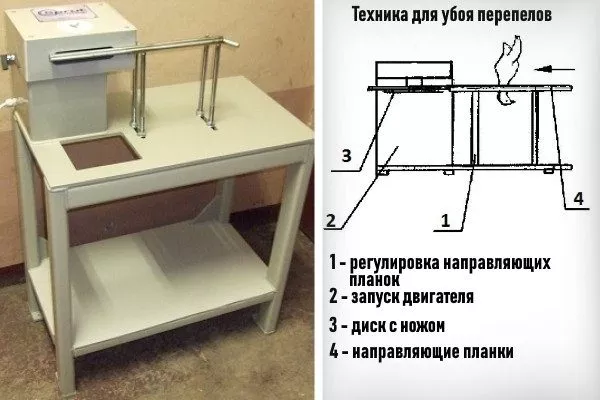
The bird is placed into the equipment manually.
The American Way
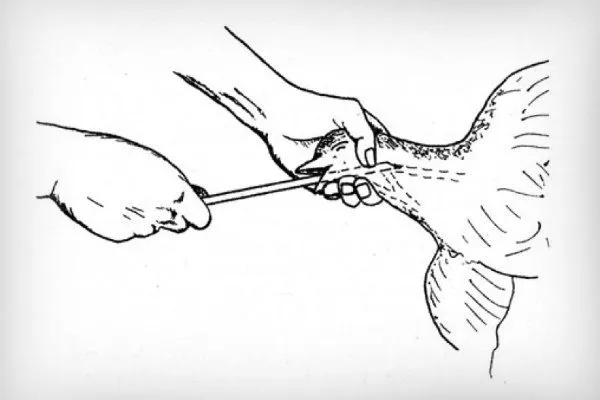
The method of slaughtering birds that involves maximum bleeding is still considered the most efficient in terms of subsequent processing. The "American method" of slaughter involves four stages:
- To begin, hang the quail by its legs, head down.
- Then, pressing on the ears, grasp the bird's head.
- Using a sharp knife, cut through the bird's beak the vessels located behind the palate.
- If blood appears, use the same knife to puncture the brain through the slit in the palate.
The final step is necessary to relax the nerve endings responsible for controlling muscle fibers. This procedure will make it easier and faster to remove feathers from the skin in the future.
Scalding and plucking of finished carcasses
Today, there are two methods for butchering quail, both performed manually. One allows for maximum preservation of the skin, thereby achieving a marketable carcass. The second is designed for quick results, but the carcass will be less visually appealing.
Cutting with preservation of the skin
If you want to preserve the skin of a quail carcass, you need to perform the following steps:
- To begin, cut off the legs where they join the drumsticks and the wings up to the first joint.
- Then place the quail in a deep container of hot water. Make sure the water temperature is around 80 degrees Celsius. The quail should not be soaked in the water for more than 40 seconds. Otherwise, the feathers will fall off along with the skin.
- Using vigorous and rapid plucking, remove feathers from the entire surface of the carcass. Up to 15 quails can be plucked in an hour.
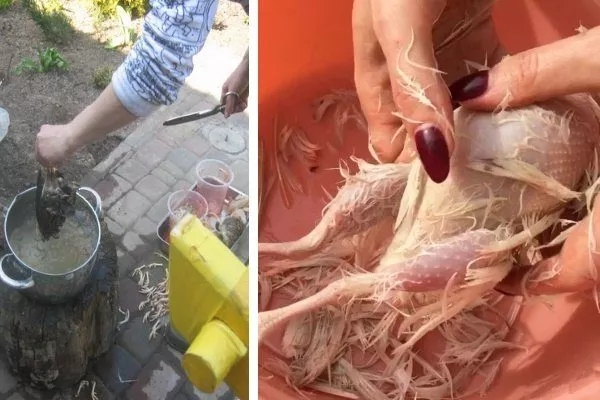
How to pluck quickly: step-by-step instructions
In most cases, if the slaughtered quail is not intended for sale, farmers prefer to perform quick plucking. This involves removing the feathers along with the skin:
- As in the first case, cut off the legs and wings.
- Then place the bird on a flat surface, belly up.
- Make a small incision on the sternum.
- Grasp the edges of the skin with your fingers and peel the skin off with a sharp movement. If necessary, double the cut on the back.
- Rinse the carcass in cool water, then proceed to gutting.
The video below shows quail being quickly plucked:
The Pros and Cons of Quickly Plucking Quail
The quick method of quail plucking has both advantages and disadvantages. Before choosing it, it's a good idea to familiarize yourself with the pros and cons. The obvious advantages of this method include the following:
- no need for subsequent processing of feathers, i.e. scalding;
- Since the processing of poultry does not guarantee the cleanliness of the space used, this method of plucking eliminates the need for subsequent cleaning of the work area;
- It requires less time and effort from the farmer to carry out such a procedure.
The disadvantages include the following:
- unattractive product appearance;
- significant reduction in overall carcass weight;
- loss of some taste qualities, since quail plucked quickly is less juicy.
The operation of a feather plucking machine
A farmer can make the plucking process easier with specialized feather-plucking equipment, which can be built at home. This machine consists of a small round container with rotating discs and rubberized spikes of varying diameters.
As the quail carcass rotates, it brushes against spikes, which grab the feathers and remove them. All the farmer needs to do is periodically spray the carcass with water and monitor the operation of the equipment.
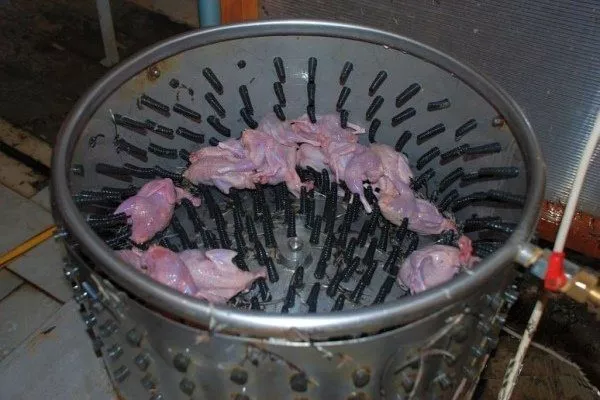
Cutting and gutting
Gutting such a miniature bird as a quail is carried out through the abdomen in a certain sequence:
- To begin, make a small incision on the abdominal surface.
- Then remove the ventricle and heart.
- Make another incision in the cervical area.
- Pull out the esophagus with a smooth movement.
- Rinse the inside of the carcass with cool water.
Most experts agree that gutting quail is unnecessary. Removing the intestines through an incision in the abdomen carries a high risk of damaging them.
Compromised intestinal integrity results in its contents adversely affecting the taste of the meat. Ultimately, cleaning the inside of the bird will require even more time and effort.
For health and safety reasons, it's recommended not to gut quail at all. This is because gutted quails contain significantly more harmful bacteria.
The only necessary condition when refusing to gut the quail is the mandatory cleaning of the bird's digestive tract several hours before slaughter.
If evisceration is necessary, it's best to do it through the anus, after making a small incision. This procedure is much more difficult than removing the internal organs through the abdomen, but it will preserve the bird's marketable appearance.
Watch a video on how to gut quails:
Cooling and storage
To preserve the meat's flavor, certain storage conditions must be observed. Quail meat should be kept frozen. However, placing the quail carcass in the freezer immediately after plucking is not recommended. First, minimize the temperature differences between the bird and the freezer.
Immediately after processing, place the carcass in a deep container of cold water, which will need to be changed periodically. This is because the quail will transfer heat to the water, changing its temperature. Then, follow these simple steps:
- Place the cooled carcasses in any container with holes, such as a large colander, and leave until all the liquid has drained.
- Then divide the birds into plastic bags. Do not put more than two quails in one bag.
- Place the bags of quail meat in the freezer, the temperature of which should not exceed 8 degrees below zero.
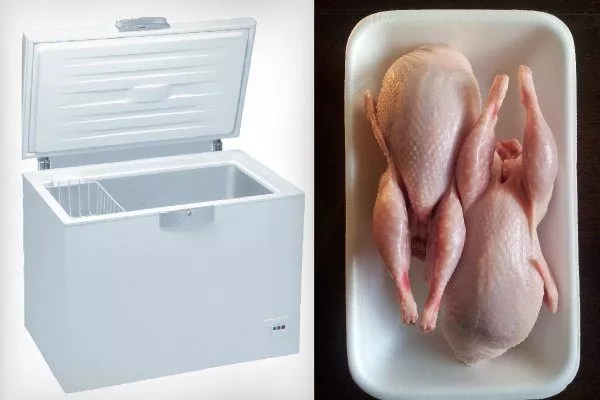
If you plan to cook the meat within the next 2-3 days, it's best to avoid freezing the carcasses. Instead, pack the required number of packages of poultry in a cardboard or wooden crate and place them in the refrigerator. This way, they will retain their flavor and won't require further defrosting, which, incidentally, depletes the nutrients in the meat.
When slaughtering quail in winter, severe frosts can be a boon for farmers. Cooling the carcass is much easier in this case. Immediately after plucking and gutting, pour cool water over the quail several times and hang it outdoors. The resulting ice crust on the carcass's surface will not only cool it but also preserve the meat's nutrients and flavor.
Slaughtering quail is not at all difficult if you follow all our recommendations. Various techniques will help you obtain meat not only for cooking but also a high-quality product for sale.