
Poultry breeders are interested in questions such as how long quail live at home, when they are most productive, and until what age is it profitable to raise them. Quail are closely related to the chicken, a subfamily of partridges, so they are used by both large and small farmers.
Lifespan in the wild
Quails live in almost every country in the world, preferring to nest on flatlands, in fields, and sometimes in mountains. Their nests are not found in bushes or trees, as they require soil. A single female can lay up to 20 eggs. Incubation takes a maximum of 18 days.
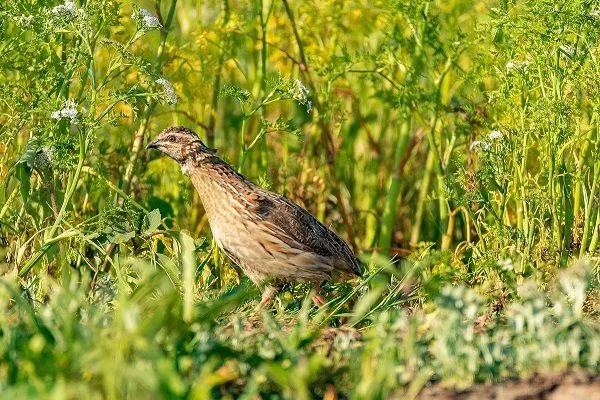
The average lifespan of wild quail ranges from 4 to 8 years, depending on the breed. In the wild, several key factors influence this lifespan:
- Activities of agricultural structures. Since quails feed on grains, worms, buds, seeds, plants and the like, their favorite habitats are fields planted with crops (it is easier to get food here).
Mechanization of agricultural work destroys birds along with their nests – they fall under the wheels of tractors, the reels of combines, etc. The population is also declining due to bird poisoning, as farmers spray grain and other crops with pesticides and chemicals. - Hunting. People hunt game birds, including quail, a favorite. Hunting occurs during May and June, just when the females are incubating their young (the state permits hunting in the fall). Hunters choose this period for a reason: when the grass is thin, the quail is easily visible.
In many cases, the birds simply fly away, but the nests containing the young or eggs are destroyed. Hunters also search for prey on the coasts when quail are preparing for the winter migration—the birds gather in groups and are easy to catch. - Natural selection. In their natural environment, quails run among tall grass, but rarely fly, so they become a food source for predators – foxes, hawks, raccoons, snakes, owls, etc. Animals not only eat adults, but also destroy their offspring and nests with eggs.
Since quails cannot fly long distances, they often die during winter migration.
Life expectancy of domestic quail by subspecies
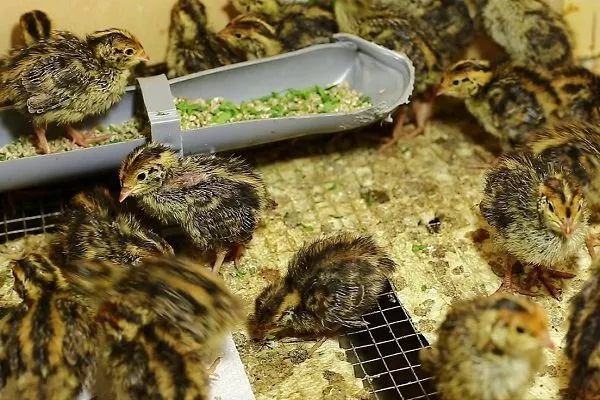
On farms, quails live no more than 2.5 months, as they are kept for specific purposes—meat and eggs. The lifespan of domesticated quails is determined by their reproductive ability, rate of weight gain, and egg production.
| Name | Average life expectancy | Productive period | Conditions of detention |
|---|---|---|---|
| Broiler quails | 45 days | 30-45 days | Tight cells, minimal movement |
| Layers | 13 months | 2-10 months | Soft lighting, 10-12 hours of daylight |
| Ornamental quails | 4-5 years | Not specified | Apartment cages, small sizes |
Birds for slaughter
Broiler quail raised for meat live for a maximum of 45 days, as they reach their maximum body weight by this time. Feeding them beyond this point is pointless (it would waste feed).
If you slaughter a bird earlier (even 7-10 days), the carcass will be of unmarketable appearance (with bluish skin and an unformed body).
Features for different purposes:
- In backyards, males are fattened for 60 days, which results in the formation of small layers of fat - such birds are intended for broths (fattening begins at 30 days, after which they are placed in tight cages to minimize movement);
- the hen is used until she loses the ability to mate and hatch eggs - a period of 8 to 11 months;
- If a male is needed as a breeder, he is sent for slaughter at a maximum of 5 months (he mates at 3 months, then is fattened).
Layers
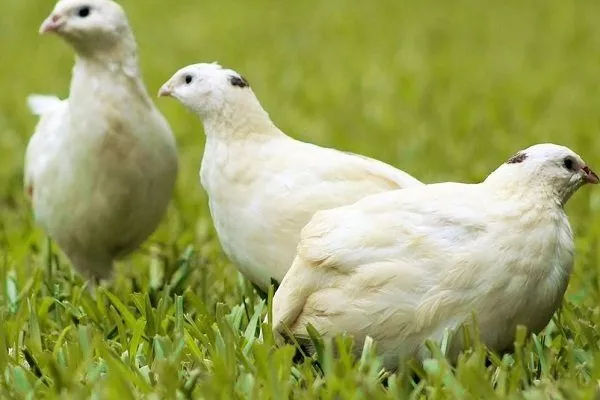
Domesticated quails They mature earlier than wild ones. The mating instinct develops in both males and females at 6-7 weeks. The hen begins laying eggs at 7-8 weeks. This continues for another 12 weeks, after which egg production gradually declines.
So, by 1 year 6 months of life females lay eggs by 40-50%, by 2 years – by 90%. Experienced farmers send laying hens to slaughter at 13 months of age.
Decorative
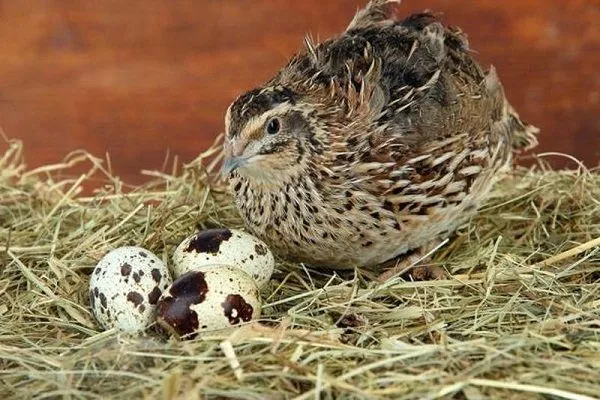
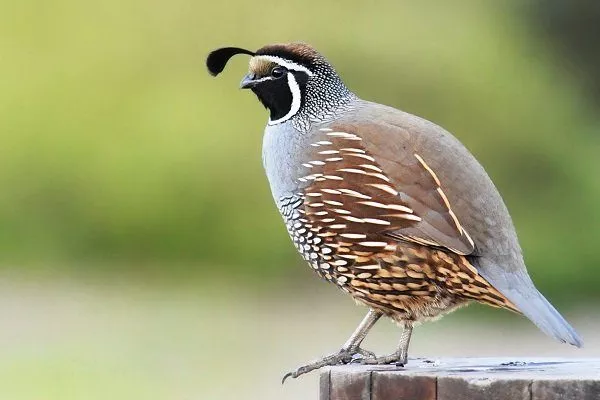
Among ornamental quail, the most popular are the Californian Crested and Chinese Painted. These are the most common quail kept in indoor cages due to their small size.
What period of life is productive for quails?
On large farms, it is customary to replace meat and egg-meat livestock at one year of age. When breeding Some owners keep small numbers of hens for up to two years. After this age, the hens lay eggs that will not produce offspring, so feeding them further is pointless.
It is profitable to keep meat breeds for up to 45-60 days, but not longer, otherwise the meat becomes tough and too fatty, making it difficult to sell.
What influences the lifespan of quails, besides the species?
The lifespan of birds depends largely on their living conditions and feeding. For example, if meat breeds are given additional high-calorie food, they will gain weight faster. Consequently, they will be slaughtered sooner.
Care and conditions
To ensure that quails do not get sick, quickly gain weight, and lay the correct number of eggs for their breed, they are provided with the correct conditions for keeping them, but this depends on their productivity.
- ✓ The optimal stocking density for broiler quails should be at least 20 sq. cm per bird to avoid stress and disease.
- ✓ It is critical for laying hens to maintain a daylight period of 10-12 hours; exceeding this can lead to exhaustion.
Features to look out for:
- Keep males and females separate until mating time;
- Place the young animals in groups starting from 3 months of age, otherwise fights cannot be avoided;
- To obtain hatching eggs, a family of 4 or 5 females and 1 male is required;
- the average stocking density for quails is 10 sq. cm per head, but broilers require 20 sq. cm, and egg-and-meat breeds require at least 12-13 sq. cm;
- the optimal temperature range is from 20 to 26°C; if the temperature is lower, the birds will freeze; if it is higher, they will lose activity, stop laying, and will refuse food;
- humidity level – 70%, if the summer is dry, spray all surfaces with water several times a day;
- the enclosure must have mesh ceilings;
- If the chicken coop is a closed type (barn), be sure to install a ventilation system or make windows for ventilation, but do not allow drafts, which can make the birds sick;
- In the pen, lay down bedding, for which use peat or hay, but it is not recommended to use wood sawdust, as the birds will start pecking at it, resulting in diseases of the gastrointestinal tract;
- Build the poultry house in a shaded area so that it receives minimal sunlight – this will prevent the air temperature in the room from rising too high;
- furnish the house with windows and shutters;
- acceptable cell size – 45x45x25 (length/width/height);
- It is better to place the feeders in bunkers and outside the cage, otherwise the birds will bring trash inside, height – 9-10 cm;
- daylight hours – 15-17 hours for meat breeds, 10-12 hours for laying hens (if longer, there will be more eggs, but the hens become exhausted and get sick);
- lighting – soft (no more than 35-40 kW).
Nutrition
The quail's diet is based on its intended use—meat or eggs—which results in increased egg production and accelerated growth. In the latter case, this is beneficial, as meat-producing quail can be slaughtered earlier, saving feed.
The diet of laying hens should consist of the following components:
- crushed grain – 55-60% of the total feed (wheat, barley, oats are used);
- protein and protein food – 30% (bone and fish meal, soybean meal);
- other – 10% (oil cake, cereals, boiled vegetables, cottage cheese, greens, bran, mineral feed, grass in the form of flour);
- Chalk, eggshells, gravel, and shells are always crushed, so that the laid eggs will be strong.
Nutrition of egg-laying males:
- carbohydrates – 60% (soy, peas, lentils);
- rest - vegetables, beet and cabbage leaves, sprouted grains.
If the hens do not have enough protein food, egg production will decrease; if there is an excess of protein, the eggs will have 2 yolks.
Diet for meat quails:
- broiler feed (for example, PK-6) – 80%;
- boiled peas – 20%;
- additional food in the amount of 5% – feed fat, greens, millet, corn, grass meal, vegetables.
Try to feed carbohydrate-rich foods in the evening to keep your birds from getting hungry. Avoid liquid feed entirely, as it can clog their noses and throats, leading to choking.
The lifespan of quail on a farm depends not only on the farmer but also on the birds' productivity, health, and overall condition. Therefore, adhere to proper care, housing, and feeding practices to maximize profits from raising your quail.