
The Chinese painted quail is an ornamental bird. Unlike other quails, which are bred for meat and eggs, the Chinese painted quail is kept as a pet. It has a bright, beautiful coloring and a quiet "voice."
The appearance and character of the bird
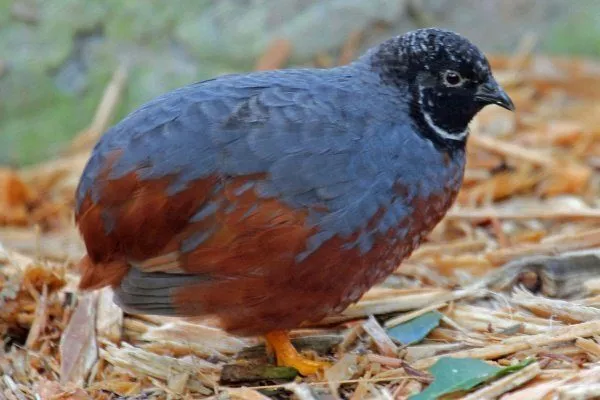
The Chinese Painted Quail is undoubtedly the most striking member of its species from a visual standpoint—its relatives are far less conspicuous. The bird is quite small in size, with a body length ranging from 11-14 cm, plus a 3 cm tail. These quails weigh an average of 45-70 g. Both males and females have black bills (with a slight blue tint in the latter), yellow-red legs, and brick-red irises.
Chinese painted quails have a pleasant, soft song. Their lifespan in captivity is approximately 10 years.
Chinese painted quails have a fairly calm disposition. They are generally friendly with cagemates, especially those kept on upper floors. However, adult males of this species may find it difficult to coexist with each other – they are territorial and aggressive towards each other. Therefore, it's best to keep one male and one female in a separate cage, or create a large enough enclosure for several pairs. Females don't exhibit such aggressive behavior.
Differences between male and female
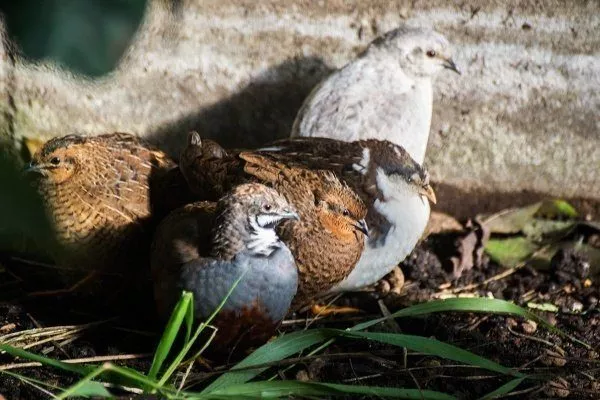
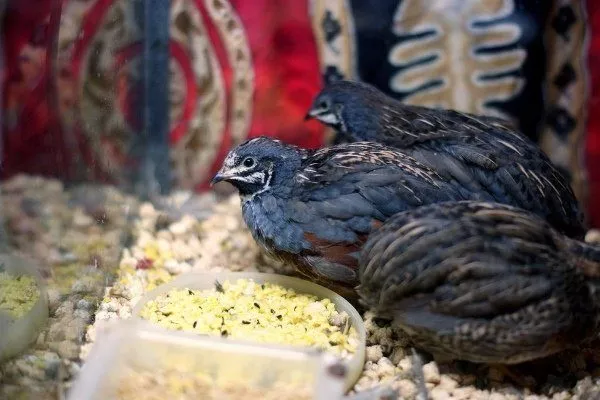
Sexual differences in the animal kingdom aren't always clearly visible. In this breed of quail, the sex of an individual can be immediately determined by eye: females have an inconspicuous grayish-brown coloring, while males are brightly colored with a blue tint and a distinctive pattern under the beak.
These quails are called "painted" because of the males - they have a white stripe from the beak to the eyes, under which there is a black stripe, turning into a spot on the throat, framing a white beard.
Distribution and origin of the breed
This species is widespread throughout southeast Asia, extending as far as the islands of New Guinea and the Australian continent, and is also found on the African continent. Given its vast habitat, which includes a vast swath of China, the breed's name is understandable.
In China, the bird has long been prized as an ornamental pet. In Europe, this breed only began to gain popularity in the 17th century.
In the wild, the painted quail nests in damp meadows, using dry grass and leaves to build nests. These birds live in pairs, and the male (rarely seen in such animals) participates in raising the young: before the chicks hatch, he brings food to the female and protects the nest; after the chicks hatch, he assists the female with raising and nurturing the young.
What colors are available?
Breeders have now developed many different color variations from the basic Chinese Painted color. Among them, the following stand out:
- blue-headed;
- two-factor;
- red-breasted, golden and bleached;
- tuxedo;
- motley;
- with white flight wings;
- golden pearls and so on.
New bird colors are constantly appearing, and lovers of decorative quails always have something to choose from.
Home conditions of detention
This quail breed can be kept in both apartments and private homes. These birds are quite small, so they won't take up much space.
Premises
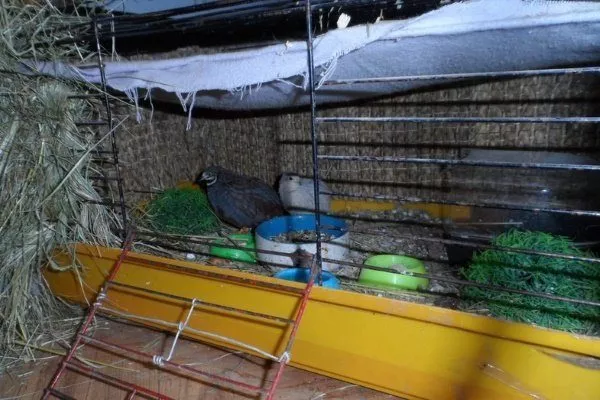
Cages or aviaries are typically used to house these quails. The main requirements for housing these birds include:
- height – about 100 cm;
- area – 1.5-2 sq. m;
- It is better to cover the bottom with earth or short grass;
- the ceiling is made of soft materials such as fabric or cloth mesh;
- sand bath with a 3-4 cm layer of sand;
- places for shelters and nests.
When setting up a home for quail of this breed, it's important to remember that they are ground-dwelling birds, so their habitat should not have any elevated surfaces. A soft ceiling is necessary to prevent the bird from injuring itself if startled, as it can leap suddenly into the air.
| Condition | Recommendation |
|---|---|
| Lighting | Subdued light, avoid direct sunlight |
| Duration of daylight hours | 12-14 hours |
Other conditions
Natural lighting is best for this breed. These birds thrive in subdued light, as in the wild, quail prefer shaded areas. Excessively bright lighting can cause the birds to become increasingly aggressive.
The room must be heated, and the temperature must be maintained at an appropriate level.
At low temperatures, egg production decreases, sometimes even stopping completely. The ideal air temperature for quail is 16-18°C. Occasionally, it may be a bit hotter, but the key is to avoid temperatures dropping below 10°C.
After laying eggs, it's best to give the hen a rest by moving her to a separate, darker room and returning her to her normal adult diet. Lowering the temperature is also often used.
Summer and winter maintenance
In summer, it's best to keep Chinese painted quail outdoors. This will allow the birds to naturally bask and receive the necessary amount of vitamin D.
For winter housing, birds require a well-heated enclosure. Such an enclosure should be divided into a warm interior and a cool, unheated area for the birds to roam.
The sparrow hawk is built from brick or wood, and the front wall, where the walking area will be, is well glazed to allow as much light as possible inside.
Sawdust or sand should be used to cover the enclosure floor. Several powerful electric lamps should be installed a short distance above the floor. A small vestibule should be installed in front of the enclosure's entrance door to provide additional insulation and prevent predators from entering.
Features of quail feeders
A feeder for ornamental quail breeds kept singly should be placed outside the cage near the opening in the side wall – this way the bird will be able to easily reach the food.
Glass, plastic, and porcelain are considered the most convenient and hygienic. Materials such as copper or wood should not be used for making feeders.
When birds are housed in groups, feeders should be moved outside the cage and placed at the front. Equipment used for feeding quail should be easy to maintain, minimize feed loss, and be kept dry and clean. Accessibility to the feeder is crucial when birds are housed in groups, but it should be noted that the birds should not be able to stand on it with their feet to avoid excessive contamination of the feed and possible injury.
Feeding
To ensure proper development, health, well-being, and regular laying of eggs, quail need proper feeding. Proper feeding of quail requires a significant amount of time. Feeding should be provided at specific times of the day, following a predetermined schedule based on the bird's needs. Feeders should be filled according to the instructions, and the water in the waterers should be changed regularly.
It's important to ensure feed is fresh, preventing birds from eating spoiled food or ingesting foreign contaminants. Seeds fed to birds must have a normal germination rate.
Types of food and diet of quails
Chinese painted quails are easy to feed. They are omnivorous birds, consuming relatively small amounts of food.
To achieve this, it is customary to include the following in the bird’s diet:
- crushed grain;
- different types of insects;
- finely chopped herbs;
- egg feed;
- mealworms;
- vitamin and mineral supplements.
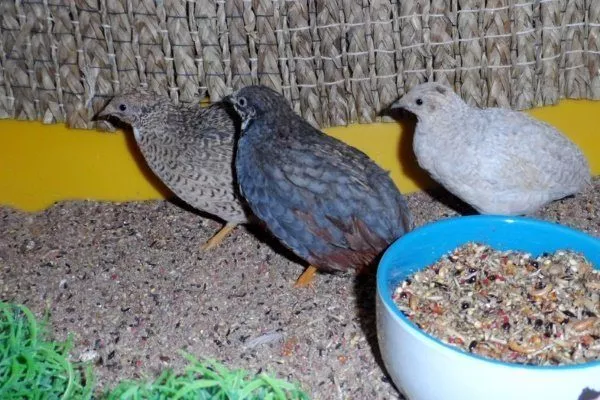
The standard feeding schedule for this breed is three times a day. A typical diet includes a mixture of small grains with some sprouted grain, often wheat.
Quails need sand for proper digestion. Therefore, a container of coarse river sand should be placed in the coop, separated from the feeder containing the main food.
For continuous feeding of females, compound feed is used only during the incubation period. If the female is too exhausted after laying eggs, adding calcium gluconate to the feed and using Immunofan solution may help.
Water should always be available in the quail house. It's best to change it a couple of times a day or whenever it gets dirty. The water in the drinking bowls should be maintained at a certain temperature—it should be slightly cool, and heated if necessary. During winter, drinking water should be warm to prevent the birds from catching a cold.
Supplements and vitamins
Among the most common vitamins and supplements for quail feed, it is worth highlighting:
- Protein-vitamin supplement (PVS). May be included in quail feed.
- Vitamin supplementsThey are used only in the absence of succulent feed (greens and carrots). Trivit and Tetravit are commonly used.
- Yeast. Rich in B vitamins, baker's, feed, brewer's, home-brewed, and carbohydrate yeasts are used as an additive to grain mixtures.
- Premixes. These are concentrated mixtures of vitamins and mineral salts with added antioxidants. Mineral and vitamin premixes should be fed to quail only according to the manufacturer's instructions. These premixes are rich in protein but have a short shelf life.
- Chiktonik. A common veterinary drug that is a complex mixture of vitamins, mineral salts, amino acids, growth factors, appetite stimulants, tonics and aromatic additives.
You shouldn't overdo it with such additives; they must be used strictly according to the instructions to avoid negative impacts on the bird's health.
Breeding Chinese Painted Quail
To successfully keep and breed quail, they need to be provided with adequate living conditions. Proper care of the birds involves a variety of daily tasks to ensure these conditions. These include:
- compliance with the feeding regime;
- control of temperature, humidity, and lighting in the bird room;
- egg collection;
- control of the incubation process and raising of chicks;
- maintaining inventory and equipment in proper condition;
- compliance with sanitary and hygienic standards for keeping birds.
Differences in internal routine are due to many factors, including the seasons, the occupation of the person working with the birds, the purpose of poultry farming, and so on.
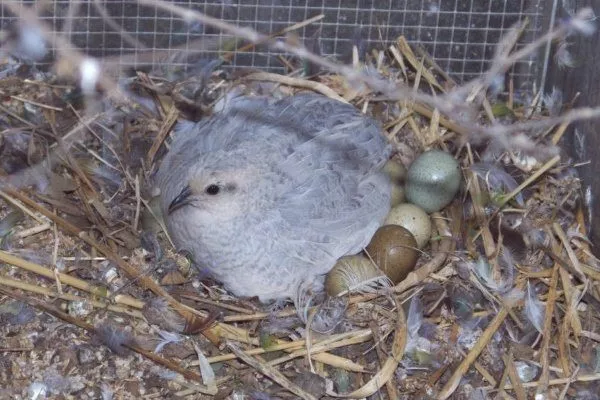
When breeding this breed, it's best to keep the birds in pairs, as this is closer to their natural habitat. Chinese quail incubate their eggs exclusively on grass or in bushes, so the breeding area should be designed accordingly.
At one time, the female lays up to ten eggs, which she incubates for about 2 weeks.
When Chinese painted quail are kept in groups, the likelihood that the female will incubate the eggs herself decreases. In this case, incubation may be necessary. An incubator capable of maintaining a temperature of 37.5-38°C for two weeks is suitable.
Care and maintenance of quail chicks
By the third day after hatching, the chicks have already fledged, and a couple of days later they are capable of flight. By the third week, the chicks weigh half as much as their parents, and by the fifth or sixth week, they are difficult to distinguish from adults. By the end of the second month, quails complete sexual maturity. During this time, the chicks require special care and feeding conditions.
Conditions of detention
When keeping young birds with their parents, ensure that the adults do not display any aggressive behavior. Otherwise, separate the birds. If there is no threat from the adult quail, the chicks will bask in their parents' feathers. If kept separately, the chicks will require additional heating.
For optimal growth, chicks should be provided with 24-hour light. It's best to line the bottom of the cage with fabric.
During the first month of cultivation, maintain the temperature at the level indicated in the table:
| Growing days | Temperature in cells (°C) | Room temperature (°C) |
| 1-7 | 35-36 | 27-29 |
| 8-14 | 30-32 | 25-26 |
| 15-21 | 25-27 | 23-25 |
| 10:30 PM | 20-22 | 20-22 |
Feeding
During the first week of life, chicks need to be fed 5 times a day. Commonly used foods for young birds include:
- mealworm larvae;
- mosquitoes;
- fruit flies;
- hard-boiled chicken eggs;
- finely chopped celery;
- grated carrots;
- poppy seeds.
For young birds, non-spill waterers are installed in cages. To do this, place an inverted half-liter jar of water on the bottom of a flat dish. Insert a spacer a few millimeters thick between the bottom and the top of the jar to ensure water can flow freely into the waterer.
To ensure proper development, chicks need mineral supplements mixed into their feed. These are now available at veterinary clinics.
From the 4th week, the chicks begin to be transferred to the diet of an adult bird.
Tips for buying and transporting birds
Choosing the right quail is crucial, as it will have a significant impact on your future. The bird's health plays a crucial role here. Among the first signs that can be used to visually determine the bird's health are:
- dense smooth plumage;
- moderate body weight;
- shining eyes;
- clearly expressed sexual characteristics;
- absence of wounds and droppings around the cloacal feathers.
- ✓ Dense and smooth plumage
- ✓ Bright and sparkling eyes
- ✓ No signs of disease
Birds that are too fat or too thin are unsuitable for breeding.
It is best to purchase young birds in the fall – this way, during the winter, they will have time to gain weight, get stronger, and become sexually mature.
Transportation Features
A simple wooden crate is ideal for transporting Chinese painted quail. One side should be made of rods, like a cage, and it's best to install a door. To prevent injuries and bruises during transport, line the crate with hay, which will also retain heat. Avoid placing too many birds in a single crate—they need to be comfortable to maintain optimal temperature and humidity, especially considering the stress of a change in environment.
It is better to keep males of ornamental quail species one per cage; for females, joint transportation is acceptable.
- Place the bird in a separate room for a month.
- Provide optimal living conditions.
Newly arrived quail should not be placed in a common room with other quail; it's best to keep them separate for the first month. Otherwise, the birds are more likely to become ill.
Productivity and price of poultry
This quail species is not commonly used for meat or eggs, so it is more often raised as an ornamental bird. Chinese painted quail are easy to breed and are not fussy about their diet. Ornamental birds are typically kept for many years, so the age of the bird at purchase is not as important as with egg or meat breeds.
These quails are easy to acquire. Common colors of this breed in our country include:
- Individuals of standard color, lightened and silveredThe average price for a male is 400 rubles, for a female - 600 rubles.
- Blueheads. Their cost today varies between 1500-2000 rubles.
Eggs sell for 40-50 rubles per dozen. The price for young is approximately 150 rubles. Single females are most often purchased.
Based on the above-mentioned conditions for keeping, feeding, and breeding Chinese painted quail, you can easily begin breeding birds of this breed. The special beauty of these quails will bring aesthetic pleasure to every bird lover, whether a novice hobbyist or an experienced poultry breeder.