
A feather plucking machine is a simple, yet highly useful and effective tool for quail farmers. These machines speed up and simplify the plucking process, eliminating unnecessary hassle for poultry farmers.
What is a feather plucking machine?
A feather plucker is a device for plucking poultry. Their specifications and dimensions depend on the size of the carcasses being processed. There are slicker pluckers for chickens, turkeys, ducks, and even quail pluckers.
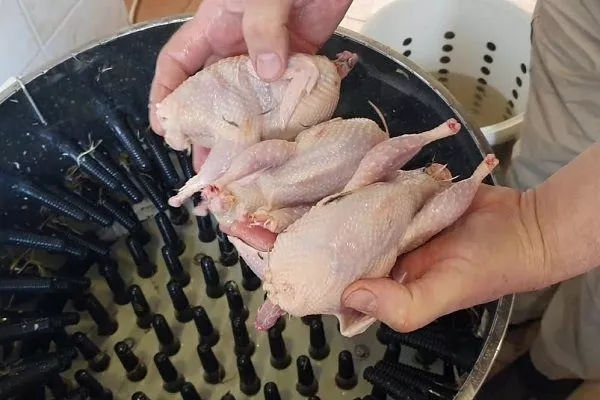
They all differ in the way they grasp the feathers:
- Bilnye. They come in disc, drum, and centrifugal types. The latter two are most commonly used by farmers because they are easy to make at home.
- Feather-plucking. In such devices, feathers are removed using metal depilatory discs rotating at a set speed.
The principle of feather plucking machines is based on the plucking of feathers by striking the carcass with striking fingers. This mechanical action causes feathers to be knocked out of the quail or torn out by catching on hooks.
Beater fingers are rotating attachments made of:
- rubber;
- silicone;
- plastics.
The most common types of feather plucking machines:
- Drums. These machines pluck using centrifugal force. The bird moves due to the rotation of the drum, while the plucking tines remain stationary. These models are the most popular among farmers, despite their low efficiency.
- Disc. They are typically used on an industrial scale. In these machines, the bird carcasses remain stationary while discs with beating fingers move around them.
Before plucking in a feather plucking machine, the carcasses are scalded to ensure that the bird retains its marketable appearance after processing.
- ✓ The temperature of the water for scalding should be at least 60°C to effectively remove feathers.
- ✓ The scalding time should not exceed 30 seconds to avoid damaging the bird’s skin.
Selection criteria
When choosing a feather plucking machine, it's important to consider a number of technical characteristics. This will allow you to get the most out of the device and avoid overpaying for unnecessary potential.
Selection criteria:
- Loading. This is the key parameter for quail plucking equipment. If the equipment uses a feather plucking attachment, only one quail carcass is processed at a time. In centrifugal machines, the loading capacity depends on the tank diameter:
- 260 mm - from 1 to 3 quails;
- 310 mm - from 3 to 5 quails;
- 350 mm - from 5 to 7 quails;
- 400 mm - 10 quails.
- Number of fingers. The average number of tines for a drum or plucking head is 15-60. In a centrifugal machine, the number depends on the tank diameter. On average, a single device is equipped with 100-150 tines.
- Speed. The optimal rotation of the disk is 200-300 revolutions per minute.
- Presence of a pocket. A good feather plucking machine should have a feather collection pocket. Without one, the device will quickly become clogged, complicating not only operation but also cleaning.
- Power. Machines range from 140 to 2,200 watts. The higher the rating, the faster the rotor rotates under load.
- Performance. It indicates how many carcasses the machine can process per unit of time. When choosing the appropriate parameter, consider the size of your herd.
- Drum material. Stainless steel products are more durable, plastic ones are less durable, but cheaper.
It is also worth paying attention to the power of the equipment, the processing time of one carcass, the body material and design features.
Types of quail baits
The length of the quail plucking tines is 50 mm. They are installed at small intervals. It is not recommended to use tines longer than 90-100 mm, as the quail will fall between them, significantly complicating the plucking process.
- ✓ The diameter of the beater fingers should correspond to the size of the bird being processed: for quail, a diameter of 10 mm is optimal.
- ✓ The level of stiffness of the fingers affects the quality of plucking: for quails, fingers of medium stiffness are preferable.
Fingers vary not only in length but also in shape, diameter, stiffness, and length. They are divided into two broad groups:
- Ballpoint. They have a bumpy surface and are used for stiffer feathers.
- Ring. These fingers have horizontal notches and are used to make the pen softer.
All plucking tines are also differentiated by the type of bird being plucked. For quail, partridges, and other small birds, tines with horizontal notches are used. The recommended diameter is 10 mm.
Pins are a vulnerable part of the structure, prone to wear and tear. They're easy to replace and inexpensive—10-80 rubles each.
Advantages and disadvantages of the technology
If you have dozens of quail on your farm, it's hard to manage without a feather plucking machine. But before buying or making such a device, it's helpful to familiarize yourself with all its pros and cons.
Advantages of an industrial feather plucking machine:
- eliminates manual labor;
- saves time;
- it's cheap;
- it is possible to process a much larger number of carcasses than manually in the same unit of time;
- easy care and maintenance of the unit;
- made of high-quality stainless steel;
- reliability and performance;
- safety and ease of use;
- eco-friendly materials;
- can be equipped with a remote control;
- do not require preliminary configuration or special skills;
- fast processing - one carcass takes no more than 30 seconds;
- economical energy consumption;
- mobility - can be transported in assembled condition;
- moisture-resistant housing.
Flaws:
- the energy dependence of the devices does not allow them to be used in field conditions;
- sharp fingers can damage the carcasses, making them lose their marketable appearance;
- high cost of industrial feather plucking machines.
Operating instructions
Before using the machine, the drum must be treated with a baking soda solution and rinsed with clean water. Before adding the carcasses to the drum, place them in hot water. Remove them several times and then immerse them again to ensure the feathers are thoroughly soaked.
Stages of quail processing:
- Turn on the device for 5-10 seconds to allow the mechanism to accelerate.
- Place the permitted number of quails into the drum.
- Turn on the water to wash away the plucked feathers.
- After 15-30 seconds, turn off the machine.
- Remove the plucked carcasses when the drum has stopped completely.
- After finishing work, wash the tank thoroughly to clean it of feathers.
The best models
The design of feather plucking machines is relatively simple and doesn't require high technology. In Russia, this market segment is dominated by products from domestic manufacturers. Among the models offered, you'll find machines designed to meet a wide range of needs.
PM40Q
The machine features a 400 mm drum and a 1.5 kW motor that rotates it at 260 rpm. The tank is made of stainless steel. The drum has drainage holes, which are supplied through a hose. It has 160 pins.
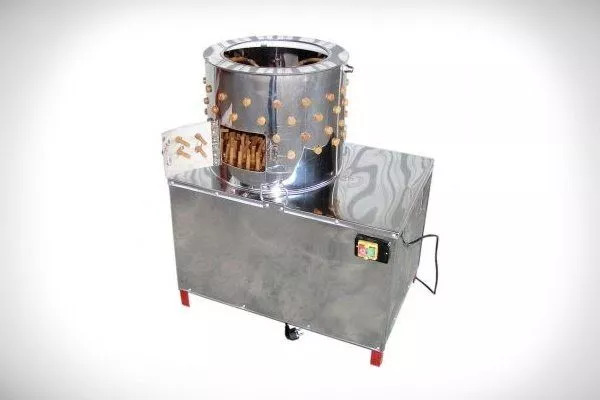
Down and feathers are collected in containers. The machine comes with five spare tines that are easily replaced. This machine is designed specifically for delicately plucking quails without damaging their delicate skin.
Pros:
- high performance;
- stainless steel body;
- suitable for fairly large farms;
- reliable rubberized buttons;
- there is a water supply system;
- easy to change fingers.
There are no downsides to this model. The only thing worth noting is its heavy weight, making it difficult to carry alone.
PM-7M Rating
This lightweight model weighs just 14 kg. It's easy to move from one place to another. This machine is perfect for a small farm. You can take it out into the yard, pluck a few quail, and put it back. Its plastic body helps keep it lightweight.
The maximum load is 7 kg. The device is universal and can be used for various bird species—recommended plucking instructions are provided for each.
Pros:
- The technology of “sticky” beating fingers has been implemented – the carcasses become as clean as possible;
- high performance;
- fast plucking - it takes half a minute per carcass;
- light weight.
This model has only one drawback: its fragile body. It's made of plastic, so it can get damaged during transportation.
Princess-200P
This delicate machine is suitable for plucking the smallest quail. It has a small capacity—0.5 kg of live weight at a time, or 1 to 4 quail carcasses. It features a 140-watt motor, and the plastic machine weighs only 10 kg.
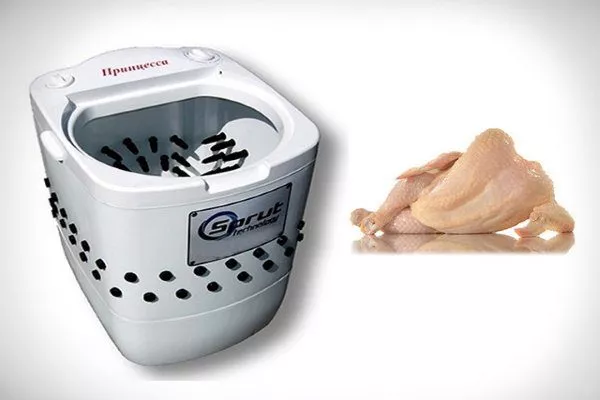
The Princess can pluck approximately 120 medium-sized quails per hour. The machine has a neat appearance and convenient control levers. It has a 75 mm drain outlet. The machine is designed to process at least 200,000 quails.
Pros:
- light weight;
- economical energy consumption;
- neat plucking;
- The machine can be run in the house by connecting the water drain to the sewer system;
- long service life;
- attractive appearance.
Cons:
- light load;
- Not suitable for plucking chickens.
VolTera PM1
This machine weighs 5 kg and gently plucks quails even with the thinnest skin. Its 140-watt power output allows it to pluck 1-2 quails at a time. The machine has a plastic housing, takes up little space, and can be stored in a pantry.
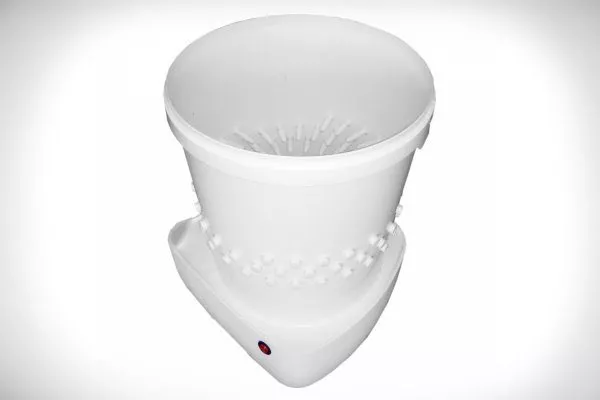
There's a single control button located on the body. The white plastic allows for easy visibility of dirt and easy removal during cleaning. The lid is sealed to prevent water from splashing.
Pros:
- in addition to quails, it is suitable for pigeons and small chickens;
- compactness;
- economical energy consumption;
- there is a handle for carrying from one place to another;
- simple control;
- light weight.
Cons:
- light load;
- Not suitable for broilers and other large birds.
Smart PM-0.3
The smallest model, boasting high hygiene thanks to its completely sealed design. It features an easy-to-clean stainless steel drum. Weighing only 2.5 kg, it can hold up to 300 g of poultry at a time.
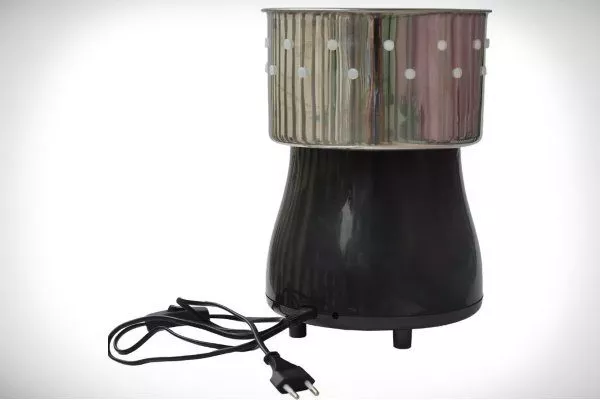
The Umnitsa drum can process up to 18 kg of poultry in one hour. This processing speed is quite sufficient for private owners and small farms.
Pros:
- light weight and small dimensions;
- easy to carry and transport;
- Suitable for any small bird, including pigeons.
Cons:
- very low load;
- low degree of plucking - about 90%.
Stimul PM-01
A model from Stimul-Ink with excellent capacity and a densely packed tine arrangement. This large machine is versatile and suitable for plucking a wide variety of poultry, from quail to turkey. Control buttons are located on the body.
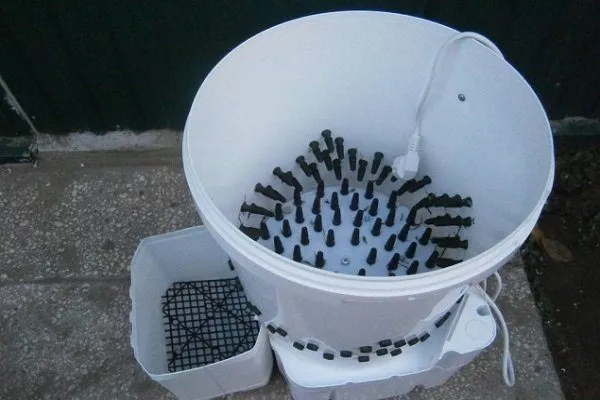
This machine uses closely spaced rubber beaters to keep the bird's skin intact. The process is monitored by indicators and has an emergency shut-off system.
Pros:
- versatility;
- heavy load;
- neat plucking;
- high level of electrical safety.
No disadvantages were found in this feather plucking machine.
PLUKA
This universal plucking unit from Sprut Technology is suitable for plucking birds of any species and sizes. It has a 3 kg load capacity (10-15 birds) and is ideal for small farms. Weighing 20 kg, it can pluck up to 90 birds per hour.
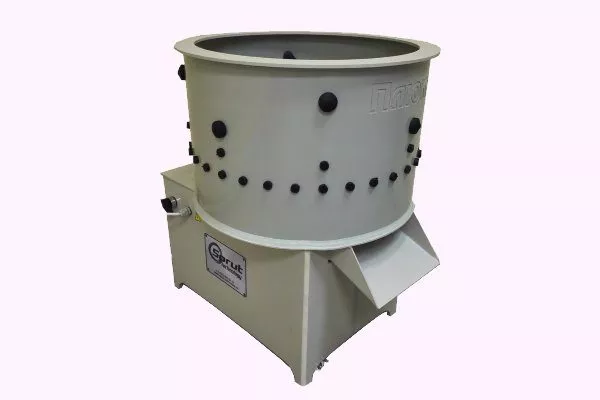
The drum and other machine components are made of antibacterial materials that inhibit bacterial growth. The beater fingers feature a "stick" feature, increasing productivity by 25%.
Pros:
- versatility;
- good loading;
- ease of care;
- impact-resistant materials;
- high performance;
- antibacterial properties;
- The light grey plastic body is easy to clean and does not absorb dirt.
Cons:
- heavy weight;
- high cost.
Sprut-500U
This model is suitable for plucking poultry and wild birds on small farms. It is a centrifugal machine with rubber tines that do not damage the skin of quail carcasses. This machine also has special tines for plucking waterfowl.
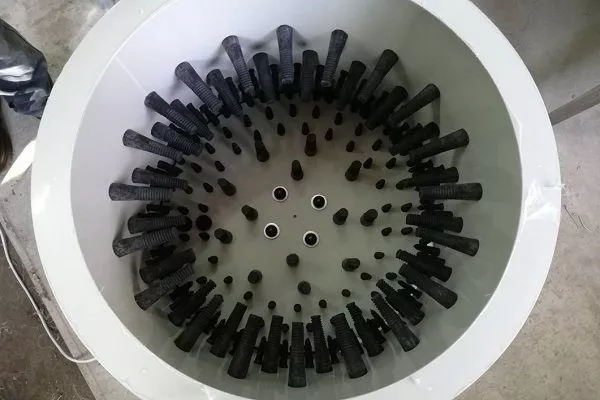
The frame is welded metal, and the drum is made of food-grade polypropylene. It can handle up to 2.5 kg of poultry at a time. The metal and other materials have a structure that inhibits bacterial growth. The drum has tines with a sticky effect.
Pros:
- Suitable for any bird;
- ease of operation;
- economical energy consumption;
- small weight and dimensions;
- reliable design;
- antibacterial properties;
- high performance;
- long service life.
Cons:
- not the biggest load for its price;
- high cost.
Farmer's Dream 800 N
This machine from a Ukrainian manufacturer is considered a reliable and productive feather plucking device. The developers replaced the belt drive of the previous model with a geared motor. An additional disc is installed for plucking quail.
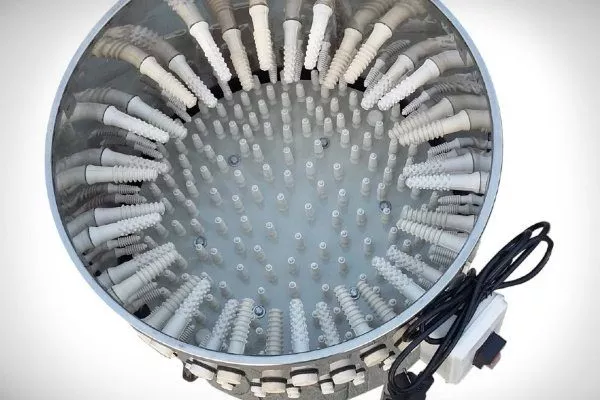
Five to six quail are loaded at a time. Plucking time is 30-40 seconds. The tank can be made of polypropylene or stainless steel. Weight: 50 kg. The frame is welded metal.
Pros:
- high performance;
- heavy load;
- reliability and high performance.
Cons:
- heavy weight;
- high cost;
- You need to pay extra for special inserts for plucking quails.
Mini-330P
A small feather plucking machine from Plaker (Ukraine). This convenient and simple device is suitable for plucking small birds such as quail, partridges, pigeons, and chickens. It can pluck three birds in half a minute. The machine has a one-time loading capacity of 1 kg.
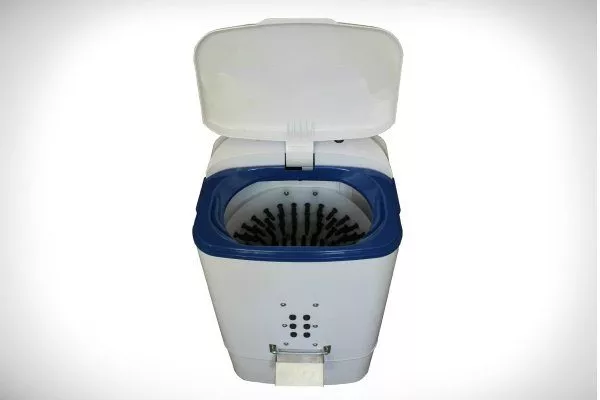
This centrifugal machine is made of high-quality, food-grade polypropylene, which is environmentally friendly and durable. It features multiple beater fingers, positioned to ensure a high-quality plucking process.
Pros:
- light load;
- easy to clean;
- compactness;
- wide drain;
- plucking quality - from 98%;
- The rounded shape of the inner tank prevents small birds from getting pinched between the striking fingers.
This machine has virtually no downsides, except that its load capacity is rather small, so it’s not suitable for those who expect to quickly process hundreds of carcasses.
How to make a feather plucking machine yourself?
Feather plucking machines are not cheap, especially those designed for heavy loads. A skilled farmer can easily build such a machine for their own farm, spending a minimal amount on components.
A schematic drawing of a homemade machine—you can create it yourself or use ready-made designs:
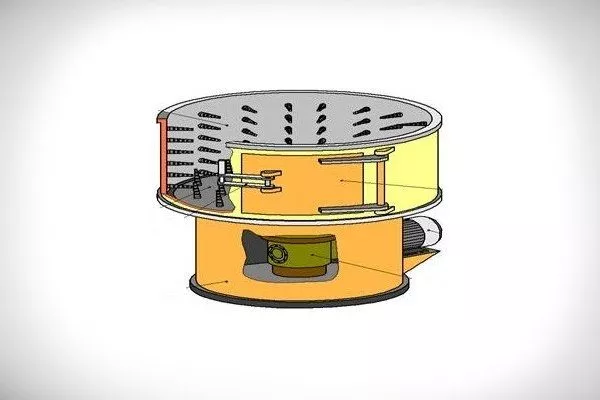
What you will need for work:
- a cylindrical container of a suitable size - approximately 80x70 cm or 200x170 cm;
- slender fingers - you need to buy them, you can’t make them yourself;
- bars for the base 50x50 cm;
- nails or screws;
- drill;
- hammer.
If the tank is made of metal, its thickness must be at least 1.2 mm.
Manufacturing procedure:
- Punch holes in the side walls of the cylinder for the tines. Make another hole for water and feather drainage. The tines should occupy at least 1/3 of the tank's surface. The recommended spacing is 3 cm.
- Lubricate the batter fingers with oil and insert them into the holes made in the side walls.
- Using a bushing, attach thick plywood to the bottom of the barrel, having first cut out a circle of the appropriate diameter from it.
- Attach the disk to the bottom of the sleeve and connect it via a belt drive to the electric motor, which will rotate it.
- Build a frame from wooden blocks and place the barrel in it.
- Connect water to the barrel so that it falls on top of the birds placed in the tank. Or, prepare a hose to rinse off the removed feathers.
- If the water will be flowing without human intervention, you can cover the barrel with a lid. This will prevent water from getting on the motor.
- Check all electrical connection points and their insulation before operating the machine.
A video on how to make a feather plucking machine yourself:
Where can I buy a feather plucking machine?
A wide selection of feather plucking machines is available at specialized online stores. These stores typically offer a wide selection and delivery to any region of Russia. Look for similar equipment in the "Agricultural Equipment" or "Poultry Equipment" sections.
In many communities, similar equipment can also be purchased at farm supply stores. The price range for feather plucking machines varies widely, depending on their technical capabilities.
A feather plucking machine requires some investment and energy costs, but it's still a real find for poultry farmers. With such a machine, you'll stop wasting time manually plucking carcasses and save a ton of time.
I had no idea such devices existed. It's so good that I'm a frequent visitor to your site—there's always something useful to find. I settled on the Princess-200P model. The price is average, and the quality seems okay. But what's more, we've already used it twice, and the results are amazing.