
When raising quail, feather loss is a common problem—birds suddenly lose feathers, giving the impression of serious illness. In reality, this phenomenon has many causes, and before taking any measures, it's important to determine the cause of the feather loss.
Why do quails lose feathers?
One of the most common problems faced by bird breeders is critical feather loss. There are numerous underlying causes, but most often it occurs due to poor housing conditions.
Feather parasites
Birds can become infected with various parasites, one of which is feather mites. These are very small insects that are introduced into the poultry house by new birds or wild birds. Mites are small red or gray insects. They can also enter the birds through equipment, shoes, or clothing.
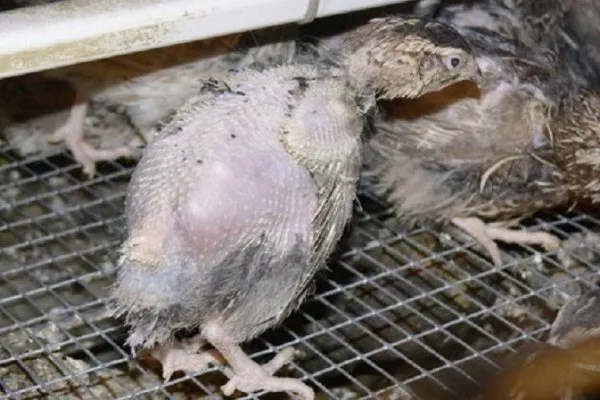
To determine if there are mites in your poultry house, simply place your hand on a wooden surface at night. If the parasites are present, they will quickly crawl onto your hand.
How to combat feather mites:
- Don't enter different poultry houses wearing the same shoes and clothing. Go to the healthy birds first, then the sick ones. After that, remove your clothes and shoes, wash them, and disinfect them.
- All new birds are placed in quarantine for a month.
- The infected poultry house undergoes complete disinfection. During this process, the birds are confined to cages.
- Animals with ticks are treated with special medications, such as Praziver or Solfisan. These are available at veterinary pharmacies. At least 2-3 treatments are required to get rid of the ticks.
It's too dry in the poultry house
Bird hair loss is often caused by excessively dry air. Humidity should be maintained between 45-65%. Birds feel uncomfortable in extremely dry conditions, and feather loss is just one of the reactions.
Other signs of increased dryness:
- birds ruffled;
- egg production drops or the birds do not lay eggs at all;
- quails keep their beaks open;
- The birds have rapid breathing.
How to increase humidity:
- place containers with water closer to the cells;
- throw a wet cloth over the cages with quails.
When increasing humidity, moderation is key. Overdoing it can trigger a cold in birds.
- ✓ Installation of a hygrometer in the poultry house for continuous humidity monitoring.
- ✓ Use of humidifiers during the heating season.
Heat in the cells
The poultry house must be ventilated and aired. Fresh air must be constantly replenished. If circulation is insufficient, the room temperature can rise critically. To somehow restore thermal balance, the birds' bodies begin to shed feathers.
According to the rules for keeping quail, the temperature in the poultry house should be maintained at +18…+25°C. The optimal range is +20…+22°C.
How to lower the temperature:
- If it is winter outside and the room is heated, it is enough to reduce the heating intensity.
- In summer, it is important to ensure proper ventilation.
- Reduce bird density.
- Make the bedding thinner—up to 3-5 cm. This will reduce heat generation.
- Fill drinking bowls with cool water regularly.
Draft in the poultry house
Quail hair loss can be caused by drafts, which can be a result of improper construction or ventilation. Regular exposure to drafts can cause hair loss on the back and head.
How to deal with drafts:
- Identify the causes or sources of drafts.
- Eliminate the causes by caulking any cracks. Take other measures depending on what's causing the rapid air movement. It might just require closing a window.
Tight cells
Quails are usually kept in cramped cages, but there are strict standards for their maintenance: no more than 4-6 individuals can be placed in a cage of 80 x 40 x 20 cm.
Consequences of overcrowding:
- quails begin to molt intensively;
- the quality of feathers and down deteriorates;
- stop laying eggs;
- they pluck out each other's feathers with their claws;
- pestilence may begin.
If the space requirements are not met, the birds should be rehoused as soon as possible. Young birds can be kept for a while in larger groups—up to 30 individuals—in large cages measuring 100 x 50 x 40 cm.
Poor nutrition
Just as humans lose hair due to a lack of vitamins and other nutrients, quails lose feathers due to an unbalanced diet. The main cause of feather loss is a deficiency of vitamins A, B, C, and E.
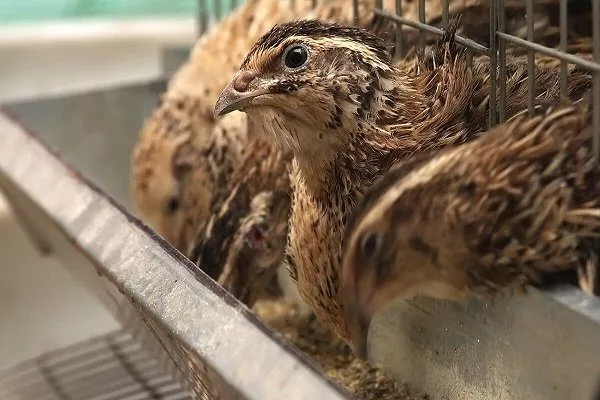
To replenish the lack of nutrients, it is recommended:
- introduce yeast into feed;
- vitamins for quails;
- legumes and green fodder;
- meat and bone meal and fish meal.
At drawing up a diet The age of the birds must be taken into account. Layers, for example, are given more protein by adding worms or boiled eggs to their feed.
Seasonal molting
This is a case where no action is needed. Birds periodically undergo seasonal molts—feathers fall out so new ones can grow in their place. To distinguish natural feather loss from abnormal ones, it's important to know the molt timing.
Quails molt for the first time at four weeks of age. Subsequent molts occur seasonally. Once they reach a certain age, quail may shed their feathers and not regain their plumage.
Zootechnical molt
Artificial molting is carried out on laying hens during large-scale quail breeding.
The goals of artificial molting:
- increase in egg production;
- extension of the productive period.
To provoke feather loss in birds, they are created under unfavorable and even stressful conditions.
Activities aimed at initiating molting:
- lack of food or water;
- reduction of daylight hours.
The procedure for initiating zootechnical molting:
- Birds are prepared for stress with enhanced protein nutrition;
- for a certain period of time they are kept in unfavorable conditions, during which the birds shed their feathers;
- within 2-4 weeks, the hens grow new feathers;
- The birds are transferred to their previous regime - daylight hours are increased and compound feed is introduced into the menu.
Injuries and fights
Quails are very skittish and will fuss at the slightest noise. If they're startled, they'll suddenly take flight and lash out at the cage bars. After smashing against the metal bars, the birds lose a significant number of feathers.
Another cause of mechanical feather loss can be conflict between birds. When confined, quail become irritable and aggressive, often engaging in fights. Feather loss can also occur in laying hens due to sexual attraction from males.
It is impossible to completely prevent mechanical loss of feathers, but it is quite possible to try to reduce it. To do this, you need to:
- observe space standards and avoid overcrowding in cages;
- Do not frighten the birds, maintain a calm environment in the room.
Cannibalism
This is a relatively rare occurrence among quail, but it can occur if bird husbandry regulations are seriously violated. Cannibalism manifests itself as aggressive pecking at each other. Birds peck at each other's heads, eyes, and feet, and also pluck feathers.
Causes of cannibalism:
- too bright lighting;
- flickering lamps;
- lack of protein feed;
- amino acid deficiency;
- cramped conditions in the cells;
- introducing foreign birds into a tribe.
To prevent bird aggression, it is enough to find out what caused it and eliminate the phenomena that provoke it.
Poultry diseases
Feather loss can be purely medical in nature. It often occurs due to problems within the bird's body, which in turn are caused by poor husbandry practices.
Hypovitaminosis
If quails don't receive enough vitamins, they may suffer from hypovitaminosis. When their diet lacks vitamins that the body can't synthesize, the birds develop avitaminosis, a condition that dramatically deteriorates their health.
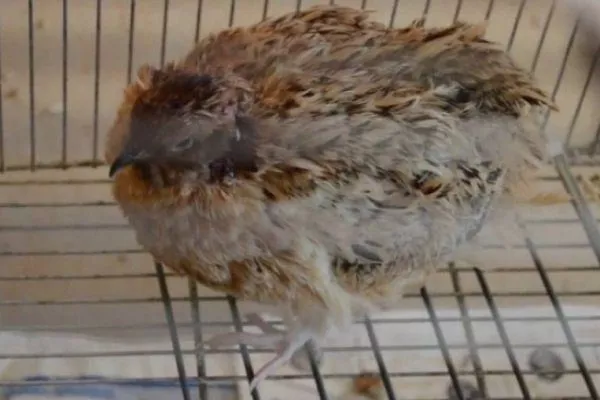
Symptoms of hypovitaminosis:
- corneal damage, conjunctivitis;
- lethargy, drowsiness;
- feathers stick out to the sides and fall out rapidly.
To compensate for the vitamin deficiency that leads to feather loss, quails are given:
- green;
- legumes;
- fish meal;
- corn;
- carrot;
- beets;
- pumpkin;
- millet;
- fish oil;
- herbal flour;
- cake;
- sprouted grain;
- dairy waste;
- brewer's yeast;
- meat and bone meal.
It's important to remember that vitamin overdose is no less dangerous than vitamin deficiency. This leads to poisoning of the body—hypervitaminosis. Vitamins A and D, in standard doses, can minimize the toxic effects of other vitamins.
Alopecia
Alopecia is a pathological condition characterized by localized feather loss. The disease affects both juveniles and adults. Feathers primarily fall out from the back and head.
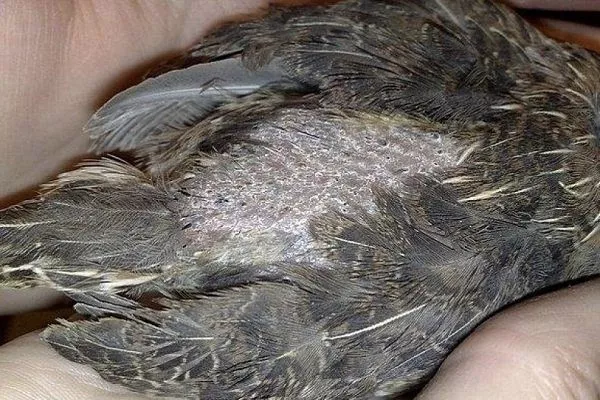
The following reasons can trigger alopecia:
- iodine or amino acid deficiency;
- Violation of humidity and ventilation standards.
They solve the problem comprehensively: they eliminate nutritional errors and enhance the diet with protein and vitamin supplements.
Parasitic diseases
Parasites are one of the most common causes of feather loss. If left untreated, the flock can lose not only their feathers but also their lives.
Mallophagosis
Mallophagosis is a parasitic disease caused by feather eaters. These are small insects, 1-3 mm long, and similar in appearance to lice. They feed on dead skin cells, down, and feathers, and reproduce very quickly.
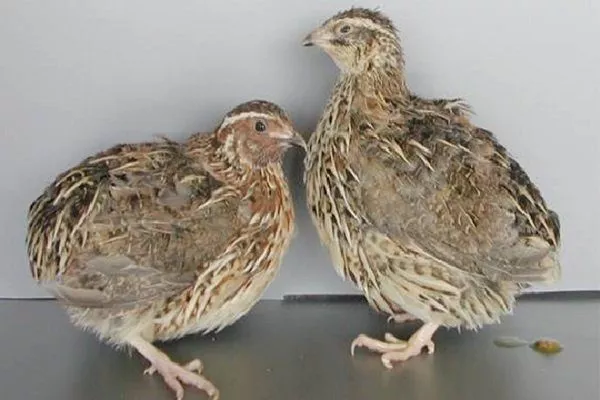
Symptoms of damage:
- egg production decreases;
- growth retardation;
- itching and irritation;
- lethargy.
If quail are infested with feather lice, treatment must begin immediately. Veterinary pharmacies will always offer several options for treating these parasites, including aerosols, drops, and powder. When treating quail, be sure to avoid any medication coming into contact with their beaks or eyes.
Along with pharmaceutical preparations, folk remedies are also used to get rid of feather eaters:
- Ash baths. The birds are given a trough filled with a mixture of dry sand, wood ash, and sulfur powder. Bathing in this bath removes parasites.
- Herbs. Dry wormwood is rubbed into the feathers.
Aspergillosis
This is a fungal disease that affects the respiratory system. It typically occurs in young quail, while in adults, aspergillosis is asymptomatic.
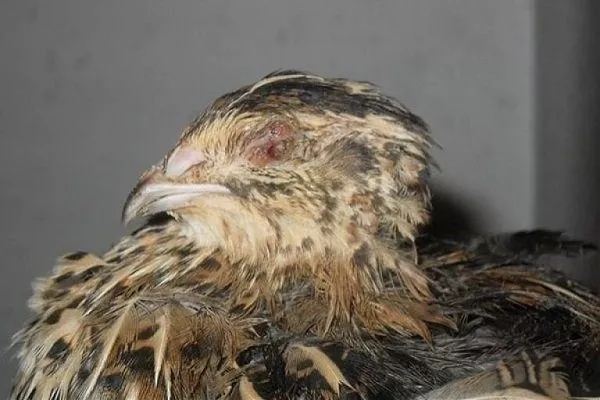
Symptoms of aspergillosis:
- lethargy;
- constant thirst;
- heavy breathing;
- bluish tint of the paws and beak;
- ruffled feathers.
Self-treatment is not recommended. A specialist's help is needed. They will prescribe antibiotics, antifungals, and vitamins.
Prevention
Preventative measures focus on eliminating the underlying causes of the problem. By following proper nutrition and care, the risk of baldness will be minimized.
Preventive measures against feather loss:
- Strengthening immunity. Glucose, ascorbic acid and a 2% solution of potassium permanganate are added to the water bowls.
- Removal of parasites. Various antiparasitic medications are administered to birds before signs of infection appear. Quail are also recommended to be dewormed once at three weeks of age.
- Favorable conditions of maintenance. The environment where the birds are kept must be maintained to ensure maximum comfort for them. Lighting, temperature, humidity, space requirements, and ventilation must all be adequate.
- Hygiene. Cages and equipment must be cleaned and disinfected regularly. Drinking bowls And feeders must be clean. Treat everything weekly with a 0.5% formalin solution.
- Feeding. The bird should be fed a complete diet containing all the nutrients it needs. Regularly feeding quail brewer's yeast is recommended.
- Insulation. New birds are quarantined. Contact with other birds and animals is prohibited. Young and adult birds are kept separately.
Feather loss, with the exception of seasonal molting, is most often a sign of illness or improper husbandry. To maintain quail health, productivity, and egg production, it's important to quickly respond to warning signs and, most importantly, prevent situations that could lead to feather loss.