
Chicken eggs becoming smaller is a common problem: in these cases, the weight of each egg is reduced by half. Instead of the usual weight of about 70 g, eggs weighing 30-35 g are produced. This phenomenon can be caused by a number of factors, including age and breed characteristics, as well as inadequate care and the presence of diseases.
General characteristics of the problem
Small chicken eggs can be either sporadic or regular. In the former case, there's no cause for concern. However, if small eggs start appearing day after day over a long period, this indicates certain problems or a specific aspect of the hens' life cycle.
Small eggs are a common egg-laying abnormality. Small, or dwarf, chicken eggs are those weighing less than 35 g. This abnormality is most often observed in the spring and summer.
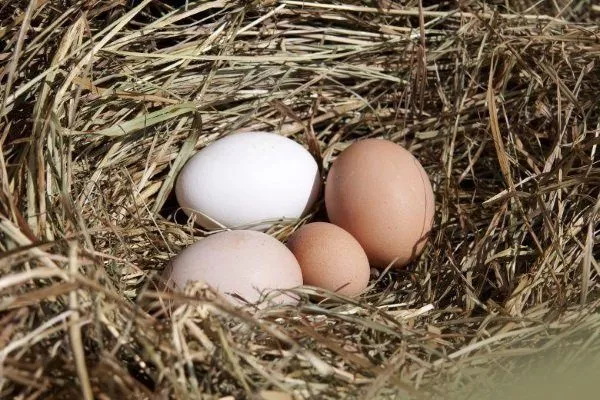
In small eggs, the yolk may be underdeveloped or absent altogether. If the center is missing, a foreign body—a blood clot, pieces of hardened protein, or fibrin—may be present in its place.
Most ground chicken eggs are round in shape. Their whites are highly dense.
The appearance of eggs is an indicator of the health of hens. If hens are healthy and developing normally, their eggs will be of the correct shape, size, and weight.
If egg size consistently decreases, it's important to determine the underlying cause. A veterinarian can help.
The main reasons for smaller eggs in laying hens
The main reasons that can cause small eggs in chickens include the following:
Age of the bird
Egg size is proportional to the hen's age: the younger she is, the smaller her eggs. Young hens lay frequently, but the eggs are small. As hens mature, their eggs increase in weight and size.
A hen can lay between 2,000 and 4,000 eggs during her lifetime, depending on her breed and health. During the first few months after reaching puberty, the eggs may be small. This is natural: during this period, the yolk is fully formed, and the white layer is small.
The egg size increases over time as the oviduct lengthens and widens. The final product may remain small until the bird is 9 months old.
This video explains why pullets lay small eggs and when they will begin to produce standard-sized eggs:
End of the biological cycle of productivity
The life cycle of laying hens consists of periods of egg-laying, each of which culminates in a molt. When a hen lays a few small eggs, this indicates that she has ceased laying and will soon begin molting. After this period is complete, the hen will resume laying standard-sized eggs.
Breed characteristics
Certain egg-laying chicken breeds are naturally small in size and weight, and therefore produce only small eggs throughout their lives.
For example, the average egg weight of a White Sultan chicken is 45 g, while that of a Hamburg chicken ranges from 45 to 54 g; accordingly, their size will also be small. Dwarf chicken varieties have even smaller eggs: Bantam chickens lay between 37 and 40 g, while Millefleur chickens lay between 28 and 30 g.
Large eggs are laid by representatives of the following breeds:
- Pushkin chickens. These hens lay eggs weighing approximately 60 g each. A distinctive feature of this breed is their easy adaptation to various living conditions.
- Hisex Brown. These birds are high egg producers, producing approximately 315 eggs per year. Their eggs are large, weighing up to 70 g each.
- Tetra. This breed is particularly demanding when it comes to keeping conditions: they require a strictly defined temperature regime and a balanced diet. However, they are also impressive egg producers: Tetra hens lay over three hundred eggs per year, each weighing approximately 65 g.
- Russian Whites. Representatives of this breed lay eggs weighing 60 g each.
- Highlines. This breed of hens is a productive layer. The average egg weight is about 65 g or more.
- Orlov hens produce eggs weighing 60 g.
- Rhodonites. The average size of one egg is 60 g.
The presence of foreign bodies in the oviduct of a laying hen
A foreign object can be a feather, a stone, a worm, or litter. When a foreign body passes through the oviduct, it is perceived by the hen's body in the same way as a formed yolk.
Subsequently, the foreign object becomes enveloped in a protein layer, and a shell forms on top. The result is an irregular egg (pseudo-egg) of small size.
Problems with feeding and keeping birds
Poor nutrition and the resulting deficiency of vitamins E and D can directly impact egg size. Drafts, insufficient light or heat, and excessively dry or stuffy air in the room where the birds are kept can also cause egg size reduction.
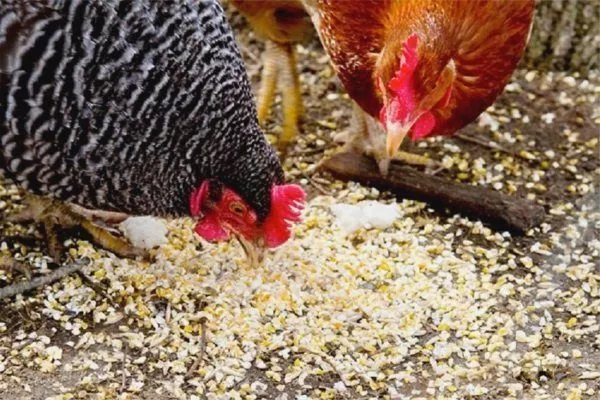
Learn more about feeding laying hens - read here.
Hormonal imbalances or metabolic problems
Deviations of this nature result in the formation of eggs without yolks, which affects their weight and size. Changes in hormonal levels or metabolism can be caused by a sudden change in feed composition, starvation, or the presence of external irritants such as noise or drafts.
Signs of this condition in chickens include hair loss, brittle feathers, weight problems (both obesity and sudden weight loss), gait disturbances, lethargy or excessive excitability of the bird.
Chicken diseases
The most common bird diseaseSalpingitis (or inflammation of the oviduct) is a condition that causes egg size reduction in laying hens. This pathological process most often develops in young hens. With this condition, eggs initially decrease in size, and then they stop laying altogether.
In the acute form of salpingitis, laying hens experience a reduction in egg production and egg size. In the chronic form of the disease, the birds do not become emaciated or experience any deterioration in their condition. The only changes are egg size and decreased egg production.
Stress
Often, when hens arrive at a new breeder's, they stop laying eggs or continue laying eggs but only produce small food items. In this case, don't panic: the bird will need several days to a week to adapt to its new environment. During this period, it's important to provide the bird with adequate nutrition and favorable living conditions.
Ways to combat the problem
If your laying hens are producing small eggs, you need to determine the cause and then choose a way to improve the situation.
The first thing to do is consult a veterinarian to rule out the possibility of inflammatory or other diseases in laying hens. If the birds are diagnosed with oviduct inflammation, they should be flushed daily with clean water and given a potassium iodide solution for 20 days. Affected hens should also be given vitamin supplements, which should include vitamins A, E, and D.
If a young hen lays small eggs, you should wait until she's six months old. By this age, hens typically begin laying eggs of a standard size and weight.
To solve the problem of small eggs, you need to follow these recommendations:
- Promptly isolate sick birds from the flock.
- For oviduct inflammation in laying hens, flush the oviduct with a saline solution administered via enema. For inflammation, birds should be given Sulfadimezine and Trichopolum: crush the tablets, dilute them with water, and pour them into the hens' beaks. If the infection was caused by pathogenic bacteria, calcium gluconate, Baytril, and Gamavit are also prescribed.
- Provide the chicken coop with the full duration of daylight hours necessary for laying eggs (15-16 hours per day).
- Feed the hens with grass and greens.
- Introduce vitamin C into the diet, which helps birds during stressful situations.
- Ensure good ventilation of the room where the birds live.
Preventive measures
To prevent abnormalities during egg formation, follow these recommendations:
- Organize the diet properly. Feed for laying hens should contain all the necessary vitamins and microelements, but at the same time, it shouldn't be too high in calories. To produce large eggs, the diet should include foods containing fat, crude protein, lysine, and cystine.
- Carefully monitor the condition of the birds in order to promptly detect the onset of diseases that cause egg-laying disorders.
- Provide adequate lighting, especially in winter, when the egg production of laying hens decreases significantly.
- Maintain an optimal temperature regime. In winter, the temperature in the chicken coop should not fall below 12 degrees Celsius, and in summer, it should not exceed 22 degrees Celsius.
- Destroy insects and ticks, eggs and larvae of helminths, harmful rodents in the room where birds are kept.
- Provide the chickens with sufficient space to roam and install comfortable perches for sleeping at night.
- Clean and disinfect utility rooms, wastewater septic tanks, and roads adjacent to the poultry house.
- Change the bedding regularly.
- Conduct preventive treatment of poultry in a timely manner to prevent helminthic infestations.
- Maintain the required humidity level in the chicken coop. This level should be between 60-70%.
- Observe sanitary and hygienic standards, ensure cleanliness and dryness in the room where laying hens are kept.
- Conduct complete disinfection of the premises regularly – at least once every 2 months.
Microclimate control plan
- Daily: temperature check (optimum +16…+20°C)
- 2 times a week: humidity measurement (60-70%)
- Monthly: air exchange rate assessment (0.7-1.0 m/s)
- Quarterly: Check lighting (20 lux at feeder level)
Schedule of preventive treatments
| Event | Periodicity | Medicines |
|---|---|---|
| Disinfection | Every 60 days | Virocid 1%, Glutex 1% |
| Deworming | 2 times a year | Albendazole 10%, Piperazine |
| Treatment for ectoparasites | Quarterly | Butox 0.005%, Neostomosan |
Periodic maintenance of the facilities housing laying hens is necessary. The main stages of this type of maintenance include the following:
- Birds are removed from the poultry houses and mechanical cleaning of the premises is performed. Feeders and bins are cleared of feed residues, and dust is collected. Manure and bedding are removed for biothermal treatment. Lighting fixtures, control panels, and other equipment are treated with a 5% phenol solution.
- Cleaning of adjacent areas, mowing grass.
- Cleaning the poultry house equipment. All contaminated surfaces and equipment installed in the coop are treated with a solution of soda ash, left for an hour, and then washed with plain water using high-pressure pumps.
- Wet disinfection of premises and equipment.
The outer walls of the poultry house are whitewashed once a year, during warm weather.
Chicken egg size markings
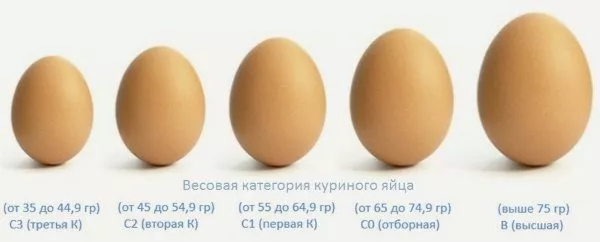
In stores, trays of eggs are marked to indicate their weight:
- the number 3 after the main indication (“C” – table or “D” – dietary egg) means that the eggs belong to the third category, since their weight is small – from 33 to 44.5 g;
- 2 – second category, egg weight – 45-54.5 g;
- 1 – first category, egg weight – from 55 to 64.5 g;
- The designation “B” classifies eggs as belonging to the highest category – this means that the weight of one is more than 75 g.;
- The designation "O" classifies the product as a select group: the weight of one egg in this case ranges from 65 to 74.5 g.
Requirements for eggs of different categories
| Category | Minimum weight, g | Permissible deviations |
|---|---|---|
| B (highest) | 75 | ±10% |
| O (selected) | 65 | ±8% |
| 1 | 55 | ±7% |
| 2 | 45 | ±6% |
| 3 | 35 | ±5% |
Chickens can lay small eggs for various reasons: it can be related to their breed and age, improper housing conditions, or illness. If the problem is sporadic, you can wait a while and monitor the hen's condition—it may be due to her young age. If small eggs are regularly laid, consult a veterinarian.