
To ensure chickens and hens receive a complete diet and improve their productivity, in addition to regular feed, they should be given special supplements. Supplements such as meat and bone meal, which are made from the carcasses of dead animals unfit for human consumption, are among the most nutrient-rich. Let's explore the benefits of these supplements, how to feed them to chickens, and how to store them.
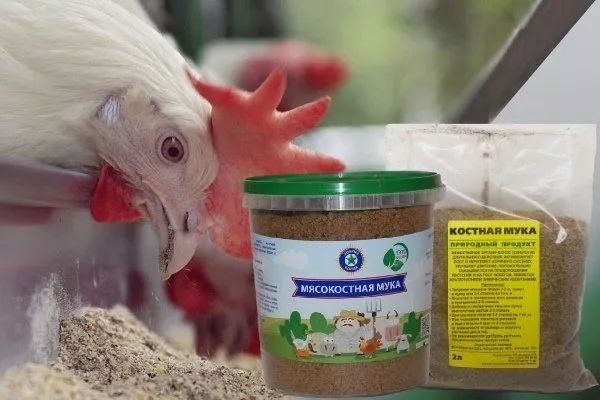
What kind of flour is this?
Meat and bone meal is a protein food supplement given to farm and domestic poultry and livestock. Visually, it appears as a homogeneous, free-flowing powder consisting of lumps approximately 12.7 mm in diameter. Three parameters help identify high-quality meal:
- ColorThe supplement should be dark or light brown in color. The powder should never be yellow, as this indicates the use of chicken feathers in the product's production. Such flour is extremely dangerous for birds—after consuming it, they may become ill and lay fewer eggs. Furthermore, the powder should not be greenish in color, as this indicates the presence of soy.
- SmellThe mixture has a distinctive odor, but it shouldn't be musty or putrid. If the flour smells like spoiled meat, it's not suitable for feeding chickens.
- StructureThe powder is loose in structure and consists of individual granules up to 12.7 mm in size. A high-quality mixture should not contain large particles. Furthermore, the additive particles should not disintegrate when pressed.
- ✓ Check the presence of a certificate of conformity to GOST 17536-82 on the packaging.
- ✓ Make sure the flour does not contain soy, which may be listed on the ingredients list.
Bone meal is also a valuable supplement, useful for laying hens and broilers. Its properties are similar to meat and bone meal, as it is also made from animal by-products unfit for human consumption. The difference is that it contains less protein, as it is produced primarily from bones rather than meat by-products.
What are the benefits of the supplement?
Breeders add meat and bone meal and bone meal when feeding laying hens, as well as broilers. Each one benefits from it.
For layers
Modern breeds of laying hens are quite productive, capable of laying an egg almost every day. However, to achieve this, they require a high intake of various micronutrients and animal protein.
While feeding birds crucian carp or pork isn't practical, introducing bone meal or bone meal into their diet is entirely possible. It has the following properties:
- increases egg production and the quality (strength) of eggshells;
- participates in the regulation of metabolic processes;
- maintains the general tone and health of the bird as a whole;
- reduces various nervous manifestations and increases stress resistance;
- prevents diseases of the respiratory system and gastrointestinal tract.
If you've decided to raise chickens for eggs, in addition to feeding the hens properly, you first need to choose a chicken breed that produces a lot of eggs. You can read more about the best egg-laying chicken breeds here. here.
For broilers
Broilers need protein supplements to strengthen their musculoskeletal and skeletal systems. Otherwise, their legs may not be able to support their ever-increasing weight. If the bird falls on its feet, it may be culled. This is unacceptable, of course, as the bird must grow and develop to a certain age (usually two months) before being slaughtered for meat.
Furthermore, regular use of these supplements helps prevent a number of pathological conditions that occur with chronic calcium deficiency. These include:
- rickets in young animals;
- osteoporosis;
- osteomalacia.
Flour promotes the functioning of the bird’s cardiovascular system, as well as the coordinated action of its blood vessels (venous and arterial).
How is meat and bone meal made?
Flour production uses the bones and meat of cattle that died of old age or non-communicable diseases. Such meat is unfit for human consumption, so it is used as an additive to animal feed. Waste from meat processing plants is commonly used in flour production. By-products, such as glands, stomachs, brains, lungs, and the like, may also be used as ingredients. The exact composition is indicated on the finished product packaging.
The process of making powder is as follows:
- Boil meat waste and cool to 25 degrees.
- The finished product is finely ground. Industrial facilities use specialized units for this purpose.
- Sift the resulting powder through a fine sieve to remove any remaining large particles.
- Pass the sifted flour through magnetic separators to remove any metallic impurities.
- Treat flour with special antioxidants to prevent it from spoiling. The product contains fat, which will cause the additive to spoil quickly if it's not treated with antioxidants.
- The finished powder is packaged and packed into containers.
During the flour production process, the raw materials used undergo heat treatment, so the finished product is safe for chickens and provides them with a valuable source of protein, phosphorus, and calcium.
Composition of flour
The additive content is determined by state standards, so the GOST number must be indicated on the packaging of a quality product. The composition of meat and bone meal and bone meal is regulated and defined by GOST 17536-82. We'll explore the contents of each additive below.
Meat and bone
The composition of flour should include:
- ProteinsThe quality of the protein determines the grade of the finished product, of which there are three. Grade I flour has the highest protein content. Grade II and III flours contain more bones, so they have less protein.
Protein is essential for living organisms to build the skeleton, muscles, and internal organs. For this reason, daily diet of laying hens, roosters and broilers must be fed with a moderate amount of protein supplement.
- FatsTheir lowest concentration is found in first-class meat and bone powder.
- CelluloseRegardless of the product class, the cellulose content remains the same.
- AshIts lowest concentration is contained in first class powder.
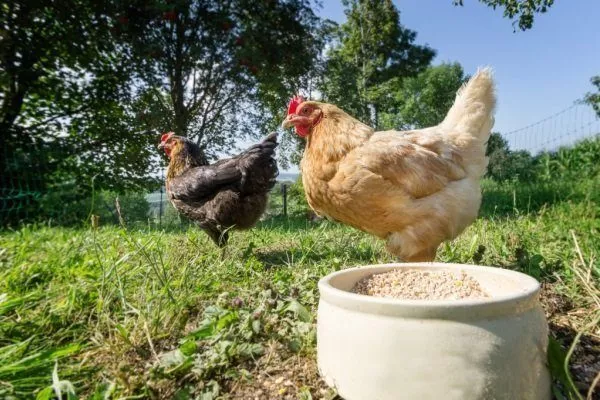
Among the useful biological substances, flour also contains:
- calcium;
- phosphorus;
- sodium
- choline;
- glutamic, adenosine triphosphate (ATP), nicotinic and bile acids;
- B vitamins;
- thyroxine;
- carnitine;
- riboflavin.
When purchasing flour, carefully read the ingredients on the packaging. If soy is listed, it's a low-quality product. Not only will such an additive fail to improve the chickens' diet, but it will also cause a protein deficiency, which can lead to illness, cannibalism, and pecking eggs.
It's important to remember that the nutritional value of flour is variable and depends on its protein concentration. If the raw materials from which it was produced contained a lot of bones, the protein content in the finished product will decrease. Considering that this additive is valued primarily for its high protein content, it's best to choose a premium product.
You can clearly see the differences between first, second and third grade meat and bone meal in the table:
| Component name | Meat and bone meal | ||
| Class I | Class II | Class III | |
| Component content, % | |||
| Protein | 50 | 42 | 30 |
| Fat | 13 | 18 | 20 |
| Ash | 26 | 28 | 38 |
| Moisture | 9 | 10 | 10 |
| Fiber | 2 | 2 | 2 |
Thus, the flour contains 30-50% proteins, 13-20% fats, 26-38% ash and 9-10% water, as well as up to 20% bone and muscle fragments.
To accurately distinguish between flours of different classes, you should also consider the following:
- first class flour contains more protein and less fat and ash;
- second class flour contains slightly less protein, but slightly more fat and ash;
- Third-grade flour contains a small amount of protein, but more fat and ash.
It's best to choose a premium supplement, as it contains less fat. Feeding chickens a lower-grade supplement may reduce egg production. These birds may also develop cannibalism.
More information about the composition of meat and bone meal 40-50% can be found below:
| Component name | Content per 1 kg of powder |
| Energy nutritional value | |
| Feed units | 1.04 |
| Dry matter | 900 g |
| Crude fat | 112 g |
| Nitrogen-free extractive substances (NFES) | 46 g |
| Protein nutrition | |
| Crude protein | 401 g |
| Lysine | 21.7 g |
| Methionine and cystine | 8.8 g |
| Minerals | |
| Calcium | 143 g |
| Phosphorus | 74 g |
| Magnesium | 1.8 g |
| Potassium | 14 g |
| Sulfur | 2.5 g |
| Iron | 50 mg |
| Copper | 1.5 mg |
| Zinc | 85 mg |
| Manganese | 12.3 mg |
| Cobalt | 0.18 mg |
| Iodine | 1.31 mg |
| Vitamins | |
| E | 1 mg |
| B1 | 1.1 mg |
| B2 | 4.2 mg |
| B3 | 3.6 mg |
| B4 | 2000 mg |
| B5 | 46.4 mg |
| B12 | 12.3 mg |
Bone
This product contains less protein than meat and bone supplements, as it is made exclusively from animal bones. However, it also helps balance the chicken's diet, as it is rich in calcium and phosphorus. It also contains other micronutrients, including iron, magnesium, zinc, iodine, copper, and cobalt.
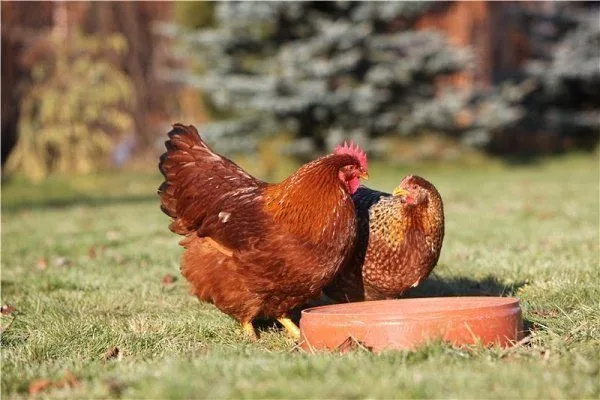
The main properties of the bone supplement are presented in the table:
| Component name | Component content, % |
| Protein | 20 |
| Fat | 10 |
| Ash | 61 |
| Moisture | 9 |
| Fiber | — |
The bone supplement does not contain cellulose at all, but the ash content is the highest compared to meat and bone meal of any class.
Rules for using flour and dosage
To diversify the diet of chickens, flour must be added to the finished product. compound feed or a homemade mash.
Doses for laying hens
Optimal dosages are determined depending on the type of flour:
- Meat and boneThis supplement should account for up to 6-7% of the total feed volume. Therefore, an adult laying hen should receive 7 to 11 g of powder per day. The optimal amount of this flour per 5 kg of feed is 250 g, and per 10 kg of feed, 500 g. This amount will provide the hens with all the necessary nutrients.
- BoneCompared to meat and bone meal, this supplement is added in smaller quantities – it should account for up to 0.6-0.7% of the total feed volume. Thus, the optimal amount of bone meal per 5 kg of feed is 35 g, and per 10 kg of feed – 70 g. Bone meal dosages should be adjusted depending on the other ingredients of the feed. For example, if chalk or shell rock is added to the feed mixture, its proportions should be reduced, and vice versa.
Here is an example of a recipe for compound feed with the addition of meat and bone meal:
- crushed corn – 500 g;
- wheat groats – 150 g;
- barley groats – 50 g;
- sunflower meal or sugar beet cake – 100 g;
- meat and bone meal – 50 g;
- yeast – 50 g;
- chopped hay or grass powder – 50 g;
- split peas – 30 g;
- salt – 0.5 tsp;
- Vitamin premix containing vitamins A, E and D.
Experienced breeders recommend feeding chickens steamed, semi-moist feed, as it's easily digestible. And for layers, it's best to supplement with store-bought feed.vitamins to increase egg production.
In summer, chickens roam freely, pecking at worms and insects, obtaining some protein from live food. Because of this, some breeders reduce the amount of flour they feed, but this is unnecessary, as hens require more protein and calcium during the summer.
Doses for broiler chickens
As mentioned above, meat and bone meal or bone meal are also added to broiler diets, but in this case, it's important to follow the specific instructions for use. The dosage of the supplement in the young birds' diet should be increased gradually to promote healthy growth and weight gain.
- Start introducing flour from the 6th day of life of chickens, starting with 0.5 g per head.
- Gradually increase the dose to 5 g by day 63, following the recommended schedule.
The feeding scheme for broiler chickens is as follows:
- From day 1 to day 5 – supplements are not yet introduced into the chicks’ diet.
- From the 6th to the 10th day, each chicken is given 0.5-1 g of flour per day.
- From the 11th to the 20th day, the flour intake per head increases to 1.5-2 g per day.
- From the 21st to the 30th day, each broiler receives no more than 2.5-3 g of powder.
- From the 31st to the 63rd day, the flour norm is increased to the maximum and amounts to 4-5 g per head.
Regardless of whether the supplement is given to a laying hen or a broiler, it is necessary to strictly adhere to its optimal dosages, otherwise the bird may develop gout or amyloidosis (a protein metabolism disorder).
Product storage
Flour is rich in protein and fat, so it can quickly spoil and lose its beneficial properties if the following storage rules are ignored:
- keep in a cool but dry place that is well ventilated or regularly aired;
- Do not allow the humidity level in the room to increase and do not allow the additive to be exposed to direct sunlight;
- Maintain the room temperature at up to 28°C (this is the maximum permissible temperature, since if the room is warmer, the fats in the flour will begin to decompose, releasing dangerous toxic substances).
The supplement can be stored under suitable conditions for no longer than 12 months from the date of manufacture. The manufacturing date must be indicated on the packaging.
How to make flour at home?
You can make a high-quality substitute for store-bought flour at home, but keep in mind that this process produces a strong, distinctive odor, so it's best to do this away from living areas. To prepare the flour, follow these steps:
- Thoroughly clean and wash the bones and meat of cattle.
- Crush the raw materials into small pieces, throw them into a thick-walled container, cover with a lid and place on medium heat.
- Cook the raw material until it becomes soft and dark. This usually takes about 3 hours.
- Remove the boiled ingredients from the heat and cool, then grind them using any available method—a hammer, mortar, or grinder. You should obtain a free-flowing brown powder.
Homemade flour should be stored in a cool place, first poured into a linen or paper bag. Add it to the wet mixture in small amounts.
An experienced breeder explains how to quickly prepare a meat and bone supplement for chickens at home:
Meat and bone meal are an excellent supplement to the diet of young and adult chickens, providing them with all the necessary micronutrients and vitamins for balanced development. However, it's important to follow the recommended dosage and storage guidelines.