
Feeding chickens and chicks compound feed significantly accelerates their growth and development. Birds gain weight faster, and egg production increases by 15%. Adding minerals and vitamins increases productivity by 25-30%. It doesn't matter whether the compound feed is commercial or homemade, as long as it contains everything the birds need.
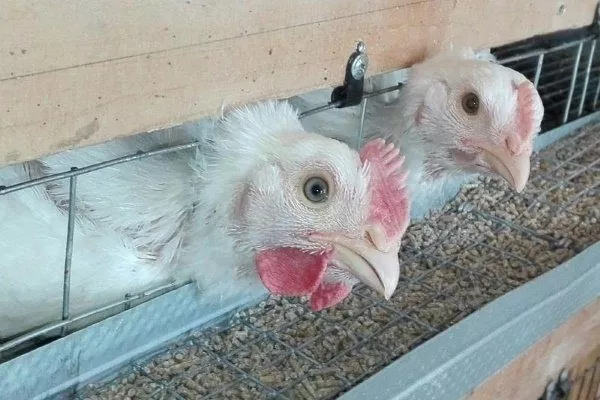
Factory-made compound feed
Compound feeds of various compositions are produced for meat and egg-laying chickens. The industry produces a wide range of compound feeds in loose, expanded, and expanded-pellet forms.
They are selected taking into account:
- directions of productivity;
- age;
- floor.
Expanded feed is produced using a brief, high-temperature, high-pressure process. This method neutralizes harmful substances, producing an optimal pellet structure.
Complete feeds can completely replace grain and become the sole source of nutrition. The key is to ensure that the feed is used for the intended group of birds. Let's take a closer look at the complete feeds produced by the industry for different groups of chickens.
| Name | Age of application | Energy value (kcal/100 g) | Protein content (%) |
|---|---|---|---|
| PC-0 | 1-14 days | 300 | 21 |
| PC-1 | from 1 year | 269 | 16 |
| PC-2 | 1-8 weeks | 290 | 18 |
| PC-3 | 7 weeks – 3.5 months | 260 | 16 |
PC-0
This feed is given to broiler chickens from 1 to 14 days old. This feed mixture contains nutrients essential for the growth of meat-fed chicks, including minerals, trace elements, vitamins, and beneficial bacteria. The composition of PK-0 is listed in Table 1.
Table 1
| Ingredients in PC-0 | Content, % |
| Wheat | 49.99 |
| Peas | 2 |
| Full-fat soybeans | 2 |
| Soybean meal | 25 |
| Sunflower meal | 2 |
| Corn gluten | 1.5 |
| Fish meal | 1.5 |
| Sunflower oil | 2.5 |
| Limestone flour | 1.57 |
| Table salt | 0.13 |
| Lysine monochlorohydrate | 0.41 |
The PK-0 compound feed also contains antioxidants, enzymes, and a vitamin-mineral premix.
The caloric value of 100 g of PC-0 is 300 kcal. Proteins make up 21% of the total feed weight.
PC-0 contains sodium lasalocid. It is added to the feed for prophylactic purposes – to prevent coccidiosis.
PC-1
PK-1 compound feed is designed for laying hens aged one year and older. It is a highly nutritious, complete feed enriched with vitamins and minerals.
The composition of the PC-1 compound feed is shown in Table 2.
Table 2
| Ingredients in PC-1 | Content, % |
| Wheat | 62.5 |
| Meat and bone meal | 4 |
| Sunflower oil | 2.3 |
| Nutritional yeast | 2.5 |
| Baking soda | 0.07 |
| Table salt | 0.1 |
| Tricalcium phosphate | 1.95 |
| Limestone flour | 7.5 |
| Sunflower meal | 17.5 |
| L-threonine 98% | 0.118 |
| L-lysine monochlorohydrate | 0.301 |
| DL-methionine 98.5% | 0.1 |
| Choline chloride B4 | 0.06 |
| Premix P1-2 | 1.0 |
The energy value of 100 g of PC-1 is 269 kcal. Protein makes up 16% of the total feed weight.
According to GOST, the composition of compound feed for laying hens must include, along with corn grain, wheat and other feed ingredients, yeast, vitamins, minerals, antioxidants, prebiotics, amino acids, antibacterial drugs, and mold inhibitors.
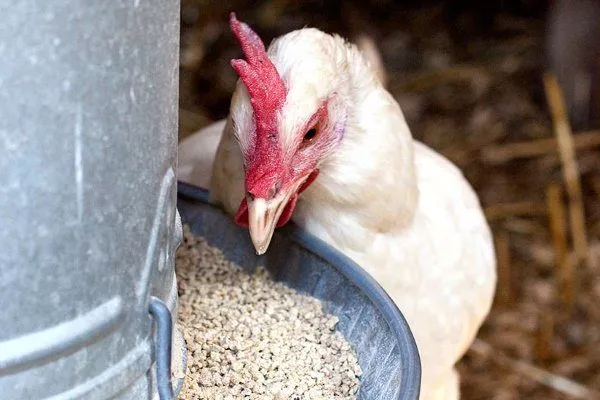
PC-1 is available in 40 kg bags. The price per bag is 850 rubles. Each laying hen should receive 120 g of feed daily. Feed mills also produce several subtypes of PC-1, designed for specific ages of laying hens, for example:
- PK 1-18 is a complete feed for laying hens aged 1-2 months.
- PK-1-1 – for layers after 48 weeks. It has a positive effect on the taste and quality of eggs. The yolk becomes bright orange, the shell becomes harder, and the hen's down becomes thicker.
- PK-1-25 – after 48 weeks. This is a balanced feed containing prebiotics, enzymes, antioxidants, and a coccidiostat.
If the abbreviation "KK" appears on the feed label, it means it's a concentrated feed – it should be added to the main diet, not used as a separate feed. KK consists primarily of wheat bran, supplemented with fish meal, oilcake, shells, limestone, and barley waste.
Excess protein, like its deficiency, leads to a deterioration in egg production in hens.
PC-2
PC-2 is a compound feed for young egg-laying breeds. It is fed to chicks aged 1 to 8 weeks. The feed contains medications in prophylactic doses. The composition of PC-2 feed is shown in Table 3.
Table 3
| Ingredients in PC-2 | Content, % |
| Corn | 48.2 |
| Wheat | 20.3 |
| Soybean cake | 12.8 |
| Fish meal | 1 |
| Sunflower cake | 12.8 |
| Table salt | 0.3 |
| Chalk | 2.2 |
| Methionine | 0.1 |
| Lysine | 0.1 |
| Premix | 1 |
| Monocalcium phosphate | 1.2 |
Available in fine grain or granule form. The cost per kg is approximately 25 rubles. Dosage is as per instructions and is adjusted according to age. 100 g contains 290 kcal. Protein accounts for 18% of the total feed weight.
PC-3
PC-3 is a feed for laying chickens. It is given from 7 weeks to 3.5 months. It is also given at 4.5-5 months of age. From 3.5-4.5 months, chickens are fed PC-4. The composition of PC-3 feed is shown in Table 4.
Table 4
| Ingredients in PC-3 | Content, % |
| Corn | 35 |
| Wheat | 30.2 |
| Soybean cake | 2 |
| Extruded soybeans | 8.4 |
| Sunflower cake | 19.5 |
| Table salt | 0.3 |
| Chalk | 2.4 |
| Monocalcium phosphate | 1 |
| Lysine | 0.2 |
| Premix | 1 |
100 g contains 260 kcal. Protein makes up 16% of the feed's total weight. A 25 kg bag costs approximately 600 rubles. The dosage is indicated in the instructions.
PC-7 is a feed for crossbred hens aged 18-22 weeks. This feed is not readily available; it is usually made to order. And this is far from the complete range of feeds for laying hens, chicks, and roosters produced in feed mills.
Advantages and disadvantages of industrially produced compound feed
Combined feed allows you to achieve high egg and meat production with minimal investment and time. Combined feed contains grain, vegetables, meal, and vitamin and mineral supplements. Captive hens, who lack access to natural foods, prefer grain mixtures, but combined feed has important advantages:
- completeness – the feed contains everything necessary for feeding the bird;
- economy;
- You can change the composition.
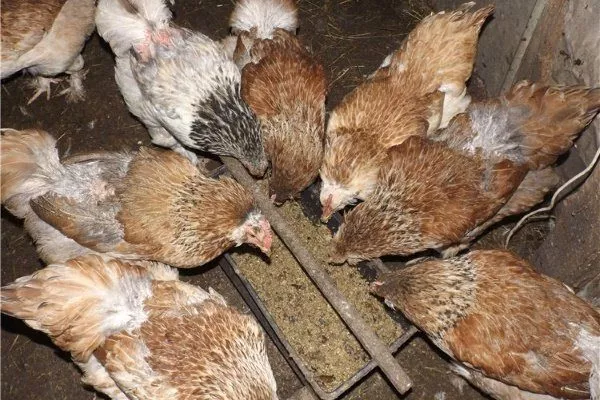
Along with industrial compound feed, you can use homemade feed - this is a more economical option, but it requires time.
The main components of compound feed
One of the factors that determines the health and productivity of chickens is a properly balanced diet. Chicken feed must contain all the nutrients they need in the appropriate proportions. Dozens of feeds are available on the market, and the farmer's task is to choose the right one based on their budget, the age of the birds, and their intended use. Broiler feeds are designed for rapid weight gain, while layers are designed to increase egg production.
- ✓ The protein level should correspond to the age and purpose of the bird: for chickens - at least 20%, for layers - 16-18%.
- ✓ The presence of preventative additives, such as coccidiostats, is especially important for young animals.
More information about the correct feeding of laying hens is written here.
All chicken feeds are divided into three groups according to their composition:
- CarbohydratesPromotes poultry growth. Typically contains grains and vegetables.
- Protein. Rich in fats—both vegetable and animal. Promotes egg production.
- Vitamins. They help you survive the winter and support your immune system.
| Type of feed | Energy value (kcal/100 g) | Recommended age |
|---|---|---|
| Starter for chickens | 300 | 1-14 days |
| For layers | 269 | from 1 year |
| For young animals | 290 | 1-8 weeks |
Let's take a closer look at each group of feeds, their features and composition.
Carbohydrate feed
Carbohydrates are the primary source of energy for birds. Chickens digest carbohydrate-rich feeds very well. Their main benefit is a slower metabolism, which is precisely what's needed for increased weight gain. Therefore, such feeds are given to broilers, which are required to achieve one goal: grow as quickly as possible.
Carbohydrate feeds are divided into:
- cereals;
- juicy;
- grain waste.
Cereals
Grain should make up more than 50% of a chicken's diet. Birds easily digest grain of any grind. Grain composition:
- starch – 70%;
- protein – 8-12%;
- mineral substances – 1.5-5%;
- fat – 8-10%.
Cereal proteins contain few amino acids, and grains contain fiber, which is poorly digested by the chicken's body.
Cereal crops for carbohydrate compound feed:
- Corn. Corn kernels are the most beneficial and valuable component of carbohydrate feeds. They contain less fiber than other grains. For example, oats contain six times more fiber than corn. Corn is the highest in protein content among grains.
- Oats. It's fed to chickens after the membranes are removed. A specific grain size is required for each age group. If oatmeal is fed to poultry, it must be sifted to remove the outer husks. Oats are rich in amino acids and are considered dietary. However, because they're high in fiber, they shouldn't be fed too much.
Sprouting oats before feeding them makes them much more nutritious. Large amounts of fiber are dangerous for poultry. It digests slowly, leading to intestinal blockages and death. The proportion of crushed oats should not exceed 20% of the total feed. - Wheat. Carbohydrate-based feed also often contains feed wheat, which contains a lot of vitamins B and E. Wheat should not make up more than 30% of the feed.
- Rye. Its presence in feed is undesirable—at least, that's the opinion of experienced poultry farmers and feed manufacturers. Freshly harvested rye should not be fed to poultry at all, as it contains a lot of mucus, which is harmful to the chicken's digestive system.
- Barley. It is added cleaned and sifted. The barley husk contains fiber.
- Buckwheat. It's rarely used in chicken feed. It's not very suitable for chickens, and they don't particularly enjoy eating it.
The energy value of grain crops is presented in Table 5.
Table 5
| Products | proteins, % | fats, % | carbohydrates, % | kcal/100 g |
| corn | 8.3 | 4.2 | 63.6 | 334 |
| durum wheat | 11.4 | 1.7 | 62.4 | 318 |
| soft wheat | 9.7 | 1.5 | 63.1 | 312 |
| rye | 9 | 1.5 | 64.6 | 316 |
| barley | 9.5 | 1.5 | 72 | 348 |
| peas | 19.3 | 2.2 | 49.8 | 304 |
| beans | 19.2 | 1.9 | 50.3 | 303 |
| lentils | 20 | 1.6 | 49.8 | 30 |
| soybeans | 28.1 | 17 | 23 | 368 |
| oats | 10.8 | 6 | 61.1 | 351 |
Succulent feed
Peeled vegetables serve as succulent feed for chickens:
- PotatoIt has a positive effect on digestion. Avoid giving green potatoes—they're full of solanine, a poison. Raw potatoes are also not recommended. The best option is boiled, dehydrated, and crushed potatoes.
- Beet. Beneficial for digestion. Give it boiled or freshly mashed. Beets can make up to 15% of the diet. Store them frozen. Once thawed, feed them immediately to the chickens.
- Pumpkin. It's rich in vitamin B2, sugar, and carotene. Feed it chopped—no more than 15% of the total feed.
The energy value of succulent feeds is in Table 6.
Table 6
| Succulent food | water, g | proteins g | fats, g | carbohydrates, g | kcal |
| potato | 78.6 | 2 | 0.4 | 19.7 | 83 |
| beet | 86.5 | 1.7 | 0.1 | 10.8 | 48 |
| turnip | 91.4 | 1.2 | 0.2 | 3.4 | 31 |
| pumpkin | 91.8 | 1 | 0.1 | 4.4 | 22 |
Grain waste
Waste from grain processing is rarely used in the production of compound feed. The most common type of grain waste is wheat bran. These additives have a serious drawback: they contain fiber, phosphorus, plant components, and fungi. Their nutritional value is low, and they offer no particular benefit for weight gain or egg production.
Distillery waste, also known as "stillage," is sometimes added to mixed feed. This refers to the residue left over from distilling alcohol, such as potato, wheat, or corn. The most nutritious stillage is wheat. It can be included in chickens' diets at a rate of 10% of their feed. It is as nutritious as oats and contains a lot of vitamin B.
Molasses, a food waste product obtained by boiling beet juice, is also added to the feed. The recommended dosage is up to 7%.
Protein feeds
Chickens that eat food that is high in protein grow quickly, hens lay better eggs, and the quality of their eggs' egg whites improves.
Source of proteins:
- ground fish;
- meat meal;
- peas and other legumes;
- cake.
To keep chickens healthy, they need protein feed—it contains the amino acids their bodies need. There are two types of protein: animal and plant.
Animal proteins
Animal proteins contain far more minerals and vitamins than plant proteins. Types of protein products:
- Fish meal. It's made by grinding fish that's unfit for human consumption, as well as fish scraps. The protein in fish is easily digested by chickens and contains many essential amino acids. Fishmeal can make up 8% of the diet. It's most often used in wet mashes.
- Bone meal. This is the second most popular protein product. It is ground from meat and bones. It has about the same amount of protein as grains, and a fat content of 11%. It also contains vitamins A and E. Bone meal is given to poultry from one month of age.
- Blood meal. The raw material is blood and bones. They contain concentrated protein and amino acids. They are given at no more than 4% of the diet to avoid digestive upset.
- Feather flour. A cheap but unhealthy product. The raw material is bird down and feathers. It makes up to 2% of the diet.
- Dairy products. Highly digestible, protein-rich foods. Using milk, cottage cheese, skim milk, and whey in wet mashes promotes chicken growth and egg production.
- EarthwormsFarmers feed them to chickens as a powerful protein supplement. The recommended dose is 5-7 g per chicken. Worms can be bred in a container filled with rotting food and weeds.
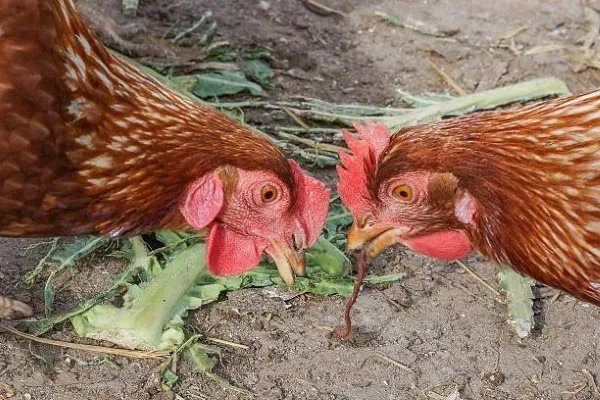
When fattening broilers, fish meal is not included in the diet so that its smell does not accompany the chicken meat.
Plant proteins
A source of plant proteins are legumes:
- Soybeans. It is distinguished by its high content of proteins, amino acids, vitamins and minerals – there are no fewer of them in soy than in animal proteins.
- Peas. It contains a lot of protein and amino acids. Chickens don't really like split peas—they have a distinctive taste and smell—but they are still added to their feed, but at a rate of no more than 10%.
- Meal and cake. Soybean and sunflower meal or cake are most commonly used. The recommended supplementation level in adult chicken feed is 15-17%, and for young chickens, 10%.
Vitamin feed
Vitamin-rich foods are foods that contain certain groups of vitamins. These are found in both grains and protein products. You can enrich your feed with concentrated vitamins yourself; these are available at specialized farm stores. Another option for enriching food with vitamins is fermentation.
Mixed feeds
Mixed feed is a compound feed that contains carbohydrates, proteins, and other nutrients in varying proportions. You can make it yourself by mixing the required ingredients. The composition and percentage of feed are determined based on the bird's characteristics. If necessary, the ingredients are cooked, ground, or processed in another way.
Homemade dry mixed feed can be prepared in advance, while wet feed should be prepared immediately before feeding. Chickens especially enjoy warm feed, so you can warm it up.
Layer feed should contain 15-20% protein and 6% fiber. Mixed feed prepared in these proportions will not cause excess weight gain. The recommended feed intake for adult hens is 75-150 g. The optimal intake is 120 g.
When preparing or purchasing mixed feed, study its ingredients beforehand and test a small amount—there are additives that chickens don't react well to. If you can't find the right feed, you can always make your own.
Compound feed for chickens
Compound feed is produced with the hens' needs in mind. Complete feeds have been developed for laying breeds:
- "Solnyshko" and PC-2 – They are given from the first days of life. PK-2 can be given up to 7 weeks. The food is finely ground – in the form of cereal or granules.
- PC-3 – given after 7 weeks to 3.5 months.
Meat-breed chickens are fed PK-5 feed. The feeding period is determined based on the feeding system. The feed is made in small grain form, making it easy for chicks to peck at. PK-5 contains active ingredients that promote weight gain.
You can prepare your own chick feed, just like you would for adult chickens. The starter mix should contain the following ingredients:
- corn – 49%;
- sunflower cake/meal – 18%;
- wheat – 12%;
- fish meal/meat and bone meal – 8%;
- reverse – 3%;
- plant components – 3%;
- feed fat – 1%.
Ingredients are first crushed and only then mixed. The ingredients added to the feed should be the same as those already introduced to the chicks to avoid digestive problems.
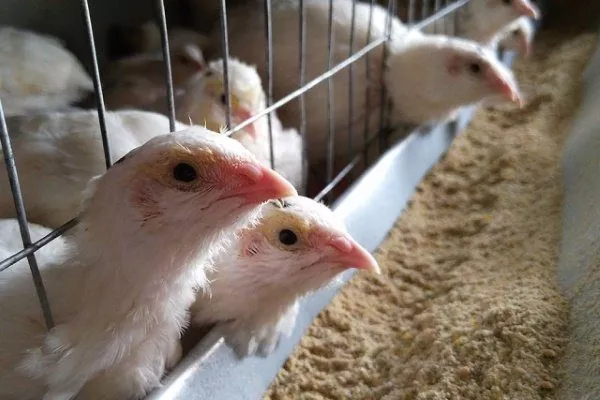
Dry feed can be given to broiler chickens from the first days of life, and to laying hens only after the first week.
Chicks shouldn't be given pelleted food—they won't be able to crush and swallow it. Pellets must be crushed before feeding.
Standards for consumption of compound feed
Overfeeding and underfeeding poultry are equally harmful. Every chicken owner should know the feed intake requirements based on the bird's age. Feed requirements for chickens and laying hens are listed in Table 7.
Talitsa 7
| Age, weeks | Daily feed intake, g | Total feed for the period, kg |
| 1-3 | 10-26 | 0.4 |
| 4-8 | 31-51 | 1.3 |
| 9-16 | 51-71 | 2.2 |
| 7-20 | 72-93 | 3.5 |
| 21-27 | 100-110 | 5.7 |
| 28-45 | 110-120 | 15 |
| 46-65 | 120 | 17 |
The above dosages correspond to feeds designed for specific life stages (PK-1, PK-2, PK-3). When preparing homemade feeds, feeding standards are established experimentally.
Broilers are fed sequentially with three types of feed:
- "Start" or PC-5 – it is given from the first day until 14-15 days or until 30-31 days, depending on the chosen feeding system.
- "Height" -given at 3-4 weeks of life.
- "Finish"– from one month of age until slaughter.
The feeding standards for broilers for a system in which only starter and finisher feed mixtures are used are shown in Table 8.
Table 8
| Feeding norms for one individual | PC-5-3 | PC-5-4 | PC-6-6 | PC-6-7 |
| age | ||||
| 0-5 | 6-18 | 19-37 | 38-42 | |
| daily, g | 15-21 | 25-89 | 93-158 | 160-169 |
| for the entire period, g | 100 | 760 | 2410 | 830 |
How to prepare compound feed yourself?
There are situations when preparing your own pet food is more cost-effective. The key is to have all the necessary ingredients on hand. Another important factor is following the recipe precisely. It's important to use all ingredients specified in the recipes, in the exact dosages.
The pellet size is determined by the age of the hens. The composition and proportions vary depending on the age of the hens and the breed type. Let's look at a few popular recipes.
Recipe No. 1
To prepare compound feed for laying hens, you need to mix the following components:
- corn grains – 500 g;
- wheat – 100-150 g;
- Peeled sunflower meal – 80-100 g;
- washed finely crushed barley – 80-100 g;
- bone meal and fish meal – 70 g each;
- yeast – 60 g;
- herbal flour – 60 g;
- crushed peas – 30 g;
- salt – 2 g.
Once all the ingredients are thoroughly mixed, concentrated vitamins can be added to the mixture. Vitamins that increase egg production in chickens are discussed here. Here.
Recipe No. 2
This is a simple recipe that doesn't require much effort. This mixed feed is suitable for hens aged 15 to 45 weeks. The amount of ingredients can be adjusted based on their weight.
The feed contains:
- wheat grains – 400-500 g (1/2 of the total volume);
- wheat bran – 40-80 g;
- vegetable oil – 15-30 g;
- meat flour – 30-70 g;
- chalk – 25-30 g;
- barley grains – 100-200 g;
- shell – 50-80 g;
- salt – up to 3 g.
Recipe #3
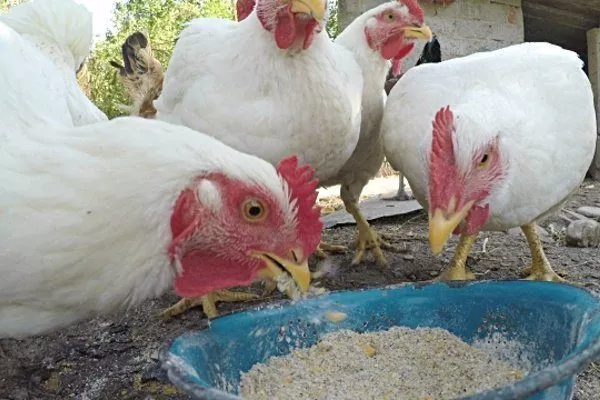
This is a recipe for finishing feed for broilers; it's not fed to egg-laying chickens. Ingredients and proportions:
- corn flour – 500 g;
- cake – 170 g;
- ground wheat – 120 g;
- meat and bone meal – 120 g;
- feed yeast – 60 g;
- premix – 15 g;
- grass flour – 12 g;
- salt – 3 g.
This mixture has a high energy value and ensures weight gain in boilers after the 30th day.
Options for preparing compound feed
There's a direct link between feed digestibility and palatability and its physical form. To ensure feed is palatable and digestible, chickens need to prepare it properly. Smaller feed sizes not only make packaging easier but also more convenient for consumption.
The size of the grains should be appropriate for the age of the chickens and the properties of the ingredients used. For example, wheat shouldn't be ground into flour—it will turn into a lump that will simply get stuck in the esophagus. Each ingredient must be properly prepared. The feed also undergoes biological treatment, which improves the taste. At the same time, carbohydrates are broken down to ensure proper digestion.
Yeasting
Yeast contains proteins, vitamins A, B, E, and D, iron, and phosphorus. Yeasting is the process of adding yeast to feed—whether grain, succulent, or vitamin-rich.
Features of yeasting:
- It is better to add yeast to feeds containing sugar beet or molasses – they contain a lot of sugar.
- To help the yeast multiply faster, you can add malted barley.
- Any food can be fermented to increase its nutritional value.
- The feed should not contain more than 15% protein.
- Salt, shells and chalk are undesirable in the feed - they inhibit the growth of yeast.
- The feed temperature should be between 24-27 °C, and the air temperature – 15-27 °C.
Step-by-step instructions for yeasting 100 kg of feed:
- Add baker's yeast to 10 liters of warm water. The yeast is taken at a ratio of 1 kg per 100 kg of feed.
- After stirring the yeast mixture to create bubbles, add sugar beets (4-6 kg) and sprouted barley (3-4 kg), or pour in 1 liter of sour milk.
- The resulting mixture is poured into warm water (150-200 liters). Mix everything again.
- Add 100 kg of feed and wait 6-9 hours for fermentation to occur.
The chickens should be fed the resulting feed for 2-3 hours. After this period, the feed will begin to sour and fungus will appear in it, making it unsuitable for feeding the birds.
Malting
Malting improves the palatability of feed. This process converts some starch into sugar, giving the feed a sweet taste. Only the grain components of the mixture are malted, so there's no point in malting complete feeds containing premixes and meat and bone meal—many of the nutrients will simply evaporate when heated.
Malting process:
- Place the ground grain in a container. Pour boiling water over the ground grain—the temperature should be between 90 and 95°C. Use 2 liters of water per 1 kg of ground grain.
- Cover the steamed mash with a lid and place it in a warm place for 4 hours. If the temperature inside the pan drops too much, the malting process will slow down.
- To speed up the process, 1-2 g of malt per 1 kg of feed is added to the mixture.
Siloing
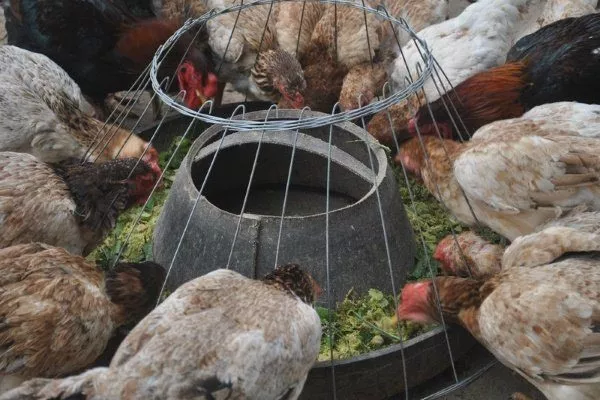
This process is similar to fermenting cabbage. The mown grass is dumped into a silo, where it is exposed to lactic acid bacteria. The resulting acidic environment preserves the green mass.
Suitable for silage:
- alfalfa;
- oat shoots;
- clover;
- the above-ground part of the pea.
One kilogram of silage contains 10-30 g of protein and 5% of carotene by weight, a high content of vitamin C, and organic acids. Ensiled grass is nutritious, improves digestion, and prevents putrefaction.
Crushing
Mechanical preparation of feed does not affect digestibility, but it does speed up and simplify the digestion process, increasing its nutritional value. The grain is coated with a husk, making it more difficult to digest. Thanks to grinding, the chicken expends less energy on digesting the feed.
The size of the fractions depends on:
- grains - the harder it is, the more it is ground;
- age of the chickens - the younger they are, the smaller the fractions.
Granulation
The pelleting process is designed to produce convenient, small-sized particles. The pellets are smooth, and the feeders they're poured into stay clean. With bulk feed, chickens can choose what they like, but with pelleted feed, they have no choice—they consume the full range of nutrients.
When pelleting, the feed is heated, making it easier to digest. However, there is a downside: the heat causes a loss of some vitamins.
Mixing
Chickens need to receive all the beneficial ingredients in their feed, so they need to mix them thoroughly. All components should be of equal particle size. If the feed isn't mixed sufficiently, some chickens will receive an increased dose of premix, while others may not receive it at all.
When mixing feed components, water or whey is added to the mixture—this helps bind the different-sized fractions together. Mixing increases the feed's efficiency.
To achieve your chicken breeding goals—high meat and egg production—you need to use feed appropriate for the age of the chickens and the breed. Properly preparing the feed can significantly improve its efficiency, nutritional value, and digestibility.