
The egg production rate of a chicken depends on both the conditions in which it is kept and the physiological characteristics of each species.
If a breeder suddenly encounters a problem such as a decrease in egg production in a chicken during the winter, there is no need to despair – you can follow these basic tips to correct the situation.
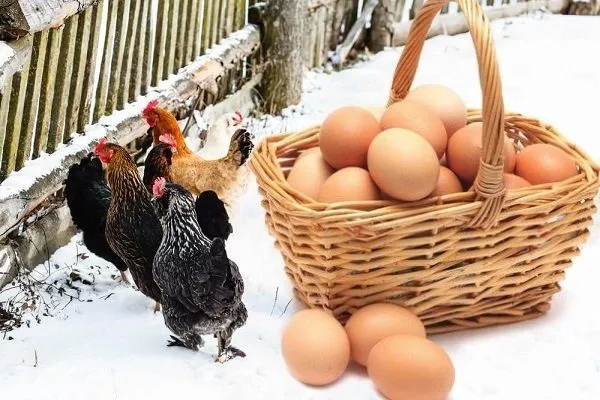
Microclimate of a chicken coop
In winter, it's important to maintain optimal humidity and temperature in the chicken coop. Since birds spend most of their time indoors, it's important to ensure the coop is regularly ventilated and heated.
Maintain humidity at 50-60% and a temperature of at least 8-12 degrees Celsius to ensure favorable conditions for egg laying. It's important to regularly refresh the air in the coop without overcooling it. Ideally, install ventilation to ensure good air exchange.
Walking laying hens
Keeping your hens outside is important not only to ensure they produce enough eggs, but also to prevent a flock of chickens from becoming overweight in the spring. Obesity is a serious problem that's not easy to solve.
- ✓ Provide protection from predators during walks.
- ✓ Ensure that the run area is sufficient for all birds to move freely.
There are several tips for organizing bird walking in winter:
- the outside air temperature should not be below 8-10 degrees below zero;
- You shouldn't let birds out for a walk if there is precipitation or a strong wind is blowing;
- the walking yard needs bedding made of hay, sawdust or sand;
- Sand or ash baths must be present to prevent parasite infestation;
- To prevent frostbite on the combs and earrings, they are lubricated with Vaseline.
Feeding
Laying hens are fed according to their schedule. It's considered very bad to occasionally overfeed or underfeed the birds, as well as to feed them at different times of the day.
Chickens eat no more than 2-3 times a day. Three meals a day is necessary if frequent outdoor exercise is not possible; otherwise, two meals a day is sufficient.
Without a set feeding schedule, hens will hover around the feeder, waiting for their owner to feed them. However, if feeding occurs consistently at a consistent time, the hens quickly get used to it and arrive at the feeding station exactly on schedule.
The first feeding is carried out after the bird wakes up, and in winter, with additional lighting, as soon as the light is turned on.
In the morning, it is more appropriate to give a mash of boiled potatoes, various ground grains, crushed eggshells and bran, but in winter, give a little less mash.
In the evening, the hens are fed an hour before roosting. This time is calculated to ensure they have time to eat their allotted ration.
Monitor the quality and standards of your poultry's feeding. The quantity and quality of eggs laid by hens depend in most cases on this. To increase egg production, add the following key ingredients to the feed:
- Minerals. Mineral supplements are mixed with grain or added to wet mashes. They contain fluoride, calcium, and zinc. Salt, limestone, shells, and chalk are commonly used as such supplements.
- Protein. Everyone knows that the bulk of an egg's mass is protein. It's found in legumes, oilcake, milk, and fishmeal.
- Carbohydrates. It is the body's primary source of energy. It is found in potatoes, cereals, vegetables, and root vegetables.
- Vitamins. They help support the bird's immune system and increase its activity level. The breeder can either add special supplements to the feed or use greens, carrots, or grass meal.
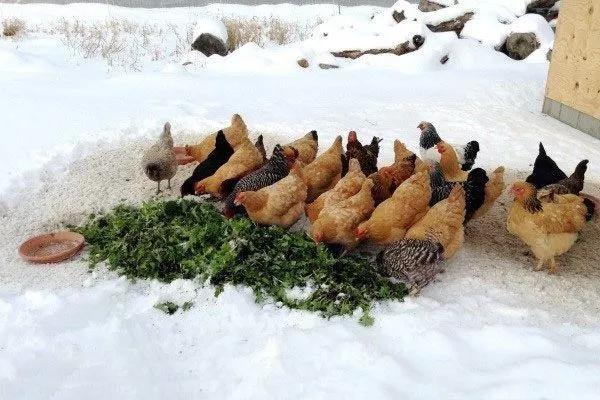
The largest number of eggs is ultimately produced by a bird that has received all the necessary nutrients. For example, a hen fed an improper diet can lay up to 100 eggs, but for each egg she lays, she will need 500 g of grain, while on a proper diet, she will need 250 g. Furthermore, improperly fed eggs result in smaller and less tasty eggs.
Feeding standards for birds are determined based on actual or expected productivity – the greater the egg production of hens and their weight, the more feed they require.
Feeding standards are influenced by many factors, such as productivity level, age and weight of the bird, time of year and living conditions – young birds require a greater intake of nutrients, and more feed is needed in winter than in summer.
Read more about balanced feeding of laying hens Here.
Lighting
Given that daylight hours are much shorter in winter than in summer, the primary goal of a chicken farmer is to artificially increase them. There should be at least one 100-watt lamp for every 10-12 square meters of the coop. Industrial poultry farms use a well-established automatic lighting system for this purpose.
It doesn't matter whether the lights turn on and off automatically or not. It's important to follow the guidelines for daylight hours and light intensity. During winter, hens need at least 12-14 hours of light to ensure proper egg production.
However, do not overdo it with the length of daylight hours, as this can cause exhaustion and premature aging of the laying hens.
Vitamin supplements and minerals
Providing poultry with the right amount of minerals and nutrients in their diet will significantly improve their health and productivity. These vitamins and minerals include:
- Calcium It is involved in the formation of eggshells. Grain contains little calcium, so mineral-rich feeds are added to the diet.
- Phosphorus Eggshells contain sufficient amounts of iron, but before feeding to birds, the shells must be washed, boiled, dried in the oven, and ground. Bone meal, made from bones by burning and grinding them, is also a valuable source.
- Chlorine and sodium. Regular table salt is considered the best source of these elements. Only finely ground salt or salt dissolved in water should be used for feeding. It improves the taste of food, enhancing its flavor, and increases appetite. However, be careful, as improper use can cause poisoning in pets.
- ✓ Include sprouted grains in your diet to increase vitamin content.
- ✓ Use fish oil as a source of vitamins A and D, especially in winter.
Forced molting
With the arrival of autumn, poultry begin a process called periodic feather shedding. This is the natural process of feather renewal in preparation for winter. Natural molting takes over 60 days, while forced molting takes only 45-50. Advantages include significant feed savings, improved egg quality and weight, and increased egg production.
In order to stimulate forced molting, a whole range of measures is carried out, including:
- change in diet;
- artificial fasting;
- change in the length of daylight hours;
- increase in body temperature.
Forced molting begins and ends simultaneously for the entire flock. After these procedures, egg production first declines rapidly and then disappears completely.
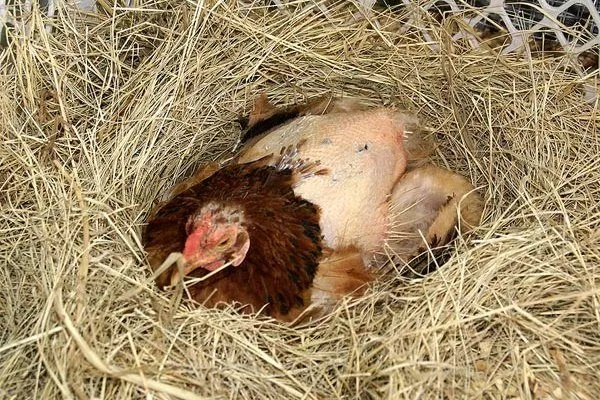
To stimulate rapid new feather growth, intensive fattening of the hens begins. This initiates a new period of egg production, characterized not only by increased egg weight but also by increased hatchability and viability of the new generation.
The age of hens suitable for egg production
Although hens live for 12 to 14 years, their most active egg-laying period is when they are young, up to a year old. Fertile hens can lay up to 300 eggs per year. After a year, egg production decreases by an average of 10%, and after 5 to 7 years, it ceases altogether. Periods of complete absence of egg production occur, which, as mentioned above, are called molting.
On large rural farms, hens are kept exclusively for up to a year, precisely during the period of their maximum egg production, and at one and a half years they are sent for slaughter, because there is no financial sense in keeping birds that lay few eggs or none at all.
On a smaller farm, the owner can keep hens until they are two or even three years old. However, after that, the hens are also slaughtered, as egg production declines much more rapidly after three years than after one year.
As for roosters, they are kept for no more than 4 years, while their period of sexual activity lasts.
When young, hens lay small eggs, which are considered low-grade (C2 and C3). However, these eggs are considered the most nutritious.
Which breed should I choose?
Often, it's worth taking steps to increase egg production when setting up the chicken coop and choosing chickens. Certain breeds are considered very prolific:
- Leghorn Broke the egg production record – 371 eggs in a year. Reproductive age begins at 20 weeks. One downside: they don't tolerate noise.
- Loman Brown They are distinguished by a high level of tolerance to cold climates and have an impressive size, which makes them a good source of meat after the reproductive period.
- Hisex Belongs to the Leghorn hybrids. Advantages:
- resistant to infectious diseases;
- tolerates low temperatures well;
- not too demanding about the quality of food.
Choosing layers, you can be guided by the following criteria: the hens that lay the most eggs have a small oval head, bright red earrings, a beak that is curved at the bottom, and thick plumage.
Video tips for increasing egg production in chickens
Here's a video in which an experienced breeder shares his secrets for improving the egg production of chickens:
When using these tips for improving egg production in hens, keep in mind that they only apply to healthy hens, as there are reasons for decreased egg production that are not related to seasonal changes. If the problem is related to illness, these recommendations won't solve the problem—in that case, you'll need to consult a veterinarian.