
Broilers are one of themeat breeds of chickens, which quickly gain weight. They are not used for breeding because they lose their characteristics in subsequent generations. Therefore, the best way to acquire them is to buy new individuals from the first hybrid line. But how can you differentiate broilers from their regular counterparts when buying? Fortunately, there are a number of distinguishing features that will help you accurately identify a broiler. We recommend you familiarize yourself with them below.
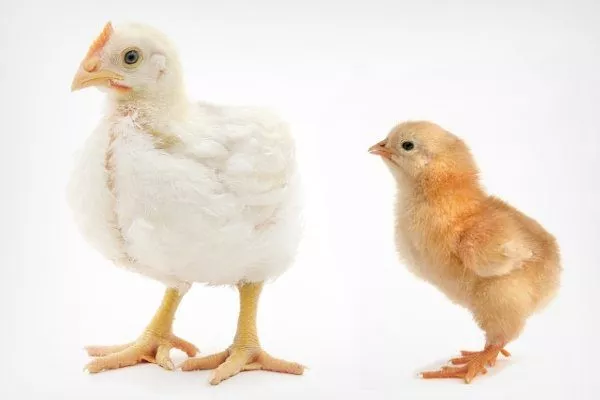
Who are broilers?
Broiler chicken is a meat-producing bird bred by crossing different breeds. Interestingly, the term "broiler" (from broil, meaning "to roast over a fire") refers to precocious birds that mature in a relatively short period of time—about 70 days.
Keeping broilers for more than 2.5 months is not advisable, as the bird will not grow beyond its current size, but will continue to eat a lot. Due to their rapid growth, hybrids are quite voracious eaters and require feeding every two hours, with a nighttime break of no more than six hours. To ensure proper development, these broilers can be kept even in a small space, but it must be warm and clean.
Active breeding of Boilers began in the 1930s, and by 1960 it had become dominant. Scientists conducted genetic experiments on industrial production of such hybrids to develop a breed with superior characteristics. Since then, broilers have typically been produced by crossing meat and meat-and-egg breeds, as this allows for higher chicken weights. Crossbreeding several lines of different breeds is also possible, with Cornish and New Hampshire being particularly popular. Gate.
Broilers are popular with factory owners raising chickens for mass meat sales, as well as with ordinary people who want to start their own chicken farm. More has been written about raising broilers for sale. Here.
External differences between a broiler and a regular chicken
Hybrids have a number of visual and physiological differences from their egg-laying counterparts. We'll examine these below.
Color
A broiler chicken is completely white, but when younger, it turns completely yellow. During feather development, white feathers first appear on the wingtips. If a chicken has colored pigment spots on its body—black, red, or brown, especially on its head and near the comb—it's most likely a member of the egg-laying breeds, which include the Moravian Black, Russian White, and Minorca.
However, it's impossible to accurately determine a chicken's broiler status based solely on color, as chicks of other breeds can also be completely yellow, then turn completely white as they develop. Therefore, further examination of the individual is necessary to accurately determine its species.
Body structure
By this feature, broilers can be distinguished from the age of 5-7 days from the moment of birth:
- the body shape of broilers is wide and rectangular, while that of laying hens is more oval and smooth;
- broilers have a broad chest and well-developed muscles, which are especially visible on the thighs of older chickens;
- Broiler chickens have shorter legs than other breeds, but they are thicker and more stable, as they must easily support considerable weight;
- broiler chickens have shorter wings than their relatives;
- The head of a week-old broiler looks absurdly large in relation to the proportions of the body, but over time it will become a normal shape, so the shape of the bird will become proportional.
Broilers are a meat breed of chicken, so their body structure is more fleshy than that of egg-laying breeds.
Sexual characteristics
In broiler chickens, sexual differences are difficult to discern for quite a long time, which is due to two factors:
- cockerels and hens have poorly developed combs and wattles;
- The birds lack decorative, beautiful earrings.
The fact is that hybrids are not intended for further reproduction, so sexual differences were little taken into account during selection. In egg-laying chickens, sex differentiation is much easier, as their combs and wattles are well developed.
Weight
Broilers are designed to gain weight quickly, so they weigh more than layers, starting from the first days of life:
- A day-old broiler weighs 45-50 g, while a laying chicken weighs 30-35 g. Some layers may weigh more than the standard. They will likely grow into fairly large hens.
- By the fifth day of life, boilermakers gain significant weight—their weight can exceed 100-115 g. At this time, regular chicks are already significantly smaller, weighing on average up to 75 g.
- On the 10th day, the weight of a broiler approaches 180-200 g, and that of a regular chick – 110 g.
- A month-old broiler weighs about 1 kg, and a regular individual weighs about 280 g.
An adult broiler can weigh up to 2-3 kg, while a typical laying hen weighs no more than 1.5 kg.
To see the difference between a broiler chicken and a regular chick, watch the following video:
Are there any differences in behavior?
Broilers differ from regular chickens not only in appearance but also in behavior. They are quite active in searching for food, as they are very voracious. Young chicks actively react to noise, moving toward its source, believing they will be fed. However, at other times, broilers are calm and can remain in one place for long periods.
Laying hens, on the other hand, are more sociable – they often "play," run around, and bully each other. Unlike broilers, egg-laying breeds can be aggressive. Therefore, they shouldn't be kept in small spaces, while broilers thrive even in confined spaces.
Differences between popular types of broilers
| Name | Weight at 6 weeks (kg) | Disease resistance | Skin color |
|---|---|---|---|
| Cobb-500 | 2.5 | High | Bright yellow |
| Ross-708 | 2.5 | Average | Bright yellow |
| Broiler-61 | 1.8 | High | Yellowish |
| Hydro-6 | 1.8 | High | Yellowish |
Experts often talk about different types of broilers. Typically, they're referring to different breeds, or crosses—the results of crossbreeding. To successfully distinguish broilers from regular chickens, it's worth taking a closer look at the characteristics of popular crosses that boast the highest productivity. These include:
- COBB-500A hybrid of Czech origin, distinguished by its bright yellow skin. Characteristic features of this cross include a wide breast and strong, yet short legs. This breed is quite resistant to various diseases, including viral ones, which distinguishes it from its brood. This broiler chicken quickly gains weight—by six weeks, it already weighs 2.5 kg and is ready for slaughter.
- ROSS-708This is a relatively new cross that currently holds the record for early maturity – chicks of this breed can reach impressive sizes and weigh around 2.5 kg at just 4-5 weeks of age. These birds have bright yellow skin, but often don't reach the age where their skin begins to turn yellow.
- Broiler-61These crosses gain weight more slowly than their relatives—at 1.5 months of age, they weigh about 1.8 kg. However, these broiler chickens have their advantages. First of all, they exhibit disease resistance, high survival rates, and good egg production. The meat of these chickens has excellent taste, making it considered a delicacy.
- GIBRO-6This hybrid was developed by crossing two breeds—the White Plymouth Rock and the Cornish. It has a moderate egg production rate, laying up to 160 eggs in 40 days. The weight gain of this breed's chickens is similar to that of the Broiler-61 cross described above, but they boast a calm disposition and resistance to viral diseases. Not only the skin but also the subcutaneous fat of these birds is yellowish.
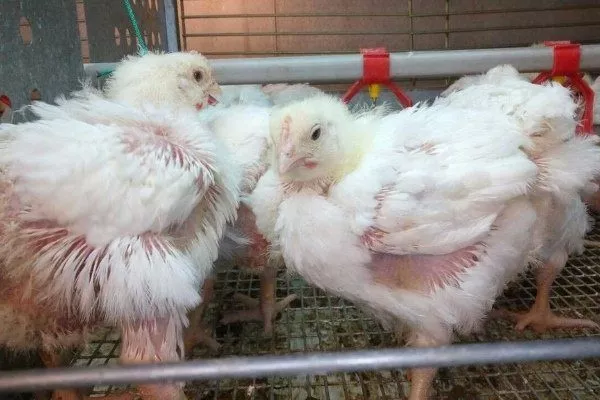
broiler COBB-500
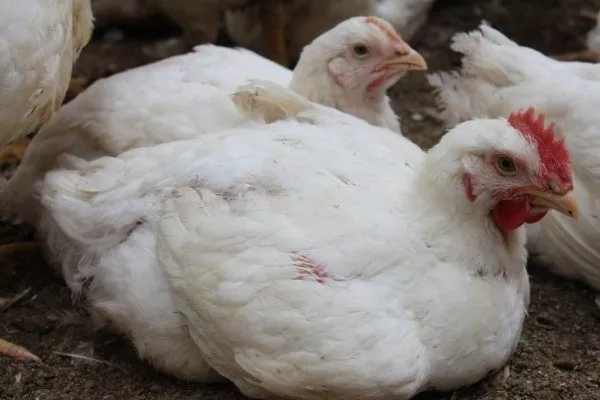
broiler ROSS-708
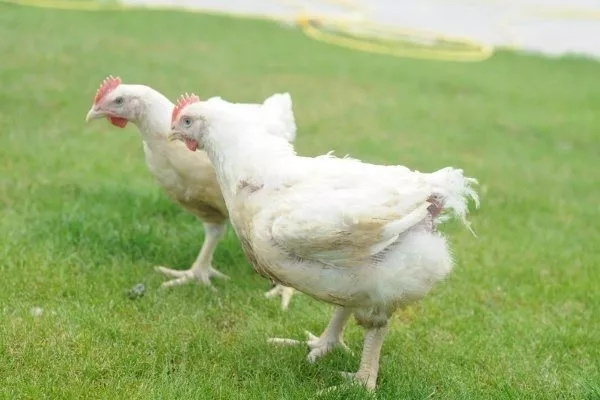
broiler Broiler-61
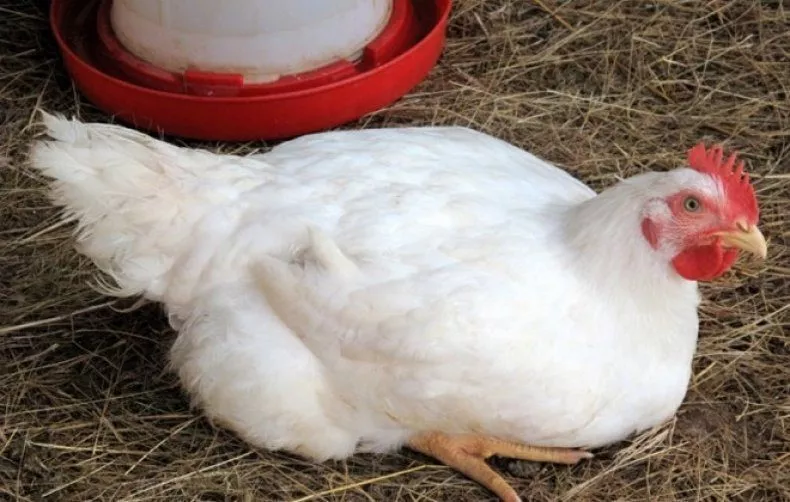
broiler GIBRO-6
Regardless of the specific species, it is worth remembering that broilers are not bred at home, since their subsequent generations significantly lose their "meat" qualities.
Rules for choosing chickens when buying
Experienced breeders recommend purchasing eggs or chicks in the first days of life to monitor their diet from the start and ensure high-quality meat. However, purchasing chicks requires careful consideration of several nuances, which we'll explore below.
- Decide on the number of chickens based on the capabilities of your farm.
- Prepare the room for keeping: it should be warm, dry and well ventilated.
- Purchase high quality feed appropriate for the age of your chickens.
When to buy?
Birds can be raised at any time of year, especially if you have access to a hatchery or poultry farm. If you plan to keep chickens at home, it's best to buy them during the warmer months to avoid the hassle of keeping them warm.
Spring is the best season to buy broilers. They gain weight well at this time, receiving all the necessary minerals and vitamins from fresh grass. The warm spring sun has a positive effect on their development. It's best to buy broilers from March to April to ensure tasty, nutritious chicken meat by fall. If you have the space to keep them, you can buy them as early as May.
Green feed for a large number of chickens is easier to prepare using a grass chopper. Here's how to make it yourself. here.
Place of purchase
Once you've decided on a timeframe, you need to choose a purchase location. Here are the most popular options:
- At the marketThe advantage is that you can buy chickens close to home, but that's where the positives end. When buying birds from someone, you can't be sure they're broilers, as there's often no way to confirm their pedigree. Furthermore, when buying chicks at the market, there are concerns about the conditions they're kept in and whether they've received the necessary vaccinations.
- At the poultry farmBuying birds from a poultry farm guarantees the exact breed they claim to be, but you can't be sure of their health. It's not uncommon for farms to sell culled and weak chicks, albeit at a fairly attractive price.
- At the incubator stationHere, you're guaranteed to get chicks of the stated breed, whose health is beyond question. This is because such stations pay close attention to the care of the young. The downside of this option is that the chicks are limited and may need to be reserved in advance.
Regardless of where you buy your chickens, it's worth checking with the seller to make sure they've received the necessary vaccinations.
How to recognize?
A broiler chicken can be accurately identified by the following parameters:
- the color of the feathers is absolutely yellow, without spots;
- the chest is wide and the head is excessively large;
- the legs are shorter and thicker than those of other chickens;
- the paws and beak have a grayish tint;
- The comb is small and the earrings are absent.
- ✓ Check the activity of the chickens: healthy individuals quickly respond to sounds and movements.
- ✓ Inspect the area around the cloaca: it should be clean, without traces of droppings.
- ✓ Assess the condition of the feathers: they should be even, without bald spots.
You should also make sure the chick looks "tight"—its skin shouldn't hang loose anywhere. There shouldn't be any traces of blood or feces on the skin or feathers. Such a chick looks healthy and without any external defects.
To check the behavior of a broiler chicken, you can lightly tap on the box - active and healthy individuals will immediately head towards the source of the sound in the hope of getting food.
If you want to raise meat chickens to produce lean meat within a few months, you should pay close attention to purchasing healthy and robust broilers—hybrids created by crossing several breeds. Given their differences from regular chickens, even an inexperienced breeder can acquire a suitable breed with high productivity rates.