
Fermented litter is also known as bacterial litter, bacterial litter, or bacterial bedding. It is a product containing beneficial bacteria and enzymes, offering many benefits. There are various brands of this product, each with its own characteristics. Fermented litter is used under specific conditions, and there are contraindications.
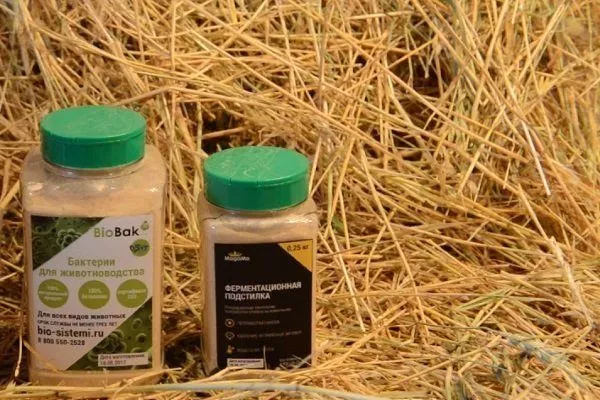
Advantages and disadvantages of fermented chicken coop litter
Bacterial litter has many advantages:
- harmless composition of environmentally friendly components;
- safety at work: a person does not need a respirator, gloves or other protective equipment even when working with bacteria in powder form;
- Maintaining heat in a chicken coop: figures depend on the manufacturer, time of year, and insulation of the poultry house;
- convenience for the bird, freedom of movement;
- ammonia absorption;
- neutralization of pathogenic bacteria;
- fast processing of chicken manure: less cleaning, less risk of disease, no unpleasant odor typical of excrement;
- no need for additional space for chicken manure;
- saving the breeder's time - unlike a purely organic substrate, the bacteria last for months and years;
- the possibility of reusing the litter as fertilizer for a vegetable garden or orchard;
- no unpleasant odor, can be stored anywhere.
Thanks to the benefits provided by bacteria, hens can increase egg production. All the necessary conditions are created for this: warmth, dryness, comfort, and minimal risk of disease.
Fermented litter has virtually no drawbacks. The only drawback is its high cost. In reality, this litter lasts for several months, saving a significant amount of time. Considering the reduced risk of disease and other benefits, using this product ultimately proves cost-effective.
Another disadvantage of fermentation bedding is the presence of contraindications, but they are few in number.
Watch a video review of bacterial bedding for chicken coops, which discusses its pros and cons:
Product brands
| Name | Country of origin | Service life | Surface temperature | Temperature inside | Use with water |
|---|---|---|---|---|---|
| Netto-Plast | China | 3 years | 25 degrees | 50 degrees | No |
| Deep litter "Barnyard" | Russia | 2-3 years | Not specified | Not specified | Yes |
| Biolatic Multi-25 | Hong Kong | 2-3 years | Not specified | Not specified | Yes |
| BioSide | Russia | 2-3 years | 20 degrees | 50 degrees | No |
| BioGerm | Germany | 2 years | Not specified | Not specified | Yes |
| Fermenter from TM "Emelya" | Tatarstan | 2-3 years | Not specified | Not specified | Yes |
Various fermentation mats are available commercially. Each brand has specific characteristics:
- Netto-PlastThis product is manufactured in China. It contains synthetic and lactic acid bacteria and enzymes. Apply 0.5 kg per 10 square meters. The product lasts up to 3 years. It generates a surface temperature of 25 degrees Celsius and an internal temperature of up to 50 degrees Celsius. It is used without water.
- Deep litter "Barnyard"Take two-thirds of the coarse sawdust and top it with one-third of the straw. The bedding should be at least 20 cm thick. Sprinkle the product through a sieve onto the bedding at a rate of 5 g per square meter of floor. Repeat every 2 weeks.
- Biolatic Multi-25Bacteria from an international brand (Hong Kong). This litter can last up to 2-3 years. Consumption is 0.5 kg of bacteria per 10 square meters. Can be used with or without water.
- BioSideThis litter is made in Russia. It heats up to 20 degrees Celsius, and the inside of the litter can reach up to 50 degrees Celsius. It can be used without water. One package contains 0.5 kg of bacteria per 10 square meters.
- BioGermThe product is manufactured in Germany. Consumption: 1 kg of bacteria per 10 square meters. The fermentation bedding lasts up to 2 years. It is used with water.
- Fermenter from TM "Emelya"Tatarstan produces this fermentation bedding. The consumption rate is 0.5 liters per 6-10 square meters.

Fermentation bedding Netto-Plast

Deep litter "Barnyard" for birds
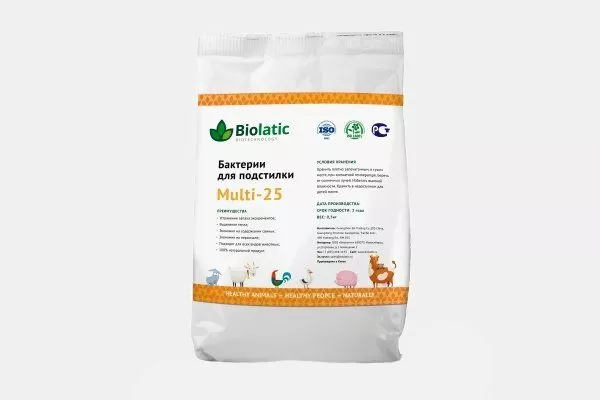
Multi-25 Biolatic Deep Litter Bacteria

Fermentation thermal litter "BioSide"
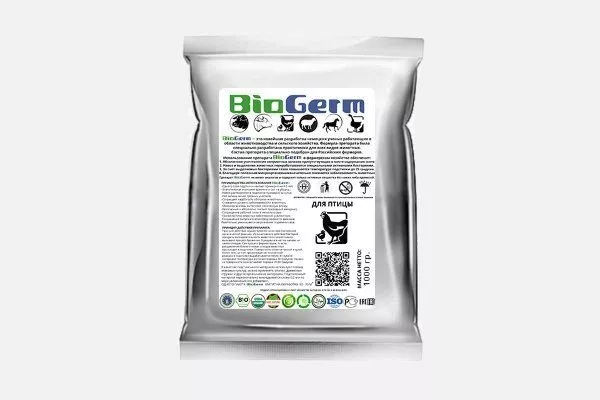
BioGerm for poultry

Fermenter from TM "Emelya"
Conditions for using the litter
Fermented bedding is used under specific conditions. This primarily involves specific requirements for the chicken coop floor. The surface must be level, firm, and dry. The material is also important. Stone, concrete, and plastic flooring are considered the best.
Not only the flooring characteristics are important, but also the proper preparation of the fermentation bedding itself. The conditions for its use are indicated on the packaging, but there are also general guidelines:
- When introducing bacterial litter, warmth is essential for chickens. This means the temperature should be above freezing. In winter, the room is heated as needed. Maintaining the temperature in the house is also important. The room should be insulated to ensure that the temperature does not drop below 0 degrees Celsius.
- An organic substrate is essential. Fermentation bedding is merely an additive, and the bacteria it contains must be mixed with a specific material.
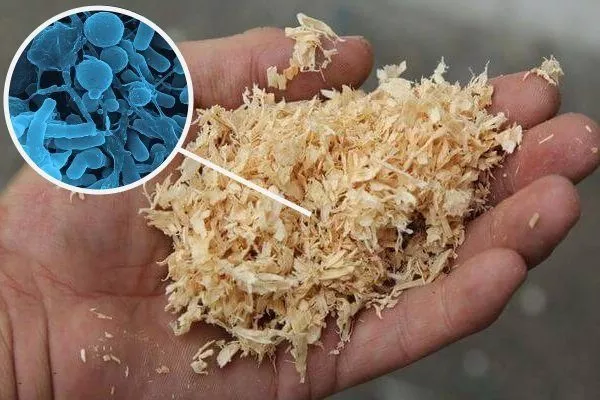
- Bacteria multiply upon contact with wood. Wood processing waste is used to form the organic bedding to which the fermentation agent will be added. Medium-sized sawdust with particles of 3 cm in length is preferred. Larger sawdust does not create the right habitat, and bird droppings are poorly absorbed into it. If fine sawdust is used, it will compact, blocking oxygen from reaching the bottom layer of the bedding, preventing bacterial growth.
- Proper ventilation is essential. Bacteria generate heat. If the room isn't properly ventilated, humidity levels will rise. Condensation will begin to accumulate on the ceiling and walls, increasing the risk of mold and chicken diseases.
- Change the bedding regularly, according to the instructions. Failure to do so will result in worms.
- Bird density in the coop. It's recommended to keep 5 hens per square meter. Fewer hens means less manure, which is nutritious for bacteria. Insufficient nutrition means enzymes become ineffective and die. If there are too many hens, the bacteria won't be able to cope. Another negative factor for bacteria is that high hens compact the litter, which restricts oxygen supply.
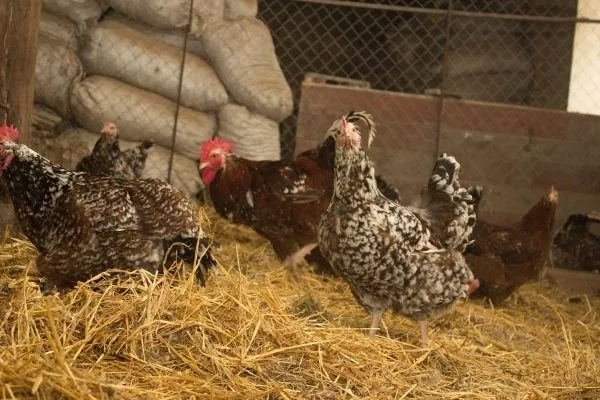
Terms of Use
Before using fermentation bedding, it's important to properly prepare the room. The following steps are necessary:
- Cleaning and disinfecting the poultry house. It's best to postpone this step until after the flock changes or before the first frost. The optimal time for bacteria to develop is autumn, but before frost. Disinfection should be carried out with products that are safe for poultry. It's important to treat not only the house but also equipment, such as feeders and waterers. Lime is best for this purpose.
- Dry and ventilate the room. Fermentation bedding should only be added to a dry poultry house.
- Organizing ventilation (forced), if this has not been done before.
To use bacteria, you first need to create a standard litter. Not only sawdust but also other organic materials are used for this. Peat is particularly suitable due to its active absorption of ammonia and carbon dioxide vapors. It can be used alone or in combination with other organic materials. The recommended litter thickness for chickens is 30-40 cm. If it is too thin, it will quickly wear down.
- ✓ The length of sawdust particles must be exactly 3 cm for optimal absorption and oxygen access.
- ✓ The use of peat in the substrate significantly reduces the level of ammonia and carbon dioxide.
The fermentation bedding must be mixed with the prepared organic layer. Bacteria are available in various forms, including liquid solutions, powders, and granules. The amount of product per square meter is indicated on the packaging. The bacteria must be distributed evenly throughout the bedding.
Some fermentation beddings require the addition of water. In this case, the preparation should be evenly distributed over the organic substrate and then moistened with the required amount of water indicated on the packaging. Using a watering can with a spray nozzle is effective – this will ensure more even moistening of the bedding. The water should be warm. Watering activates the bacteria.
Water quality is important—chlorinated tap water is unsuitable, as it kills bacteria. Spring water is the best option, but you can also get it from local clean bodies of water.
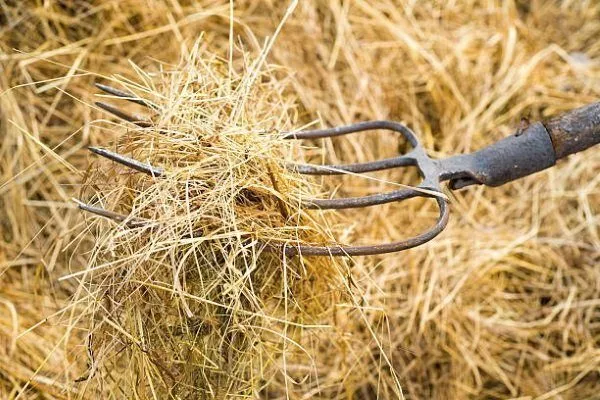
If the instructions call for starting the fermentation bedding with water, then after moistening it, it needs to be mixed and loosened. For bedding with straw or hay, it's best to use a pitchfork, while a shovel is more convenient when working with sawdust.
Another option for starting fermentation bedding is to use water. The liquid is used to prepare a solution: the amount of product specified in the instructions is diluted in it and the resulting solution is poured onto the pre-prepared organic bedding.
By the end of the week after starting the fermentation litter, the bacteria should be checked for activity. A rise in temperature within the litter indicates the success of all measures. This means the hens can be introduced into the house.
Fermented litter should be replaced after its useful life has expired. It should also be replaced before introducing a new flock of chickens, after the old flock has been slaughtered. Standard preparation is mandatory: cleaning, disinfection, drying, ventilation, and laying fresh organic litter.
Features of bedding care
Fermented litter significantly reduces cleaning time and offers many other benefits, but it does require some maintenance. A mandatory step is loosening the litterIt is recommended to perform this procedure every three days, but such procedures are not necessary during the first week after the bacteria are introduced. Without this procedure, the bacteria will gradually die, and the effectiveness of the fermentation bedding will be negated.
A rake or pitchfork can be used for loosening the litter. This allows the chicken manure to be evenly distributed throughout the litter, improving the effectiveness of the bacteria. Loosening also improves oxygen penetration, which is essential for bacterial growth.
Chickens also loosen the litter in the coop. You can encourage them to do this by scattering a small amount of grain on the floor.
Another important condition for the care of fermentation bedding is control and maintenance of optimal humidity levelsBefore introducing the litter, ensure adequate ventilation, and afterward, ensure that its level does not exceed 60%. A psychrometer (psychrometric hygrometer) is usually used for monitoring.
If the humidity in the room increases sharply, loosen the substrate and sprinkle superphosphate – 1 kg per square meter. Cover the substrate with a layer of fresh sawdust or other suitable bedding material.
Manufacturers claim on the packaging that fermentation bedding lasts up to 2-3 years. In reality, the bacteria's effectiveness gradually weakens. Periodic maintenance is necessary. add fresh product.
If necessary bacteria feedTo do this, dissolve 20 g of the preparation and 1 kg of sugar in water. This solution should be left for several hours, and then poured onto the bedding, after loosening it first.
- Prepare a solution of 20 g of the preparation and 1 kg of sugar in water.
- Leave the solution for several hours to activate.
- Pour the solution over the previously loosened litter.
Contraindications
The use of fermentation bedding is contraindicated on wooden floors due to the chemical reaction between wood and bacteria. Disinfecting the bedding with insecticides and rodenticides is also not permitted.
The following factors are contraindicated when using fermentation bedding:
- high humidity in the chicken coop;
- temperature below 0 degrees;
- too large or too small a poultry population;
- lack of natural material – organic bedding;
- lack of oxygen – this is caused by excessive compression of the substrate;
- Drying out of the bedding – it is especially important to monitor its moisture level in the summer; additional moisture may be required.
Fermented chicken litter contains specialized bacteria that can solve a variety of problems. When used correctly, it will digest bird droppings, generate heat, and neutralize pathogenic bacteria. Fermented litter can last up to 3 years and requires minimal maintenance.
I stumbled upon your article by chance. I had no idea bacterial litter existed. We've been using it for seven months now. It's a bit pricey, but at least it's free of infections, illnesses, and problems. I highly recommend it! And thank you for the information!