
At first glance, an egg, such a common food for humans, has a very complex structure, difficult to even imagine. Even the most seemingly insignificant element is called upon to perform important functions during the hatching of a chick. This article examines in detail the structure of an egg laid by a hen.
Chemical constituents of chicken eggs
Chemically, a chicken egg is a valuable combination of nutrients. The shell-enclosed space contains all the necessary substances for the development of a young organism. The human body digests 97% of a chicken egg, providing it with a wealth of amino acids and vitamins A, B, and E.
Protein composition
Generally speaking, the composition of egg white is clearly reflected in its name. In addition to moisture, egg whites contain numerous animal proteins:
- Ovoglobulins – about 2%.
- Ovalbumin (reserve for embryo formation) – approximately 54%.
- Highly viscous glycoproteins – up to 3.5%.
- Ovotransferrin (has an antibacterial effect) – up to 13%.
- Lysozyme (an enzyme, together with ovotransferrin, helps increase antibacterial properties) – not less than 3.4%.
Egg whites also contain ovomucoid, a compound that triggers allergic reactions in humans. Therefore, the claim that eggs consumed without the yolk do not cause individual intolerance cannot be trusted.
Due to its rich composition, nutritionists actively recommend consuming protein. It has been proven that proteins are an important building block for all tissues and organs, not only in the fetus but also in the human body.
Protein foods are essential for children, athletes, pregnant women, and breastfeeding mothers. Chicken eggs are often a staple in the diets of people suffering from illnesses or recovering from injuries and illnesses. Protein is easily digestible. It is recommended to consume raw egg whites on an empty stomach. Raw egg whites are especially beneficial for inflammation of the mouth and gastrointestinal tract.
Composition of the yolk
The yolk is approximately 1/3 fat, with about 16% protein and no more than 50% moisture. Carbohydrates, minerals, and vitamins account for about 2%.
Egg yolk is also rich in the following components:
- macro- and microelements;
- essential amino acids for the human body;
- choline;
- B vitamins, vitamin D, vitamins E, K, F;
- carotenes;
- lecithin;
- lipids and phospholipids.
The composition of egg yolks is controversial. Chemical analysis has no bearing on the matter. Scientists disagree about cholesterol, which the yolk contains up to 140 mg. Although the cholesterol in the yolk is "good," many people still choose to avoid it. Consuming it in large quantities, of course, will not provide any health benefits.
Read also the article about the benefits and harms of chicken eggs for the human body – here.
The structure of the egg
All components of a chicken egg's structure are crucial for the development of a new life. The yolk nourishes the embryo, the air cell facilitates oxygen delivery, and the shell forms a protective barrier between the future chick and the outside world.
Shell
The shell covers the outside of the chicken egg, maintaining its physical integrity and protecting it from bacteria. The shell is mostly composed of a calcium matrix with organic impurities.
The shell is also rich in the following minerals and microelements:
- boron;
- sodium;
- aluminum;
- magnesium;
- copper;
- zinc;
- iron;
- manganese.
The shell has a unique structure: it is permeated with numerous pores, forming tunnels between the mineral crystals. These tunnels facilitate gas exchange between the interior of the egg and the surrounding atmosphere. The number of pores varies between 7,000 and 15,000. The greatest concentration of pores is found in the lower part of the egg, at the blunt end, where a gas chamber exists beneath the shell.
The shell can be white or brown, depending on the breed of bird and the concentration of pigments (porphyrins) located in the shell's calcium matrix. These pigments have no effect on the nutritional value or quality of the product. The type of feed or the raising technique used also has no effect on the shell's color.
The quality and strength of the eggshell directly depend on the animal's mineral metabolism and diet. Sanitary factors are no less important for eggshell strength.
The membrane under the shell and the air chamber
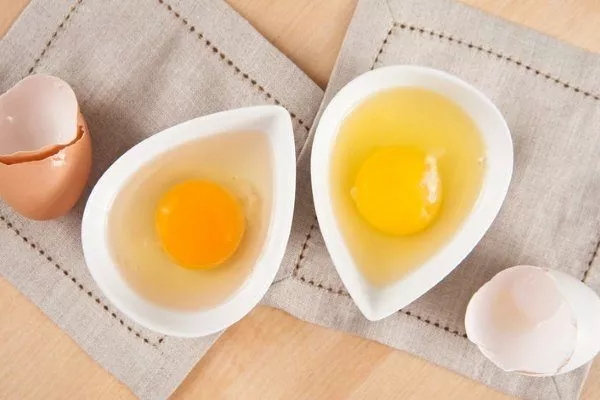
The two-layer membrane beneath the shell consists of interwoven organic fibers. The stage of egg formation depends on the shape determined by the membrane; only then does the shell begin to form.
At the blunt end of the egg, the layers of the shell separate, creating a cavity filled with oxygen—the air cell. It forms when the hen lays the egg. The air cell contains enough oxygen for the embryo to survive the entire incubation period.
Cord
The cord is a kind of umbilical cord that holds the yolk in place—in the center of the white. The cord is formed by one or more spiral-shaped strips of tissue and is located on both sides of the yolk. Through the cord, the embryo receives nourishment from the yolk.
Protein
The albumen density varies in different places. The thinnest layer surrounds the yolk, which contains the funiculus. Further down, the layer of liquid albumen thickens—it's necessary for nourishing the embryo during the initial stages. Next comes the densest layer, which nourishes the embryo during the second stage and serves a protective function, preventing the future chick from coming into contact with the shell.
The protein is rich in the following components:
- biotin – 7 mcg;
- water – 87.9%;
- pantothenic acid – 0.30 mg;
- dry matter – 12.1%;
- niacin – 0.43 mg;
- proteins – 10.57%;
- riboflavin – 0.56 mg;
- fats – 0.03%;
- folacin – 1.2 mcg;
- carbohydrates – 0.9%;
- vitamin B6 – 0.01 mg;
- ash (mineral substances) – 0.6%;
- lysozyme – 3%;
- ovoalbumin – 69.7%;
- ovomucins – 1.9%;
- ovoglobulin – 6.7%;
- ovomucoid proteins – 12.7;
- conalbumin – 9.5%.
Yolk membrane
The yolk membrane is a transparent layer necessary for the formation of the egg itself during its development. During the first 2-3 days of incubation, the yolk membrane is a source of nutrients for the embryo.
Yolk
It contains all the nutrients that accumulate in the animal's egg cell in the form of plates or grains, which sometimes merge into a single mass. If you look closely at a raw yolk, you'll notice alternating dark and light layers. The dark layers are filled primarily with dry matter.
The first few days of embryonic development rely on nutrients and oxygen from the yolk. The yolk contains the following components:
- 1.1% ash (minerals);
- 48.7% water;
- 1% carbohydrates;
- 51.3% dry matter;
- 32.6% fat;
- 16.6% proteins.
Germinal disc
The germinal disc is also called a blastodisc. It is a cluster of cytoplasm located on the surface of the yolk. This is where the chick begins to develop. The clot has a lower density than the rest of the yolk, allowing it to remain permanently at the top.
- ✓ Optimum incubation temperature: 37.5°C ± 0.5°C.
- ✓ Air humidity in the incubator should be maintained at 50-60% for the first 18 days, then increased to 65-70%.
- ✓ The eggs should be turned at least 3 times a day to ensure uniform heating.
Cuticle
The entire surface of the shell, including the pores, is covered with a special film—the organic cuticle—composed of 90% protein and a small amount of carbohydrates and lipids. This layer protects the egg from infection, gases, and moisture.
To ensure that the purchased egg is stored for a long time, you must try not to damage the cuticle..
Every poultry farmer needs to know what an egg is, as well as its structure and chemical composition. This information is covered in the video. Regarding egg incubation, this knowledge is especially useful:
Nutritional value and nutritional content
A chicken egg contains no more than 17% of the body's calories, making it a key component of any diet. It contains numerous amino acids, ten of which are essential—they are produced in the body and can only be obtained through egg consumption.
| Component | Protein (per 100g) | Yolk (per 100g) |
|---|---|---|
| Squirrels | 10.57% | 16.6% |
| Fats | 0.03% | 32.6% |
| Carbohydrates | 0.9% | 1% |
| Water | 87.9% | 48.7% |
Protein is an essential component of the human body, as it can be broken down into essential amino acids required for the normal functioning of not only muscles but also the human brain. The yolk is a more caloric component, containing a variety of fats and fatty acids.
Eggs are similar in structure, but typically vary in size. The white, yolk, and shell of an egg contain numerous beneficial substances. This product is beneficial for humans, and its unique structure provides reliable protection for the future chick.