
When raising laying hens, many farmers wonder whether roosters are necessary. What is their role, besides reproduction, and can hens survive without the help of males? These and other interesting questions will be explored below.
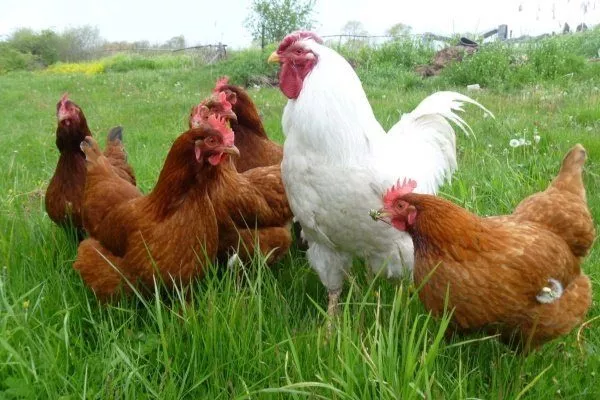
What is a rooster for?
It's generally accepted that hens who live with roosters lay tastier and healthier eggs than hens kept alone, although this depends primarily on their diet and living conditions. But why keep roosters, then?
The importance of having a male depends on the purpose of using the eggs:
- use;
- consumption and subsequent production of new offspring.
If the goal is only for consumption, then the farm can do without a rooster. The hen can lay eggs on her own, because the rooster does not affect formation of the egg structure - shell, protein and yolk.
However, when eggs are used to hatch chickens, roosters play a direct role. Without a rooster, hatching chickens at home is virtually impossible, as he helps develop the embryo that eventually becomes a chick.
Can laying hens do without a rooster?
As noted above, hens are naturally capable of producing eggs regularly. This ability develops when they reach six months of age.
The productivity of laying hens depends on certain factors:
- chicken breeds;
- her diet;
- microclimate features.
On average, a hen can lay eggs once every two days. This is due to certain processes occurring in the hen's body:
- the egg matures, after which it is released from the follicles and enters the oviduct;
- protein and shell formation occurs;
- the egg comes out;
After completing the final step, the body immediately begins working on the next egg. Therefore, it can be concluded that the rooster is not necessary.
The benefits of keeping chickens with a rooster
Even though a rooster is not absolutely necessary for laying hens, breeders still keep at least one male in their flock, which is due to several reasons:
- Breeding offspringa: only if there is a male on the farm is fertilization possible, which is necessary for incubation and subsequent egg incubation.
- Order and discipline in the householdAll hens obey their male—if he calls, they all come running, not scattering in different directions. Roosters ensure that each hen has her own place near the feeder and in the nest. Roosters can also find food, such as insects and grain.
- Protection and security Roosters are true fighters, so if their coop senses a threat, they have spurs, a sharp beak, and claws to deal with it. Roosters are also very courageous birds; they'll attack enemies of any size.
- Appearance. Roosters look very beautiful, unlike hens, and he also behaves unusually towards the female when he is courting her.
Considering the size of the rooster, it can be raised for meat production in the future.
Disadvantages of keeping a male
If a chicken coop is inhabited only by hens that lay eggs for human consumption, and the owner is capable of maintaining it on his own, then what is the role of the rooster? Indeed, some breeders believe that roosters are more trouble than they are worth, both for the owner and the hens. Let's consider the reasons why having a rooster in the coop is a disadvantage:
- Aggression. A rooster's primary role is to protect his coop from outside interference, any kind of interference. Therefore, even if the owner approaches the hens to feed them, an angry rooster may attack. An angry, attacking rooster is very difficult to resist.
- Chickens show lower egg production levelsThere's some debate about this point, as some breeders say that roosters actually help and don't interfere with hens' egg production, while others claim that without a rooster, hens behave much more calmly and lay more frequently.
- The appearance of chickens. Roosters regularly trample hens, which does not add to their attractiveness, since the male scratches and plucks their feathers, leaving wounds that can become infected;
- The desire to hatch chickens. If fertilization occurs, the hens' maternal instincts begin to awaken, while they remain indifferent to unfertilized eggs. However, the downside is that, in their eagerness to hatch the eggs, they occupy the nests, thereby preventing other hens from laying eggs.
- The rooster was chosen and sent to the hen house incorrectly.Chickens may treat him with disdain, which will cause aggression.
Comparison of simple and fertilized eggs
There are numerous rumors that fertilized eggs contain more nutrients and are tastier than regular eggs. This is not true, as the effect of a rooster on hens is purely physiological: for three weeks after mating, a hen will only produce fertilized eggs. However, there will be no noticeable difference in the characteristics of the eggs.
The only difference is that fertilized eggs are considered dietary for 5 days, while unfertilized eggs are considered dietary for a week. Both can be stored for 25 to 30 days under proper storage conditions.
How many roosters are needed for one chicken coop?
A rooster can keep about a dozen hens in a single coop. If the number of hens exceeds this number, the rooster may develop favorites, which he will not give peace to and will bully those he dislikes.
If there are more than 15 chickens in a coop, you should split one family into two, with a male added to each. It's crucial to demarcate territories and ensure that roosters from neighboring families don't encounter each other, otherwise fighting can occur, which can result in serious injury or even death for one of the males.
In one flock, with a moderate number of hens, a maximum of two roosters can coexist peacefully.
Keeping a rooster in a chicken coop is only recommended if the goal is to raise hens that will produce offspring. Without the goal of breeding offspring, there's no need for a rooster, especially if the hens are kept in cages.
If you're planning to breed chickens in a coop, you should consider getting a rooster. Otherwise, there's no need for a male, especially if the hens are kept in cages, as a rooster would be unnecessary and wouldn't affect the final egg count.