
Maintaining a chicken coop involves a number of nuances. Pullets don't begin laying eggs immediately, but rather after a certain period of time. Egg production depends largely on the breed, but other factors can also influence it. Here are several potential problems and solutions.
Timing of the onset of egg laying
| Name | Egg laying start date (months) | Egg production (eggs/year) | Duration of egg production (months) |
|---|---|---|---|
| Egg breed | 4-5 | 200-250 | 10 |
| Meat and egg breed | 5-6 | 170 | 7-8 |
| Meat breed | 7.5-8 | 120 | 5-6 |
The time when pullets begin laying eggs depends on many factors. These primarily relate to the living conditions, such as the size of the coop, the availability of run space, and the quality and quantity of feed.
The breed of bird also plays a role. Depending on this factor, the egg-laying start time is as follows:
- egg breed – 4-5th month;
- meat and egg breed – 5-6th month, no later than 6.5 months;
- meat breed – 7.5-8th month.
A hen begins laying eggs when it reaches sexual maturity. This occurs around the time the bird has gained more than 75% of its body weight. The average time is 6 months, with variations depending on the breed and living conditions.
Egg production of pullet hens
| Name | Egg production (eggs/year) | Peculiarities | Egg production record (eggs/year) |
|---|---|---|---|
| Shaver Brown | 400 | High productivity | 400 |
| High Line | 350 | Disease resistance | 350 |
| Hisex | 340 | Adaptability to conditions of detention | 340 |
| Loman | 330 | Good survival rate | 330 |
| Bovansk | 325 | Low feed requirements | 325 |
| Isa Brown | 320 | High resistance to stress | 320 |
| Leghorn | 260 | Record egg production | 371 |
| Russian Crested | 200 | Decorativeness | 200 |
| Minorca | 200 | Beautiful plumage | 200 |
The breed of the bird is extremely important, as it determines many factors. This includes egg size (large or small) and egg production. The productivity of pullets, depending on the breed, is as follows:
- egg breed - on average 200-250 eggs per year;
- meat and egg breed - approximately 170 eggs per year;
- meat breed – up to 120 eggs per year.
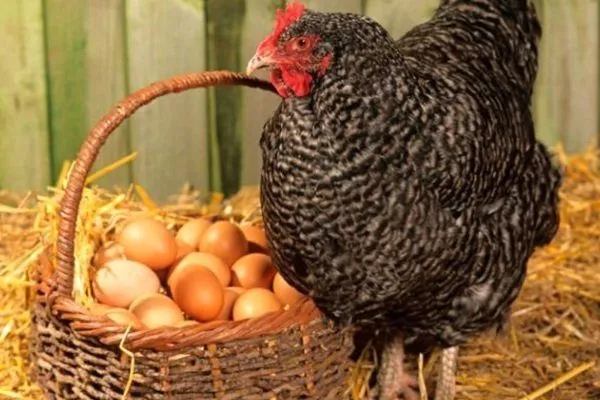
It is worth highlighting several breeds whose pullets show the highest egg production:
- Shaver Brown – up to 400 eggs per year;
- High Line – up to 350 eggs per year;
- Hisex – up to 340 eggs per year;
- Loman - up to 330 eggs per year;
- Bovansk – up to 325 eggs per year;
- Isa Brown – up to 320 eggs per year;
- Leghorn – up to 260 eggs per year (breed record – 371 eggs);
- Russian Crested – up to 200 eggs per year;
- Minorca – up to 200 eggs per year.
How long do pullets lay eggs?
It's not enough to judge a bird's productivity solely by its egg production. It's also important to consider how many months a pullet can lay eggs. For egg-laying breeds, this period is approximately 10 months, while for meat breeds, it's 2-3 months shorter. These figures refer to the time the bird lays eggs without interruption, that is, until it molts.
A hen's body is designed to produce several thousand eggs. Despite these impressive numbers, egg production declines each year. It peaks in the first year, then declines by approximately 10-15%.
Egg production declines steadily each year. By the fifth year of a bird's life, it drops to 1-2 eggs per week. Because of this, hens are not kept for long; they are replaced every two years. The longer a hen lives, the worse the quality of its meat becomes—it becomes tougher, less tasty, and less nutritious.
Chickens aren't always replaced in a household. Sometimes the birds are allowed to live out their entire lives—on averagelife expectancy The lifespan of a female is 15 years. She continues to lay eggs throughout this time, but in minimal quantities.
When monitoring egg production, it's important to consider the specifics of the process. Several times (3-5) a year, a dormant period occurs, lasting on average up to a month. Once this period ends, egg production returns to its previous level. This dormant period can extend to three months in winter if the coop is poorly heated.
How to improve the quantity and quality of eggs?
To improve the quantity and quality of eggs, it is necessary to adhere to the following measures:
- provide for the bird proper nutrition – it should be three times a day, balanced and sufficiently varied;
- during peak activity periods of chickens, increase the intake of protein (including animal protein) and calcium – the need for these elements increases;
- adding fatty foods to the diet;
- compliance with the lighting regime;
- maintaining cleanliness and warmth;
- To stimulate egg laying, it is effective to use vitamin and mineral supplements, for example, Ryabushki (but it is necessary to strictly adhere to the dosage, since exceeding it can lead to vitamin deficiency);
- minimize stress on the bird – stressful conditions lead to disruption of the cycle stability;
- Regularly change the livestock - it is recommended to replace most of the chickens at once (70-80%).
It's not recommended to rush the start of egg laying. There are many ways to speed up this process, but rushing the process can lead to health problems for the bird, as its body will become depleted. Eggs can be obtained earlier, but this can backfire on the hasty owner later. This also affects the egg size—they remain small for a long time.
If a breeder wants to regularly produce a certain number of eggs, they must begin with a careful selection of their flock. This applies not only to the breed of birds but also to the age of the birds. Age should be varied so that by the time the older hens are culled, the pullets are beginning to lay eggs, and the middle-aged hens are at the peak of their activity.
Potential egg production problems and their solutions
The egg production of pullet hens depends on many factors. If it has decreased, the problem must be identified and addressed.
- Check the conditions: temperature, humidity, lighting.
- Review your diet to ensure you are getting enough protein and calcium.
- Make sure there are no stress factors for the bird.
- Inspect your chickens for diseases.
Molting
This process involves a complete renewal of the hen's feathers. Molting begins at the head, gradually moving toward the tail. During this period, egg production may drop significantly and even cease altogether.
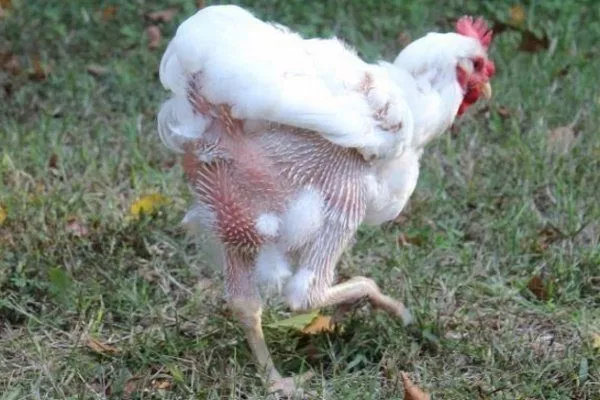
For pullets, this is their third molt, beginning in the spring (the first two molts occur at the first and third months of life). Subsequently, the bird will molt annually in the fall. The process can take 1-1.5 months, but sometimes it drags on. You can speed it up and restore egg production by following these steps:
- exclusion of tactile contact;
- increasing the protein content in the diet;
- ensuring free range;
- exclusion of cold weather;
- avoiding any stress.
After molting, there's a risk of false layers appearing. These hens don't lay eggs at all, so they must be culled. A distinctive feature of false layers is the presence of a cock's comb and a small space between the sit bones.
Conditions of detention
Egg production in hens declines if they are not warm enough or have insufficient light. In summer, egg production increases significantly as ambient temperatures rise and daylight hours increase.
In the autumn-winter period avoid a decrease in egg production it is possible by ensuring the following conditions:
- temperature not below 18 degrees;
- optimal humidity level is 55-65%;
- daylight hours are approximately 17-18 hours.
- ✓ The optimal temperature in the chicken coop should be maintained at 18-22°C for maximum productivity.
- ✓ The humidity level in the room should not exceed 65% to prevent the development of diseases.
- ✓ Daylight hours should be extended to 14-16 hours using artificial lighting with an intensity of no more than 20 lux.
Artificial lighting should not be made too intense – up to 20 lux is sufficient.
The sanitary condition of the room is crucial for egg production and the health of the hens. It is essential to keep it dust-free, the litter clean and dry, and the nest comfortable.
How to make a roost for chickens with your own hands is described in next article.
Feeding Features
Another factor affecting egg production in hens of any age is feeding. Feed should contain approximately 15-17% protein. If it's insufficient, egg production declines.
A possible problem is egg casting. This is when a hen lays eggs without shells—the liquid eggs can be eaten by the hen or lost in the litter. This occurs due to a calcium deficiency. This problem is called a false drop in egg production.
Another negative factor is a lack of water. Laying hens can be given either measured or free watering – in either case, there must be enough water. When given measured watering, water is given with the feed. It's important to keep water quality in mind. You can make a drinking bowl yourself, or you can buy a ready-made one.
Diseases
Sick birds experience reduced egg production. This can be considered zero, as in most cases the product is simply unfit for consumption and requires disposal. Egg production can decrease with the following diseases:
- Infections. The percentage of productivity loss depends on the specific disease; after treatment, egg production is restored by an average of 75%. Infectious bronchitis carries the risk of chronic disease and internal organ damage, which can lead to complete and irreversible loss of productivity.
- Non-communicable diseases. These are usually inflammatory in nature, including salpingitis, peritonitis, and ovarian inflammation. Individual birds are affected, and egg production decreases or even disappears.
Chicken treatment should be carried out under the supervision of a veterinarian. Diseases are often caused by improper housing or feeding practices – these errors must be identified and corrected. For a more complete overview of chicken diseases, see here.
Rats
This is a serious problem in chicken coops. Rats steal eggs, causing stress in the birds, which can lead to a decrease in egg production. There's also a high risk of diseases transmitted by these rodents.
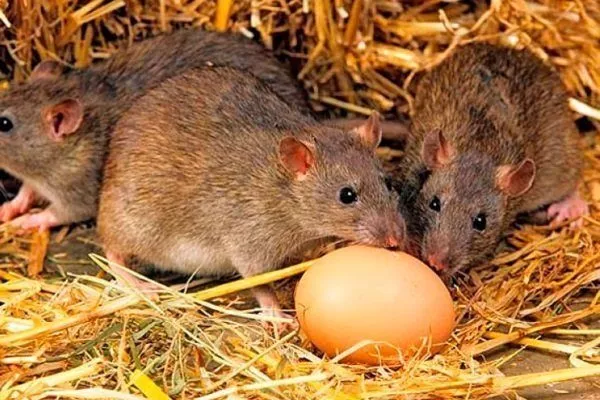
It's essential to get rid of rats in your chicken coop. This can be done in the following ways:
- An ultrasonic repeller. This option is well suited for humane people who don't want to kill rodents. Birds and humans don't notice the sound of the repeller, but it's extremely uncomfortable for rats. Depending on the size of the chicken coop, you can choose a suitable household or industrial device.
- Mechanical obstruction. This should be addressed during the construction of the chicken coop, but it's also possible to improve the existing building. All holes and cracks should be sealed, protected with fine-mesh netting or sheet metal (which should extend half a meter into the ground), and nest boxes should be positioned high.
- Odors. Rats dislike the smell of burnt fur, cat hair, and certain plants (marsh tea, mint, nightshade, elderberry, onions). Plants should be used with caution, as some are poisonous to chickens, so they should be placed in areas inaccessible to the birds.
- Chemicals. These include poisons and various substances sprayed into the air. The second option involves the use of chlorine, carbon monoxide, and hydrogen phosphide. These methods are used by experienced disinfectors and are suitable for large farms and industrial scales. Poisons can include various powders, granules, and baits. The downside is the danger of poisons to other animals, birds, and even people. This risk can be reduced by setting up special traps.
- Cats and dogs. Certain breeds of these animals are excellent rat-catchers, but to maintain egg production, it's important that they don't disturb the hens.
- Cannibalism. This method is cruel: you need to catch one or more rats and keep them confined until they're half-starved. Starvation will cause them to resort to cannibalism, killing their own kind. This may still pose a danger to the chickens.
Egg production is one of the most important indicators of the performance of pullets, especially when bred specifically for this purpose. The timing of the onset of egg laying and its duration depend on the breed of the bird and its husbandry requirements. Egg production can be increased by taking certain measures. If it declines, the problem must be identified and addressed.