
One of the most popular areas of poultry farming is chicken breeding. It offers the opportunity to produce high-quality home-grown products, which can also be sold through a well-established market. To ensure success, it's crucial to select the right chicken breed and master the proper raising techniques.
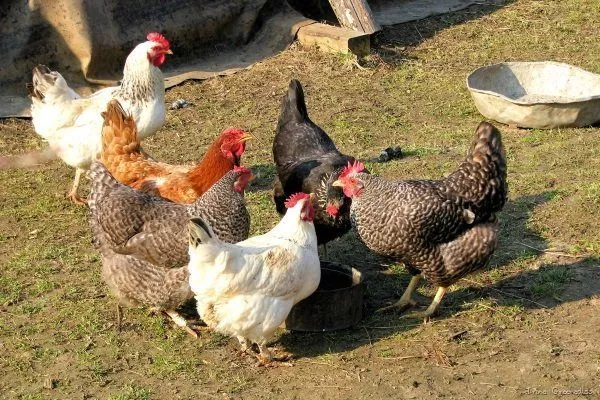
Selecting a breed
| Name | Disease resistance | Feeding type | Content Features |
|---|---|---|---|
| Meat | High | Compound feed | An insulated room is required |
| Egg | Average | Corn | Need a walk |
| Meat and egg | High | Compound feed and grain | Universal |
For home breeding, breeders often choose representatives of the following breeds:
- MeatThey are distinguished by their large size and average egg production. Females of meat breeds are recognized as good brood hens.
- EggThey are lightweight—on average, up to 2.5 kg—but are known for their high egg production. Among their drawbacks, egg-laying hens are often susceptible to various diseases.
- Meat and eggThey are not as prolific as egg-laying breeds, but they are heavier and also make excellent brood hens. They do not require special care and are ideal for home breeding, as they have a calm disposition and are rarely susceptible to disease.
- ✓ The noise level produced by the breed is especially important to consider when kept near residential areas.
- ✓ The breed's ability to adapt to various climatic conditions, not specified in the article.
To raise chickens at home or in your garden, you first need to purchase chicks. To do this, it's best to immediately contact reliable suppliers who sell productive breeds. The most popular breeds are listed below:
| Breed | Egg production (pieces per year) | Weight (kg) | Description |
| Loman Brown | 315 | 2-3 | These hardy hens have brown plumage. They lay eggs weighing up to 64 g. They are highly productive for 80 weeks, so keeping them longer is unprofitable. |
| White Leghorn | up to 330 | 2-3 kg | The most productive breed for domestic use, originating from the Mediterranean region. Egg production declines after a year of keeping. Females lay eggs weighing up to 60 grams and with white shells. |
| Hisex Brown | 315 | 2.3-2.7 | The chickens have a high survival rate of 99%. When kept outdoors, they begin laying eggs at 4 months. These hens lay large eggs, weighing up to 70 g. |
| Rhode Island | 230 | Up to 3 | Chickens of this breed are distinguished by their increased agility. They adapt well to free-range conditions. They have brown or dark golden plumage. They can be used to breed broilers by crossing a hen with a Kuchinskaya Yubileinaya rooster. |
| Amrox | 200-220 | 3.5-4.5 | A meat and egg breed of chicken developed in Germany. Its members have a rather heavy appearance due to their loose, loose plumage. Egg production declines slightly after the first year. The eggs have strong, light-brown shells and weigh an average of 56-60 g. |
| Adler silver | 180 | 3-4 | A peaceful and placid bird with beautiful but poorly developed plumage. It begins laying eggs at six months. Egg production continues for up to four years, with no decline in egg production during this period. |
| Moscow Black | 170-180 | 2.5-3.3 | These hens have beautiful plumage—black with golden feathers on their necks. At five months of age, they begin laying large eggs, which can weigh up to 62 g. |
| Russian white | 250 | 1.5-2.4 | A hardy and frost-resistant bird with a calm temperament and fast growth. It matures early, at 5 months. It lays white eggs weighing an average of 56-60 g. |
| New Hampshire | 220 | 2-3.5 | A friendly bird with reddish-brown plumage. It is frost-tolerant. It lays yellow-brown eggs weighing 60 g. Productivity declines by the third year. |
| Barnevelder | 180 | 2.4-3.5 | A Dutch breed of domestic chicken. It quickly gains muscle mass but reaches sexual maturity quite late, at 6-7 months. It lays large eggs weighing up to 80 g, but small eggs may be present early in the laying cycle. Their color varies from terracotta to dark brown. |
It is better to purchase a batch of day-old chicks from a poultry farm with a guarantee that the livestock is purebred and healthy.
How many chickens does it take to breed?
The optimal number of heads on a farm depends on the method of keeping chickens, of which there are two:
- FloorThe number of birds will depend on the area of the house, as no more than five birds can be housed per square meter. The house must be warm (above 5-7°C), light, and dry, otherwise the hens' productivity may suffer. Proper perches are also essential, with 20 cm of space per bird allocated on each perch. Perches should be positioned at the same level.
- CellularEach cage can accommodate 5-7 birds. To ensure fertilized eggs, a rooster is required in the flock.
How do I start raising chickens at home? Should I build cages or do without them? The breeder will answer these questions in the video below:
It is believed that chickens in cages develop, lay eggs and gain weight faster.
Organization of the place of detention
Before setting up your chicken coop, you need to decide whether you'll be raising your flock seasonally or year-round. In the summer, you can simply provide a light shelter and a run, while in the winter, it's better to convert a heated barn or build a new chicken house. Read on to learn how to build your own chicken coop.here.
When building a chicken coop, consider the following recommendations:
- The walls should be at least 1.8 m high and should be insulated to maintain an optimal temperature of 15°C. Chickens may feel more comfortable at lower temperatures, but this may impact their productivity.
- A chicken coop must have a foundation—concrete, brick, columnar, or strip. A floor, preferably wood, must be laid on it. If the foundation is concrete, it must be lined with sawdust or straw. To prevent the chickens from freezing, the thickness of the flooring should be more than 10 cm.
- The chicken coop roof should be solid and leak-free. A gable roof is preferable, as this allows for a loft for storing chicken feed, hay, and various utensils.
- To ensure adequate light in the room, at least one window should be installed, but the light from it shouldn't shine directly onto the nests. A lamp should also be installed, as hens prefer brightly lit areas. The lamp should be placed in a shade to reduce the risk of fire and keep the light source clean. The light should be turned off at night.
- A chicken coop can be equipped with a simple ventilation system. To do this, drill small holes in two opposite walls. One should be located at the top, and the other at the bottom.
- Perches should be installed deep in the coop, spaced 30 cm apart for each chicken. The distance between them should be 35 cm, and the floor height should be more than 0.5 m. The timber used for perching should be screwed together to prevent injury to the chickens. Place trays between the perches to collect droppings, which will make cleaning the coop much easier in the future.
- Nests should be nailed to the wall near the perches. They can be open or closed, but closed is preferred. The optimal nest size is 30 x 40 cm. Line it with straw and insulate with sawdust. For future reference, it's best to remove eggs from the nests in the morning.
- Install waterers and feeders in the coop, raising them slightly above the floor to reduce the collection of dirt, droppings, and other debris. Clean the equipment at least once a week.
- The chicken coop should be cleaned and disinfected at least twice a year. The floor should be replenished with new straw or sawdust as it gets dirty.
- Disinfect the premises 2 weeks before introducing the chickens.
- Make sure there are no drafts and check the tightness of windows and doors.
- Organize feeding and watering areas, taking into account the number of individuals.
A farmer shares his experience raising chickens in the following video:
When setting up a chicken coop, remember that it should be warm, bright, and clean so that its inhabitants feel safe and don't experience unnecessary stress. This will help you get the most out of your chicken farming.
Arrangement of a walking area
Chickens kept in a summer house require daily exercise, so it's advisable to create an area near the coop where they can roam freely in good weather. It's recommended that each chicken be given 2 square meters of outdoor space.
The run should be fenced with mesh to prevent the chickens from escaping and trampling the plants in the garden bed. Chain-link fencing is best for this purpose. It's also a good idea to build a transparent canopy over the run to create shade in the summer, providing shelter from the sun. To ensure they have easy access to food and clean water, several feeders and waterers should be placed in the run area.
If you need advice on how to make your own chicken feeder, then This article will be useful to you.
Experienced farmers recommend installing a door in the run to prevent wild and domestic animals from entering the coop. In summer, the run can be left open, as this is when the birds frequently venture out for fresh air. In winter, run time should not exceed two hours and is only possible when the temperature is at least -14°C (-14°F). If severe frosts occur, the chickens should be kept in an insulated coop 24/7.
Caring for chickens
Keeping chickens is considered a simple matter, but to successfully breed them you will need to consider a number of rules:
- To hatch chicks, you need to place 5 to 10 hens per rooster. The hens should incubate the eggs for 5 days. After that, new eggs can be placed underneath them.
- If your hens aren't hatching, you'll need an incubator, which you can buy at a store or make yourself. In such a device, you can hatch your young in 28-29 days.
- The chicks should be kept in a box lined with newspapers. For heating, it's best to use an incandescent lamp. A more affordable option is a container of hot water wrapped in thick material.
- During the first days of life, the brood should be raised at a temperature of approximately 30°C. Subsequently, this can be lowered to 20°C.
- Chickens need to be fed three types of food: liquid porridge, dry compound feed, chopped eggs, and cottage cheese. The latter category provides the chicks with the proteins needed for the normal development of their digestive tract muscles and the production of vital enzymes.
- Mashed grains should form the basis of the chicks' diet for the first 10 days, after which dry food can be introduced. This should make up half of the chicks' daily ration by the time they reach two months of age. Whole grains should only be introduced after one month, as otherwise they may choke.
- Cardboard cages should always be equipped with clean drinking bowls. A small amount of potassium permanganate can be added to the water for a short time. This will disinfect the chicks' stomachs.
- You can move chicks into the main coop at three weeks of age. By this time, they can be fed carrots, nettles, bran, wheat, greens, chalk, or shells. They can be fully transitioned to adult food at two months of age.
Fresh milk should not be given to chickens, as it disrupts digestion and causes feathers to stick together.
Peculiarities of breeding laying hens
Home-raised eggs are superior to their factory-raised counterparts in a number of ways, including nutritional content, weight, and natural yolk color. They can be sold at markets, private retailers, or fairs, provided they receive veterinary certification. To start a business like this, you need to breed laying hens, of which the following breeds are known for their high productivity and adaptability:
- Kuchinskaya Jubilee;
- Leghorn;
- Hisex;
- Loman Brown;
- Pushkinskaya.
For more information on good laying hens, look forhere.
It's best to buy laying hens in the spring. They should be between 3 and 4 months old, as young birds begin laying eggs at 5 months. This way, you can quickly recoup the cost of purchasing and maintaining the hens.
Conditions of detention
To breed laying hens at home, you need to provide them with appropriate living conditions:
- The temperature in the chicken coop should be maintained at +25°C. Excessively low temperatures are unacceptable, as this will reduce the productivity of the hens.
- Lighting should be both natural and artificial. For natural lighting, a window and a vent should be installed in the coop, while for artificial lighting, incandescent lamps should be installed. Daylight hours should be from 6 a.m. to 7 p.m. During the colder months, this can be extended with artificial lighting.
- Nests must be installed in the chicken coop at a rate of 1 nest per 3-4 chickens. They should be located at a height of 0.5 m from the floor.
- Provide a sufficient number of feeders and waterers in the room to prevent birds from choking or fighting during feeding and watering. Aim for this: 10 cm per bird.
- Keep the coop clean and remove droppings as needed. Change the litter once or twice a week and avoid allowing it to become damp.
- Create a designated area for the chickens to run around near the coop. This can be done by simply fencing off the area around it with fine-mesh netting.
It is believed that 10-20 hens will feel comfortable in an area of at least 2x3 m.
Do you need a rooster?
When introducing laying hens to a prepared house, beginning breeders wonder whether they need to add roosters. This is unnecessary, as egg production even increases slightly without roosters. However, many poultry farmers still prefer to keep males to maintain flock structure. Furthermore, unfertilized eggs are unsuitable for incubation.
To help you decide what to do, we recommend that you also read the article about When do laying hens need a rooster?.
Feeding
Laying hens are easy to feed, although they do require a high amount of protein. To achieve this, their diet must include the following:
- wheat;
- compound feed;
- fish or bone and meat and bone meal.
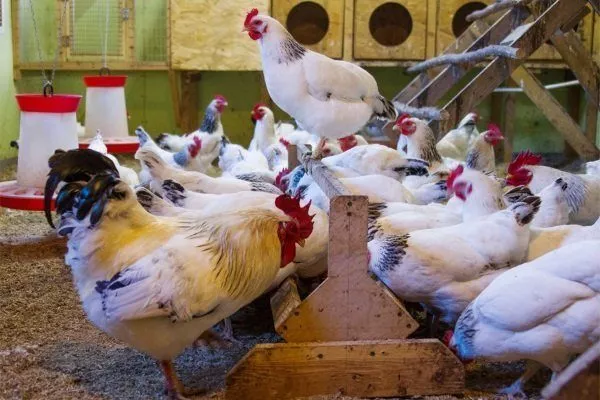
They also require increased amounts of calcium to ensure their eggshells are hard enough. This can be replenished by adding special supplements to their feed. These include:
- chalk;
- crushed eggshells;
- crushed shells;
- yeast.
Once a week, chickens should be given salt to improve food digestion and to kill helminths (worms).
They should also be fed root vegetables and herbs regularly. The best additions to the feed mixture are:
- carrot;
- cabbage;
- zucchini;
- potato;
- beet;
- nettle;
- beet or carrot tops;
- quinoa.
It's crucial to adjust your chickens' diet according to the season. In the fall, they can be fed pears and apples, but in the winter, the percentage of grain should be increased and the proportion of root vegetables should be reduced. It's also important to ensure there's always clean water in the waterers. In winter, it should be kept from freezing.
You can read about how to make your own drinking bowls for chickens and chicks in this article.
Chickens need to be fed 2-3 times a day. In the morning, they should be fed protein feeds such as wheat and bran, at lunchtime, mash, and in the evening, grain. It's crucial to feed them strictly at the designated times, otherwise their egg production may suffer.
Peculiarities of broiler chicken breeding
For commercial meat production, broilers, a selective meat breed, are the most efficient choice. They have a high growth rate, so they develop vigorously and gain weight quickly. This reduces feed costs compared to mixed breeds.
Breeders offer a variety of crossbred chickens developed by crossing meat breeds. The following broilers are noted for their high productivity and meat quality:
- ROSS 301;
- ROSS 708;
- Broiler-61;
- COBB 500.
These breeds should be purchased at 10 days of age. Choose active chicks with bright eyes. Make sure their bellies are soft and taut, their down is even, and their wings are tightly attached to their bodies.
Breeding methods
There are two ways to raise broilers:
- IntenseThis involves purchasing young birds every trimester. It allows you to raise chickens year-round.
- ExtensiveLivestock is purchased between spring and midsummer. The young animals are raised to the desired size, then slaughtered and sold. Breeding begins only the following season.
Regardless of the breeding method, the resulting meat can be sold in private stores, markets, and fairs. It is in greater demand than factory-raised poultry meat because it is more tender, flavorful, and delicious. Furthermore, this meat is considered not only dietary but also more nutritious due to its high protein content.
Conditions of detention
Newly purchased chicks can be kept in boxes, but avoid excessive crowding. To achieve this, no more than 15-20 chicks should be kept per square meter. The optimal temperature for the first 24 hours is 30°C. Subsequently, it can be lowered by 1-2°C daily, stopping when the temperature reaches 20-19°C.
After a few days in the box, the chicks can be moved to cages. Each cage should contain no more than 20 individuals. Another method for raising broilers is on the floor or on litter, which requires the use of sawdust, wood, and bark bedding. In this case, the following rules must be followed:
- Sprinkle each square meter with 1 kg of quicklime powder, then sprinkle with sawdust in a 10 cm layer.
- Create ventilation in the room.
- Maintain humidity levels no higher than 65%.
Fattening
Broiler feeding requires the utmost attention, as it determines their growth rate. The birds' diets should be adjusted according to their maturation:
- From 1st to 3rd dayFeed the chickens boiled eggs, milk and cottage cheese.
- From day 3 to day 5Add chopped fresh herbs (20%), sprouted grains (10%), and grass meal (5 g) to the menu.
- From the 5th dayMinerals should be added to the diet at a rate of 3 g per individual. The most beneficial supplements are bone meal, chalk, and crushed shells.
- From the 15th dayThe menu can be supplemented with carrots and boiled meat. It must include these products:
- oatmeal;
- millet;
- crushed wheat;
- corn grits;
- crushed barley.
- From 3 weeks of age. 20% of the feed mixture must be replaced with boiled potato roots.
- From 2 months of ageProtein products should be excluded from the diet and replaced with herbs.
To ensure chickens gain weight actively without becoming obese, it's also important to strictly adhere to a feeding schedule. During the first week, they should be fed eight times a day, six times a day during the second week, and four times a day during the third and fourth weeks. Once they reach one month of age, they can be transitioned to two meals a day.
Chicken farming as a business
Many breeders raise chickens for eggs or meat for sale. The specifics of the business depend on the type of operation. While breeding meat chickens is considered more profitable than laying hens, it also requires more maintenance and feeding costs.
When breeding layers, profits can be made from the first month and continue for the next six months, until egg production declines. A hen is considered to lay one egg every two days. She begins laying eggs at 4.5-5 months of age, and her active production period lasts for about six months, after which she will need to be restocked.
A small farm can keep up to 30 birds. Assuming the market price of a dozen eggs is 60 rubles, this translates to 2,700 rubles per month and 14,850 rubles for the entire season.
Breeding broilers for meat requires more money, as these birds require more expensive feed and improved growing conditions. Furthermore, it's important to consider that, on average, a third of young birds die. Among the advantages, it's worth noting that broilers grow quickly, gaining 50 g per day. On average, they reach their maximum weight within 1.5-2 months, but no longer than 80 days.
The net weight of a chicken after slaughter is generally considered to be 2 kg. The market price of poultry meat is 250 rubles per kilogram. Therefore, one chicken can fetch 500 rubles. If a farm has 30 chickens, the potential profit is approximately 15,000 rubles.
For more information about chicken farming as a business, watch the video below:
On a large farm, it is possible to breed layers and broilers at the same time, but they must be kept in separate rooms.
With proper chicken breeding, any farmer can produce top-quality eggs and meat. Moreover, such products can be successfully sold in stores, private businesses, or at fairs. To ensure waste-free production, poultry manure can be used as garden fertilizer. Starting with a small operation, you can gradually gain experience and increase the turnover of this business.