
This breed was developed by specialists at the Zagorsk Poultry Institute. The breed's ancestors are the Russian White and Yurlovskaya Golosistaya, as well as New Hampshire and Rhode Island varieties. The breeders followed a method that helped achieve high egg production and excellent meat quality. More details on the breeding characteristics and conditions are provided later in the article.
Characteristics
The Zagorsk salmon breed was developed for Russia's cold climate and is considered moderately accessible. It is a meat-and-egg breed. It doesn't require any special conditions for breeding, making it suitable for even the most novice poultry farmer.
Representatives of the medium-heavy breed - hens gain from 2.5 kg to 2.7 kg, and roosters - from 3 to 3.6 kilograms; already at 5 months, the carcass of a gutted bird weighs more than one and a half kilograms.
One of the breed's remarkable qualities is its large eggs. Hens produce up to 250-260 large eggs per year, weighing 60-89 grams, but larger ones are also common. The shell color is light brown or pale pink. The shell is characterized by a strong structure, ensuring its integrity during transportation.
Hens begin laying eggs at 6 to 8 months of age. They are very active, especially in the summer, when 10 hens produce 7-8 eggs per week. In winter, this number drops to 4 or 5. Hens lay eggs in a row for 3 to 5 days, then there is a short break. After 2 months of laying, it becomes clear what egg weight to expect from a particular hen.
Zogor salmon are known for their calm disposition and get along well with each other and other inhabitants of the farm.
Exterior
The birds' bodies are large, slightly wider at the bottom, and their backs are elongated. The males' legs are strong and long. The skin on their legs is yellow.
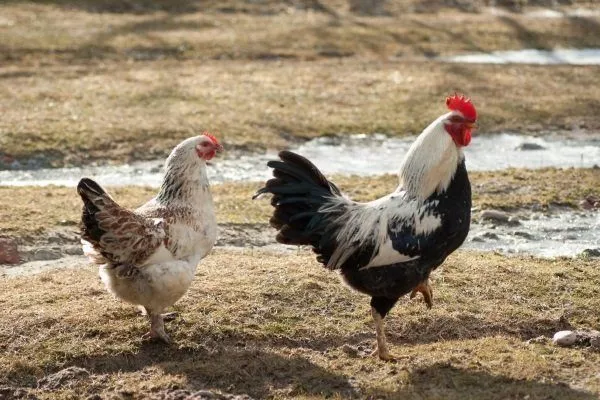
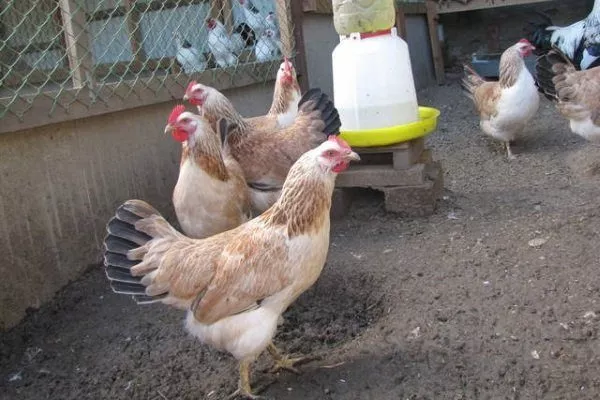
Zagorsk salmon chickens are distinguished by their delicate pink with an orange tint (salmon) on the wings, which is combined with light brown plumage on the belly and brown with white flecks on the collar. The plumage is dense, and the tail is short and black.
The rooster's appearance is emphasized by feathers of other colors: black on the belly and chest, white silver on the collar, brown with a reddish tint on the back, white at the base of the tail on the back and black in the tail itself.
Zagorsk Salmon Roosters' heads are adorned with leaf-shaped red combs with 4 or 5 teeth, as well as a red wattle and earlobes. The hens' beaks, combs, and earlobes are much lighter in color. Their bills are yellow, sometimes with dark spots or a dark base. Their eyes are orange.
The sex of Zagorskie chicks can be distinguished at an early age. As early as two days after hatching, hens develop pink-gray spots or a stripe along their backs. At one week of age, cream-colored feathers develop on their wings. And at two weeks, dark feathers appear on the wings of roosters.
Content
Zagorsk salmon are very unpretentious in terms of feeding, temperature and lighting, and are stress-resistant.
- ✓ The minimum area of the chicken coop per individual should be at least 0.5 m² to ensure comfortable maintenance.
- ✓ Optimal humidity in the chicken coop should be maintained at 60-70% to prevent respiratory diseases.
When forming a family, the rooster's activity level is taken into account. One male is sufficient for 8-15 hens, but a backup is needed in case of any emergency (while the first rooster is doing well, the second should not be allowed into the family). Read the article about When do laying hens need a rooster?.
Landscaping
This breed is best kept with access to a yard for foraging and outdoor exercise. Infrequent and short-lived cold spells are not harmful to this breed. In the spring, Zagorskies begin to venture outdoors much earlier than other breeds.
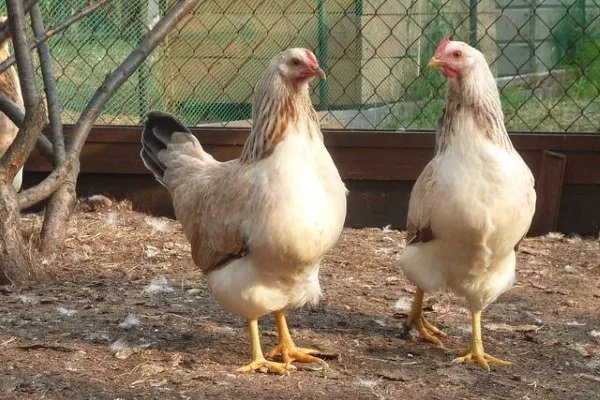
Keeping chickens without the opportunity to walk will negatively impact their productivity and health.
When setting up a poultry house, you should consider:
- Chickens cannot be kept in cramped conditions, so the coop must be spacious and well lit during the day.
- The Yurlov ancestors left the Zagorsk roosters with beautiful voices and a passion for long crowing. If the owner doesn't want the roosters waking up the entire street with their loud crowing, they must ensure the birds have a quiet night. This requires keeping the coop windows tightly closed.
- The room temperature should not drop below 0°C. Typically, a chicken coop is built insulated, but not heated. Only in severe winters should an additional heat source be considered. How to build a chicken coop yourself is described in Here.
- The floor is covered with a high litter layer. Peat or sawdust are best. It should be changed regularly.
- A ventilation system is essential. If the chickens are poorly ventilated, they become ill. Ventilation is especially important during hot summers. In winter, ten minutes of daily ventilation is sufficient.
- The nests are located low - at a height of no more than 0.5 m, since the chickens are quite heavy.
- The perches are also not installed very high – 60-80 cm from the floor.
Requirements for the enclosure and exercise yard:
- The pen is used for exercise in winter. It is set up on the south side, using the wall of the chicken coop or another structure to provide protection from the cold north wind.
- A canopy should be provided on top to protect from precipitation.
- The height of the fence around the walking area is about 1.5-2 m. The bird flies high, although once free, it does not run far.
If left to roam freely, chickens can damage garden beds, flower beds, etc. A flock of chickens can also enjoy hunting mice.
Necessary equipment:
- Feeders and waterers should be placed so that all chickens have access to them at the same time, otherwise, fighting over food can occur. Read more about how to build a feeder – hereand how to make a drinking bowl with your own hands – Here.
- In addition to feeders, containers filled with sand, shell rock, chalk, or crushed shells are always provided. In summer, these containers are moved to the exercise yard and protected from precipitation.
- A bath of ash and sand is essential to clean the feathers of parasites. In summer, it is placed outside, protected from the rain by a canopy. In cold weather, it is moved to the coop.
Feeding
Despite the fact that chickens are not demanding in terms of diet, it is necessary to calculate the amount of feed and strictly adhere to the feeding schedule.
You can feed chickens:
- grain (wheat, corn);
- millet;
- root vegetables;
- pumpkin and its seeds;
- cabbage;
- peeling vegetables and fruits;
- fresh grass or hay;
- mash;
- compound feed.
In summer, the feeding schedule includes two feedings—one in the morning and one in the evening. During the day, chickens forage for food. In winter, they are fed three times a day. The amount of feed should not exceed what the chickens can consume in half an hour.
Farmers believe that the best feeding method is a combination of different types of feed: wet mash in the morning, dry grain in the evening.
The volume of waterers is calculated based on the number of chickens: 200 ml per chicken, with an additional 300 ml for evaporation and spillage. Water is replenished daily, after cleaning the waterers.
Birds respond well to supplementation with protein—they immediately gain weight and produce more eggs. Fish can be added as a supplement. However, be sure to ensure the chickens eat it immediately; rotten leftovers should be avoided.
Molting
Chickens begin to molt around early to mid-autumn. However, feather loss is not accompanied by bare skin. During this period, they stop laying eggs. Egg production resumes approximately three weeks after new feather growth. Pecking is not typical of Zagorsk salmon.
During molting, you should ensure:
- adding fish waste or flour to the diet to replenish protein, soybean meal and vitamin complexes;
- protection from wind and dampness on rainy days - it is better to keep the birds in the coop during bad weather.
Breeding chickens
Chicks of the Zagorsk salmon breed are hatched both by incubation and by brooding.
To successfully hatch chicks you should:
- select active and healthy hens (10-15 individuals) and a rooster into a separate pen;
- feed selected birds with vitamin and mineral supplements;
- Eggs are collected from hens that have been laying for three months or from hens that molted 2-4 weeks ago;
- for breeding the next generation, you should select eggs weighing 60 grams without external defects;
- Store the material in a cool, dark place for no more than 15 days.
The eggs are placed under the hen, who is ready to sit on the nest. The brooding area is set up in a secluded, quiet spot, with a waterer and feeder for the hen nearby. Being good mothers, Zagorsk hens take on both the brooding and subsequent care of the chicks.
Before placing eggs in an incubator, they are brought into the room where the incubator is located to warm up to room temperature. The eggs remain in the incubator for approximately 24 days. Initially, the temperature is set to 38°C (100.4°F) and gradually reduced to 36.7°C (98.5°F). Overall, the process is no different from hatching other chicken breeds.
The hatched chicks are calm and large, and are not prone to pecking their peers. They immediately become active. The chicks are transferred to a brooder on cardboard bedding, which can be replaced with sawdust after a few days. The temperature in the brooder is maintained at 35°C, gradually decreasing to 28-30°C.
There are more males than females among the chicks.
As early as three days old, chicks can be taken outside in a box, weather permitting. They can be released onto the grass after one week of age. A special enclosure is set up for this purpose. Before releasing the chicks into it, make sure there are no poisonous plants, ants, or other insects.
In the first days of life, in addition to the starter feed, chicks can be fed:
- mashed egg yolk with semolina;
- fresh low-fat cottage cheese;
- chopped herbs.
A little later, they gradually add:
- grated carrots;
- crushed grain;
- bone and meat and bone meal;
- fish oil - if there is no possibility of walking.
From two months old, chicks can eat everything that adults can, as long as the food is high-quality. Corn should be ground to prevent large kernels from getting stuck in their throats.
Crossbreeding
Zagorsk varieties are excellent for forming new types of crosses.
Productive hybrids are obtained by crossing:
- Cornish roosters or Kuchin jubilee and Zagorsk hens;
- Zagorsk breed roosters and Plymouth Rock or New Hampshire hens;
- roosters and hens of the Zagorsk breed and Adler silver ones.
Hybrids gain weight very quickly and produce excellent carcasses. At three months, they weigh 1.5-1.8 kg.
The fertilization rate of eggs during crossbreeding is almost 100 percent, and the chicks are renowned for their high survival rate.
The main characteristics of the Zagorsk salmon breed, their advantages and disadvantages, and the conditions for keeping and breeding can be seen in the following video:
Possible problems
Among the most common problems of the breed:
- Obesity. The first symptoms are a decrease in egg production and changes in the comb: it becomes larger and paler, and in severe obesity, it takes on a bluish tint. The hens' weight increases by a third.
Obesity leads to death.
The problem is treated by increasing physical activity, switching the chickens to low-fat feed, introducing vitamins B, D and lecithin into the diet - as recommended by a veterinarian. - Infestation by ectoparasites (lice, ticks, feather eater). You can rid your chickens of pests using special disinfectants. Once the parasite is detected, the coop should also be thoroughly cleaned and disinfected.
- Poisoning. Eating spoiled, low-quality, or toxic food can cause digestive problems. Chickens should not be fed rotten vegetables or moldy feed. Chickens will not touch poisonous plants in their run, but when storing hay for the winter, remove milkweed and celandine from it. Potato sprouts are also toxic to chickens.
- Non-communicable diseases. They occur as a result of poor sanitary conditions or exposure to low or high temperatures. They often resolve spontaneously, without treatment, once living conditions improve.
- Infectious, bacterial diseases. They are transmitted through food and contact with sick birds. Treatment is with antibacterial medications prescribed by a veterinarian. To prevent infection, chickens should be kept away from wild animals and birds. Sick birds should be kept in a separate room.
We recommend reading the article about chicken diseases.
Acquisition
Zagorsk salmon chickens can be purchased at Genofond in Moscow and St. Petersburg. Birds from Moscow resemble broilers—strong and massive. The breed is also sold privately, but it's best to choose reputable poultry farmers.
The price of an egg for incubation varies from 90 rubles, and for chicks – from 150 rubles.
To purchase healthy chickens, you need to pay attention to the following:
- It would be desirable to have the opportunity to see the adult animals on the farm and the conditions in which they are kept.
- If gray or chestnut spots are visible on the chest of chicks, they are not purebred. Such birds should not be crossed with other breeds, as the outcome is unpredictable.
- Healthy chicks are active, peck at offered feed, and respond to tapping. Lethargy, indifference to food, and lack of response to sounds indicate illness.
- If chicks have bare areas that should be covered with down, any discharge from the eyes, a protruding belly, or bleeding, this indicates serious health problems.
- ✓ The presence of an even downy coat without bald spots.
- ✓ Active response to sound stimuli and light.
- ✓ No discharge from the eyes and nostrils.
Raising Zagorsk salmon chickens can generate a stable income. The breed doesn't require any special conditions and tolerates changes well without sacrificing productivity. The chickens' rapid sexual maturation and the cockerels' rapid weight gain ensure a rapid meat and egg production, which justifies the cost of their acquisition.