
The remarkable Yurlovsky Golosistye chicken breed is popular not only among professional poultry farmers but also among amateurs. These birds, developed in Ancient Rus', stand out among other chickens with their haughty appearance and clear, insistent call. Many farmers prefer these chickens due to their excellent production characteristics.
History of origin
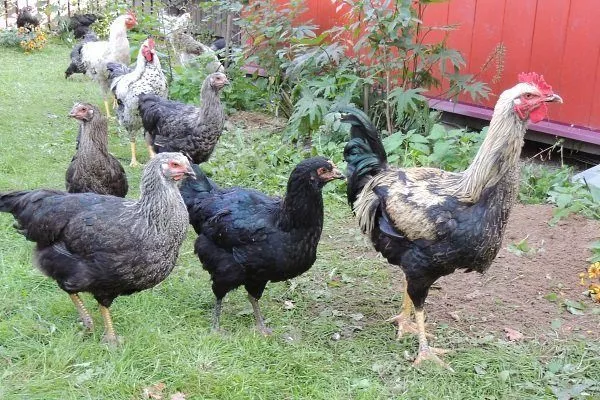
No one knows the exact year the chickens were created, but scientists have determined that Yurlovsky Golosistye chickens were developed in Rus' over two hundred years ago. Some believe this meat and egg breed was developed by professionals in the Black Earth Region of the Russian Federation.
Let's break down the names: Yurlovskaya is named after the village where, according to some, the breed was developed—Yurlovo. They are called "vocal" because they have a resonant voice. The crowing of roosters made every passerby stop in their tracks throughout Rus'.
Historians believe the Yurlovsky Golosistye's ancestors are locally bred chickens and heavy fighting chickens, also with some meat-producing hens. This crossbreeding helped breeders create large birds with a low-pitched voice.
To develop this breed, scientists selected not only roosters with vocal talent but also considered robustness. A strong chest—the area where most of the white meat is stored—was particularly prized.
During crossbreeding, attention was also paid to late sexual maturity. There is a popular belief that the longer a male develops, the better his voice will be. Because of this, males that began vocalizing at an early age were culled. Poultry farmers sorted purebred roosters by timbre and duration of their vocalizations.
Interestingly, in the 19th century, cock-hunting—a competition between two males to see who could sing—was extremely popular in Russia. Bird owners would gather at the market to judge the talents of their males. The prizes went to those roosters that could sustain their crowing for more than 18 quarter notes.
Description and characteristics of the Yurlovskaya golosistaya breed
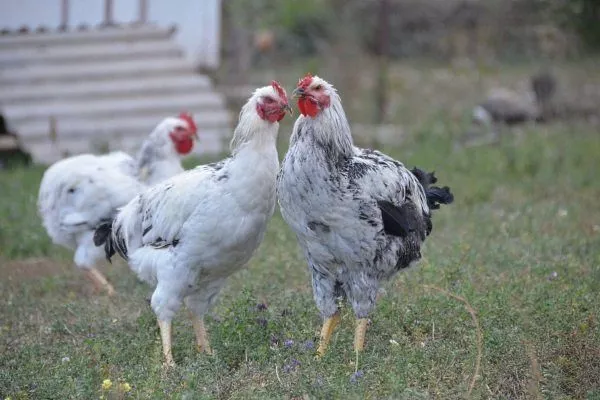
Yurlovsky beauties and beauties are significantly different from their counterparts; they are renowned for their robust bodies and strong legs. They tend to have an upright posture.
Appearance
The main characteristics of purebred Yurlovsky voiced horses:
- strong, slightly long body, positioned evenly on strong legs;
- the belly is clearly defined;
- wings pressed to the body;
- the neck is long;
- massive paws with long metatarsus;
- huge head and small beak;
- a strong frontal bone, framed by eyebrows that give the birds an unusually menacing appearance;
- bright red earlobes, pink comb;
- The shade of the eyes depends on the color of the plumage.
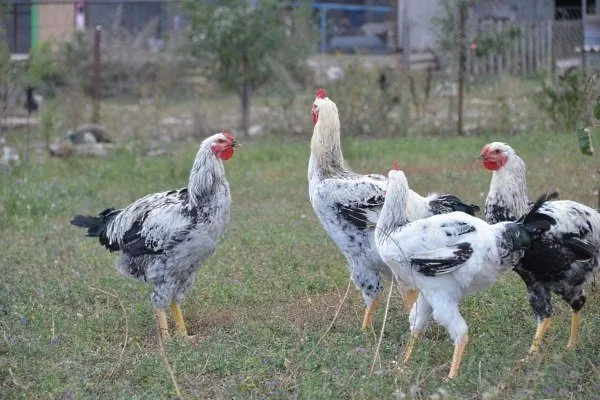
Nature has gifted humans with a wide variety of bird colors. The most common is black with golden spots and a silvery back. White and silver birds are also common. Chickens' plumage is not particularly dense, allowing owners to easily access the skin. The tail, on the other hand, is very lush and long, standing out from the rest of the chicken's body.
Yurlovsky vociferous birds often take part in exhibitions, but to do so the bird must be purebred and fully comply with the breed standard.
Unacceptable deviations in birds:
- white tint on the earlobes;
- small arches above the eyebrows;
- absence of folds in the lower part of the beak;
- straight back without any slope towards the tail;
- the ridge is located at an angle;
- flesh-colored fingers.
Minor, but still unacceptable defects:
- presence of processes on the ridge;
- raised ridge;
- too wide tail;
- short neck and small paws;
- the presence of feathers on the face;
- the presence of a tuft on the back of the head.
In the video below, the breeder provides a detailed description of the Yurlovskaya Golosistaya chicken breed:
Character
Poultry farmers must be prepared for impulsive individuals. They have extremely complex personalities. These birds are highly aggressive, pugnacious, and hot-tempered. Hens and roosters do not accept newcomers to their families, and they dislike being in the same area with other chicken breeds. Yurlovsky vocal hens are incapable of negotiating, and they resolve all their problems by fighting.
For these reasons, it's crucial to carefully manage the placement of all family members, otherwise, future injuries and losses are inevitable. Roosters' main characteristic is their crowing; they simply can't help it. Every morning, you'll wake up not to an alarm clock, but to the sound of a beautiful and vocal rooster. Its call can be heard within a radius of up to 20 meters.
Puberty and egg production
Previously, roosters were valued more if they matured late, as their voices were more pronounced then, and the males were considered talented singers among their peers. Thanks to genetic manipulation, this breed now matures late, at 8-9 months.
| Parameter | Yurlovsky's vociferous | Average by breed |
|---|---|---|
| Egg production (pieces/year) | 160 | 200-250 |
| Egg weight (g) | 70-90 | 55-65 |
The reason for this delay is the birds' heavy weight and the lengthy muscle development process. Egg production is not the lowest, and it's not the number of eggs that matters, but their weight—over 70 g. A hen can lay up to 160 eggs in one year. In terms of meat production, a rooster weighs around 6-7 kg, while a laying hen weighs 2-2.5 kg less.
The instinct of incubation
Although Yurlovsky Golosistye hens are purebreds, not crosses or hybrids, there's still a nuance to their maternal instinct. Hens do have a brooding instinct, but it's not fully developed. A broody hen may sit on the nest for a long time and then suddenly leave, so the poultry farmer must keep an eye on the hens. In some cases, it's better to use an incubator.
Advantages and disadvantages
Representatives of the Yurlovskaya Golosistaya breed, like other species, have their pros and cons, which must be taken into account when breeding birds.
Advantages of this chicken breed:
- average egg production and high meat productivity;
- excellent taste of products;
- large eggs;
- excellent fertility, survival and hatchability of chicks.
- strong immunity.
Disadvantages of the chicken breed:
- aggressiveness and anger of chicks;
- late puberty;
- The cell culture method is not allowed.
Growing and care conditions
To ensure the birds produce enough eggs and maintain tender and tasty meat, proper and regular care is essential. Yurlovsky croakers are not afraid of cold and frost, and can live in a coop even without special heating. However, poultry farmers claim that birds are more productive in a heated coop; maintaining a temperature of 12 degrees Celsius is recommended.
Requirements for the premises
Daylight hours should be approximately 12-14 hours. Special lamps are installed in the room for this purpose. It's also important to avoid drafts and ensure adequate ventilation. Air circulation is essential because chicken droppings contain a small amount of ammonia, which negatively impacts the birds' respiratory system.
Due to the large size of the birds, it is necessary to arrange a hen house of considerable area, approximately 0.5 square meters per individual.
Insects, pests, and bacteria will begin to infest the chicken coop if the floor bedding (straw, hay, or dried grass) gets wet. Dry and change it regularly. These materials are good for covering because they absorb water well. The bedding should be removed from the coop twice a year.
A poultry house is a sacred abode for birds, so their health and well-being depend on its cleanliness. Waterers and feeders are especially important; they must be washed and cleaned at least once a day, otherwise the chickens may stop eating. Learn how to make your own feeder. this article.
If you need advice on how to build a chicken coop yourself, this article is located here.
Walking yard
Yurlovsky scaly-billed grouse love the outdoors and are large, so their plots are designed to accommodate them. They are pugnacious and mischievous, so fencing the plot is essential. It's best to use netting to protect your garden from uninvited attacks from feathered guests.
The yard is built on open ground so that the Yurlovsky scaly-mouthed ...
We recommend reading the article about How to make your own chicken waterers.
It's best to choose containers shaped to prevent birds from spilling or spilling anything. Fill the containers one-third full, then add chalk, gravel, shells, salt, and limestone to individual containers.
Nutrition
High egg production is only achieved with proper nutrition. Let's look at a proper menu for chicks and adult hens:
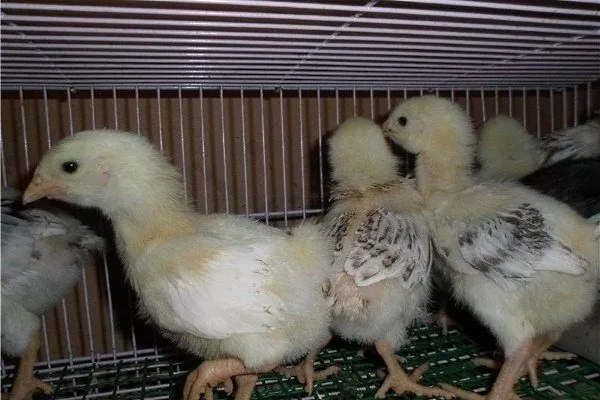
- Chickens. They are fed for the first time after their down has dried and they are transferred to the coop. The first meal is a boiled egg. After three days, the chicks can be given low-fat cottage cheese, cereal, and maggots.
The active growth period for young animals is 2-6 months. During this period, it's important to supplement their diet with not only weight-building foods but also nutrients and vitamins. The main ingredient is compound feed. The diet should include greens and vegetables, which help the gastrointestinal tract digest food better. - Adult chickens. These birds are not suitable for commercial breeding or sale. They require enormous amounts of food and are unprofitable to keep. Their diet consists of grains and cereals. Males are fed 150 grams of these products daily, while hens are fed 100 grams.
During the winter, add grass meal once a week. It's crucial to add greens and vegetables to their diet. In winter, hens eat about 100 grams of vegetables per day. Protein-rich foods are essential for laying hens. Maggots, fish, and meat are abundant in this nutrient. Low-fat cottage cheese and yogurt can be given.
To improve health and strengthen the immune system, add chalk and crushed shells to a separate container. In summer, birds eat a lot of greenery; if you can't feed them greens, you can use dried grass.
Breeding
To ensure that breeding this breed is successful, it is necessary to follow the basic recommendations:
- Properly distribute the birds among the families. One male is needed for every 12-20 hens. The number of young birds with excellent voices depends on the rooster's age and his sexual activity.
- To create offspring, it is not necessary to select the phenotype of birds - 50% of the young that are born will not inherit the plumage color of their parents.
- For breeding, select males that sing the longest and have a more pleasant voice than other males. Vocal qualities are preserved only by choosing a rooster with a low voice.
- The ideal “father” of young birds is the rooster that begins to sing a year after birth.
- Due to the large mass of males, cracks and plucked feathers may appear on the hens after crossing. To prevent this, put special vests on the birds for "mating games."
- Select eggs for the incubator that are no more than 5 days old. They should be medium-sized, weighing more than 50 g, oval-shaped, and have a shell without cracks or punctures.
- You can lay more than 15 eggs under a single hen, but be sure to place the nest in a warm, dark place with food and water containers nearby. Read on to learn how to make your own chicken nest. Here.
- If you use an incubator, be sure to take all the necessary precautions into account. Turn the eggs regularly and keep them moist. We recommend that you familiarize yourself with the instructions beforehand.features of incubating chicken eggs at home.
- To keep the breed purebred, always update the herd.
- To improve productivity, select hens weighing over 2 kg and with excellent egg production.
- ✓ The optimal temperature in the incubator should be maintained at 37.5°C with 60% humidity for the first 18 days, then increasing the humidity to 80%.
- ✓ To prevent pecking among chickens, it is necessary to provide sufficient space - at least 0.1 m² per head.
Even a novice poultry farmer can breed Yurlovsky Golosistye chickens, as long as they follow the basic recommendations.
How to care for chickens:
- For the first three days, the temperature should not drop below 28 degrees Celsius; ideally, it should be 32 degrees Celsius. After one week, it can be lowered by 2 degrees every seven days, ending at 18 degrees Celsius.
- Make sure your chicks are fed and have access to fresh water. The more water they drink, the faster they will grow and get stronger.
- Place food and water within easy reach of the chicks. Also, ensure there's enough food and water for each chick, otherwise the stronger chicks will crush them.
Moulting period
Molting is a normal, natural process and should not be feared. This process typically lasts for about three months. Egg-laying often ceases during this period. To prevent birds from becoming nervous and plucking their own or other birds' feathers, they should be provided with a well-balanced, calorie-rich diet rich in vitamins and minerals.
Hens and cockerels live for about 6 years, but they shouldn't be kept longer than 2-3 years. Feeding hens is too expensive, so older hens are immediately slaughtered, and the coop is filled with older chicks. It's important to time the laying period so that the chicks are ready to start laying eggs by this time. Males can be used as "fathers" for new flocks, and after one year, they are slaughtered, as this is when they reach their heaviest weight.
Diseases
Representatives of this breed differ from other species in that they are born with a strong immune system. However, preventative measures are a good idea. Young birds are vaccinated within the first few days after birth. Afterward, they should receive proper, comprehensive hygiene care to prevent them from becoming infected with various pathogens.
Poultry farmers' reviews of the breed
Yurlov's vocal chickens are loved and revered by the local people. Poultry farmers value them not only for their unique, ringing voices, but also for their productivity, although it's not particularly high.