
Welsummer chickens are a unique breed that evokes admiration not only among farmers but also among ordinary people with no connection to poultry farming. The hens are very attractive, boasting tender meat and high egg production.
History of the breed's origin
The chicken breed originated in the village of Velsum, Holland, and was named after the village itself. The first breeds of birds were bred from the Dorginka and partridge birds that lived in the village.
After some time, the resulting birds were crossed with Malayan fighting birds. The Dorkings gave the Welsummers their large eggs, while the Malayans gave them their unusual feather coloring and dark eggshells.
Breeders were afraid that the dark shell would become lighter over time, and to fix the dark color, they crossed chickens with Barnevelders And Rhode IslandsIn 1900, breeders stopped crossbreeding and established a breed standard.
These chickens have undergone a great deal of development during their breeding, and boast not only a standard appearance but also consistent productivity. The breed is ideal for those living in cold regions, as the birds tolerate frosts without any problems.
Ten years after the Welsummer's introduction, a smaller version of the chicken, the dwarf Welsummer, appeared in a German city. These birds are suitable for breeding in small areas. In terms of living conditions, dwarf Welsummers are completely similar to larger birds – they are undemanding in terms of space and can live in colder climates.
Hens begin laying eggs as early as four months. The eggs of the large and dwarf breeds taste identical. The only difference is egg size.
Description and characteristics of Welsummer chickens
When you first see these chickens, you might assume they're not purebred, that they're supposedly undistinguished. The birds lack a crest or shaggy legs. However, poultry breeders identify several characteristics that Welsummers should possess.
Appearance of roosters and hens
| Name | Weight of an adult | Egg production per year | Eggshell color |
|---|---|---|---|
| Welsummer | 3.5-4 kg | 180-200 | Light brown |
| Dwarf Welsummer | Up to 2 kg | 180-200 | Light brown |
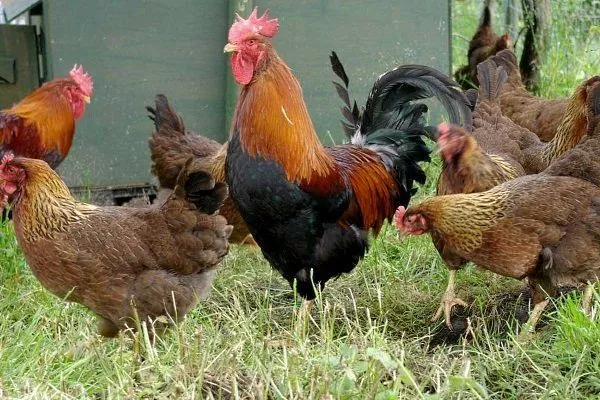
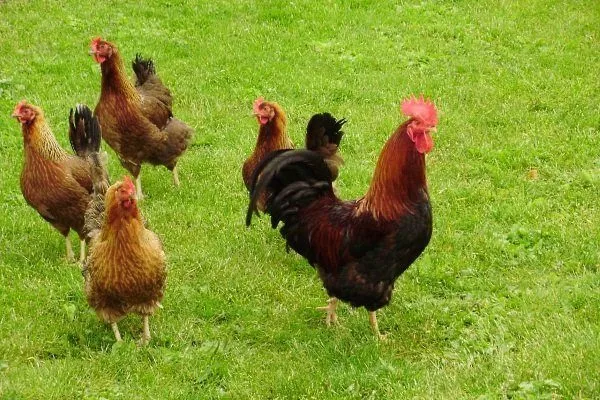
Males and females don't differ much in coloring, mainly due to the presence of mixed-breed ancestors. The hens' necks are dark, while their feathers are slightly lighter, sometimes even golden. The black pattern on their plumage stands out clearly.
The wings and legs are lighter than the neck, reminiscent of ochre. The tail is dark, most often black. The belly is slightly lighter than the back, with small dark spots. The hen doesn't boast a bright coloring; the plumage is simple but playful.
The male is slightly more distinctive than the female, with almost black legs. His wings and tail are covered with green feathers. His neck and head are light brown. A distinctive feature is the pattern on his chest, which looks like an unusual mosaic.
As for plumage, both males and females have plenty of it. However, it lies too close to the body, giving the appearance of being flat. Beneath the feathers, there's a generous amount of down, so the birds don't freeze in winter.
The body of hens is not too large, but solid. Both hens and roosters have well-developed muscles. The back and chest are not narrow, and the beak is small and yellow. The comb is red, unremarkable, small, and does not extend beyond the back of the head. The earlobes of males are slightly larger than those of females.
Character
Welsummer chickens are simple in appearance, but their disposition is quite interesting. They owe their character to their ancestors. For example, from fighting birds, they inherited a dignified, reasonable, and slightly aggressive nature.
On the other hand, laying hens are good-natured, they are not afraid of people, they love to communicate with them, some birds can be handled, they are not afraid of other animals, and they are calm about almost everything.
Productivity
This breed belongs to the meat and egg groups. A single hen can produce up to 200 eggs per year. These birds can also be raised for meat production, as they quickly gain weight and can reach 3.5-4 kg.
Puberty and egg production
The breed's basic egg production figures aren't particularly record-breaking, but they still impress many poultry farmers. Each year, a single hen lays approximately 180 eggs, each weighing approximately 65 g. This is a remarkable result, especially considering that the birds are bred not only for eggs but also for meat.
The shell is light brown, but as for taste, it's difficult to say definitively. It all depends directly on the feed the hen eats.
The instinct of incubation
Maternal instinct is inherent in purebred breeds. Hybrids have lost it completely or partially. As for the Welsummer, the hen is unable to hatch her young. This is due to extensive breeding and the crossing of non-pedigree birds. However, the Welsummer boasts excellent productivity.
The lack of brooding instinct is a significant disadvantage of the breed, but this can be corrected by purchasing a special incubator or using a broody hen of a different breed of chicken.
The Welsummer breed is characterized by a high fertility rate – approximately 95%.
Molting and break in egg production
Molting is a normal occurrence for chickens, and there's no need to worry. They're shedding their old feathers for new ones. This process lasts about two months and occurs annually. Chickens don't lay eggs in winter.
Birds live a long time, but keeping them for more than two years is not recommended. After this age, egg production decreases significantly, and the taste of their meat deteriorates.
Maintenance and care
Welsummer chickens are common in many countries around the world. They are renowned not only for their unique appearance but also for their low maintenance requirements. Any farmer, even a beginner, can raise young birds. The Welsummer breed inherited from its ancestors a strong immune system and resistance to many dangerous diseases. They also have an easygoing nature. Standard living conditions are all that is required to ensure a healthy and robust flock.
Requirements for the poultry house
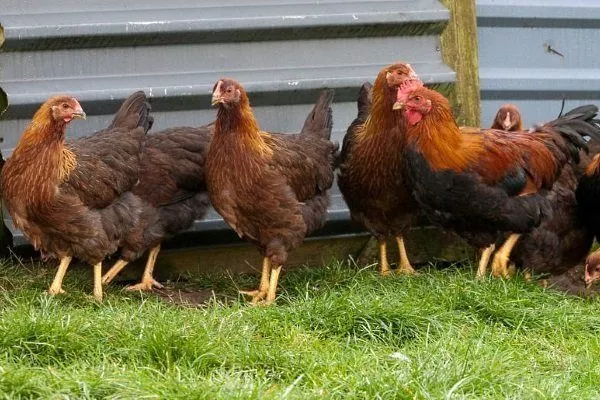
The chicken coop must fully meet the birds' needs. Even though the birds aren't particularly large, they still require a large area. About three birds can live per square meter, and the larger the coop, the better off the hens are. Nests for laying hens are also installed in the coop.
If you need advice on how to build a chicken coop yourself, this article is located Here.
Drafts and dampness are the main enemies of birds. These should be eliminated in the chicken coop. Cover the flooring, even if it's made of wood, with straw or hay. Sawdust can be used, but change it regularly to prevent the growth of pathogenic bacteria.
Chicken manure contains ammonia, so to prevent it from harming the birds, the coop must be ventilated. Ventilation is essential. The room must be equipped with feeders andchicken drinkersThey need to be washed and cleaned regularly. Discard any food debris.
Read the article about How to make a chicken feeder yourself.
In addition to a chicken coop, the birds need a run. Not only will it improve their health by allowing them to roam in the fresh air, but it will also provide them with an additional source of fresh greens. Chickens outdoors seek out food at ground level. Furthermore, laying hens are considered natural sanitation workers, quickly eliminating pests.
A hen only lays eggs well if she has enough light. Some of the necessary light can be obtained through outdoor walks, but additional lighting in the coop and run will yield excellent results.
Enclose a small exercise yard with netting to ensure the hens feel comfortable and safe. The netting should be about 1 meter high, otherwise the birds will quickly fly over the fence and attack the area.
In a yard, birds need access to open soil so they can find worms and other insects.
A canopy is essential in the yard to protect the birds from the scorching sun or pouring rain. Build the patio on a raised platform, otherwise runoff will constantly flow into it. If there's no such area on the property, you'll need to lay concrete or build a wooden deck on the ground.
Slate, roofing felt, or polycarbonate can be used as a canopy. In the isolated yard, waterers and feeders are placed, along with a trough filled with ash, sand, and shells, which helps the chickens take hygienic baths. In the summer, nests can be built in the yard for the birds to lay eggs in.
Nutrition
The Welsummer diet is not particularly different from that of other poultry. Feeding variations depend only on the hens' age, time of year, intended use, and husbandry methods.
During the first few days, chicks are fed boiled eggs mixed with semolina. On the third day after birth, fermented milk products and grain-based mash are added to their diet. Bran, broth, vegetables, herbs, and low-fat cottage cheese are added to the food.
Greens should make up approximately 35% of the total diet, as they contain essential minerals and vitamins. Chicks should be fed every two hours (approximately six times a day), with the number of feedings reduced to four from the 10th day.
Adult chickens eat grains. They enjoy barley, wheat, corn, and millet. If the poultry farmer doesn't have access to a range, supplement their diet with grass, vegetables, and special nutritional supplements.
Birds also eat wet mash, so make sure food doesn't remain in the feeders. If the birds haven't finished their meal, remove the container from the room, otherwise the food will become mixed with droppings and other debris.
Use chalk, bone meal, or fish meal as mineral supplements. When raising meat-producing birds, add compound feed to the menu and increase the amount of food. In summer, adult hens are fed twice a day; in winter, three times a day.
Reproduction
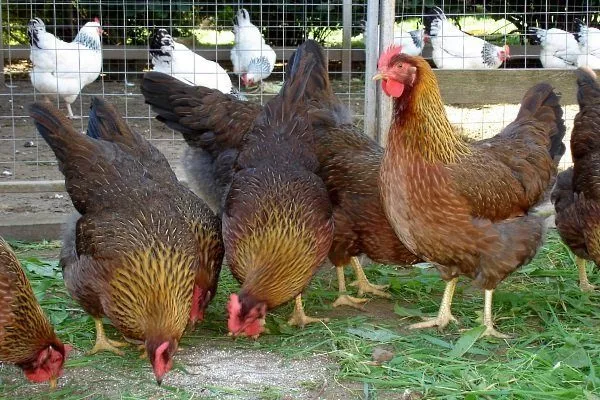
Hens begin laying their first eggs as early as four months old. Roosters and hens reach their maximum weight by one year of age. This is when eggs should be selected for breeding.
The hen won't hatch her eggs, so it's best to use a different breed or an incubator. Fertilization rates will be higher if the eggs are taken from a complete family—one rooster and 10 hens.
We recommend reading the article about features of incubation of chicken eggs.
Diseases and their prevention
The Welsummer chicken breed is renowned for its strong immunity. However, preventative measures are essential. Prevention is simple, and its basic rules are:
- Clean the chicken coop regularly, it should be clean and dry.
- Ensure there is ventilation and sufficient lighting.
- Treat all equipment in the room with a solution of potassium permanganate and potassium.
- Wash holes in the room with malathion emulsion (1%).
The first symptoms of the disease are changes in feather color, loss of appetite, decreased productivity, weight gain, and changes in the color of droppings.
Raising chickens
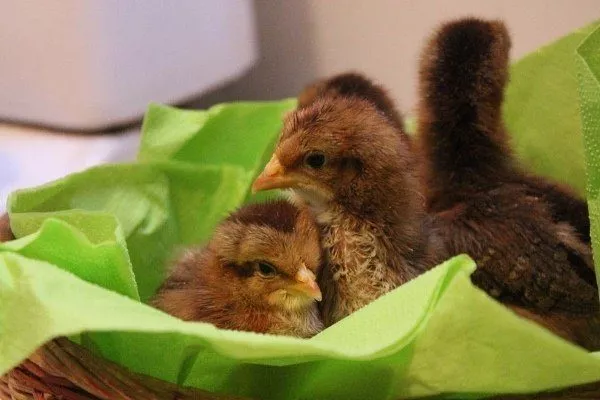
The chicks are born yellow or brown. They develop very quickly and require a high-quality diet supplemented with vitamins and minerals. However, don't overdo it with supplements, as too many vitamins can be harmful to the chicks.
- ✓ The optimal temperature in the chicken coop for the first days of life should be no lower than 30°C, with a gradual decrease of 2°C every week.
- ✓ The humidity level in the chicken room should be maintained between 60-70% to prevent respiratory diseases.
At the age of 1.5 months, chickens weigh approximately 0.7 kg.
These birds don't have any special requirements, but basic rules for raising them should be followed. The coop should be as dry as possible with excellent ventilation. Birds don't tolerate dampness and cold. In the cold, chicks become sick and die.
Newborns require a brightness level of over 40 lux. As they grow and develop (starting from the third week), the lamp brightness is reduced to 10 lux.
Adult hens require 10 lux of lighting; if a flock includes a rooster, this level is increased to 15 lux. The lighting system should operate smoothly; turning the lights on or off abruptly is not recommended.
Advantages and disadvantages
This chicken breed has both advantages and disadvantages. These nuances should be considered before breeding these birds.
Advantages of the Welsummer chicken breed:
- ease of care;
- Breeding can be done by a novice farmer;
- do not require a special diet;
- high fertility (more than 90%);
- good survival rate of young animals;
- early maturity of chickens;
- average egg production rate;
- meat characteristics are at the highest level.
Disadvantages of the Welsummer chicken breed:
- lack of maternal instinct;
- the wayward nature of young males, in some cases their behavior leads to injuries to other chicks;
- rarity (it is very difficult to buy a purebred bird).
Farmer reviews of the Welsummer breed
The birds are very graceful, with long legs. At an early age, the birds already begin to show their temperament. They haven't harmed anyone, and they eat well. Although the cockerels occasionally fight with other males, this happens very rarely.
Welsummer chickens are considered undemanding and productive. They can be kept on private property. Purebred birds are extremely difficult to find today.