
Black Wuheyiluy chickens are a rare breed. Their meat and eggs are prized for their excellent taste and therapeutic properties. These chickens have a well-developed immune system, a strong survival capacity, and a maternal instinct. However, caring for them requires following certain rules, which will be discussed later in the article.
History of development
The first mentions of the breed date back to the Ming Dynasty in China. By the end of the last century, the Wuheilu chickens were nearly extinct. Breeders discovered the last two hens and one rooster in a village in southern China. This marked the beginning of the breed's revival, a process that took several decades.
During genetic research, it was discovered that the chickens are of natural origin, with genes from pheasants, Chinese Silkie chickens, and the Yugan breed found in them.
This breed is extremely rare, difficult to find even in China. They are protected by a state program and listed as part of the National Germ Resources Conservation Project. Despite this, the birds are still found on private farms throughout our country.
Characteristic features of the breed
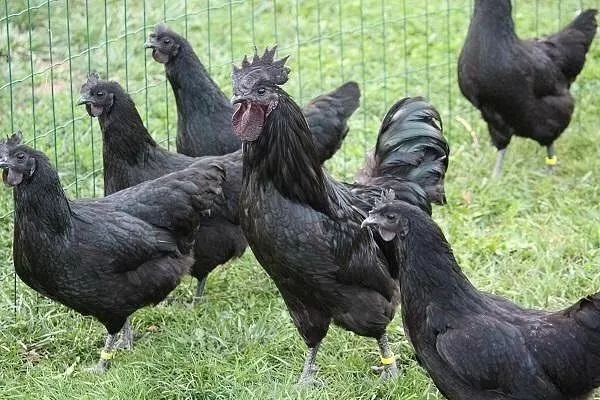
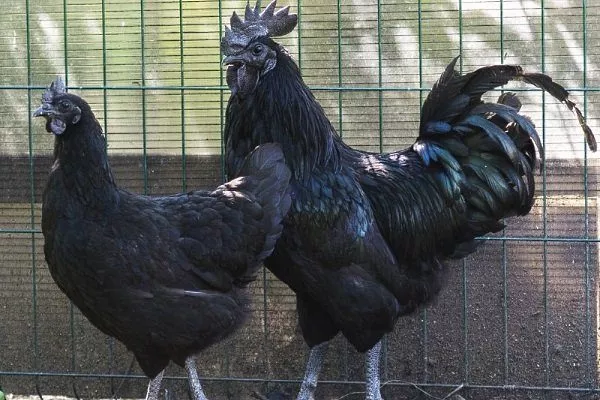
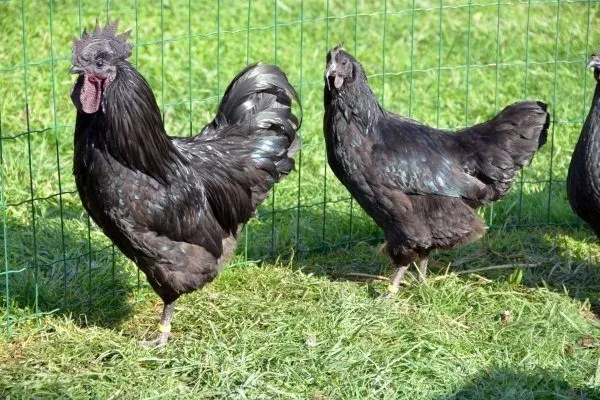
A distinctive feature of chickens is their color. Translated from Chinese, the name "wuheilu" means "five blacks" (comb, feathers, skin, bones, meat) and one green (eggs). However, high-quality chickens are not completely black; they should have a glossy green tint to their plumage and purple in their earlobes, comb, and forechest.
- ✓ A bright, glossy green tint in the plumage indicates good health and nutrition.
- ✓ A purple tint in the earlobes and comb is a sign of purebred and lack of stress.
Exterior:
- the body shape can be described as compact;
- the tail is elongated;
- developed chest and wings;
- the plumage is thick, under the feathers there is a thick downy cover;
- black leather;
- large black eyes;
- leaf-shaped 5-toothed comb, larger than other breeds;
- the earrings are very pronounced;
- Paws are medium sized, stable, black-gray in color.
An adult hen weighs approximately 1.5 kg, a rooster – up to 2 kg.
Sexual maturity, productivity and taste characteristics
Chickens of this breed are classified as meat and egg breeders, but they are not distinguished by high productivity rates.
Sexual maturity is characterized as mid-season – chickens begin to lay eggs at 6-8 months.
Egg production is average, with one hen laying 160 to 180 eggs per year, each weighing 48-53 g and with a large yolk (8% larger than other breeds). The maximum number of eggs is produced in the first year of life.
Productivity is maintained for 2 years, then it decreases.
The meat is highly valuable because it has a tender texture and many useful substances.
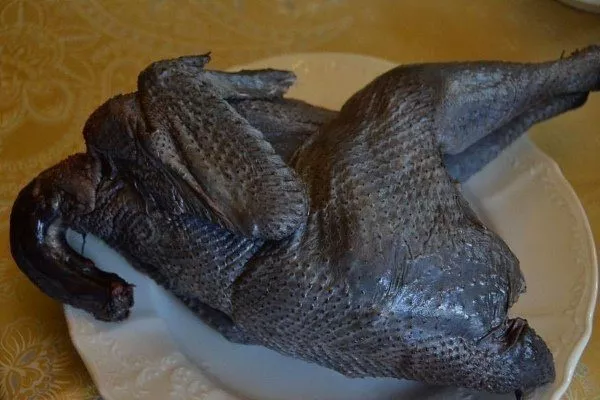
Due to the rarity of the breed, birds are sent for slaughter in isolated cases.
The healing composition of eggs
Eggs are valued for their excellent taste and healing properties, and they are easily digestible.
Green eggs contain large amounts of:
- vitamins A, E, B;
- selenium;
- iodine;
- zinc;
- lecithin;
- amino acids.
Doctors recommend using them for the following diseases and conditions:
- anorexia;
- pica;
- cardiovascular diseases, during recovery after stroke and heart attack;
- thyroid disorders, diabetes;
- hormonal imbalances;
- digestive disorders;
- to lower cholesterol;
- to improve immunity;
- for the harmonious development of the child's body;
- to slow down aging;
- to replenish protein and collagen reserves in athletes.
The Chinese call Wuheiliu eggs a product for the mind, health, beauty and life.
Dietary supplements are made from egg extract.
Temperament
The following character traits of black chickens are noted:
- peacefulness - do not conflict with each other and other cohabitants;
- activity – they do not tolerate cage keeping, they need to be walked, they fly well and high;
- tension - chickens are somewhat timid and fussy;
- the instinct of family life is developed – they live in groups;
- Roosters are good at keeping order and protect the family only when necessary;
- the bird quickly gets used to the owner, remembers a large number of words, and has high intelligence;
- They cannot stand sharp, loud sounds and screams, as well as cruel treatment, and in such conditions they begin to get sick.
Molting and break in egg production
Chickens begin molting in the fall, when daylight hours become noticeably shorter. During this molt, hens stop producing eggs.
It is not recommended to artificially delay the molting period to a later date, including lighting in the poultry house, so that egg production will resume more quickly.
To maintain the health of the bird, it is necessary to increase the feed doses and enrich the diet with vitamins and minerals.
Advantages and disadvantages
Uheyilyuy chickens are naturally occurring and have strong immune systems. They are able to survive in the wild, so they are undemanding in terms of living conditions.
Other advantages of the breed include:
- an unusual species of bird, especially valuable for lovers of exotic birds;
- beneficial properties of eggs and meat;
- disease resistance;
- high survival rate of chicks;
- good adaptation to new conditions.
The disadvantages include:
- rarity of the breed, difficulty in purchasing hatching eggs and chicks;
- low frost resistance;
- After 2 years of life, egg production decreases.
Contents of Uheyilyuy
The main criteria for proper maintenance in a household are:
- No drafts and insulation. Build a sturdy coop with thick walls and no gaps for your Wuheyilui chickens. Maintain a temperature of 15-17°C. Both below and above this temperature are detrimental to the chickens.
In winter, install electric heaters or infrared lamps for heating.
Maintain air humidity at 60%. - Floor and bedding. Make the flooring out of wood. Lay a thick layer (12-15 cm) of bedding on the floor. Sawdust or straw are suitable for this purpose.
- Ventilation. Install the system so that it does not cause drafts, provides a constant flow of fresh air, and prevents an increase in humidity.
- The need for walking. Free-range is a mandatory requirement for keeping Uheyilyuy chickens. Keeping chickens in cages is prohibited.
During the cold season, provide a sufficiently large area for the chicken coop, and additionally equip it with ladders and bridges for the chickens to move along.
Birds can be released into the yard when the temperature is no lower than +2°C. In windy and rainy weather, it is also better to keep them indoors. - Walking yard. Enclose the nest with a high fence and provide a shelter above. This will protect the timid chickens from unnecessary disturbance, provide protection during inclement weather, and prevent attacks by birds of prey.
Sow lawn grass as a floor covering for the exercise yard. - Lighting. During the winter, turn on the lights in the chicken coop. Daylight hours should be 12-14 hours.
- Dry baths. To clean feathers and prevent the development of parasitic infestations, install baths with ash and sand (1:1 ratio) in the walking yard in the summer and in the poultry house in the winter.
- Feeders and drinkers. Each chicken should have unimpeded access to feeders and waterers. Calculate the feeder length at a ratio of 10-12 cm per chicken. For information on making your own feeder, see here.
Warm the water before filling the waterers. Birds may become ill if they drink cold water. Read on to learn how to make your own waterers. Here. - Perches. Place the perches so that each chicken has enough free space.
- Nests. Set it up in a remote, dry, and secluded area of the poultry house. Line the inside with straw.
If you need advice on how to build a chicken coop yourself, then read on this article.
Feeding
The complete diet of Uheyilyuy chickens is no different from that of other breeds.
The chickens are fed twice a day:
- in the morning - grains;
- in the evening – wet mash with vitamin and mineral supplements.
Birds can eat greens all day long without restrictions.
Uheyilyuy chickens love green food obtained by foraging.
Make sure no food remains in the feeders; the birds should consume it within 30 minutes. Remove any leftovers immediately. Discard any uneaten mash.
Table of daily feed consumption rates for laying hens:
| Products per 1 person | Summer | Winter |
| Root vegetables, g/day | 50-60 | 20-25 |
| Cereals, g/day | 40-50 | 50-55 |
| Flour products, g/day | 20 | 20-25 |
| Chalk, crushed shell rock, g/day | 7 | 7-8 |
| Meal, cake, g/day | 6-7 | 6-8 |
| Legumes (grain), g/day | 5 | 2 |
| Fish, meat and bone meal, cottage cheese, fermented milk products, g/day | 5 | 5-6 |
| Salt, g/day | 0.5 | 0.5 |
| Hay, g/day | — | 5-10 |
To keep your bird healthy, follow these feeding rules:
- Diversity. Consuming only one type of food is harmful to birds. Their diet should include a variety of grains, vegetables, fruits, greens, and animal feed.
- Premixes. Egg production takes calcium from the bird's body, so add vitamin premixes to the diet daily.
Premixes and vitamin complexes aimed at increasing egg production should not be given; they are harmful to the health of chickens.
- Caloric content. During the cold period, increase the caloric content of food.
- Mashed potatoes. Every day, feed a mash of boiled potatoes and any vegetables. In the summer, add greens and leafy greens. In the winter, warm the mash and add warm broth or milk.
Buy ready-made grain mash or make your own.
To prepare the grain mash yourself, take the ingredients in the quantities listed in the table below.
Table of ingredients for preparing grain mash:
| Ingredients | Quantity |
| Grain (any), g | 500 |
| Corn grits, g | 500 |
| Wheat groats, g | 500 |
| Eggshells, pcs. | 10-12 |
| Grated apples, pcs. | 2-3 |
| Table salt, tbsp. | 1 |
| Sunflower cake, a handful | 1 |
Next, follow the following sequence:
- Pour all ingredients into an enamel container and mix well.
- Pour 1 liter of boiling water over it.
- Mix thoroughly again and leave until completely absorbed (about 1 hour).
Maintaining cleanliness
It is very important to keep the chickens' habitat clean to prevent diseases.
Basic rules:
- General cleaning. Clean the coop once a year in the spring. Remove all dirt, droppings, and old bedding. Disinfect with a sulfur candle and whitewash the walls and ceiling. Ventilate the room before allowing the birds in again.
- Maintaining cleanliness. The coop should be cleaned at least once a week, ensuring the floor remains dry. Remove the top layer of bedding and top it off with fresh bedding.
- Feeders and drinkers. Clean them daily. To prevent intestinal infections, wash them with hot water and treat them with a solution of potassium permanganate.
- Nests. Hens will stop visiting the nest if it's dirty. Replace the litter regularly and check its condition daily. If an egg breaks in the nest, discard all the litter and thoroughly clean the nest.
Chickens should not be allowed to taste raw eggs, as this will cause pecking.
- Baths. Replace the sand-ash mixture once a month, or as it becomes dirty. Add more when the volume decreases.
Breeding chicks
A key feature of chicken breeding is that several breeding roosters are required in a farmstead. If there's only one male, the breed will begin to degenerate after a few generations, producing weak and sickly chicks that will lose their breed characteristics.
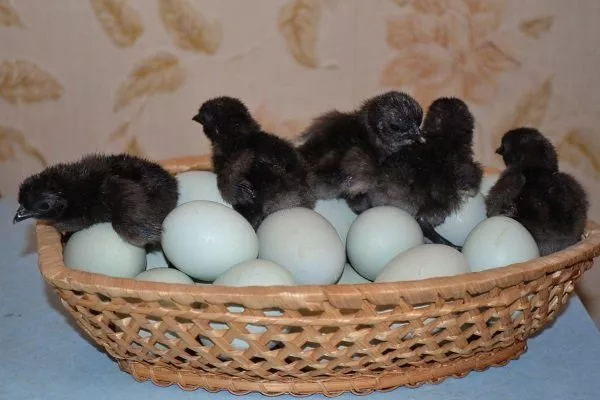
The eggs have high fertility rates.
Of all the eggs, 95% are fertilized. The survival rate of the new generation is the same.
Ability to incubate
Wuheyiluy chickens have a highly developed maternal instinct. They brood and care for their chicks without assistance.
Roosters tend to replace the hen on the nest.
The chicks hatch on the 21st day of incubation. Upon hatching, the chick has ash-black down and large black eyes.
Chicks grow slowly; by two months, females weigh up to 600 g, males 800 g. Their distinctive plumage appears late. Therefore, until they are three weeks old, they are kept in a closed, draft-free area, maintaining a temperature of 28-30°C.
Care
Caring for chickens isn't much different from caring for other breeds. Some special considerations include:
- Microclimate. Chickens do not tolerate drafts, heat and low temperatures.
- New place. Transporting or relocating chicks should not be done before they are one week old, preferably later. The mortality rate increases by up to 50% when changing locations.
- Features of the feed. It is good to add boiled eggs from a broody hen, especially the yolks, to the chickens’ feed.
- Feed mixtures. The chicks are fed a mixture of boiled yolks and semolina, corn, and wheat groats.
- Supplementary feed. Greens, pre-chopped, cottage cheese, steamed millet, and boiled fish are added to the feed.
- At the age of 1 month. You can feed chickens with ready-made feeds and add vitamin-enriched mixtures.
- Water. It should always be fresh and in sufficient quantity.
- Vaccination. It is a must when raising chickens.
You can learn about the appearance of Uheyilyuy chickens, the breed's characteristics, egg composition, and the nuances of breeding from the breeder's story in the video below:
The chicks stay with their mother for up to 3 months, as they are quite timid.
Diseases and pests
If the conditions of maintenance are violated, some diseases common among birds may develop.
The poultry farmer should pay attention to the following signs in order not to miss the first symptoms:
- decreased or complete lack of appetite;
- unusual behavior, lack of coordination of movements;
- loss of activity, the bird stands in one place, the head is lowered or drawn in, in younger individuals the wings may droop;
- lack of response to external stimuli;
- swelling of the comb and earrings;
- difficulty breathing, coughing, sneezing;
- change in the consistency and color of feces.
If you notice at least one of the symptoms, you should contact a veterinarian as soon as possible.
The most common chicken diseases:
- Infectious. The infection is caused by microorganisms that multiply and release toxins, poisoning the host. Chickens can become infected from wild birds and animals, humans, or infected poultry. Treatment should be under the supervision of a veterinarian. Only a specialist can determine the nature of the disease and prescribe the necessary medications.
- Non-infectious. Caused by improper living conditions or mechanical impacts from external factors, these diseases include:
- injuries;
- exposure to heat, cold, electricity, atmospheric pressure and precipitation;
- avitaminosis;
- Baldness is the loss of feathers due to pecking or a lack of vitamins.
It is necessary to distinguish between baldness and autumn molting.
These diseases can be eliminated by improving living conditions and balancing the diet, supplementing it with vitamin and mineral complexes.
- Parasitic. This group includes diseases caused by infestation of birds with small parasites, such as:
- Helminths. Internal invasion is accompanied by loss of activity, diarrhea, and deterioration of appearance.
- Ticks. These are small insects that feed on the bird's blood, draining it. The disease manifests itself as restless behavior, refusal to lay eggs in their usual nesting site, and small wounds on the skin. Control involves the use of insecticides (Pyrethrium, Ecoflies) and disinfection of the chicken coop.
- Lice and feather eaters. Less dangerous than mites, they can also cause discomfort to birds: they become restless, egg production decreases, and they scratch constantly. Severe infestations can lead to anemia. They can be detected visually by carefully inspecting the birds and nests. Beaphar, Frontline, and Bars are used to eliminate them. The litter in the coop and nests should be replaced with new material, and the old material should be burned.
Lice can carry infections and helminth eggs.
Acquisition
Obtaining breeding material for the Uheyilyuy breed in Russia isn't easy, but it's possible. The price will be approximately as follows:
- hatching eggs – about 500 rubles per piece;
- chickens – 800 to 3000 rubles per 1, depending on age;
- young chickens – 10,000 rubles per 1 bird.
The best option is to purchase black chickens from China. This way, you can be sure of purebred bloodlines and the price will be lower.
Reviews of Uheyilyuy chickens
The birds themselves are peaceful, produce good eggs, and are a delight to the eye with their unique appearance. The only problems they face are their low frost resistance and the need for a large coop and run.
Wuheyilui chickens have an attractive appearance, a docile nature, high disease resistance, and good productivity. However, they do not tolerate low temperatures well, egg production declines after just two years, and hatching material is very expensive and rare even in China.