
Tsarskoye Selo chickens are a versatile breed that boasts not only an attractive and striking appearance but also high body weight and egg production. These chickens are considered a meat and egg breed and are rapidly gaining popularity among farmers.
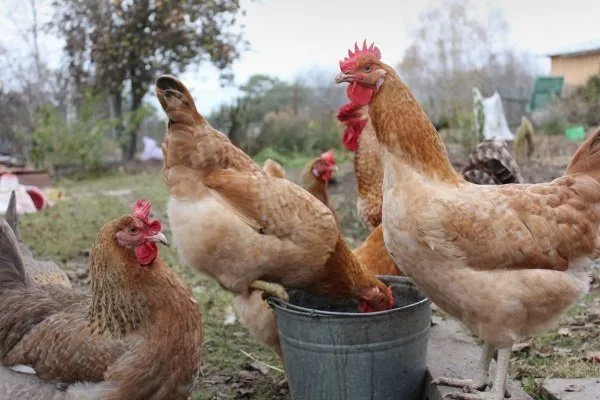
Origin of the Tsarskoye Selo breed
The Tsarskoye Selo chicken breed was developed in the late 1980s. Breeders aimed to create a highly productive breed with good resistance to extreme cold.
Scientists used Poltava and New Hampshire chickens, as well as the Broiler-6 hybrid, for crossbreeding.
The development of the first experimental species took place under the constant supervision of scientists, but after just a couple of years, this breed gained great demand.
Description
This type of bird is primarily used for meat and eggs, but is also considered an ornamental variety due to its rare coloring and unique texture. Currently, there are no more than three similar chicken species in the world.
Bird exterior
The bird has the following characteristic features of appearance:
- Large body, set deep and wide, trapezoidal and slightly elongated.
- The head is small, the neck is long and thin, and the beak is yellowish-gray.
- The back, chest and belly are wide.
- Legs are medium-length, featherless, and an interesting yellow-gray hue. The thighs are well developed.
- The comb is serrated, rose-shaped or leaf-shaped, and bright red in color.
- The earrings are big.
- The feathers are dense and lush, giving the body a more streamlined shape.
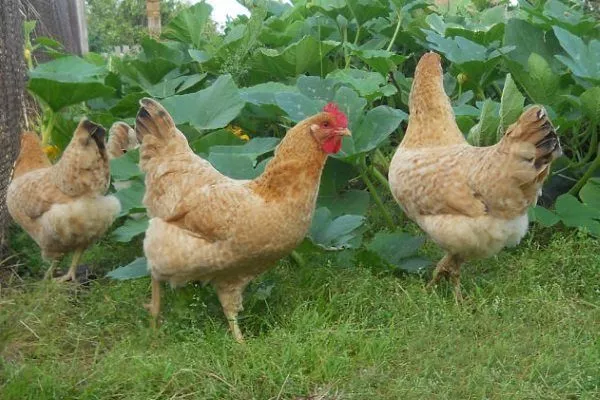
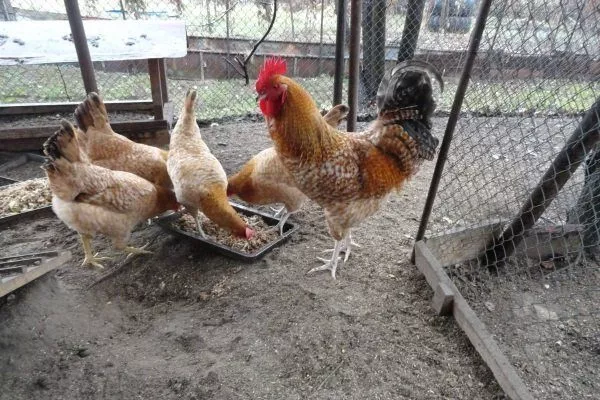
- Unlike roosters, hens have a lighter color. Their red feathers have dark stripes that gradually fade to white.
- Both hens and roosters have tail feathers that are speckled or black (there are also variants with slight gray inclusions).
Color
The birds have a very colorful and massive appearance, due to both the dense texture and the characteristics of their plumage. Visually, the feathers add additional volume to the birds' figures. This breed is characterized by its rufous striped coloring. The plumage is predominantly reddish.
Roosters have a brighter, more saturated coloration. Hens appear a bit more subdued, with paler, less striking shades. The surface of their feathers is covered with a reddish pattern, characterized by alternating light and dark patches. Grayish-black accents may also be present.
Characteristic features
This bird species has become one of the best options for home breeding. Their main qualities are discussed below.
Puberty and productivity
Chickens are characterized by high egg production rates. On average, one hen produces about 165-185 eggs per year. This rate is not affected by weather conditions or nutrition, even if the coop is unheated during the winter.
Having reached 5 months of age, the laying hen begins to lay eggs, but she will not be fully formed until at least 10 months.
Provided all care instructions for this breed of chicken are followed, a proper feeding regimen is maintained, and favorable living conditions are maintained, a hen can produce over 200 eggs per year. Starting with the first clutch, the average egg weight is approximately 55-72 g. The shell is beige-brown.
The birds fatten up very quickly, allowing the farmer to save on feed.
The instinct of incubation
These birds are unpretentious in their living conditions, so incubation allows for a nearly 100% fertility rate. They exhibit excellent brooding qualities. While working on the Tsarskoye Selo breed of birds, scientists were able to instill this quality in the hens and significantly enhance it.
Females become caring mothers; they do not abandon their nests and offspring, both during incubation and after hatching, raising the chicks.
Character
The character of this calm poultry has a touch of nobility:
- the chickens are quiet and calm;
- shows kindness towards people, there is no aggressive behavior;
- If the family was not composed correctly, the male is capable of starting a fight with another rooster; this behavior also occurs when there is insufficient space for the birds;
- a friendly attitude towards other animals is also shown;
- the birds are bold, active and curious;
- are practically not subject to stress;
- Brave and fearless, the birds are ready to protect their families in any danger.
Advantages and disadvantages
Chickens of the described breed have a lot of positive qualities, which include:
- high resistance to various diseases;
- rapid growth, rapid weight gain;
- high quality meat;
- undemanding to maintenance conditions;
- they can eat different foods;
- birds almost never suffer from obesity;
- about 100% survival rate of chicks;
- high endurance, so even during molting the birds’ body does not weaken;
- They can also be raised in northern regions, as their thick and fluffy plumage reliably protects the chickens from frost;
- The character is quiet, calm, docile and friendly - the birds get along easily with various inhabitants of the yard.
There are also some disadvantages:
- the breed is still under development, so there are no specific characteristics yet that will confirm that the bird belongs to a specific species;
- It is quite difficult to acquire eggs, adult birds and chicks, as the breed remains rare and few in number.
The video below provides an overview of the Tsarskoye Selo chicken breed:
Varieties
| Name | Comb type | Frost resistance | Egg production (pieces/year) |
|---|---|---|---|
| Leaf-shaped | Leaf-shaped | Average | 165-185 |
| Rose-shaped | Rose-shaped | High | 165-185 |
Birds of this breed are found in two types, and the main difference is the type of comb:
- leaf-shaped;
- rose-shaped.
Birds that acquire a rose-shaped comb are much better adapted to living in severe frosts. Chickens with a leaf-shaped comb are more sensitive to cold snaps and temperature fluctuations.
Where to keep Tsarskoye Selo chickens?
This experimental breed possesses many positive qualities, but its main advantage is its hardiness, endurance, and unpretentiousness. These qualities make it possible for even inexperienced farmers to raise these birds. Both care and upkeep are inexpensive and time-consuming.
Chicken coop requirements
Choose the highest possible elevation for your chicken coop to avoid flooding, which can occur during spring floods or heavy rains. Only a concrete foundation is recommended, as digging under the coop could allow predators dangerous to the birds to enter.
It's preferable for the chicken coop walls to be wooden. It's important to properly calculate the interior area, taking into account the following: no more than 10 birds per square meter. Be sure to cover the wooden floor with a layer of hay, dried straw, or sawdust.
The bedding should be changed periodically to help keep the room dry and clean.
Place waterers at a level that allows the birds to comfortably reach them. It's best to place them slightly elevated, which will prevent the hens from constantly knocking them over. This will prevent the birds from getting their feathers wet, and the floor will stay cleaner longer. Learn how to make your own waterers here. this article.
As for feeders, use those with small sides. How to make a chicken feeder yourself is described in here.
Place nests at a height of at least 1 m. Keep in mind that there should be no more than five hens per nest. During winter, supplemental lighting is required in the coop to help prolong the incubation period. There are no special requirements for insulation, as these hens tolerate low temperatures well.
Walking yard
Like any other poultry, Tsarskoye Selo chickens love and need the opportunity to roam freely. This can be accomplished in several ways: using an aviary or a run, or letting the birds graze in an open meadow.
To decorate your dog's exercise yard, follow a few simple tips:
- for walks, fence off a dry area using fine-mesh metal mesh;
- attach the mesh flush with the poultry house;
- Make sure that the netting is not damaged in any way that could injure birds;
- Dig the lower part of the mesh into the ground to a depth of at least 50 cm;
- Build a canopy over the area where the birds will be walking so that they can hide from the hot sun or rain.
Content
Tsarskoye Selo chickens are not suited to being kept in cages, so a coop is required. It's best to choose an insulated room with a good ventilation system. Try to avoid drafts.
Adult chickens
Perches aren't necessary, as hens feel more comfortable on the floor. This will help protect the flock from the risk of accidentally falling from a high perch, which could result in serious injury. Hens are also capable of constructing a cozy nest for themselves in a remote location.
Hens are very energetic and require ample space to move around. If the coop is overcrowded, this can lead to occasional fights between the hens.
Chickens
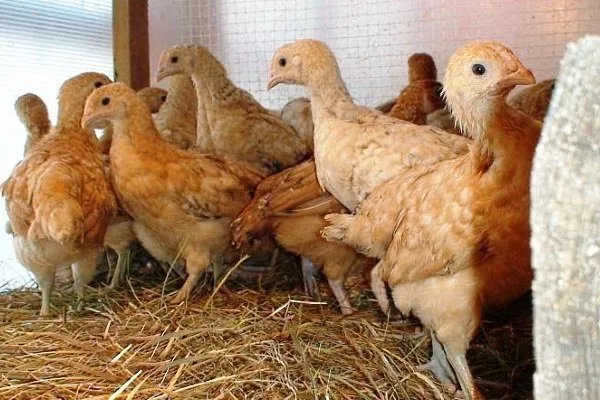
Chicks should be kept only in warm and well-equipped rooms. However, don't focus too much on maintaining the correct temperature. Even in the first days after hatching, chicks show good tolerance to cool air and are not susceptible to illnesses caused by sudden temperature changes.
- ✓ The optimal temperature in the chicken coop for chickens in the first days of life is 32-35°C, with a gradual decrease of 2°C every week.
- ✓ The humidity level in the room for adult chickens should not exceed 60-70%.
To understand how comfortable the chicks are, simply observe them. When they're cold, they start huddling together, trying to find a source of warmth. If it's stuffy, the chicks become very lethargic, refusing to eat and sleeping almost all the time.
Molting and break in egg production
When molting begins, birds do not suffer or become weakened, which is what distinguishes them from other bird species. Molting can last up to 60 days. If molting does not begin on its own, forced stimulation will be necessary.
Planned replacement of the herd
By the age of one year, the birds are almost fully developed and have reached a good weight. Therefore, if necessary, the birds can be slaughtered. Young males are most often slaughtered.
Hens can lay eggs for up to two years. After this period, productivity declines rapidly.
Basics of feeding
When developing a menu and feeding schedule for birds, it's important to consider certain factors. The age of the females is particularly important—for example, young birds require a diet high in protein. After reaching one year of age, the amount of protein consumed should be gradually reduced.
Seasonal diet
To ensure good fertility and rapid growth, chickens must be fed three times a day. Avoid longer than 6-7 hours between feedings.
Birds should receive at least 80 grams of grain per day. Add a wide variety of grains. Occasionally, you can feed them bran. This breed can easily consume almost any vegetable on its own or in a mash.
Greens with fresh tops are excellent sources of minerals, vitamins, and other nutrients. Periodically mix dried greens into the feed during the winter.
Daily diet
Sprouted grain is recommended for daily feeding, especially in the fall and winter. Complex supplements containing valuable vitamins are essential for maintaining bird health and increasing productivity during periods of low temperatures.
Minerals are essential for producing eggs with strong, durable shells, and they also have a positive effect on the bird's skeleton. Leave feeders filled with chalk or crushed shell rock readily available.
During molting, it is recommended to provide nutritious feed and fish oil to support the birds' health. Feeding regimen directly impacts the hens' activity level: if there is a food shortage, the hens will temporarily stop laying eggs to conserve their energy levels. However, once their diet is restored, this process quickly and spontaneously resumes.
Drinking habits play a major role in bird nutrition, so clean water should always be freely available. Yogurt can be given periodically.
An approximate daily diet for one bird might look like this:
- 3-4 types of whole grains (50 g);
- dissolved table salt (0.7 g);
- 3-4 types of grain flour mixture (50 g);
- chalk or crushed shell (5 g);
- wheat bran (10 g);
- pumpkin, cabbage leaves, carrots (40 g);
- meal, cake (5 g);
- coniferous or hay flour (5 g);
- fish, bone meal or meat and bone meal (10-14 g).
Diseases and pests
The scientists' successful work has resulted in the development of a chicken breed resistant to most diseases. They are immune to colds, flu, and viral infections. The greatest danger to chickens is the risk of parasite infection, which can occur through contact with rodents or wild birds. These are the most dangerous carriers of infection.
Timely vaccination of the herd and properly selected, healthy nutrition become an excellent preventative measure against various diseases.
Similar breeds
Due to its frost resistance and ability to lay large numbers of eggs even in cold weather, this breed is similar to the Wyandotte breed. In terms of basic characteristics, the Kuchinskaya Yubileinaya breed is closest to the Tsarskoye Selo breed.
Where can I buy eggs and poultry?
Today, there are several farms in Russia that breed this breed of chicken:
- Smolensk - "Smolensk Compound";
- Moscow – “Golden Feathers”;
- Oktyabrevka village, Vladimir region – “Oktyabrevskaya bird”.
Reviews of Tsarskoye Selo chickens
The Tsarskoye Selo chicken breed has both advantages and some disadvantages. This makes them very attractive and sought after by those who want to raise domestic chickens. These birds are highly productive and naturally beautiful.