
Xin Xin Dian are productive Chinese chickens that lay dietary bluish-green eggs. The breed is marketed as a meat and egg producer. These small, early-maturing layers are known for their high egg production and low nutritional requirements. Learn more about the appeal of this breed, how to breed it, and how to care for it.
Historical information about the breed
The Xin Xin Dian breed owes its origin to Chinese breeders from the Shanghai Poultry Institute. While working to improve the Wuheyiluy breed, the Chinese developed new chickens.
Breeders wanted to reduce the weight of the birds, thereby increasing their egg production and maturation speed. As a result, new meat-and-egg chickens were created—the gentle, productive, and attractive Black Sheep. Khabarovsk poultry breeder N. Roshchin was the first to bring them from China to Russia.
The long name of the breed is Xin Xin Dian, which translates as “hen that lays green eggs.”
Bird exterior
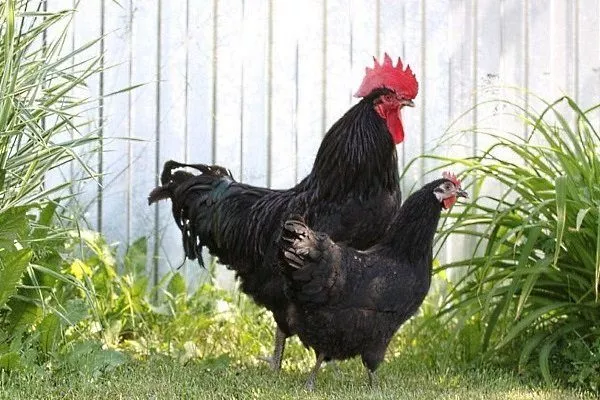
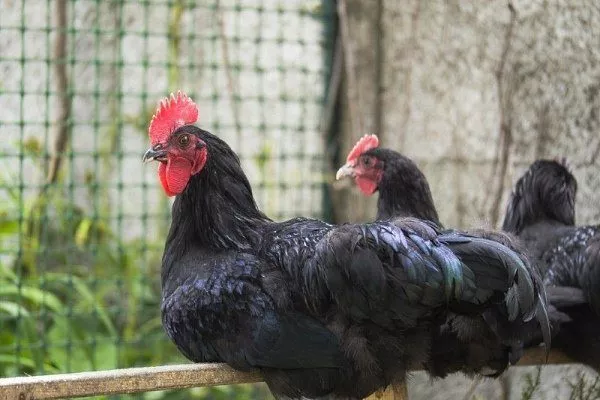
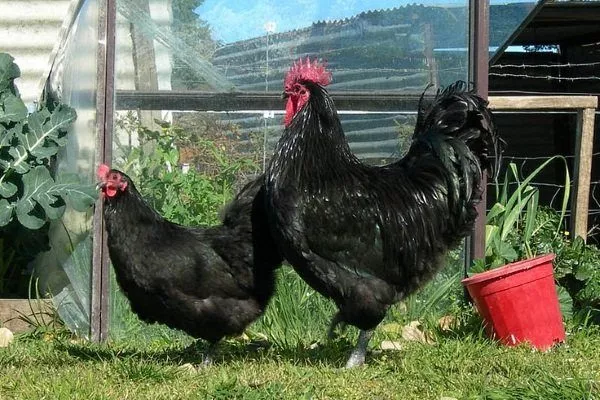
The breed is most often represented by black plumage. However, black chickens also come in red and brick-red shades. The appearance of these small birds matches that of egg-laying breeds.
External features of the breed:
- The body is trapezoidal, with light bones.
- The back is straight, the chest is rounded.
- The head is neat, small, the unfeathered part is red.
- Earlobes with scarlet earrings.
- The comb is well developed and leaf-shaped.
- The neck is wide and of medium length.
- The legs are yellow-gray, short, straight, and without feathers.
- The thighs and shins are small.
- The wings are medium-sized and pressed tightly to the body.
- The tail is set high and fluffy.
Individuals of red and red-brick color are difficult to distinguish from layers of other breeds.
Characteristic features
Compared to many other Chinese breeds, these chickens don't have any distinctive external characteristics that make them stand out from the crowd. They're simply good-quality black layers with good productivity figures. Let's learn more about the temperament and farming potential of this breed.
Character of Xin Xin Dian
What is known about Xin Xin Dian's character and abilities:
- They are active, agile, and fly well – they can rise to a height of up to 2 m.
- Neat and disciplined, they make ideal layers and housemates. At night, they sleep on perches and lay eggs only in nests, not scattering them around.
- They are not aggressive and easily coexist in the same territory with other bird species. Even roosters are not particularly pugnacious, and only occasionally compete for dominance.
Puberty and egg production
As the Chinese breeders intended, the Xin Xin Dian breed is distinguished by its very early maturity. Laying begins at 4-4.5 months. However, the bird is not yet mature by this time; its peak egg production is yet to come.
In their second year, hens reach peak egg production and lay larger eggs. In their third year, the number of eggs laid begins to decline. It's profitable to slaughter three-year-old hens for meat, completely renewing the flock.
For an overview of the Xin Xin Dian chicken breed and their egg production characteristics, watch the following video:
Productivity
Xin Xin Dian chickens not only lay eggs well, but also produce meat with excellent flavor. This is why our poultry farmers consider this breed a versatile, meat-and-egg producer.
Productivity indicators:
- The weight of eggs in the first year is 55 g, in the second year – 60 g.
- The number of eggs laid per year is 250 pieces.
- The weight of a laying hen is up to 1.5 kg, and that of a rooster is up to 2 kg.
- The survival rate of chicks is up to 98%.
The breed is productive, but that's not the main reason why Chinese Black Hemp hens are prized. Their main characteristic is the unique composition of their eggs. They are rich in vitamins, minerals, and fatty acids. The eggshells are an unusual color—from turquoise to blue. Older hens lay darker eggs. The color of the chicks is independent of the shell color.
Regular consumption of Xin Xin Dian chicken eggs normalizes hormonal balance, strengthens the immune system and restores the nervous system.
Poultry breeders often debate whether Xin Xin Dian is a breed or a cross. This question should be addressed to Chinese breeders. The Chinese themselves are more concerned with productivity than with the breed's identity. Therefore, hybrids may also be found under this name.
Crossbreeds lay blue and marsh-colored eggs. If a clutch contains these, it's an impure breed—it's not a Xin Xin Dian, but a crossbreed with other Chinese chickens.
The instinct of incubation
In industrial poultry farming, broodiness isn't given much attention—large incubators are now available for hatching eggs. Many modern incubators are even better at hatching eggs than chickens. However, for small private farms, layers capable of hatching eggs are very convenient.
Xin Xin Dian chickens, unlike most Chinese breeds of this type, are excellent brood hens. In fact, 60-70% of all layers are capable of hatching chicks.
The larger the number of chickens on a farm, the more often farmers use incubators. Artificial hatching has its advantages – it's more reliable and productive.
We recommend reading the article about the peculiarities of incubating chicken eggs at home.
Molting and breaks in egg production
Molting is a period of plumage change that lasts 1.5 to 2 months. The "summer" feathers are replaced in the fall by denser, thicker ones. During molting, hens stop laying eggs, and all their energy is focused on recovery. During this period, birds are especially vulnerable to disease.
Even if you provide ideal lighting and temperature conditions for regular laying hens, they still take a break. Farmers claim that Chinese hens continue laying eggs even during molting. Egg production only drops slightly. It's important to provide molting hens with a complete diet enriched with vitamins A, D, B1, and B3. It's also important to prevent the birds from becoming overly cold.
Advantages and disadvantages
The secret to success lies in the advantages of this breed:
- Birds have small stomachs, so you can save on food.
- Xin Xin Dian eggs are a dietary product.
- High egg production.
- Expressed brooding instinct.
- Unpretentiousness to feed.
- High taste qualities of eggs and meat.
- Stable egg production even during molting.
- Undemanding in care.
- High survival rate of young animals.
- Early maturity. The bird gains weight quickly. In two months, it gains 800 g.
- They start laying eggs early.
- Balanced character and neatness.
Disadvantages of the breed:
- Insufficient adaptability.
- They are affected by parasites.
- The period of high egg production ends relatively quickly.
- They do not tolerate low temperatures and dampness well.
The Xin Xin Dian breed appeared on the Russian market quite recently, but has become popular in just a few years.
How to care for the breed?
Chinese laying hens don't require any special care, as long as they're kept warm and clean. Let's learn how to manage the lives of Xin Xin Dians to maximize their productivity.
- ✓ The optimal temperature in the poultry house should be maintained at +12-+14°C to ensure high egg production.
- ✓ Humidity in the chicken coop should not exceed 70% to prevent diseases.
Walking
When choosing a location for the chicken coop and run, you need to find a quiet place - laying hens do not like extraneous noise.
Chickens are recommended to take daily walks outdoors. To prevent the birds from escaping, the run should be enclosed with a fence at least 2 meters high. The fence can be lower, but then the run area should be covered with a mesh canopy.
Density
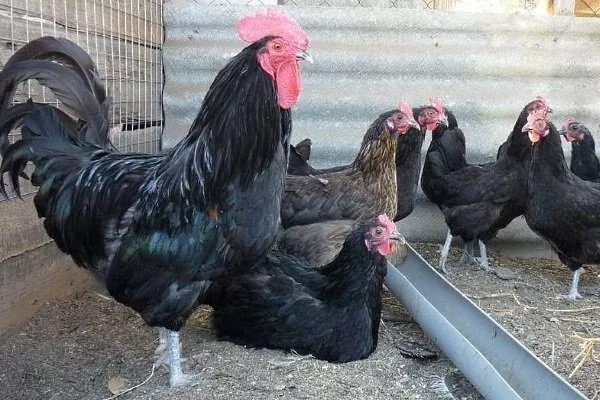
The Xin Xin Dian breed is small in size, so up to six birds can be housed per square meter. When installing perches, consider a 40 cm perch per hen.
Lighting
The recommended daylight hours range from 12 to 14 hours. It's not recommended to exceed these parameters. Maintaining normal daylight hours is especially important in winter to prevent a decrease in egg production. If the daylight hours are longer than normal, the hens will lose weight and age quickly.
Temperature and humidity
The optimal temperature for layers of this breed is +12-+14°C. To prevent a decrease in egg production, it is necessary to maintain the temperature between +10°C and +20°C.
The breed does not tolerate adverse weather conditions well, preferring warmth and dryness. It is not recommended to let Chinese hens out for walks in severe frosts. The humidity level in the coop should be set at 70%. The coop should be regularly ventilated. Drafts are not allowed.
Bedding
The floor of the chicken coop is covered with bedding made of peat, sawdust, or straw. Clean and dry bedding not only ensures hygiene but also warmth. In cold weather, it helps maintain the desired temperature in the coop. The acceptable temperature for Chinese hens is +5-+7°C.
Bathhouse
To prevent parasites, place containers of ash and sand in the coop. By digging through the sand or ash, birds remove parasites lurking in their feathers. You can place both materials in separate containers, or mix them.
Feeders and drinkers
The following types of feeders are made for chickens:
- Tray. They have sides to prevent feed from scattering. These feeders are good for chickens.
- In the form of a gutter. There's a grate or a spinner here. The trough is divided into sections for different types of food.
- Bunker. A closed structure that prevents chickens from scattering feed. Used for grain.
For each type of food, it is recommended to make feeders from a specific material:
- wood - dry food;
- plastic – universal, for any feed;
- metal – for wet food;
- rods - green fodder and hay.
How to make a bird feeder yourself is described in more detail here.
Basics of feeding
To maximize egg production, laying hens require proper dietary management. Each hen should receive 120 g of feed daily.
Daily
Xin Xin Dian chickens are productive layers whose egg production is directly dependent on the quality of their feed. Their diet must contain all the nutrients necessary for healthy body function and egg production.
Chickens can be fed commercially prepared feed or prepared at home. A single laying hen consumes 40 kg of feed and 14 kg of grass per year. To increase egg production, laying hens can prepare homemade feed. compound feed.
Composition and norms of ingredients in homemade compound feed:
| Ingredients of compound feed | Weight, g |
| Corn | 450 |
| Peas | 20 |
| Fish meal | 50 |
| Wheat | 120 |
| Herbal flour | 30 |
| Barley | 70 |
| Feed yeast | 40 |
| Sunflower meal | 70 |
| Chalk | 70 |
| Meat and bone meal | 60 |
| Vitamins | 10 |
| Salt | 3 |
Composition and sources of nutrients for high egg production:
| Power supply element | Role in the body | Where to get it? |
| Squirrels | They participate in the creation of cells and the formation of eggs | Earthworms, meat and bone meal, legumes, soybeans, rapeseed. |
| Fats | They create energy reserves and participate in the formation of eggs. | Corn grain and oats |
| Carbohydrates | Functioning of internal organs | Starchy and fiber foods – beets, pumpkin, potatoes |
| Vitamins and minerals | Responsible for immunity and affect productivity | Laying hens especially need vitamins B, D, and A. These can be obtained from fish oil and cod liver oil. Omega 3 can be added to their feed – 1 tablespoon per 3 kg of feed (once a week). Fish meal and bone meal are fed daily – 10 g per chicken. |
| Calcium | Formation of the shell | To absorb calcium, phosphorus is needed – it is found in crushed coal, shell rock, and ash. |
It's recommended to feed birds wood ash 3-4 times a week. Before feeding, the ash should be kept in the fresh air for a month.
To increase egg production
Rules for feeding laying hens to increase egg production:
- Feeding – early in the morning and late in the evening, at the same time.
- 50% of the grain diet is corn. The remaining 50% is a mixture of wheat, oats, and other grains.
- Wet mashes of boiled potatoes, ground grain and eggshells are recommended.
- At night, the bird is given whole grains - alternating oats and barley.
- Vegetables, greens, and fruits make up 40% of the total feed. In the summer, chickens can graze outdoors, receiving green fodder. In the winter, the birds are fed grass or pine meal, beets, potatoes, and pumpkin.
- Vitamin supplements are added to the feed every week.
- Meat and fish scraps are used as feed. Insects eaten while grazing also provide protein.
- Calcium-containing minerals, such as crushed shells, bone meal, and seashells, are added to the food daily. The diet should also include yeast, fish oil, sprouted grain, and salt.
- Water bowls should always be stocked with fresh, clean water. Each chicken needs 250 ml of water daily. You can read about how to make your own water bowl here. Here.
- The food is given crushed - the bird refuses to peck large pieces.
- Probiotics are introduced into the diet to reduce the risk of salmonella infection and improve overall tone.
- Vinegar is given in small quantities, added to the chickens' waterers 2-3 times a week. It makes the chickens more active, and their plumage becomes more beautiful and healthy.
- Linden and birch brooms, hung within the chickens' reach, serve as a source of nutrients.
- Chickens are given gravel—it helps grind their food. Without gravel, 20% of the feed would be indigestible.
Breeding
Xin Xin Dian chickens are natural layers, so they are better used for egg production than brooding. Incubators are just as effective at hatching chicks as hens. The breed is bred within the species without losing its characteristics.
Caring for chickens
Chinese hens require standard care. Day-old chicks are kept under 24-hour lighting. They are gradually acclimated to darkness. The temperature is maintained at 30°C for the first few days, gradually decreasing to 20°C.
- ✓ Chicks should actively respond to sound and light in the first days of life.
- ✓ Healthy chicks have uniform down color without spots or bald spots.
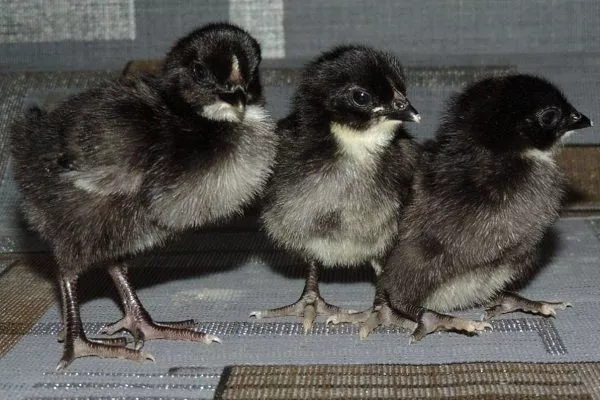
Xin Xin Dianov chicks differ in color from adult hens.
Feeding the "babies"
Diet of chickens depending on age:
| Age | Feed per individual |
| 1-5 days |
|
| 6-10 days | the norms are increased by 1.5 times, minerals are introduced - 0.5 g |
| 11-20 days | They are given compound feed or mash, eggs are replaced with boiled root vegetables - 5 g each |
| 21-40 days | increase the ingredient norms:
|
The chicks' diet is no different from that of regular chicken breeds. They begin feeding with boiled eggs mashed in milk. They are also given cottage cheese, greens, and crushed corn. Yeast is added to the feed. Then, the young birds are transitioned to a mixed feed with boiled vegetables, supplemented with vitamins and minerals.
Diseases and pests
Parasitic infections are the most common problem for Chinese layers. This breed, despite its excellent immunity, is nevertheless susceptible to trichomoniasis, coccidiosis, and histomoniasis. To avoid losing your flock, it's important to recognize the early symptoms of these diseases and take prompt action.
Particular attention should be paid to the health of chickens during molting – it is essential to support their immunity in every possible way, providing them with adequate nutrition and good living conditions.
Diseases of Xin Xin Dian chickens and their treatment:
| Disease | Symptoms | What to treat with? |
| Histomoniasis |
|
|
| Coccidiosis |
|
|
| Trichomoniasis |
|
|
Diseases are usually caused by improper care. It's the veterinarian's job to make an accurate diagnosis and prescribe medications. chicken diseases Vaccination and compliance with maintenance rules help.
How much do they cost?
Average price of Xin Xin Dian chickens:
- hatching eggs – 70-80 rubles per piece;
- young animals – 180-200 rubles per individual;
- adult laying hen – 1200 rubles.
These are average prices; the cost of chickens varies depending on the region.
Reviews of Xin Xin Dian chickens
This breed stands out among its competitors for its high egg production, unique eggs, and low feed consumption. Given their ease of reproduction, these unpretentious Chinese layers are deservedly popular among our poultry farmers.