
Shaver Brown chickens have earned the respect and recognition of poultry farmers for many years. Despite being a crossbreed, they are known for their excellent egg production and low maintenance requirements.
History of the breed's origin
The breeders' names have been lost to time, but it is clear that these crosses were developed by a well-known Dutch breeding company. The breeders dreamed of creating a cross that would produce a large number of eggs and possess maternal instincts. This goal was achieved, and the cross fully achieved it. There is no clear data on when the breed was created or how it arrived in Russia.
Description and characteristics of Shaver Brown chickens
In nature, three types of these chickens are commonly distinguished: white, brown, and black Shaver chickens. This article focuses only on the brown Shaver chicken, but many breeders claim that other than feather color, these birds are indistinguishable from each other.
Some poultry farmers noted that the black ones are the largest birds, and the white ones are the smallest.
Appearance and physique
| Name | Weight of an adult (kg) | Egg production (pieces/year) | Eggshell color |
|---|---|---|---|
| Shaver Brown | 2.0-2.5 | 210 | light brown |
| Shaver white | 1.8-2.3 | 200 | white |
| Shaver black | 2.2-2.7 | 220 | dark brown |
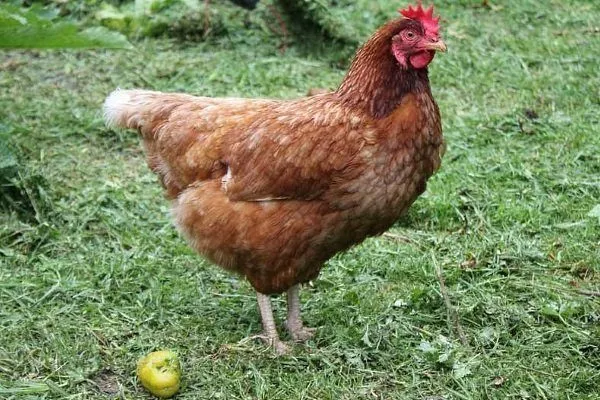
Shaver Browns are small, with hen's weighing up to 2 kg and cockerels around 2.5 kg. Their appearance is unassuming and unremarkable. Their bodies are small and their skeletons are light. Their abdomen and chest are substantial, with hens having a larger abdomen than cocks.
The back is concave. The neck is short, and the legs are small and featherless. The hens' tails are drooping, while the males' tails are raised. Roosters are renowned for their proud posture, and the hens' eyes are deep orange, changing color with age. The comb is small. The wattles are a rich red, and the beak is strong.
Color
Shaver Brown chickens are brown. These crosses may have white spots on their wings and tail. Female chicks fledge much earlier than young males. Differences can be seen within a day of hatching.
Character
Laying hens have a wonderful temperament: they're peaceful and friendly. They're somewhat similar to phlegmatic hens. Their disposition makes these breeds easy to care for. They can get along with any breed of domestic chicken. However, it's best to house them separately to ensure a clean coop.
The breed's only drawback is its desire to fly, and they have no problem flying over a small fence. Therefore, the exercise yard is constructed with a high fence, which is very difficult to climb. Males are especially curious, while females are more reserved.
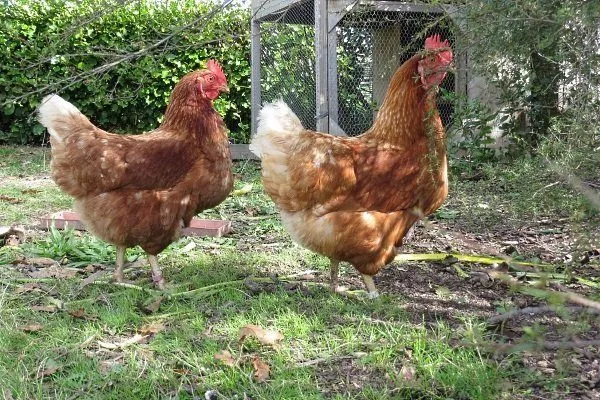
Birds react negatively to wing clipping, so it should not be done.
The instinct of incubation
Numerous studies have proven that maternal instinct is inherent in all purebred breeds, with crossbreds and hybrids having lost it completely or partially. However, there are exceptions, and the Shaver Brown chicken breed is proof of this.
Shaver Brown hens have a well-developed brooding instinct. Hens happily sit in nests and hatch their eggs. However, there's no denying that some hens are flighty layers, so it's best to invest in an incubator just in case. Read more about incubating chicken eggs. Here.
Productivity indicators
This cross is renowned for its performance, occupying a leading position among egg-laying chicken breeds. They gain weight very quickly, weighing 1.4 kg at 4.5 months and around 1.9 kg at 6 months. By one year, they reach over 2 kg. It's virtually impossible to obtain meat from such a weight, and the meat itself isn't particularly high-quality or tender. The reason is simple: these crosses are considered egg-laying chickens.
Puberty and the onset of egg laying
Hens can begin laying eggs for the first time as early as four months of age. Initially, the process is irregular, but after two weeks, things improve. The eggs are small, weighing around 50-60 g. A hen lays about 210 eggs per year.
Some poultry farmers claim that hens lay around 350 eggs or more. This depends entirely on the conditions in which the birds are kept. The Shaver Brown breed's shell color is light brown. Over the entire laying period, hens produce only 1% of bad eggs.
The fertilization rate is almost 99%. The chick survival rate is lower – about 80%.
What is interesting is that the eggs of this breed of chickens are rich in Omega-3 and Omega-6 much more than those of other domestic birds.
How do they cope with the cold?
A temperature of +5 degrees Celsius is the limit for laying hens. At this temperature, they still lay eggs, but if the temperature drops, the hens freeze. Special infrared lamps are installed over the nests, and the room is heated or insulated to prevent drafts. Temperatures below +28 degrees Celsius are dangerous for the young.
Birds should not be released into the outdoor yard when the temperature drops to -10 degrees Celsius.
Conditions of keeping and breeding
As for care, the Shaver Brown breed is not demanding, but it has special preferences when it comes to food.
Poultry house
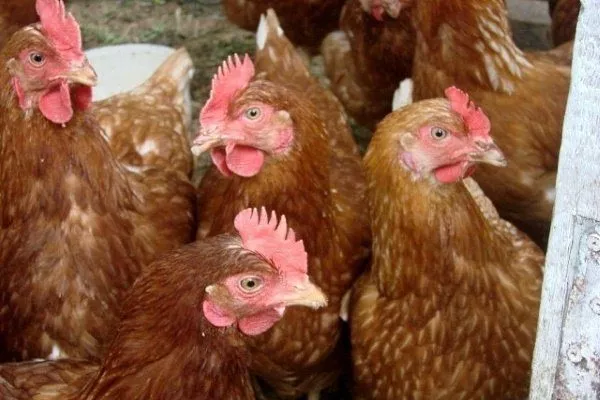
These breeds don't require a large space, so the birds can be kept in either a coop or cages. They don't require any special equipment or facilities. These breeds are considered cold-resistant, so the coop can be heated, or it can be left unheated; the key is to insulate it well. The floor is laid with clay, then covered with straw, dry leaves, or peat.
Chicken manure contains a small amount of ammonia, so the coop must be well-ventilated and regularly ventilated. The poultry farmer should pay special attention to the nesting boxes; they can be built in small boxes with hay or straw placed at the bottom.
Perches are essential and should be large in size, with approximately 0.4 m of space allocated per laying hen.
Yard for walking
Even though chickens are phlegmatic, they still love fresh air. Sunlight is also beneficial for birds, strengthening their immune system. The most important thing to consider is building a high fence; simple mesh can be used as a fence. If the birds fly over it, your entire future garden or vegetable patch will be damaged.
Also, keep in mind that in summer, birds eat not only what the poultry farmers provide but also outdoor food, including worms, other insects, and greenery. It's best to create a run in an area with open soil so the birds can find something to eat.
The chicken coop and run should be built on a slight elevation to prevent rainwater from flooding the area. If this isn't possible, you can lay wood or other material on the ground to allow water to drain away.
Another important point in the process of building a patio is the presence of a canopy that will protect the birds from bright sunlight and pouring rain.
You can find out how to build a chicken coop yourself Here.
Molting and oviposition break
Autumn is a time of renewal for many birds. As the sunny days become shorter and the cold weather becomes more intense, the birds begin to shed their old feathers for new ones. Molting is a normal process common to all birds. This process helps hens become more productive.
New feathers help them weather the cold weather more safely, but during this time, there's a long break in egg-laying. This isn't considered a disease or abnormality; it's simply a normal response of the body, which has decided to devote all its energy to feather renewal.
Some birds may exhibit cannibalism, which means they begin pecking at the feathers of other birds. Sometimes this behavior doesn't stop there, and some chickens are completely eaten. Cannibalism during molting can only be avoided by improving their diet.
The Shaver Brown chicken breed is distinguished by its long lifespan. life expectancyHowever, after 3 years, you can get rid of the old birds and completely renew the flock, since the productivity of old chickens decreases.
Nutritional Features
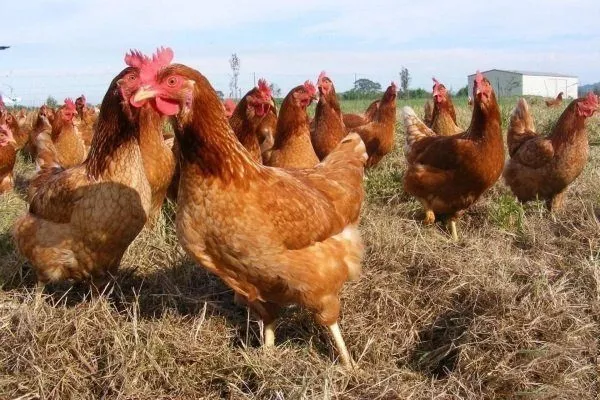
The diet of Shaver Brown chickens should be carefully selected; due to their small size, these crossbreeds do not require as much food as their counterparts.
Adults
To ensure that Shaver Brown birds grow up healthy and productive, it is important to follow basic feeding recommendations:
- The main dish is combined feed mixtures.
- Add whole and crushed grains daily.
- Wet mash digests quickly, so feed it in the morning rather than in the evening. This dish also improves egg production, but it doesn't promote weight gain.
- Add useful vitamins to the mash, for example, chalk, shells, fish, meat and bone meal.
- Add salt.
- Don't neglect vegetables and other healthy ingredients; boiled potatoes and carrots are excellent options.
- Feed the birds twice in the summer, if they are free-ranging, and at least three times in the winter.
- During the winter period, give food warm.
- Greens can be replaced with herbal flour.
- Add fermented milk products and vitamins from time to time.
Chickens
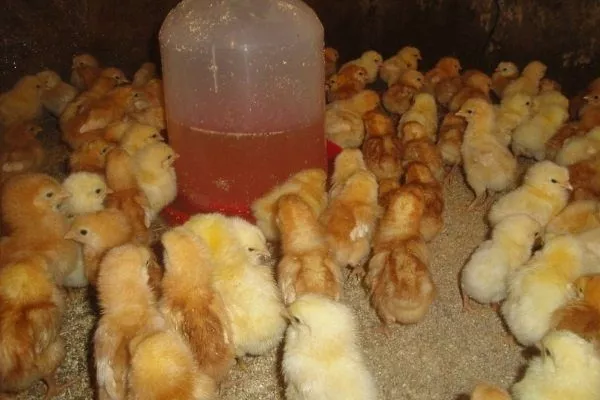
For the first two days, the chicks' diet consists of a hard-boiled, chopped egg rolled in semolina. Low-fat cottage cheese and sour milk are gradually added to the food. The cottage cheese should not be wet, so it doesn't get stuck in the birds' beaks.
To ensure the chicks' bodies process food quickly and efficiently, containers of sand should be kept in the coop. The sand should be heated in a hot frying pan for about 10 minutes beforehand. At 5 days of age, chicks can be fed a variety of foods.
Breeding
The Shaver Brown chicken breed has a maternal instinct, and hens can hatch their young. It's also worth noting that these hens are excellent mothers; after the chicks are born, they care for them, nurture them, and teach them how to survive in the coop.
However, not everything is as simple as one would like. Before a poultry farmer decides to breed Shaver Brown birds, they need to know one characteristic of these birds. Hybrids cannot pass on genetic traits to their offspring. When breeding Shaver Brown crossbreeds, the breed's characteristics will first begin to change and then disappear completely. It is impossible to breed purebred Shaver Brown birds at home.
Purebred crossbreeds can be purchased at breeding centers or specialized poultry farms that breed hybrid chicks. Chicks are available at 1 day, 1 month, and 5 months of age.
Never buy chickens from the market or from the street.
Caring for chickens
Adult birds of these breeds tolerate cold well, but the young are not yet ready for it. Drafts can kill the chicks. The temperature in the coop where the chicks are raised should not fall below 28 degrees Celsius. Special lamps should be installed to illuminate the coop.
- ✓ The temperature in the chicken coop should not fall below +28°C during the first weeks of life.
- ✓ To prevent cannibalism during molting, increase the protein content in the diet to 18-20%.
Keep chicks separate from adult hens, and pay attention to their behavior. Monitor the temperature; if the birds rub against each other, they are very cold.
Advantages and disadvantages
Before purchasing Shaver Brown cross chicks, you need to familiarize yourself with all the advantages and disadvantages of the cross.
Advantages:
- high productivity;
- strong immunity;
- ease of care;
- withstanding frost and cold;
- high survival rate of young animals;
- healthy eggs with strong shells;
- docile character.
Disadvantages of Shaver Brown:
- cannibalism occurs during molting;
- impossibility of breeding on your own plot;
- rarity (very difficult to find chickens of this breed).
Frequent illnesses
Breeders spent extensive time developing this cross, which gave the birds strong immunity. The only threat to the breed is avian tuberculosis, which almost always results in death.
Disease can only be avoided by following all preventative measures. It's important to feed the birds well, clean the coop regularly, and take good care of their health.
The main signs of the disease in crossbreeds are: change in the color of the droppings, poor appetite, inactivity, and decreased egg production.
Farmer reviews of Shaver Brown chickens
The Shaver Brown chicken breed is an excellent, low-maintenance breed. These small and elegant hens will amaze you with their productivity day after day.