
Chabot chickens are considered ornamental birds, and have long been known to lovers of birds with unusual appearances. A dwarf breed, they are suitable for breeding in both small and large numbers.
History of the breed's origin
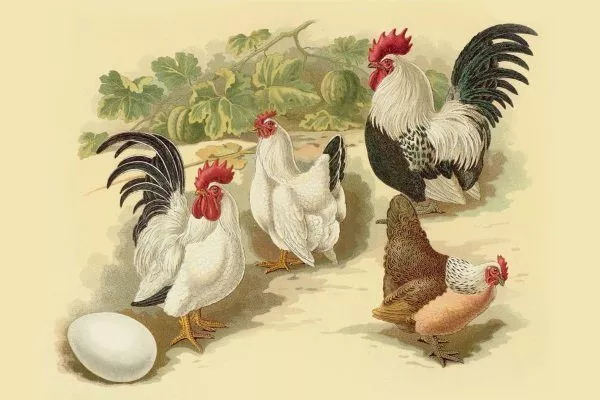
Originating in Japan in the 17th century, Shabo are often called Japanese bantams. Their ancestors are wild chickens brought to the country from India. Thanks to their genes, Shabo chickens have excellent maternal instincts and the ability to withstand various conditions. chicken diseases.
After Japan, China became interested in this breed. Shabo chickens arrived in Europe two centuries later. It was during this period that some ornamental birds arrived in Russia.
Description and characteristics of Shabo chickens
The breed's main characteristic is its small, low-slung body with uneven, low legs. The difference between the body and legs is so great that the birds appear to crawl rather than walk. This short-legged nature has influenced not only their appearance but also their behavior. Shabos are calm, not particularly active, and are characterized by extreme tolerance and composure.
Appearance
Due to their short legs, the breed is considered an exotic ornamental. Despite their sedentary nature, Shabos are among the hardiest small chickens. It is precisely this appearance and calm nature that make the Japanese Bantam a favorite breed for ornamental purposes.
Miniature chickens don't live long, but Shabo is known for its longevity, especially with proper and regular care.
Modern versions of these birds haven't changed much compared to their ancestors. Poultry breeders strive to maintain the genetic link that connects the old Shabos with the current ones. However, everything depends directly on the hardiness of the offspring. Only the color of the hens can be changed, which makes it possible to produce versatile specimens while maintaining excellent hardiness.
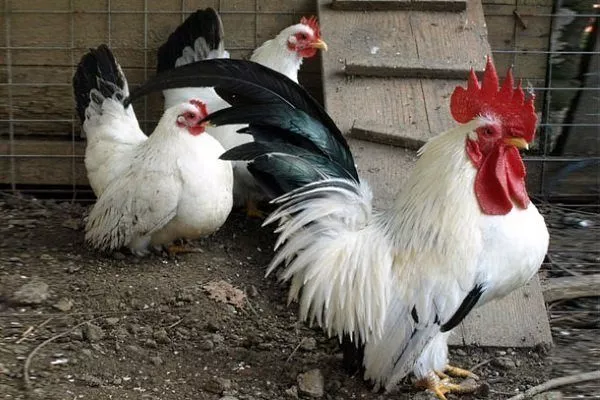
The main characteristics of the appearance of Shabo chickens:
- Very short legs.
- Small back and wide chest.
- Large, grounded body.
- Long wings that touch the ground surface.
- The head is voluminous with a small beak.
- Long tail with raised tail feathers.
- Large-scale plumage.
Chickens present a unique, motley display of multicolored feathers, especially when the shades blend. The exotic appearance of Shabo chickens often prompts breeding. For bantams, a cockerel with a blue tail or a hen with golden plumage is not uncommon, but a classic color.
In terms of appearance, males and females are generally similar. The main differences are that the female lacks the pointed tail feathers and has a smaller head.
Character
Bantams are beautiful in appearance, but they are also excellent in behavior. Their main distinguishing feature is their innate maternal instinct. Many poultry breeders consider bantams a real find, as they incubate not only their own eggs but also those of other miniature chicken breeds.
For a description of the Shabo chicken breed's character, watch the video below:
Shabos have a unique character, but that's what makes them so beloved. These cockerels are combative, even wild in a way. They are true protectors of their hens. A cockerel will defend a feathered female with his entire body, fearlessly charging into battle, regardless of the size of his enemy.
When it comes to communication between individuals of the same breed, Shabo is distinguished by its extreme friendliness and cohesion. Representatives of this breed will protect each other from uninvited guests or enemies.
Birds cannot live alone; any confinement negatively impacts their behavior and health. If a Shabo is kept in confinement for an extended period without contact with other members of its species, it stops eating and eventually dies.
The Shabo chicken community has a special hierarchy, where the rooster is the leader. He protects and defends everyone, wakes them up, and tastes the food before the hens are supposed to eat it.
Productivity
Shabo chickens reach full maturity in the same way as other chicken breeds—at six months of age, sometimes earlier. Males begin to fertilize females, and the females, in turn, are ready to lay and hatch eggs.
On average, egg production is 80 eggs per year. In rare cases, it can reach 110 eggs.
The productivity rate is not the highest, but it is due to the following factors:
- The weight of one egg is approximately 30 g, which is half that of a classic laying hen.
- Despite their long lifespan, females quickly age and stop laying eggs. By the third or fourth year of life, egg production significantly declines, so females must be culled.
- Over the years, the chicken does not lose its beautiful appearance, but it is no longer possible to use it to obtain a large number of high-quality eggs.
- The weight of an adult female is 0.5 kg, and that of a male is 0.7 kg.
- Bantam meat tastes more like partridge than chicken. It's very juicy and tender, and contains little fat.
| Parameter | Meaning |
|---|---|
| Average egg weight | 30 g |
| Minimum survival temperature | +10°C |
Growing and maintenance conditions
The breed is known for its sociability and good nature, but it can be overly vocal. Bantams don't require special housing, but they do require adequate living conditions. The primary requirement is a warm environment, as the Shabo's homeland is the Land of the Rising Sun, meaning they don't tolerate cold temperatures.
Chickens should be fed a nutritious, complete feed. It's best to mix your own feed rather than buy store-bought pre-mixed ones. It contains mineral supplements, greens, and plenty of vitamins.
Climate and thermal conditions
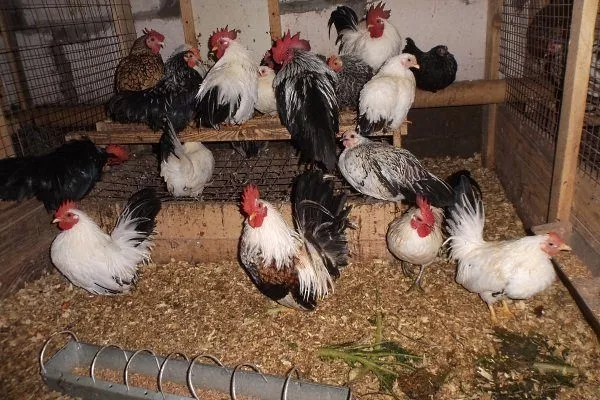
Chickens cannot adapt to cold, even if they are gradually acclimated. Given this characteristic, Shabo chicken breeding is only profitable in the central or southern regions.
The temperature in the chicken coop should be maintained at 18 degrees Celsius during winter. A temperature drop of 1-2 degrees is acceptable. Failure to do so will result in the birds freezing and dying, even with their abundant feathers.
- ✓ The temperature in the chicken coop should not fall below +16°C even for a short time.
- ✓ Air humidity should be maintained at 60-70% to prevent respiratory diseases.
Setting up a chicken coop
The arrangement of the chicken coop must be approached with care. The most important thing is that it maintains normal humidity, is free of drafts, and is free of sudden temperature changes. This means the coop must be well-insulated.
Ventilation can be provided using devices that do not generate cold air currents. Underfloor heating is essential; if the underfloor is covered with cold material, use additional clean underlay.
Foam plastic granules cannot be used as bedding material.
Sand trays are a must in the room; they help eliminate parasites. Perches are built to standard dimensions, 40-50 mm wide, and placed at a height of 1.5 m to allow the birds to rest and lay eggs. Their wide wings allow them to quickly reach these heights.
Walking
The Shabo breed is very slow and calm, but they enjoy the fresh air. Walking relieves boredom and strengthens the immune system. The birds require a fenced-in area. It's best to protect the yard with a canopy to prevent other birds from entering and to provide shelter from the rain.
During the summer, chickens should be allowed to roam freely as much as they want. During the winter, when temperatures drop below freezing, roaming is prohibited. Bantam chickens don't tolerate the cold well and quickly become ill.
Nutrition
Shabo chickens are a miniature breed, so they require minimal amounts of food. This allows poultry farmers to feed them high-quality, nutritious feed. Skimping on feed is not recommended, as it can negatively impact their health and egg production.
Chickens
The diet of young bantams is not much different from that of other chickens. In the first few days, poultry farmers feed them corn grits, then transition them to a special mixture. It's important that young bantams receive all the necessary nutrients in their diet, otherwise they will grow weak and die quickly. Chalk is always added to the feeder.
In addition to special mixtures, you can give chickens:
- green;
- low-fat cottage cheese;
- boiled vegetables.
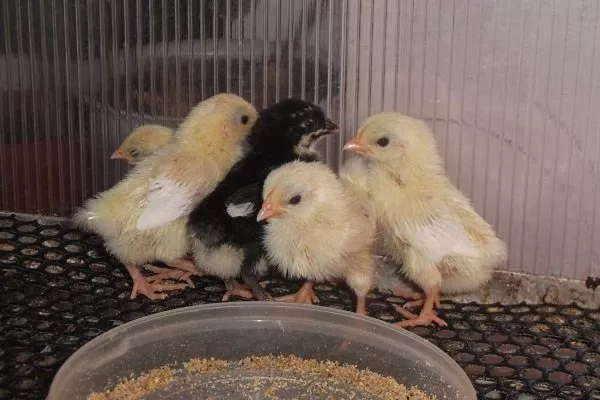
Never feed earthworms to young animals - they can carry various infectious diseases.
Adult chickens
The diet consists of grains and cereals. Grains that can be used include wheat, barley, and corn. You can also add the following to the diet:
- boiled potatoes;
- green;
- some cottage cheese;
- bone and meat and bone meal;
- mineral supplements.
You can buy high-quality bantam feed, which already contains all the necessary ingredients. When purchasing, be sure to check the presence and amount of minerals in the feed. Sprouted wheat is added to the diet of adult hens in small quantities as a supplement.
Breeding
Sexual maturity occurs at 5-6 months of age. By this time, Shabo females are ready to incubate eggs, making the breeding process significantly easier.
Breeding ornamental birds places high demands on standards. All individuals must be born purebred and healthy. The strongest, most beautiful, and healthiest bantams are selected as parents.
Individuals with the following defects are not allowed for breeding:
- small body;
- elongated back;
- long paws;
- underdeveloped ridge;
- the iris of the eye is yellow-green;
- short, underdeveloped wings.
Experienced poultry farmers recommend choosing a standard rooster and a hen with slightly longer legs. Years of breeding have shown that short-legged pairs produce weak offspring that die within a short time.
Diseases and treatment
Bantams are very prone to colds. Because of this, poultry farmers recommend building a high-quality coop from the start, ensuring good air circulation but minimizing drafts. Bantams are not allowed outside during the winter.
Shabo chickens are often susceptible to various parasitic infections and tuberculosis. Maintaining cleanliness and sanitation in the chicken's living quarters will help prevent ticks, fleas, and bedbugs. To prevent tuberculosis, keep domesticated Shabo chickens away from wild birds. The yard should be fenced off with mesh, and the floor should be filled with cement to prevent mice and rats from entering.
Get preventative vaccinations; they will help protect birds from infections.
Advantages and disadvantages of chickens
Advantages of the Shabo chicken breed:
- individuals require a small amount of food;
- decorative appearance;
- calm character;
- the presence of maternal instinct;
- the presence of a third type of product – high-quality feathers.
Disadvantages of the Shabo chicken breed:
- weak immunity;
- high mortality rate due to non-compliance with the conditions of keeping or breeding;
- demanding of high-quality feed;
- impossibility of keeping with other breeds of chickens.
Reviews from poultry farmers
I got about 70 eggs from one hen this year, which I don't think is much, of course. But I bred them for beauty and for the soul, not for any particular benefit. As for personality, the rooster turned out to be the most active. The hens are calm and slow, but he's constantly doing something, squawking. Maybe that's just how he shows he's in charge—I don't know, I haven't figured that out yet.
Shabo chickens are an excellent option for those who don't have a large property but are interested in ornamental birds. Japanese bantams are regularly featured at shows and fairs; they are kept not so much for the product as for aesthetic enjoyment and breeding.