
Raising Russian Crested chickens requires following certain guidelines. Although the breed is considered easy to care for, ignorance of certain facts can negatively impact the flock. Breeding and maintenance considerations, feeding management, and much more useful information are available below.
Interesting historical data
The breed is considered to be native to Russia, but its origins remain uncertain and continue to spark debate in academic circles. According to one theory, the breed originated in Asia; another, it was developed by Russian farmers over 100 years ago. The latter theory is supported not only by archival records but also by the bird's ability to tolerate our climate.
Regardless of the origin story, this breed is widespread in Russia and is also raised in Asia. In European countries, the Russian Crested population is small.
Description and characteristics of the Russian Crested breed
Let's look at the main characteristics of this breed.
The bird's appearance
Exterior features include:
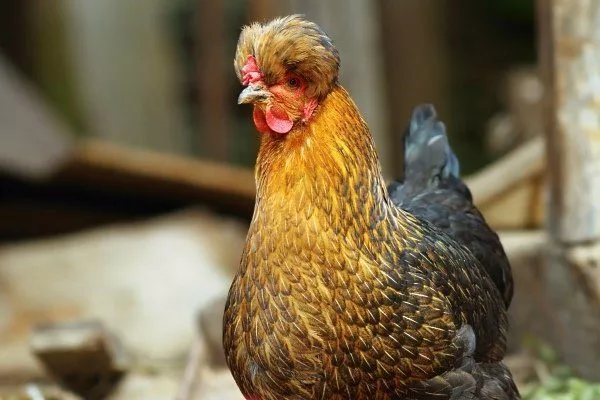
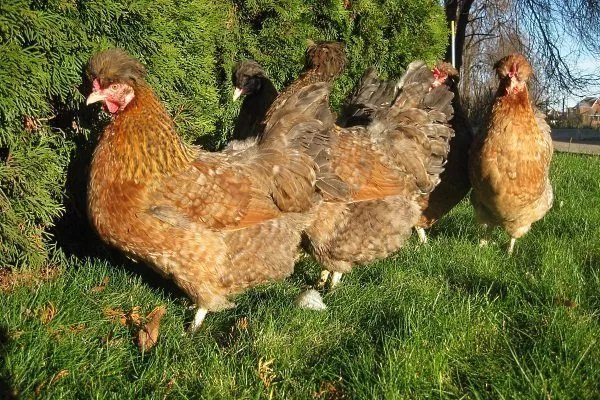
- These birds are medium-sized. Their main distinguishing feature is a crest on their head, the feathers of which are directed backward. These feathers may stick out or create an "artistic mess" on the head. The shape of the head is either sheaf-like or helmet-like.
- The comb is red, leaf-shaped, and can also be rose-shaped and regular in shape, without any shoots.
- The head itself is small, slightly elongated, and proportionate to the body. The face, ear wattles, and earlobes are also red. A small amount of white markings is permitted by breed standards.
- Eye and beak color depend on the plumage. Species with orange eyes are more common, while light yellow, brown, or red eyes are less common. The beak ranges from yellow to dark gray. It is strong and slightly curved. The feathers lie flat against the body and point straight back.
- Russian Crested Ducks have a short neck. The back is broad and level. The tail is well developed. The chest is also broad and dense. The wings are drooping, strong and powerful. The legs are short and bare.
Differences between a rooster and a hen
The male and female of this breed differ significantly in appearance. The rooster is much larger than the hen. His robust body is almost twice as large as that of the hen. However, his hair is much more modest. Due to his larger comb, his crest is much smaller than that of the hens. However, it does have a feathered mane, so it usually hangs to one side.
Laying hens have very lush and thick crests. They need to be trimmed occasionally to prevent them from obscuring their eyes. The male's tail is triangular in shape. It is lush and long. Not only the braids are long, but also the top feathers.
Color
The breed is also interesting because of its diverse coloring. The standards don't specify strict restrictions on this issue, but they do recognize 10 basic colors:
- White. The most common birds are white-colored. These individuals have a yellow beak and metatarsus (the bones of the foot located between the shin and the toes).
- Black. Black individuals have brown eyes, a dark grey bill and grey tarsi.
- Red. The red hen has yellow feet, dark eyes and a light brown beak.
- Lavender. Of particular interest is the lavender or bluish coloration, which occurs through a mutation in the genes responsible for color. For this reason, it is quite rare.
- Gray. The gray coloration is characterized by feathers with a wide white border around the neck and a narrow one on the crest. Gray individuals have brown eyes, and their beak and tarsi are gray.
- Silver-black. The lower part of the body—the belly, sides, back, and wings—is covered with black feathers, while the upper part—the neck, head, crest, and lower back—is silvery. The eyes are brown, and the beak and tarsus are light-colored.
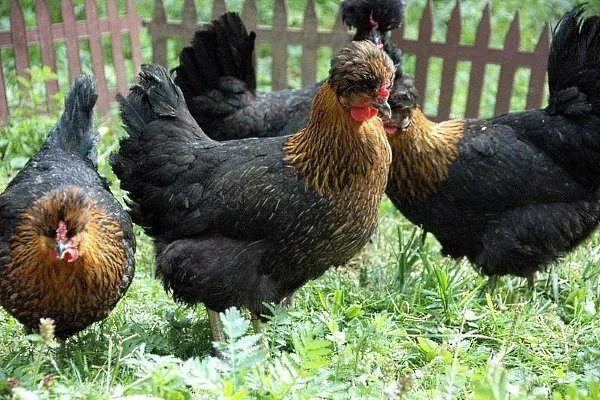
- Golden-black. These hens have a rich appearance, with golden feathers on their necks and crests, while the rest of their feathers are black. Their eyes are brown, and their beaks and tarsi are dark.
- Cuckoo. These specimens are hard to miss. They have a uniformly variegated coloration, with light-colored bills and tarsi.
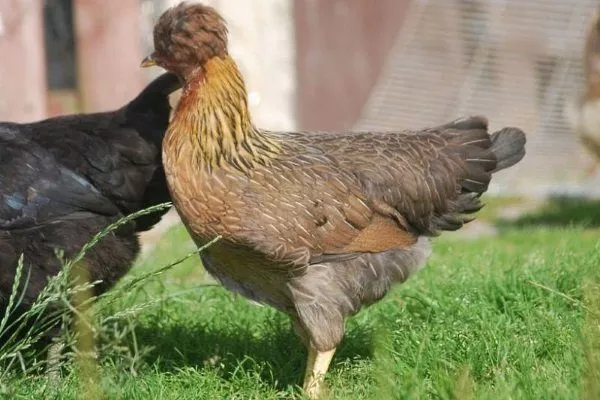
- Chintz. The most striking and unusual coloring is considered to be calico. These birds have a red or rufous base coat, interspersed with lighter-colored feathers. It's impossible to find two identical calico hens, as the pattern is unique to each individual.
- Salmon. These are soft fawn-colored hens with black stripes on their necks and chests. The coloring is reminiscent of salmon.
An overview of the Russian Crested chicken, as well as the varieties of this breed, are presented in the video below:
However, there are several traits that are unacceptable in breeding birds. If they are present, the bird is rejected and not used for further breeding:
- absence of a crest or its poor development;
- large comb;
- completely white earlobes;
- long legs;
- the color scheme includes yellow;
- wings are set high;
- rough body.
Bird's disposition
Russian Crested birds are distinguished by their peaceful, friendly nature. They get along well with other birds, become attached to their owners, are unafraid of people, and are easily tamed.
However, don't think that these are phlegmatic natures. On the contrary, they are emotional, active, and vocal.
Sexual maturity and egg production
This breed is a versatile one. Poultry farmers will be able to provide themselves with not only eggs but also delicious chicken meat. Females begin laying eggs at 5-6 months of age. Each hens can produce 150-160 eggs per year.
Peak egg production occurs at eighteen months of age, then begins to decline. The average egg weighs 56 g. The shell is usually white or cream-colored.
The instinct of incubation
Russian Crested hens have a strong maternal instinct, so breeders have no problem hatching chicks. Unless they're aiming for large numbers, hens are excellent at this task.
Not only do they tend to the eggs with particular care, but they also care for their young with equal care. However, they don't observe mass chick mortality.
Productivity
Crested individuals have average productivity. Different sources report different figures. This is due to the breed's genetic diversity.
A mature cockerel can weigh between 2.7 and 3.5 kg. A hen weighs less. Most sources list the average weight as 2.2 kg, but some sources report it as high as 1.8 kg.
Advantages and disadvantages of the breed
Whether or not to raise this breed is a poultry farmer's decision. To make the choice easier, let's look at the main advantages and disadvantages of the Russian Crested breed.
Among the advantages, experts note:
- excellent frost resistance of birds (they winter well in unheated chicken coops and in light frosts they prefer walks in the fresh air);
- high immunity to diseases;
- high adaptability, takes root in any region;
- stable egg production - 1 egg every 2 days;
- original appearance, variety of colors;
- high egg fertility up to 90–95%;
- strong maternal instinct of hens;
- high hatchability rate;
- calm disposition;
- delicious tender meat.
Among the disadvantages, they note the pugnacity of roosters and the additional hassle of keeping hens - their crests need to be trimmed periodically.
Conditions of detention
Although birds are unpretentious and undemanding in maintenance, creating favorable living conditions is still the responsibility of the poultry farmer.
How to set up a chicken coop?
Because crested hens are frost-resistant, the coop doesn't require insulation. However, it must be built on a 40-60 cm high foundation and provided with ventilation. If ventilation isn't possible, the room must be ventilated daily. The air must not become stagnant.
Perches are installed inside at a height of 30–35 cm from the floor. The floor is covered with litter made of hay or sawdust. This litter is changed regularly as it becomes soiled or damp. The poultry house must be kept dry and clean, as this ensures the health of the birds. Artificial lighting is essential, and daylight hours should be maintained for at least 12–14 hours.
Nests are placed on the floor away from the perches. The optimal size is 50x50 or 50x40 cm.
If you want to make a chicken coop with your own hands, then This article may become useful.
Walking yard
Since birds are very active and inquisitive, a covered outdoor area is essential for the birds to shelter from rain or hot sun. The area is enclosed with fine-mesh netting. The bottom of the netting is dug into the ground to prevent digging from both sides.
This will prevent the chickens from escaping, and it will also protect them from uninvited predators. In the summer, chickens spend all their time outdoors. In winter, they also enjoy exploring the yard, even in severe frosts down to -40°C.
Feeders and drinkers
Feeders and waterers are kept outside in the summer and brought inside the coop during cold weather. They are regularly washed and disinfected to prevent the development of pathogenic microorganisms. How to make your own feeder is described in Here.
Water in the waterers is changed regularly. Birds must be able to access them without hindrance. Wet mash is placed in plastic or metal feeders, and dry food is placed in wooden ones. Any uneaten wet food is discarded.
Read the article about How to make your own chicken waterers.
Bird wintering
During the winter, the hens are kept in coops. To maintain egg production, artificial lighting is turned on daily. At temperatures below -40°C, the crested hens are not allowed outside.
In milder frosts, they can walk for 30–60 minutes a day without harm to their health or the risk of frostbite on their combs and earrings.
Molting
Every bird sheds its feathers. Molting is a natural process that occurs with a decrease in egg production, as essential nutrients are used up by feather renewal.
In healthy birds, molting lasts about two months. In healthy birds, molting occurs without any difficulties, and they quickly return to normal.
Feeding adults
In summer, free-ranging chickens can easily provide themselves with a full diet. The rest, which are only allowed to roam in the yard, are fed three times a day. The birds don't have any particular food preferences. However, their diet must be nutritious and contain vital nutrients such as minerals, vitamins, and proteins.
Of the grains they are given - wheat, oats, millet. You can use ready-made industrial ones compound feed.
Birds get calcium from crushed eggshells, chalk, and shell rock. Fine gravel should always be available. It has a beneficial effect on the digestive system.
Green grass contains essential vitamins. It's abundant in summer, so it should be included in the diet daily. In winter, fresh root vegetables—carrots, beets, zucchini—are given, as well as apples, harvested hay, and yeast. A wet mash with added meat or fish meal is fed year-round. In winter, this feed is served warm to provide additional warmth.
Breeding chicks
Breeding Russian Crested chicks does not require any special skills, but it is important to know about the specifics of the process.
Hatching or incubation?
Crested hens are renowned for their strong maternal instincts, making them among the best brood hens. If you keep the hens for yourself only, it's enough to place hens on the eggs. Those who sell young of this breed typically use incubators for hatching.
- ✓ The optimal temperature in the incubator for Russian Crested eggs is 37.5-37.8°C for the first 18 days, then reduced to 37.2°C.
- ✓ Humidity in the incubator should be maintained at 50-55% for the first 18 days, then increased to 65-70% until hatching.
By spring, the hen's maternal instinct kicks in and she begins building a nest, lining it with her plucked breast feathers. Spring is the optimal time for hatching, as the chicks will be raised in warmth. Three to four days after the clucking hen begins building her nest, eggs can be placed underneath her. She incubates them for 21 days.
Crested hens are very responsible mothers and can remain in the nest for long periods. Therefore, they must be removed from the nest periodically and ensured that they eat and drink regularly.
Sometimes an egg can be found near the nest. The hen has rolled it away. There's no need to return it to the clutch, as the hen intuitively senses which eggs are dead. Most likely, it was not fertilized or the embryo died.
Caring for young animals
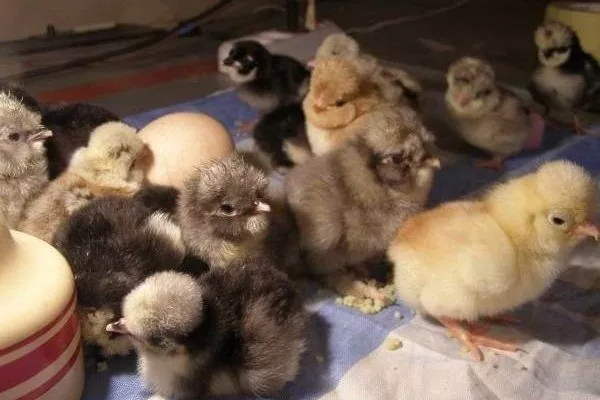
After 21 days, the chicks begin to hatch. Ideally, leave the babies with their mother—the hen will keep them warm, safe, and protected. Later, the brood will follow the mother hen everywhere. She will also teach them how to drink and eat.
If this isn't possible, the dried chicks are removed from the mother hen and placed in a box. It should be lit 24 hours a day with a lamp above and heated from below. Bedding should be placed on the bottom. The box should be warm (+30°C), dry, clean, and free of drafts.
Feeding chickens
Meals are organized as follows:
- During the first few days, the chicks are fed a hard-boiled egg, which is very finely chopped beforehand. Then they are given millet porridge cooked in water with dill added. They are given chamomile infusion or a light pink solution of potassium permanganate to drink. This diet is followed for two weeks.
- Starting at two weeks, fresh cottage cheese, semolina, and finely ground cornmeal are added to the diet, along with boiled mash. At this age, chicks can already catch small insects.
- Up until four months of age, young animals should be fed a diet rich in protein. From one and a half months on, they begin to grow rapidly and gain muscle mass. They are fed a mash made with meat broth, protein-enriched feed, and fermented milk products such as cottage cheese and yogurt.
- At 5–6 months, young females begin laying eggs. Sources of calcium, minerals, and vitamins are introduced into their diet.
Planned herd replacement and diseases
A complete replacement of the laying flock is carried out after 2-3 years, by which time egg production has dropped to critical levels. However, since the chicks have a high survival rate, replacing them is usually not a problem. The flock quickly recovers and produces well.
- Disinfect drinking bowls and feeders weekly with a solution of potassium permanganate.
- Treat the chicken coop with slaked lime once a month to prevent the development of parasites.
- Every three months, give the birds a preventative course of vitamins for 5 days.
With proper care and adherence to sanitary and hygienic standards, Russian Cresteds will give no cause for concern about their health, thanks to their strong immune system. For prevention, giving them chamomile tea is sufficient.
However, if you feed your birds stale food, don't change the water in their waterers, or leave wet food uneaten all day, especially in hot weather, no amount of immune support will help. Your flock will develop intestinal diseases and illnesses caused by dangerous microorganisms.
Where to buy and how much does the bird cost?
It's recommended to purchase young birds from poultry farms or reputable farms, as not all birds with a crest are Russian Crested. There are many different chicken breeds worldwide that sport a crest.
On average, one hatching egg costs around 50 rubles, a day-old chick costs around 150 rubles.
Prices for adult birds vary by region. Roosters range from 500 to 1,000 rubles, and laying hens from 300 to 800 rubles.
Poultry farmers' reviews of the Russian Crested chicken breed
Reviews of the Russian Crested breed are mostly positive; poultry farmers value them for their unpretentiousness and beauty.
And, you know, I don't regret buying them at all. Firstly, they don't get sick compared to the others. Secondly, they're good brood hens—two hens quietly built nests, laid eggs, and sat down to brood. Thirdly, they know and love me like little dogs, by God. As soon as I walk in, they immediately rush to me.
The Russian Crested is fit to compete in a beauty contest; the bird is easily recognizable by its stylish hairstyle and beautiful plumage. However, this breed is renowned for more than just beauty. With proper care and adherence to all the rules, it will delight you with its egg production and ease of maintenance.