
Among egg-laying chicken breeds, the Loman White has been renowned for many years. And for good reason, these layers have become so popular: in addition to their low maintenance and beauty, they are known for their high productivity. Learn how to properly care for and breed these birds in our article.
Description and character
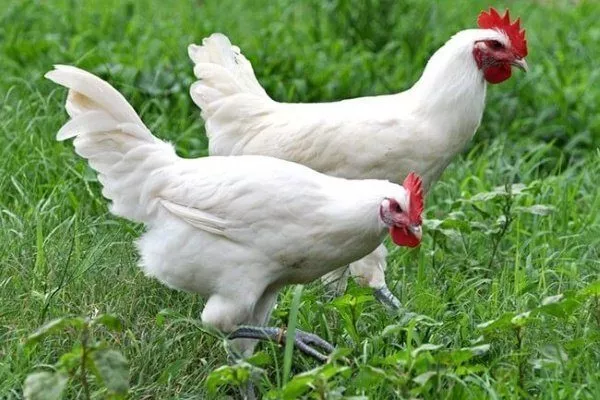
The Loman White egg crosses have distinct characteristics:
- snow-white color of feathers;
- the birds are small in size: the rooster weighs approximately 1.7 kg, and the hen – 1.5 kg;
- the body is compact, trapezoid-shaped;
- the chest and abdomen are not clearly defined;
- There is no feathering on the legs, they are long and yellow;
- wings are short;
- a small red comb with clearly defined teeth;
- red earrings;
- eyes are red-orange.
Behavioral and character traits:
- They are calm and get along well with other breeds;
- very active – constantly moving, easily taking off and landing on perches;
- curious;
- They are quite noisy, but leader roosters help calm the hens. Experts recommend keeping one rooster per 15-20 hens.
Advantages and disadvantages
Breeding Loman White chickens has many advantages:
- they eat little, which allows them to save on buying food;
- ripen early;
- have a high survival rate;
- unpretentious in care and maintenance;
- tolerate any weather well;
- have high productivity: they lay about 350 eggs per year;
- The eggs are large in size – 65-70 grams.
Of course, the breed has its disadvantages, but they are far fewer than its advantages:
- complete absence of the brooding instinct in laying hens;
- The maximum level of productivity does not last long.
Puberty, productivity, egg laying
The productivity of Lohman White hens is considered the best of all egg-laying breeds. Hens can lay eggs daily, regardless of the time of year.
Egg production characteristics:
- Sexual maturity occurs at 4 months of age. From this age, hens begin laying eggs.
- Egg production increases with age, peaking between 160 and 180 days.
- Egg production declines at 80 weeks, so keeping hens on large farms longer than this period doesn't make sense. On private farms, they are kept for up to 2-3 years.
- Egg production decreases during molting. During this time, it's important to ensure your hens are getting all the necessary vitamins from their food. This will ensure the molting process proceeds quickly, and the birds will return to their normal routine.
Breeding and caring for chickens
To breed the Loman White breed, you need to purchase hatching eggs or hatched chicks.
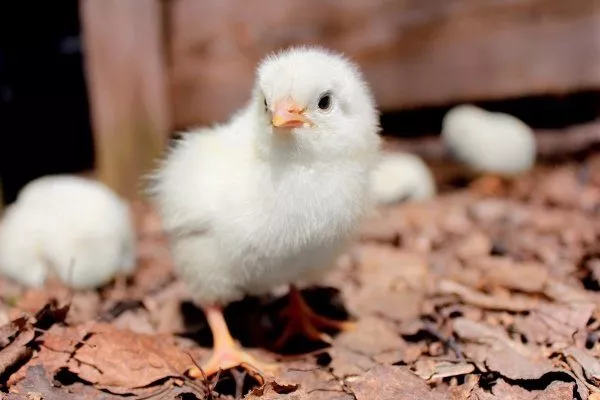
Birds should only be purchased from reputable poultry farms to avoid infectious diseases.
Signs of a healthy chicken:
- plumage - white or light beige, any spots or stripes are a sign of illness;
- active movements;
- eyes are bright, not cloudy;
- the area around the cloaca is not inflamed or dirty;
- wings are pressed tightly to the body;
- the belly is soft;
- the droppings should not be greenish, liquid, have traces of blood or bubbles;
- ringing voice;
- reaction to a person - knock on the box, the chick should move towards the sound;
- good appetite - to check, pour out some food, the chick should start eating it actively.
- ✓ Chicks should actively respond to sounds and movements; lethargy may be a sign of illness.
- ✓ The wings should be tightly pressed to the body; protruding wings may indicate developmental problems.
After purchasing, be sure to quarantine the chicks and give them antibiotics for 5 days. The following medications are used for this:
- "Baytril" or "Enroxil", if the child is under 5 days old;
- "Nutril Selenium" or "Trivitamin" at the age of 5-12 days.
When using an incubator to raise chickens, the following rules should be followed:
- carefully selecting the material is the key to the emergence of healthy chicks;
- cracks and spots on eggs are a defect;
To determine the quality of eggs, you can use an ovoscope.
- eggs intended for incubation should be stored for a maximum of 10 days in a cool place with the base facing up, while turning them around the vertical axis twice a day;
- You cannot wash eggs for incubation;
- the incubator is washed with hot water and then dried well;
- the device is placed on a flat surface, the required parameters are set and turned on;
- in 24 hours you can start laying eggs - place them vertically with the base down.
The entire incubation process is divided into 4 stages:
- During the first week, the embryos' hearts develop and their ability to obtain oxygen develops. During this stage, the incubator temperature should be 37.8°C and the humidity 55%. The eggs should be turned four times a day.
- In the second week, the bones and beak are formed. The temperature remains the same, and the humidity is set at 45%. The eggs are turned six times a day.
- On days 15-18, the temperature remains unchanged, but the lid is opened for 15 minutes twice a day to allow the eggs to cool. Humidity is 50%. Turning the eggs should be done in the same way as in the second week.
- At 19-21 days, the temperature is 37.5°C, and the humidity is 65%. Cooling and turning of the material are stopped. During this period, the chicks begin to break through the shell and hatch.
- ✓ The temperature in the incubator must be stable; fluctuations of more than 0.5 °C can negatively affect the survival of the embryos.
- ✓ Air humidity in the incubator is critical to prevent the eggs from drying out, especially in the first days of incubation.
More details about incubating chicken eggs are given in next article.
A newly hatched chick weighs approximately 40 grams. Survival rates are high—approximately 96%.
Raising chickens is not difficult, as they are unpretentious:
- They do not grow very quickly, but they feather faster than chicks of other breeds.
- In the first days after birth, preparations should be added to the water for the chicks to boost their immunity and provide them with nutrients.
- During the first month, it is necessary to vaccinate the chickens against various infections.
- Newborns need to be fed frequently: 7-8 times a day. In the first days after birth, their diet should include finely chopped boiled eggs, greens, and grains, or starter feed.
- A week after birth, the feeding regimen changes: 4-5 times a day, and foods such as cottage cheese, boiled vegetables and yeast are added.
- At 1.5 months of age, chicks can be placed in the coop with adult birds, but continue to receive special nutrition to support growth and development. Determine the sex of the chicks and choose a diet based on this:
- Roosters are given foods rich in proteins and carbohydrates so that they grow quickly, and at 6-8 months they can be taken to slaughter;
- Laying hens are provided with many vitamins, minerals and other useful substances for the formation of eggshells and preparation for egg production.
- Let your chicks out for walks; this way they get vitamin D and also get plenty of exercise, which helps prevent obesity and many diseases.
Where to keep newly hatched chicks, what medications should be in your veterinary kit, and what to feed them can be found in this video:
Keeping and caring for adult birds
Caring for birds requires following certain rules that are specific to the Loman White breed:
- The temperature in the chicken coop is 23-25 degrees Celsius. Chickens can tolerate temperatures as low as +5 degrees Celsius, but this negatively impacts egg production.
When building, it's advisable to double-layer the walls, roof, and floor, placing 10 cm of foam between the two layers. Cover the floor with a 15 cm thick "carpet" of straw. This insulation can protect the birds even at -12°C (15°F) outside. However, if your region experiences very cold winters, you should additionally install a heater. - The area is calculated as follows: 2 individuals per 1 square meter.
- Cleanliness is crucial for birds, so it's essential to regularly clean the coop, clean the litter, and disinfect equipment (waterers and feeders). Install an exhaust fan to remove odors and moisture.
- The optimal daylight duration is 13 hours. In autumn and winter, fluorescent lamps are used.
- The feeder size is 10-15 cm per bird, and a 5-liter waterer is sufficient. How to make a waterer described here.
- In addition, nest boxes should be built for the hens—one for every 5-6 hens. The dimensions are 30/30/30, so all the eggs will be in one place. They should be built in a corner of the coop, in a dark, draft-free area. Each compartment should be lined with hay, and holes should be drilled in the bottom for ventilation. Avoid attaching the nest box to the walls, as this can cause drafts to blow through.
- The run is set up at a rate of 1 square meter per bird. A 70 cm high, 50 cm wide access hole should be built into the run from the chicken coop and kept open all day.
- The yard should be equipped with drinking bowls and feeders, as well as basins with sand, clay and ash, where the birds can clean their feathers.
How to build a chicken coop yourself so that it meets the requirements for keeping birds - read here.
Feeding rules:
- The diet should be balanced and contain vitamins and minerals.
- You can feed the birds with store-bought food or make it yourself from the following ingredients:
- dairy products or fishmeal (optional);
- cereals: wheat, barley, corn;
- chalk/shell/egg shell.
By grinding all these ingredients into powder and mixing them, you get food that is fed to laying hens about 4 times a day.
- The grain content of chickens' diet is about 60%, including wheat, oats, corn and barley.
- 30% is greens: dandelion, alfalfa, clover, nettle.
- Vegetables are also necessary: potatoes, carrots, beets and cabbage - to strengthen the immune system.
- In winter, dry food is mixed with warm broth.
- Every day you need to add bone meal or chalk to your food to strengthen your bones.
- It is essential to provide the birds with clean water every day, after thoroughly washing the drinking bowl.
One chicken consumes approximately 40 kg of feed and 15 kg of greens per year.
From all of the above, it can be concluded that the Loman White chicken breed has rightly gained such popularity among farmers. Their egg production is unmatched by other layers, and their low maintenance and living conditions make breeding very profitable.