
The Plymouth Rock chicken breed is highly productive and requires little special care. However, despite this, the number of this breed in Russia has declined significantly in recent years.
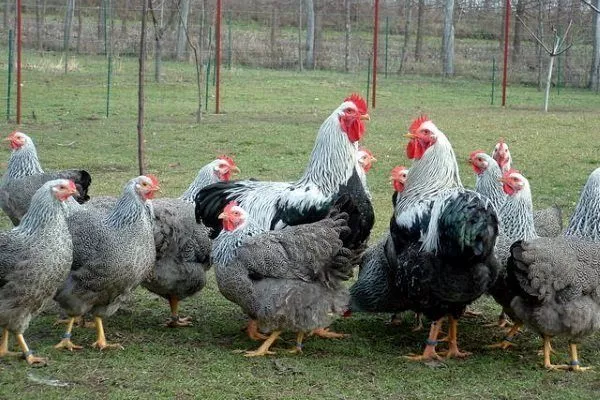
History of origin
Breeder: W. Worcester, origin: USA, period: 1860s. The birds owe their name to the small American city of Plymouth, and the prefix "rock" was added to it, which in English refers to the chicken's strong and large body.
The ancestors of the Plymouth Rock are Dominican and Langshan chickens, as well gate And CochinchinasThe birds arrived in Russia in 1911, and today, domestic breeders often use them to develop breeds. Plymouth Rocks are in high demand in many countries around the world.
Characteristics and description of the Plymouth Rock breed
This breed is incredibly beautiful with a willful yet calm disposition. These birds boast undemanding living conditions. Let's look at some of the breed's characteristics.
Appearance and physique
Main characteristics:
- small head;
- red comb with teeth;
- red earrings;
- the beak is yellow-gray;
- the neck is straight, small, covered with feathers;
- the back is wide;
- the chest is deep;
- the wings are small;
- tail is medium-sized, thick;
- the tail plumage is the same as the body;
- the hips are developed.
Invalid characteristics:
- non-standard slightly long head;
- closely spaced paws;
- dark colored paws;
- narrow little back.
Character
The Plymouth Rock breed has a calm disposition. Hens and roosters are impressive in appearance and large in size, yet they possess a gentle nature and a genuinely peaceful disposition.
The hens are moderately active; they love to walk and play in the yard, but they are reluctant to fly away. They don't fly because they are too heavy. Plymouth Rocks don't attack other birds—they're not vicious. Females are often subject to violence from other birds, as they are unable to defend themselves.
Hens are very timid, afraid of every sound, including people. For every 10 hens, one male should be kept; he will give them confidence and peace of mind.
Color
| Name | Weight of an adult (kg) | Egg production (pieces/year) | Color |
|---|---|---|---|
| White | 3 | 200 | White |
| Fawn | 3.5 | 180 | Pale yellow |
| Striped | 4 | 190 | Striped |
| Black | 4.5 | 170 | Black |
| Blue | 3.8 | 185 | Blue |
| Partridge | 3.2 | 195 | Partridge |
While males often have some kind of pattern, roosters do not. Males always have light-colored feathers, so they differ from hens not only in size but also in color.
The breed differs in the color of its feathers; in nature, the following color variations are found:
- white;
- fawn;
- striped;
- black;
- blue;
- partridge.
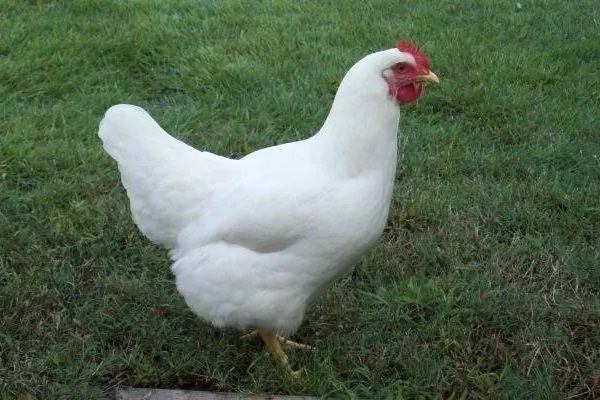
Plymouth Rock white
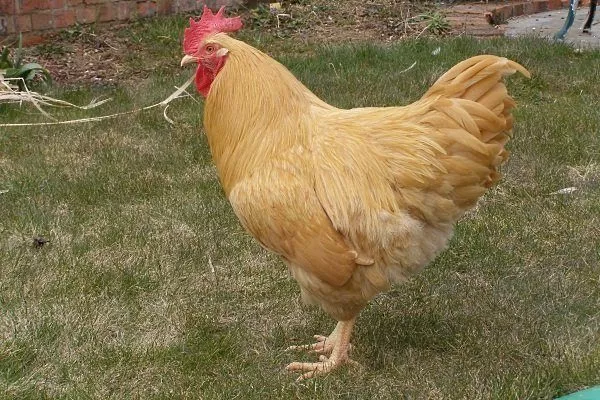
Plymouth Rock fawn
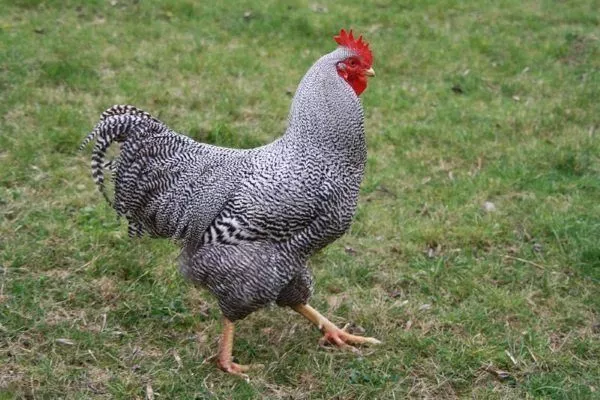
Plymouth Rock striped
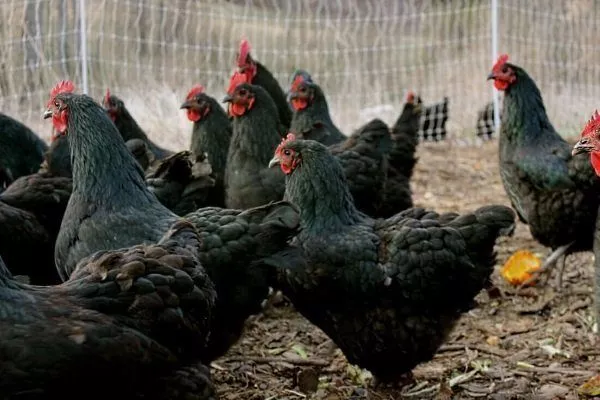
Plymouth Rock black
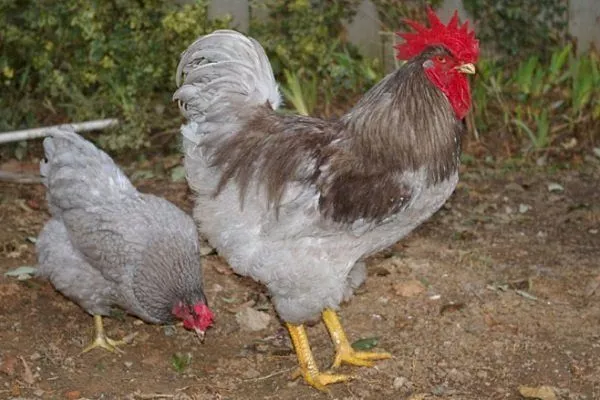
Plymouth Rock blue
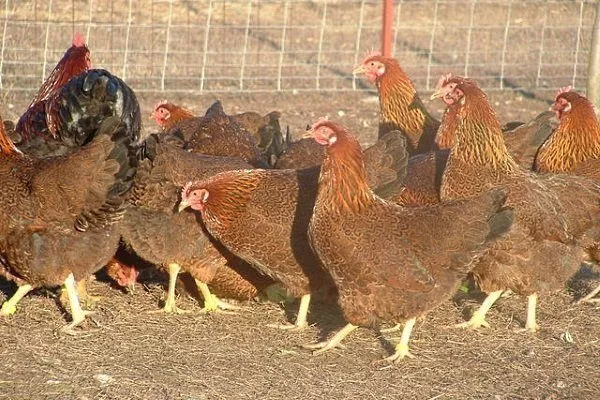
Plymouth Rock Partridge
The instinct of incubation
Not every chicken breed boasts a maternal instinct. Often, this trait is retained only in purebred birds. Crossbreeds and hybrids lose this ability completely or partially.
American Plymouth Rocks are excellent and responsible brood hens, patiently brooding their young and never leaving their nest for any reason. Furthermore, after the chicks are born, mother hens lovingly raise them. They keep them warm, protect them, and teach them the rules of the coop.
Productivity indicators
Let's look at the breed's key productivity indicators. This breed is in demand not only due to its attractive appearance but also due to its productivity.
Egg production and when they start laying eggs
Plymouth Rocks aren't exactly the most productive poultry birds. They don't lay a huge number of eggs, but they can produce around 200 small eggs per year.
The average egg weight is 60 g. With proper care and maintenance, the number of eggs increases. The first eggs are laid at six months of age. However, it's important to remember that this depends not only on the breed's characteristics but also on how well they are cared for.
It takes about 3 days for one egg to form, so due to physiological reasons, hens cannot lay more frequently.
Early maturity and taste of meat
Males reach a maximum weight of 4.5 kg, while females weigh around 3 kg. After six months, weight gain either stops completely or decreases significantly. The meat is quite tasty and tender, so these birds are kept for their meat rather than for eggs.
Poultry farmers are confident that the most delicious meat comes from chickens with light plumage.
Plymouth Rocks live a long time, but they shouldn't be kept longer than three years. After this age, egg production declines, and the flavor of their meat deteriorates. A new generation of Plymouth Rocks can be raised several times over a three-year period.
Plymouth Rock chicken breeds
Chickens of this breed are classified as meat and egg breeds, although their appearance suggests they are purely meat-producing. This belief is justified, as large-sized breeds were involved in the breed's development.
As for the Plymouth Rock varieties, the most popular are English and American birds. They are quite massive birds. Today, breeders have even managed to develop a dwarf variety.
Advantages and disadvantages of the breed
Like any other breed, the Plymouth Rock has its pros and cons. Considering these qualities can help determine the success and potential of breeding these birds.
Advantages of the Plymouth Rock breed:
- average egg production;
- early puberty;
- strong immunity;
- rapid weight gain and rapid development of chickens;
- calm character;
- active, but do not require frequent walks;
- beautiful appearance.
Disadvantages of the Plymouth Rock breed:
- too long feathering of chicks;
- high cost of chickens;
- demanding in terms of diet.
Watch an overview of the Plymouth Rock chicken breed in the video below:
Care and maintenance of the Plymouth Rock breed
Birds are not demanding in terms of living conditions, but they must be fed regularly and of high quality. Only then can a poultry farmer raise healthy and strong birds.
- ✓ The optimal temperature in the chicken coop for adult chickens: +12°C to +18°C.
- ✓ The humidity level in the room should not exceed 60%.
Nutrition
Let's consider the diet of chicks and adult hens. For the first seven days after birth, chicks are fed small portions every two hours. This helps the chicks develop a habit and increase their appetite. Leftover food must be removed immediately, otherwise pathogenic bacteria will begin to multiply. Empty food dishes should be removed from the room to prevent them from becoming dirty after cleaning.
The chicks should be fed for the first time no later than 12 hours after hatching.
Experienced poultry farmers have come up with two standard options for feeding chickens:
- Grated boiled yolk.
- Boiled corn grits.
It's best to choose the second option, as the yolk contains a high amount of fat, which is harmful to the chicks' health. On the 8th day, you can add a mixture of semolina and egg yolk to the diet. This feeding option won't harm the chicks. Boiled potatoes and carrots are considered excellent additions to the menu.
At one month of age, the birds are given fresh grass and additional minerals and vitamins. At one and a half months, they are transitioned to grains or special feed.
If some birds are weak, they are given fish oil and fermented milk products.
The menu for an adult chicken consists of:
- wet mash (cereals, greens, low-fat broth) – 1 time per day;
- grains - in sufficient quantity;
- herbs;
- combined feeds - as an additive.
In winter, the amount of food should be increased by 20%.
Molting
Seasonal molting is a normal occurrence, and there's no need to worry or try to avoid it. By the end of November, birds are renewing their plumage, so old feathers fall out and new ones appear.
If a laying hen doesn't start shedding its feathers, it's worth consulting a veterinarian, who can advise on what to do. More often than not, the poultry farmer will help these birds shed their old feathers themselves.
During this period, special attention should be paid to diet, and daylight hours should be reduced. During molting, hens stop laying eggs; once the birds have developed new feathers, egg production resumes.
Requirements for the premises
Plymouth Rock chickens enjoy being in a large space, and it is also important to remove any obstacles that the birds could hit and injure themselves on.
| Type of bedding | Advantages | Flaws |
|---|---|---|
| Straw | Good thermal insulation, easy to replace | Gets wet quickly and requires frequent replacement |
| Peat | Excellent moisture absorption, antibacterial properties | High cost, difficult to acquire |
| Wood sawdust | Availability, good absorption | May cause respiratory problems when wet. |
The chicken coop should be free of high perches, as the birds cannot fly, and should not have any additional partitions. If the flooring is covered with wood, it should still be covered with hay or straw. Peat is a good option.
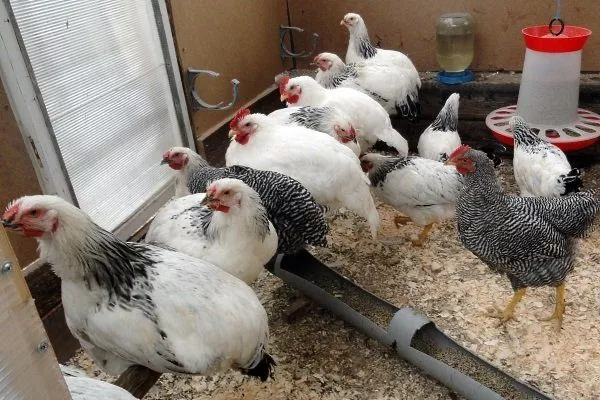
Floor litter in a room is a source of pathogenic bacteria that infect birds. To prevent it from becoming wet, dry it regularly or change it.
Particular attention is paid to ventilation and proper lighting in the chicken coop. Ventilation controls humidity. Chicken manure releases a small amount of chemicals that are harmful to the birds' respiratory system and significantly weakens their immune system.
Small lamps that produce a warm, yellowish light are installed indoors. In winter, daylight hours should be approximately 11 hours.
This breed of chicken doesn't require heating. Even in winter, simply insulating the coop is sufficient: seal all cracks and holes to prevent wind and drafts. It's important to remember that this breed of chicken doesn't like excessively high temperatures.
If you need advice on how to build a chicken coop yourself, this article is located Here.
Yard for walking
Birds need fresh air year-round. During the summer, Plymouth Rocks not only absorb sunlight but also boost their immune system. The exercise yard should be fenced with a material that won't harm the birds. If predatory animals or birds live near your property, cover the exercise yard with netting or other translucent material.
Predators will not only destroy poultry, but also infect them with some kind of bacterial or viral disease.
If a poultry farmer decides to concrete the yard, they should lay bedding on top. Keep in mind that while out walking, birds not only enjoy themselves and frolic, but also nibble on grass, so feeding costs are significantly reduced during the summer. The key is to provide sufficient greenery. If this isn't possible, freshly mown grass can be placed on the yard floor.
How to cope with winter cold
Plymouth Rocks have a strong immune system, but they shouldn't be exposed to freezing temperatures. Their robust build allows them to survive the cold well, thanks to their abundant feathers. However, their comb and wattles are bare, making them susceptible to severe cold. Chickens become ill at temperatures as low as -5 degrees Celsius.
There's no need to take birds outside during the winter. Furthermore, birds can tolerate the cold thanks to their overall health, so it's important to improve it starting in October.
Peculiarities of keeping chickens
For the first 10 days after hatching, chicks should be kept in completely sterile conditions. The room should be cleaned, ventilated, and disinfected daily.
What is interesting is that a 1-day-old chick displays all the skills typical of a 3-year-old human.
The room temperature should not fall below 30 degrees Celsius. It is lowered gradually when the chick reaches one month of age. Every seven days, the temperature is reduced by a couple of degrees.
Air humidity plays a particularly important role. It should hover around 55%. Higher humidity increases the risk of fungal diseases, while lower humidity can cause the young birds' mucous membranes to dry out, requiring increased watering.
Breeding
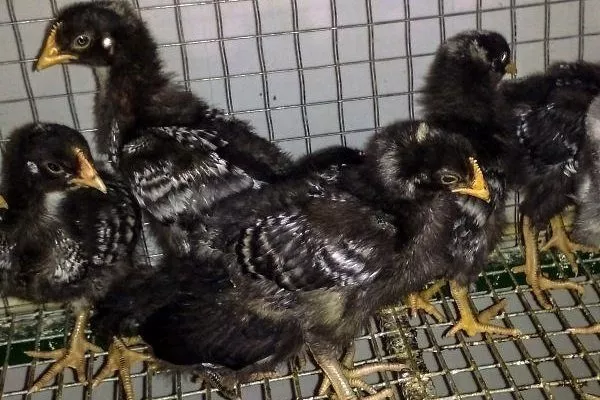
The maternal instinct is well developed, especially in white hens. The hatchability of young of this breed of chicken is approximately 80%.
Chickens at the age of 1 day have significant differences:
- Chickens have a clear and bright spot on their heads.
- The roosters are a blurry, dim spot.
One of the Plymouth Rock breed's characteristics is its slow feathering. It takes 1.5 months for the chicks to fully develop their feathers. Avoid exposing the chicks to cold. An infrared lamp should be installed to heat the coop.
Grown chicks can be kept on a home farm, but they are also bred commercially. These birds gain weight very quickly, and their meat is renowned for its excellent taste. Properly balanced nutrition and proper husbandry will help raise healthy and strong poultry.
Breed diseases
Plymouth Rock chickens have a strong immune system, so there's no need to worry about illness. The key is to follow all preventative measures, feed your offspring properly, and maintain regular cleanliness. Diseases can be caused by parasites, and these should be eliminated.
Reviews from poultry farmers
Plymouth Rock chickens are an excellent, low-maintenance breed, requiring no special conditions. They tolerate any climate and are not known for being aggressive or quarrelsome. They are suitable for small farms.