
Pavlovsk chickens are one of the best ornamental breeds bred in Russia. They are popular among poultry farmers due to their distinctive appearance. These birds are more similar to pheasants than chickens.
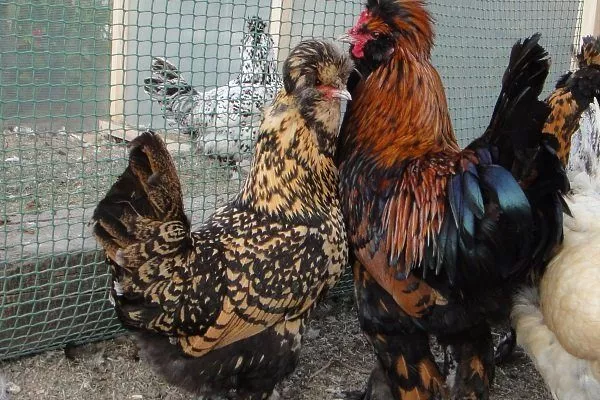
Pavlovsk chickens
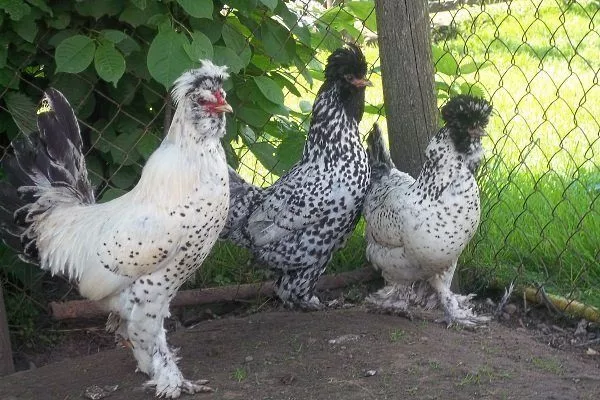
The nearly extinct Pavlovskaya chicken breed is once again gaining popularity among poultry farmers.
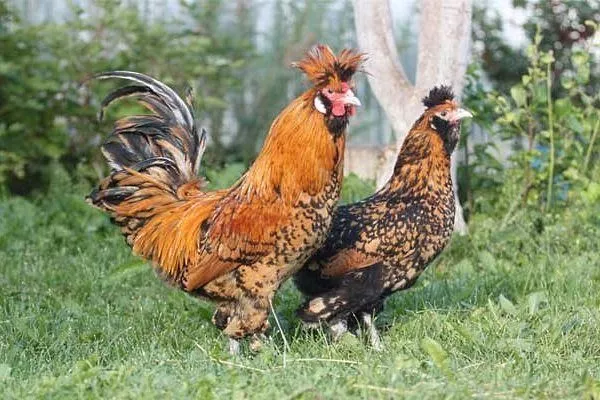
In the century before last, Pavlovsk chickens were repeatedly recognized as “royal” at exhibitions and received the status of the best breed
History of the breed's origin
Pavlovsk chickens are one of the oldest breeds developed in Russia. Because they were developed so long ago, the true origin story has not been preserved to this day. The scientists who worked on the breed and its ancestors are also unknown.
The main reason for this irresponsible attitude toward history is that scientists and chickens were previously treated with disrespect. Nobility and poultry farmers preferred foreign-bred chickens, and Pavlov's birds were discovered only in the late 19th century, when the birds were in the process of dying out.
The Pavlovsky breed was named after a settlement in one of the provinces, Pavlovo. It was famous for its blacksmith craftsmen, who were extremely popular in Rus'. In addition to blacksmithing, the residents of Pavlovo bred domestic birds, preferring foreign breeders, so many birds were imported from other countries. It's safe to assume that the Pavlovsky breed's parents were precisely such birds.
In the 19th century, the breed began to travel around the world, first to Turkey and then to Great Britain. In Turkey, they were given the name "Sultan." But all characteristics made it clear that these were Pavlovian birds.
Ordinary people in the village of Pavlovo were able to create a remarkable ornamental breed, which eventually became the standard for all ornamental poultry. Some breeders believe that these birds were the founders of the crested chicken in Europe. Modern-day poultry farmers have succeeded in creating an ancient breed that existed in the 19th century.
Description of the exterior of Pavlovsk chickens
This chicken breed has an extravagant appearance and a wayward character.
Appearance standard
The current standard for chickens describes it as follows:
- the head is small;
- the crest is pressed down and looks like a curl;
- there is a long thick collar on the neck;
- feathers frame the eyes and cheeks;
- earlobes and comb are small;
- the beak is straight, the nostrils are raised;
- eyes are small;
- resemble pheasants;
- the body is massive;
- small back;
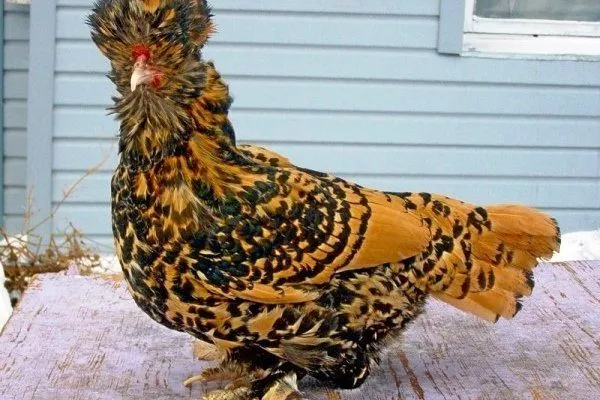
- feathers are spotted, white, golden, silver in the middle;
- the tail is beautiful;
- wings fit securely to the body, developed;
- legs are feathered on both sides;
- the fingers are covered with small feathers;
- paws are blue-black.
Unacceptable deviations in exterior
Scientists have been breeding purebred Pavlovsk chickens for a long time, so the standard of the chickens is of great importance.
Unacceptable characteristics of purebred birds:
- a huge number of feathers;
- lack of feathers on the paws;
- extra color that does not correspond to the standard color;
- the presence of a fifth toe on the paw;
- too large birds;
- a huge crest that does not lie close to the head;
- different color of legs.
Subspecies of the breed
Breeders distinguish two main subspecies: silver and golden.
| Name | Weight of an adult | Egg production per year | Plumage |
|---|---|---|---|
| Silver | 2.5 kg | 200 eggs | White with black spots |
| Golden | 2.8 kg | 180 eggs | Brown with black border |
Silver
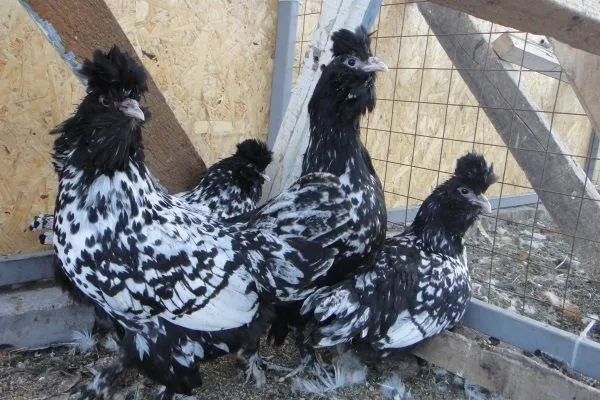
This subspecies is the most widespread. These birds have predominantly white feathers, with black spots of nearly equal size.
Golden
At the tips of the feathers, brown merges with black, creating a border that extends from the crest and neck to the shoulders. This unusual coloring forms a V-shape.
Advantages and disadvantages
Like other birds, this breed has its pros and cons, which must be taken into account before breeding it.
Advantages of the breed:
- unusual appearance;
- unpretentiousness;
- eat food in small quantities;
- a high percentage of chicks survive;
- excellent quality meat and eggs.
Disadvantages of the breed:
- average productivity;
- the risk of purchasing impurebred young animals.
Production characteristics
The breed is considered a decorative breed and today its representatives can be seen at exhibitions.
Purpose of the breed
Although this breed of domestic birds is considered an ornamental one, all its characteristics must be taken into account. The main ones are: average egg production, rapid weight gain, excellent hatchability, and survival rate of young. Thanks to these characteristics, this breed can be roughly classified as a meat and egg breeder.
Birds are bred on farm plots, in villages and private homes.
Weight
Representatives of this breed are not considered giant birds. Small roosters reach a weight of 1.8 kg, while adults weigh up to 3 kg. Hens weigh no more than 2 kg. The meat of these birds is very tasty and juicy.
Egg production
Egg production is low. A single hen can produce 160 to 260 eggs in 12 months. The shell can be beige or white. Each egg weighs approximately 60 g.
Hens have a brooding instinct, and their love for each other helps them hatch approximately 92% of their chicks. Breeders often use Pavlovian hens to hatch the offspring of other birds.
Laying hens may not stay in the nest and lay their eggs elsewhere. To prevent this from happening, place white decoy stones in the nests.
Temperament
These birds are very fast and restless, and they love to run. Their main distinguishing characteristics are their agility, maneuverability, and ability to fly over tall obstacles. They can change direction instantly during flight.
Males are known for their quarrelsome nature, but despite their somewhat unfriendly nature, they get along well with other domestic birds. Pavlovian ornamental roosters love and trust people; they are attached to their habitat and therefore do not try to escape. To prevent roosters from fighting or bullying each other or females, they need to be provided with a fenced area.
Content Features
One of the advantages of Pavlovsk chickens is their ease of care, but standard conditions must be observed.
Watch an overview of the Pavlovsk chicken breed in the following video:
Chicken coop or run
Chickens are easy-to-care-for. They have rich, dense plumage, so they don't mind the cold. They live comfortably in unheated rooms, as long as they're protected from drafts and wind. A spacious, cozy coop is considered a good option.
Read the article about How to build a chicken coop yourself.
Birds should not be kept in cages; they do not tolerate small, confined spaces well. Due to their extreme activity, they require regular exercise. During the summer, confinement to the coop is reduced to a minimum, and the birds spend the entire day outdoors.
Home improvement
The room should be quite large, up to 2 meters high, and at least 3 square meters in area. The coop must have a window, or preferably several. A manhole with an insulated door is built into the wall. Perches are placed at a height of approximately 0.8 meters.
- ✓ Lighting in the chicken coop should be at least 14 hours a day to stimulate egg production.
- ✓ Air humidity should be maintained at 60-70% to prevent respiratory diseases.
The standard nest size is 0.35 x 0.35 x 0.3 cm. Nests are secured and lined with insulating material. The floor must be insulated; it's best to cover it with clay and then layer it with straw or sawdust. Feeders must be washed. It's best to install them on legs, as this will reduce the risk of birds scattering food on the floor.
Diet and nutrition regimen
Pavlovsk chickens differ from other chickens in that they consume little food and are not picky about their diet. During the summer, they feed outdoors on greenery and any available forage.
In winter, birds should be transitioned to a standard diet: grains, vitamins, and minerals. With a balanced diet, each bird requires approximately 0.05 kg of feed per day.
The diet should include a mixture of vitamins: chopped nettle, fruits and vegetables.
During the winter, a third of the diet consists of solid feed. Two-thirds consists of various mashes. The diet consists of grains, plant mixtures, animal feed, and minerals. Hens that will hatch eggs and raise the young require protein and plenty of vitamins. Protein-rich foods for chickens include fish meal, meat meal, skim milk, and low-fat cottage cheese. Legumes, nettles, yeast, and meal are also important.
In the first days after birth, chicks are fed boiled eggs and low-fat cottage cheese. The eggs are mixed with grains, such as semolina. On the third day, the chicks are fed alfalfa, clover, boiled potatoes, or carrots. On the fifth day, the chicks can eat a variety of mash, tops, yeast, and grass meal. The diversity of the diet directly affects the development rate and survival rate of the chicks.
If adult chickens are unable to obtain pasture feed, then poultry farmers adhere to the standard scheme:
- You need to feed 4 times a day.
- In the morning, a third of the grain crops are given to the chickens, and 2 hours later – a wet mash.
- In the evening, the remaining grain crops are poured out.
Caring for chickens
Pavlovsky chicks are fluffy, and their feathers grow quickly. At birth, they acquire their coloring—dark or spotted. Over time, their plumage becomes golden or silver. Eggs weighing 60 grams are selected for hatching. The chicks can be brooded by a hen or in a special incubator.
- ✓ The egg size should be at least 60 g to ensure high chick survival rate.
- ✓ The shell must be free of cracks and deformations to prevent the penetration of bacteria.
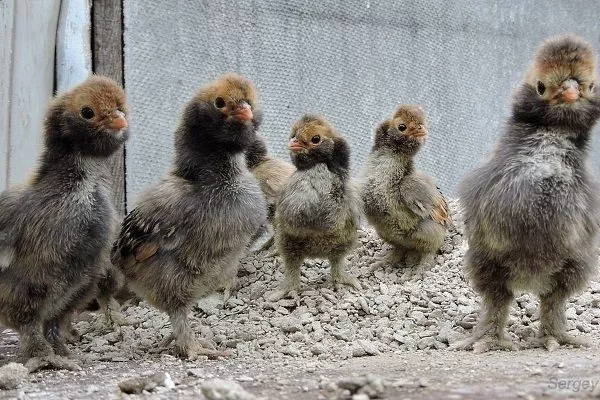
Hens of this breed are good mothers, keeping their young warm and safe. They teach the young to search for food and ensure they don't get lost.
A separate area is built for the chicks, and heaters and lamps are installed. For the first five days after hatching, the room temperature should be maintained at 30 degrees Celsius, and from the sixth to the tenth day, around 26 degrees Celsius. Then, the temperature is gradually reduced to 18 degrees Celsius.
The thermometer in the chicken coop is hung at a height of 0.5 m from the floor surface.
Observe the chicks' behavior. If they aren't pushing, are eating well, and are calm, their temperature is normal. If the temperature is too low, the chicks won't eat, will huddle near heaters, and will crush weaker birds. If the temperature is too high, they'll open their beaks, drink frequently, won't eat, and will lie down.
Diseases
A distinctive feature of Pavlovian hens is their strong immunity. This is due to the birds' abundant green feed in the summer, which helps them stay healthy throughout the year. Poultry farmers with large flocks vaccinate their hens against Gumboro, Marek's disease, and Newcastle.
Poultry farmers' reviews of the Pavlovskaya chicken breed
Pavlovsk chickens have long been abandoned for commercial breeding. They can now be found in private farms run by enthusiasts of domestically bred chickens.