
The Orlov chicken breed is considered one of the oldest in Russia, but it remains of great interest to domestic poultry collectors. These chickens are renowned for their hardiness, meat production, and ease of maintenance. This article will cover the breed's key characteristics, its advantages and disadvantages, and the intricacies of keeping and caring for these poultry.
History of the breed
The origin of the Orlov chicken is unknown, but many historians believe that this breed was brought to Russia from Iran as early as the 17th century. Count Orlov-Chesmensky played a major role in the breeding and distribution of the Orlovka, thanks to whom this poultry gained immense popularity in 19th-century Russia.
The Malayan Game and Persian chickens are considered the ancestors of these birds. The Russian Ushanka, Thuringian, and Bruges breeds also played a direct role in the development of the breed. In 1899, Orlov chickens arrived in Western Europe, where they attracted considerable interest from the Germans and British.
However, in the mid-20th century, many new foreign meat and egg breeds were imported to Russia. Orlovkas proved uncompetitive on an industrial scale and almost completely disappeared from poultry farms and private farms.
In the 1950s, several poultry enthusiasts decided to revive the old Russian breed, using a cross between local chickens and Orlovkas as the basis, selecting the individuals that best matched their appearance. The breeding process lasted over 40 years, eventually restoring the breed to its original form.
Features of Orlov chickens
In recent years, the popularity of Orlov chickens has increased dramatically—layers can be found on both small poultry farms and in private farms. Currently, there are two branches of the breed: Russian and German. Quality standards in Germany differ from those in Russia, so over many years of selective breeding, these majestic birds have lost their original appearance.
Orlovkas are considered both a decorative and a competitive breed. Despite their robust appearance, these birds have a friendly and calm nature. While they are not particularly prolific egg layers, their colorful plumage and low maintenance requirements attract both domestic and international poultry farmers. Orlovka chickens are preserved in the gene pool of the VNITIP.
Appearance
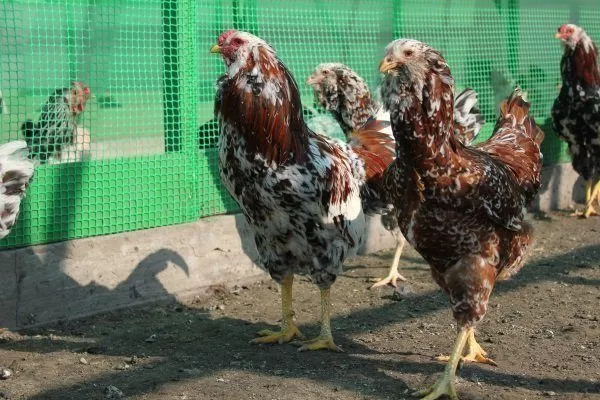
Orlovkas typically stand no more than 60 cm tall and are distinguished by well-developed muscles and strong bones. Their heads are medium-sized, their necks long, and their scruffs are densely feathered. Their eyes are small, typically amber or reddish-orange. Their beaks are light yellow, short, and hooked.
The Orlovka's comb is small, slightly flattened, and bumpy. It is located on the forehead and practically hangs over the bird's nostrils. The earlobes and wattles are poorly developed, making them difficult to see under the overhanging feathers of the vent. The tail is medium-length and well-feathered.
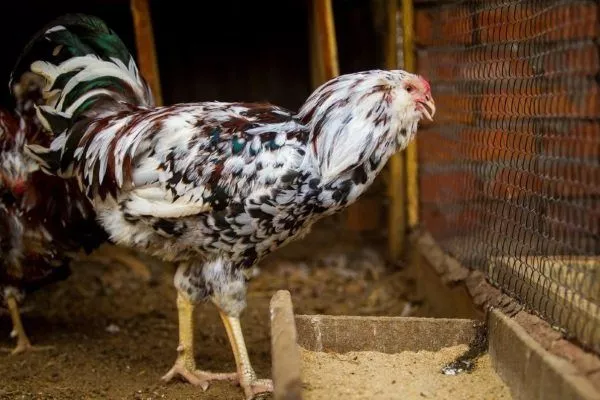
Roosters are distinguished by broad shoulders and a well-developed, muscular chest. The sideburns and wattles are somewhat less developed than those of hens. The large, curved beak and broad forehead make Orlov roosters resemble true raptor eagles, and the strong brow ridges and deep-set eyes further emphasize this resemblance. The tail is medium-length, well-feathered, and set at a right angle to the back.
Color
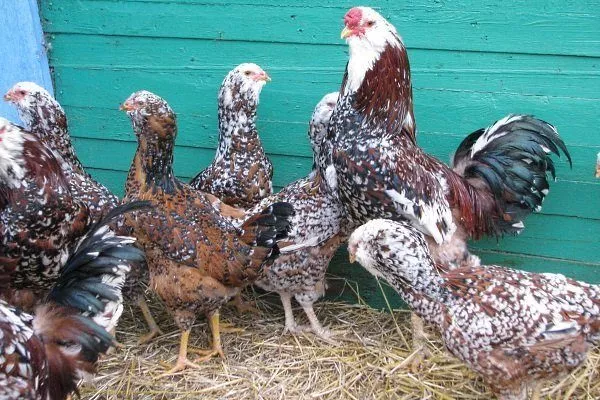
The plumage coloration of domestic poultry is quite varied. Currently, the following subspecies of Orlov chickens exist: calico, white and black, mahogany, brick, and black and red. Calico-colored individuals are the most common. They are easily distinguished by their lush beard, consisting of white, orange, and gray feathers.
The body and breast of calico roosters are black with white speckles, while the head and back are brick-red. The wings feature prominent transverse black stripes with a greenish tint. The tail is completely black, but the breed standard allows for a pair of white feathers in the upper braids.
The hens are identical in color, but not as vibrant as the roosters. Their wattles and nape have a fair amount of white feathers. The lighter spots on their bodies are clearly defined.
Of the solid colors, white Orlovkas are the most common in our area. In private poultry yards, you can also find mahogany-colored birds, with a brick-colored body and head, and a black tail with a green tint.
Character
The Orlov rooster is a true master of the poultry yard, ready to spring into action at any moment. Its appearance is dignified, and it loves to stroll around the coop, proudly puffing out its powerful chest. If you decide to keep a rooster of this breed, you can be sure that no other bird will dare encroach on its territory—it will give a fitting rebuff to any challenger.
The Orlovets inherited this fighting spirit from its ancestors, the Malayan chickens. However, don't assume that roosters of this breed are pugnacious or aggressive. They get along well with other birds in a common yard, but they do not allow other roosters near themselves or their hens. Laying hens are known for their friendly and docile nature, rarely getting into fights, and coexist peacefully with other birds.
Egg production
Orlov hens mature relatively late and begin laying eggs at eight months of age. In the first year, a young hen can lay around 180 eggs, but by the second or third year, this number drops to 140. The eggs are medium-sized, weighing up to 60 g. Shell color varies depending on the hen's coat color and ranges from cream to light pink.
Despite the fact that Orlovka's productivity is average, poultry farmers note the high taste qualities of their eggs.
The instinct of incubation
Orlov chickens lack the broodiness instinct. Many poultry farmers don't consider this a drawback, as the number of advocates of natural incubation is dwindling each year. Furthermore, hens do not lay eggs during the brooding period, which is economically disadvantageous.
If you decide to breed chickens without an incubator, the best option is to place Orlovka eggs in the nest of a hen of a different breed.
Advantages and disadvantages
Poultry farmers in Siberia and other regions with harsh climates often prefer Orlov chickens, as they easily adapt to various environmental conditions without losing their productive qualities. Other advantages of the breed include:
- decorative appearance;
- good meat productivity;
- endurance;
- unpretentiousness in maintenance;
- high taste qualities of meat products.
This breed also has its disadvantages:
- decrease in egg production in laying hens with age;
- slow growth of poultry;
- late maturation of laying hens;
- poor feathering of chickens, which creates some difficulties when raising them.
Despite all their advantages, Orlovkas are not bred commercially. Currently, breeders have developed numerous meat and egg breeds with higher productivity rates. Orlovkas are most often found in small poultry houses, where they are kept primarily for ornamental purposes.
Content Features
The Orlovka's docile nature allows them to be kept in the same room with other birds. If you decide to get a rooster as well as hens, it's advisable to provide them with separate quarters. The Orlovka will not tolerate competition within its territory, so fights in the coop are inevitable. If a separate area is not possible, divide the area with a partition.
In the central part of Orlovka, chickens can easily survive winter frosts in an unheated building, but if the temperature drops to -30°C or below, a heater should be installed in the coop. In regions with harsh winters, it's advisable to insulate the coop walls with mineral wool or extruded polystyrene foam in advance.
If you are interested in how to make a chicken coop yourself, you can read this article.
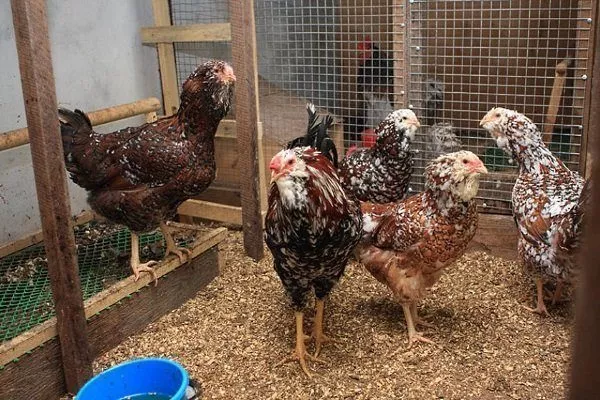
The size of the chicken coop depends on the number of birds and should accommodate 5 birds per square meter. The floor of the coop should be covered with bedding made of straw, sawdust, dry moss, or peat chips. During winter, the bedding layer should be increased to 40 cm to provide insulation. In the spring, the bedding is removed, the floor is disinfected and dried, and then new bedding is laid.
Care
Orlov chickens are easy to care for, but to ensure good laying performance, they need comfortable living conditions. Essential elements of any poultry yard include:
- feeders;
- drinking bowls;
- nests for laying eggs;
- perch;
- walking area.
When choosing feeders and waterers, it's important to consider that Orlovkas have short, curved beaks. It's best to choose shallow, wide containers that can be placed either on the floor of the coop or hung around its perimeter.
You can read how to make a drinking bowl with your own handsHere.
Small wooden boxes or baskets lined with straw or hay can be used as nests for laying eggs. One nest is needed for every five hens. Don't forget about a perch—a place for the birds to rest and sleep. Experienced poultry farmers recommend making it from 50x50 mm wooden beams. These perches are installed in a shaded area of the coop, 80 cm above the floor.
A run area is most often set up directly next to the chicken coop on the south side. It should occupy at least 50% of the area of the chicken coop. The run area should be fenced with galvanized mesh 2-2.2 meters high to prevent the Orlovka hens from flying over it.
Some farmers let their chickens roam the garden and orchard, where they eat weed sprouts and destroy slugs and pest larvae.
Feeding
To gain weight well, Orlovka hens require a varied diet. Their diet should include a variety of grains, succulent greens, root vegetables, and dairy products. Three to four times a week, you can offer them a wet mash consisting of chopped boiled potatoes with steamed barley. Fish scraps can also be added. bone and meat and bone meal.
It's advisable to occasionally add unhulled buckwheat to the main feed. It contains a large amount of iron, which has a positive effect on egg production and muscle development in poultry. The diet should also include mineral supplements such as table salt, sand with shells, and limestone (0.5-1.5 mm grain size).
Ready-made commercial feed mixes, which already contain vitamin supplements, proteins, and minerals, are also a good option. It's important to ensure fresh drinking water is available in the waterers. Place them so that the birds can easily access them and quench their thirst at any time.
Breeding
To successfully breed Orlovkas, it's important to consider certain nuances of this breed. Currently, finding purebred birds that fully meet the standards is quite difficult. They are primarily bred by professional poultry breeders and participants in various bird shows.
It's also important to note that Orlov hens reach sexual maturity relatively late, so there's no point in purchasing a hen under 2 years old. Birds that exhibit the following characteristics are considered unsuitable for breeding:
- low weight for his age;
- insufficient feathering of the neck and scruff;
- thin beak;
- coloration that does not correspond to the subspecies.
For incubation, select large, well-shaped eggs with thick shells. They should be fresh and have a shelf life of no more than 5 days. For hatching, it is advisable to use specialized incubators with controlled microclimate and temperature.
- ✓ The temperature in the incubator should be maintained at 37.5-37.8°C for the first 18 days, then reduced to 37.2°C.
- ✓ Humidity in the incubator: 50-55% for the first 18 days, then increases to 65-70% until hatching.
We recommend reading the article about features of incubation of chicken eggs.
Raising chickens
In an incubator, chicks hatch in 20-21 days. After hatching, they are placed in a large box or crate lined with sawdust or hay. This bedding should be changed daily.
Orlov chicks have a relatively low survival rate and require constant attention. They grow slowly, and feathers appear late. They do not tolerate high humidity and cold well and are prone to colds.
Chicks adapt poorly to changing environmental conditions, so in the first days of life they should be kept in a room heated to 35 degrees Celsius. By the end of the first week, the temperature is reduced to 32 degrees Celsius. Thus, the coop should be cooled by a couple of degrees Celsius every week. The optimal temperature for keeping young birds is 23 degrees Celsius.
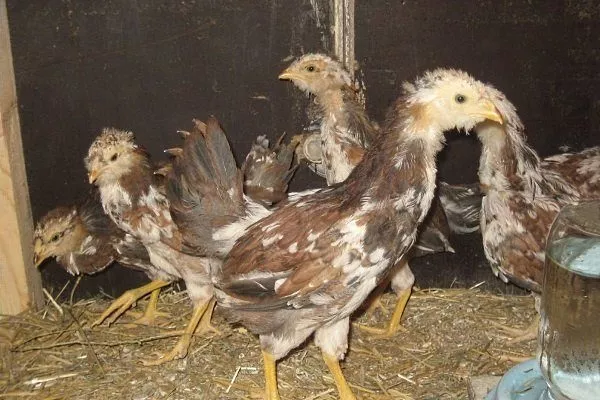
During the first week, the chicks are fed every two hours. The best foods for them during this period are chopped boiled eggs, corn and barley grits, cottage cheese, succulent greens, grated carrots, and boiled potatoes. Then, the diet is expanded every three to four days, adding new foods and crushed grains. The number of meals is gradually reduced; by the end of the third week, there should be four.
- Day 1-3: chopped boiled egg, cottage cheese, corn grits.
- Day 4-7: adding barley groats, grated carrots, boiled potatoes.
- Week 2: Introduction of crushed grains and juicy greens.
If you prefer to use industrial compound feed, then carefully select them based on the chicks' age. For the first 10 days, chicks are given warm, boiled water at about 30 degrees Celsius. By three weeks of age, the water is gradually cooled to 18 degrees Celsius. Vitamins appropriate for their age and probiotics are usually added to the water to improve digestion.
Molting
The natural physiological process of feather shedding can be quite frightening for an inexperienced farmer. It's especially noticeable in the densely feathered Orlovka hens, as during molting, the hens almost completely lose their wattles and sideburns. In hens over one year old, molting typically takes 4 to 8 weeks.
Seasonal molts can occur in spring, summer, and fall. The first two are virtually unnoticeable, and their occurrence depends on the climatic conditions of the region where the birds are kept. The fall molt is the most extensive, as feathers are renewed throughout the bird's body. Hens most often stop laying eggs during this period.
How to choose a purebred bird?
A purebred Orlov chicken must fully comply with the approved standard. Breed defects can be identified by:
- poorly developed plumage on the head;
- the presence of a hump;
- small stature of the bird;
- underweight for age;
- narrow back and chest;
- the presence of residual feathering on the toes and metatarsus;
- brownish body color;
- black beard;
- straight thin beak.
You shouldn't buy such birds, as they won't match the breed's characteristics and may simply disappoint you. Currently, there are many farms in Russia where you can buy Orlovka breeder chicks and hatchery eggs. At specialized exhibitions, you can also meet collectors who breed poultry, guaranteeing you'll buy a purebred hen.
In this video, the breeder talks about the Orlovskaya chicken breed:
Frequent illnesses
With proper care, Orlov chickens rarely get sick. If you do notice symptoms of illness in your hens, it's important to get a proper diagnosis and begin treatment promptly.
The most common non-infectious diseases of Orlov chickens and methods of their treatment
| Name of the disease | Main symptoms | Treatment |
| Avitaminosis | General malaise, weight loss, loose stools, decreased egg production, pale comb, lethargy. | After a blood test, the doctor will prescribe a complex of missing vitamins and minerals that will need to be added to the chicken's food. |
| Tenosynovitis | Lameness, lethargy, refusal to eat, swelling in the joint area. | Introducing juicy greens into the bird's diet. |
| Gout | Diarrhea, discolored stool, impaired motor function, swelling of the joints, increased body temperature. | Drinking 2% aqueous solution of bicarbonate of soda, 0.25% urotropin. |
| Dropsy of the abdominal cavity | Increased abdominal volume, change in its shape, shortness of breath, lethargy. | In mild forms of the disease, fluid is removed from the abdominal cavity and diuretic therapy is administered. |
| Cloacite | Diarrhea, inflammation of the cloaca, the appearance of hemorrhagic ulcers, weight loss, lack of egg laying. | Treatment of the cloaca with a 1% solution of Rivanol, lubrication with terramycin ointment, Levomekol. |
| Gastroenteritis | Depression of consciousness, blue comb, loss of appetite, diarrhea, fever. | A diet including fermented milk products, 0.2% ferrous sulfate solutions, and 0.02% potassium iodide. After assessing the condition, the veterinarian may prescribe antibiotics: tetracycline, neomycin. |
Reviews of Orlov chickens
Orlov chickens are gradually regaining their former popularity, and many poultry farmers are now eager to have a purebred, stately bird on their farm. Despite average egg production, with proper care, these hens lay eggs even in winter, and their meat is renowned for its excellent flavor. While the birds grow slowly, an adult can weigh up to 5 kg.